Art history: learn to really see paintings
This curriculum takes a complete beginner from "how do I even look at a painting?" to a confident, historically-grounded understanding of Western art from the Renaissance through the modern era. The four stages build deliberately: first developing a visual vocabulary and genuine enthusiasm, then surveying the grand sweep of history, then diving deep into specific movements and ideas, and finally engaging with the critical and philosophical questions that make art matter beyond the museum wall.
Learning to See
BeginnerDevelop a personal visual vocabulary — how to slow down, look carefully, and describe what you see in a work of art — before tackling any historical narrative.
▸ Study plan for this stage
Pace: 10–12 weeks total, reading roughly 20–30 pages per day. Week 1–3: "The Art Museum" (browse slowly, 1–2 spreads per sitting, treating it as a visual atlas). Week 4–6: "Ways of Seeing" (short book but dense — read one chapter, pause, re-read before moving on). Week 7–12: "The Story of Art" (Gombrich's
- Slow looking: resisting the urge to read a label before spending time with an image, as modeled by the image-first layout of 'The Art Museum'
- Visual description vs. interpretation: separating what you literally see (line, color, shape, texture, composition) from what you think it means
- The male gaze and the social construction of seeing: Berger's argument in 'Ways of Seeing' that who looks, and from what position of power, shapes what an image 'means'
- Reproduction and aura: Berger's point that mechanical reproduction (postcards, textbooks) changes our relationship to an original work — relevant every time you study a page in 'The Art Museum'
- The 'language' of images: how conventions (pose, gesture, symbol, scale) carry meaning across cultures and centuries, introduced practically through Gombrich's storytelling in 'The Story of Art'
- Problem-solving as artistic drive: Gombrich's central thesis that art history is a history of artists solving visual problems, not merely expressing beauty
- Period eye: the idea (woven through all three books) that viewers in different eras saw differently, and that we must try to reconstruct that context
- Personal visual vocabulary: the cumulative habit of naming what you see precisely — the skill all three books together are designed to build
- After spending five minutes with a single image in 'The Art Museum' — before reading any caption — what specific visual elements (line, color, scale, focal point) can you identify and describe in your own words?
- In your own words, what is Berger's core argument in 'Ways of Seeing' about the difference between 'seeing' and 'knowing', and how does it challenge the way art is typically presented in museums and textbooks?
- How does Berger's concept of the 'original' versus its 'reproduction' affect how you should think about studying art through a book like 'The Art Museum'?
- What does Gombrich mean when he says there is no such thing as 'Art', only artists — and how does this reframe the way you approach a work in 'The Story of Art'?
- Choose any single work discussed by Gombrich in 'The Story of Art'. Can you describe it purely visually first, then layer in the historical 'problem' Gombrich says the artist was trying to solve?
- How do all three books together suggest you should position yourself — mentally and physically — when standing in front of an original work of art?
- The 10-Minute Rule (The Art Museum): Open to any full-page image. Set a timer for 10 minutes. Write a continuous description — no art-history terms allowed — of everything you see. Only after the timer ends, read the caption. Note the gap between your description and the label's language.
- Berger's TV Test (Ways of Seeing): Choose any image from 'The Art Museum'. Write one paragraph describing it 'neutrally'. Then re-write the same paragraph imagining the viewer is (a) a 17th-century aristocrat who commissioned it, and (b) a contemporary person seeing only a smartphone thumbnail. Compare the three paragraphs — this is Berger's argument made personal.
- Visual Vocabulary Journal: Keep a running notebook. Each week, add 5 new precise visual terms you encountered (e.g., 'chiaroscuro', 'contrapposto', 'impasto'). For each term, find one example in 'The Art Museum' and write a one-sentence description using it naturally.
- Gombrich Problem-Solution Cards: For each chapter of 'The Story of Art', make a simple index card: front = the artist/period; back = 'the visual problem' Gombrich identifies + 'the solution the artist found'. By the end, you have a physical deck that maps art history as a chain of problem-solving.
- Slow-Look Museum Visit: Visit a local museum or gallery (or use a high-resolution online collection such as the Met or Google Arts & Culture). Select just THREE works. Spend at least 15 minutes with each. Apply the description-first habit from 'The Art Museum', then ask Berger's question ('Who is this image made for, and what does it want from me?'), then ask Gombrich's question ('What problem was
- Reproduction vs. Original Reflection (Ways of Seeing + The Art Museum): Find a work that appears in 'The Art Museum' and that you can also view in a high-resolution digital scan online. Write a short paragraph (150–200 words) on what is lost and what is gained in each format — directly applying Berger's argument about aura and reproduction to your own experience.
Next up: By the end of this stage, the reader has a reliable personal method for looking at and describing any work of art — which means the next stage can safely introduce deeper historical, cultural, and thematic narratives without the reader passively absorbing them; they now have the visual tools to interrogate and question those narratives from the very first page.

A visually rich, chronological tour through 1,000 masterworks presented like walking through the world's greatest museum — perfect first exposure that builds pattern recognition across styles and eras.

Short, provocative, and transformative: Berger teaches you that looking is never neutral, introducing ideas about perspective, gender, and power that will sharpen every subsequent encounter with a painting.
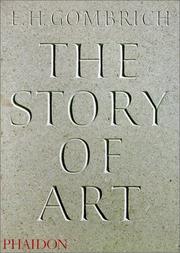
The single most celebrated introduction to art history ever written — clear, warm, and chronological. Read it here to lay the complete historical skeleton before adding flesh in later stages.
The Grand Narrative — Renaissance to Modernism
BeginnerUnderstand the major movements, their historical causes, and their key artists in a connected, cause-and-effect narrative from roughly 1400 to 1950.
▸ Study plan for this stage
Pace: 10–12 weeks total. Weeks 1–5: "Lives of the Artists" by Vasari (~25–30 pages/day, reading select lives rather than every entry — prioritize Giotto, Brunelleschi, Donatello, Leonardo, Raphael, and Michelangelo). Weeks 6–11: "The Shock of the New" by Robert Hughes (~20–25 pages/day, chapter by chapter
- The Renaissance 'rebirth' myth: Vasari's idea that art died after antiquity and was progressively resurrected by Italian masters — understanding this as both a historical claim and a constructed narrative
- Artistic biography as art history: how Vasari's Lives established the template of the 'genius artist' and why that framing still shapes how we talk about art today
- Cause-and-effect across movements: how patronage systems (Church, Medici, guilds) directly shaped what artists made, how large, and in what style
- The concept of 'progress' in art: Vasari's arc from Cimabue to Michelangelo as a teleological story, and how Hughes later dismantles or complicates linear progress narratives
- Modernism as rupture: Hughes's central argument in The Shock of the New that the avant-garde movements (Cubism, Futurism, Abstraction, Surrealism) were inseparable from the social and technological upheavals of the late 19th–early 20th centuries
- The role of technology and mass media: Hughes's analysis of how the machine age, photography, and industrialization forced artists to redefine what art was for
- Key formal shifts: from Renaissance illusionism and perspective (Vasari's heroes) to the deliberate fracturing of perspective and representation in Modernism (Hughes's subject)
- The artist's social role: comparing Vasari's court-and-church-serving Renaissance master with Hughes's alienated, market-navigating, or politically radical modern artist
- According to Vasari, what distinguishes the 'third age' of art (Michelangelo's era) from the first and second ages — and what does this reveal about his values and biases as a writer?
- How did the patronage system of Renaissance Florence, as illustrated in Vasari's Lives, shape the subjects, scale, and style of the works produced?
- What does Robert Hughes mean by 'the shock of the new,' and which specific movements or works does he use as his primary evidence for art's radical break with tradition?
- Hughes argues that Modernism was not just a stylistic change but a response to historical forces. What are the two or three forces he emphasizes most strongly, and which artists does he link to each?
- How does the concept of 'artistic genius' travel from Vasari's Renaissance biographies into the 20th-century art world Hughes describes — and in what ways does Hughes challenge or complicate it?
- Tracing a line from Vasari to Hughes: what is one formal or thematic concern (e.g., the human figure, the relationship to nature, the purpose of beauty) that appears in both books, and how has it transformed across 500 years?
- Create a visual timeline: Draw or digitally map a single timeline spanning 1400–1950. As you read each book, pin every artist, movement, and historical event mentioned onto it. Use one color for Vasari's world and another for Hughes's — the visual gap and overlap between the two color zones will make the 'rupture' of Modernism tangible.
- Write a Vasari-style mini-biography: After finishing Lives of the Artists, choose any Modernist artist Hughes discusses (Picasso, Matisse, Duchamp, etc.) and write a 300–400 word biography in Vasari's voice and style — praising their 'genius,' describing their technique, and moralizing about their character. Then write a short reflection on what this exercise reveals about Vasari's method and its
- Cause-and-effect chain exercise: Pick one movement Hughes covers (e.g., Cubism or Futurism) and build a written cause-and-effect chain of at least five links tracing from a historical event or technology back to a specific artwork. Example structure: Industrial warfare → disillusionment with progress → Dada → readymades → Duchamp's 'Fountain.'
- Side-by-side image analysis: Select one Renaissance work discussed in Vasari (e.g., Michelangelo's Sistine Chapel ceiling) and one Modernist work discussed by Hughes (e.g., Picasso's Les Demoiselles d'Avignon). Write a one-page comparison focusing on: treatment of the human figure, use of space/perspective, and implied relationship between artist and viewer.
- Identify Vasari's blind spots: Make a list of at least five categories of artists or art that Vasari ignores or marginalizes (e.g., women artists, Northern European artists, decorative arts, non-Christian subjects). For each, write one sentence on how Hughes's book begins — or fails — to address that gap.
- End-of-stage synthesis essay (500–700 words): Answer the question — 'Is the history of Western art from 1400 to 1950 best understood as a story of progress, rupture, or something else entirely?' — drawing specific evidence from both Vasari and Hughes.
Next up: Mastering this grand narrative of cause-and-effect across movements gives the reader the chronological and conceptual skeleton onto which the next stage — a deeper, more critical examination of specific periods, non-Western traditions, or theoretical frameworks — can be confidently layered.
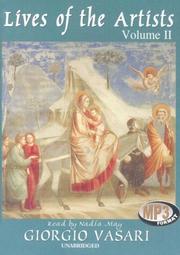
The founding document of art history, written by a Renaissance insider — reading Vasari on Leonardo, Michelangelo, and Raphael gives you the period's own self-understanding and makes the Renaissance feel alive.

Hughes's passionate, opinionated survey of modern art from Impressionism through the 1970s picks up exactly where the Renaissance narrative ends, explaining why art kept breaking its own rules.
Reading Paintings Deeply
IntermediateMove from recognizing movements to genuinely interpreting individual works — understanding iconography, symbolism, composition, and the social context embedded in specific paintings.
▸ Study plan for this stage
Pace: 10–12 weeks total. Week 1–4: "How to Read a Painting" by Patrick de Rynck (~20–25 pages/day, focusing on one painting per sitting and pausing to study reproductions). Week 5–8: "Paintings in Proust" by Eric Karpeles (~15–20 pages/day, reading alongside relevant Proust passages where possible, moving
- Iconographic reading: identifying and decoding symbols, attributes, and allegorical figures embedded in paintings (core method in de Rynck)
- Compositional analysis: understanding how line, geometry, light, and spatial arrangement guide the viewer's eye and communicate meaning
- Narrative and textual sources: recognizing how biblical, mythological, and literary texts (Ovid, the Bible, hagiographies) are translated into visual form
- Social and patronage context: reading a painting as a document of its commissioning culture — who paid for it, who it was for, and what it was meant to do
- The painting as literary echo: Karpeles's method of treating Proust's fictional paintings as windows onto real works, revealing how writers 'read' art and how meaning travels between media
- Hidden and layered detail: the Hagens' technique of slow, forensic looking — discovering narrative clues, disguised symbols, and secondary figures that reshape interpretation
- Period 'visual conventions': understanding that symbols (a skull, a lily, a lamb) carried shared, codified meanings for original audiences that must be reconstructed by modern viewers
- Interpretive humility: recognizing that multiple valid readings of a single work can coexist, and that context changes meaning
- After working through de Rynck's entries, can you identify at least five standard iconographic attributes (e.g., objects, animals, colors) and explain what they signified to a contemporary audience?
- How does Karpeles's 'Paintings in Proust' demonstrate that a literary description of a painting is itself an act of interpretation — and what does that reveal about the limits of purely visual analysis?
- Choose any painting from 'What Great Paintings Say': before reading the Hagens' commentary, what details did you notice on your own, and which did you miss? What does the gap tell you about your current habits of looking?
- How does knowing the social or patronage context of a work (who commissioned it, where it hung, who viewed it) change your interpretation of its content and composition?
- What is the difference between iconography and iconology, and how do the three books in this stage model each approach differently?
- How do compositional choices — placement of figures, use of light, geometric structure — function as a form of symbolic language independent of depicted objects?
- 'Symbol inventory' drill with de Rynck: for each painting discussed, cover the text and list every object, color, gesture, and figure you can see. Then read de Rynck's analysis and mark what you missed — keep a running log of recurring symbols to build your own iconographic vocabulary.
- Literary cross-reading with Karpeles: select three of the Proust passages Karpeles pairs with real paintings, read the literary description first, sketch or describe the painting you imagine, then compare your mental image to the actual work. Write a paragraph on where Proust's language guided or misled you.
- Slow-looking timed exercise with the Hagens: open to any painting in 'What Great Paintings Say,' set a 10-minute timer, and write down every detail you observe before turning the page to read the commentary. Track your 'discovery rate' improving over successive sessions.
- Contextual research sprint: pick one painting from any of the three books and spend 30 minutes researching its patron, original location, and intended audience using external sources. Write a one-page 'context memo' and then re-read the book's analysis to see what the authors emphasized or omitted.
- Comparative composition analysis: choose two paintings from different centuries covered across the three books that share a subject (e.g., Annunciation, Vanitas, mythological scene). Draw simple geometric diagrams of each composition and write 200 words on how the structural differences produce different emotional or ideological effects.
- Personal interpretation essay: after finishing all three books, select one painting that appears or is discussed in any of them and write a 500-word close reading that integrates iconographic, compositional, and social-contextual analysis — citing specific insights drawn from de Rynck, Karpeles, and the Hagens.
Next up: Mastering the close reading of individual paintings — their symbols, compositions, and contexts — builds the interpretive precision needed to tackle broader art-historical arguments, such as how movements evolve, how artists respond to each other across time, and how institutional forces shape what gets made and remembered.

A practical, image-by-image guide to decoding the symbols, narratives, and conventions hidden inside Old Master paintings — builds the iconographic literacy needed for deeper analysis.

By tracing every real painting embedded in Proust's novel, Karpeles models the richest possible kind of close looking — connecting literature, biography, and visual culture in a single sustained act of attention.
Takes 100 canonical works one at a time and unpacks every layer of meaning — a perfect companion that consolidates the interpretive skills built in this stage.
Ideas, Theory & Why Art Matters
ExpertEngage with the philosophical and critical frameworks — aesthetics, theory, cultural politics — that explain why art history is not just a list of objects but a living argument about human experience.
▸ Study plan for this stage
Pace: 6–8 weeks total: Week 1–2 — "The Painted Word" (~130 pages; read in 3–4 sittings of ~35 pages each, pausing after each chapter to annotate Wolfe's satirical arguments); Weeks 3–8 — "Art as Experience" (~355 pages; ~15–20 pages/day, 5 days/week, treating each chapter as a self-contained philosophical
- The primacy of theory over perception: Wolfe's central provocation that 20th-century avant-garde art became illegible without its accompanying verbal/critical theory, inverting the traditional relationship between artwork and explanation
- The art-world as a closed social system: Wolfe's sociology of taste — how a small Manhattan clerisy of critics, dealers, and collectors manufactured meaning and market value, insulating art from broader public experience
- Aesthetic experience as continuous with ordinary experience: Dewey's rejection of the 'museum pedestal' model and his argument that art grows from the same impulse as cooking, craft, sport, and everyday perception
- The concept of 'an experience': Dewey's distinction between mere experience (diffuse, interrupted) and 'an experience' — a unified, consummated event with its own internal rhythm and fulfillment
- Expression vs. discharge: Dewey's argument that genuine artistic expression is not raw emotional release but a disciplined interaction between the artist, medium, and material resistance
- The role of the medium and form: How Dewey treats form not as decoration but as the very organization of energies that produces aesthetic meaning — inseparable from content
- Criticism as reconstruction: Dewey's view that the job of the critic is to re-educate perception, helping audiences recover the live experience embedded in a work — a direct counter-model to the theory-first criticism Wolfe lampoons
- Cultural politics of institutional authority: Reading Wolfe and Dewey together to see how institutions (museums, criticism, the art market) can either liberate or suffocate the democratic, experiential potential of art
- According to Wolfe, what specific historical and social conditions allowed theory to eclipse visual experience in postwar American art, and which critics and movements does he hold most responsible?
- What does Dewey mean when he says aesthetic experience is not a separate, rarefied category but the 'clarified and intensified development of traits that belong to every normally complete experience'? Do you agree?
- How does Dewey's concept of 'an experience' challenge the way art is typically displayed and consumed in the museum context that Wolfe also critiques — and where do the two authors' diagnoses converge or diverge?
- Wolfe argues that without the word, the painted surface is mute to the modern viewer. How would Dewey respond to this claim using his theory of expression and the role of the medium?
- Dewey insists that form and content are inseparable in genuine art. How does this principle expose the weakness of the theory-driven art Wolfe describes, where conceptual content is delivered verbally and the visual form becomes almost incidental?
- After reading both books, how would you define the proper role of art criticism? Should it explain, translate, reconstruct experience, or something else entirely?
- Wolfe's Reversal Test: Choose one canonical work of postwar abstract or conceptual art (e.g., a Rothko, a Rauschenberg). First, read only the standard critical/wall-text explanation. Then, cover all text and sit with the image for 10 minutes. Write two paragraphs: one describing what the theory tells you to see, one describing what you actually experience. Use this gap as the empirical data Wolfe
- Dewey's 'An Experience' Journal: Over two weeks, identify three non-art moments in daily life (a meal, a conversation, a commute) that qualify as 'an experience' by Dewey's criteria — unified, with a felt sense of completion. Write a short entry for each explaining which of Dewey's conditions (rhythm, cumulation, consummation) were met. Then apply the same lens to one artwork.
- Socratic Dialogue: Write a 600-word imagined dialogue between Tom Wolfe and John Dewey on the question: 'Who is responsible for making art meaningful — the artist, the critic, or the viewer?' Force each voice to use only arguments grounded in the actual text of their respective books.
- Medium Resistance Exercise: Choose an art medium you have never used (charcoal, watercolor, clay). Spend 45 minutes making something — not for quality, but to feel the resistance of the medium. Afterward, write one page connecting your experience to Dewey's argument that expression emerges from the struggle between impulse and material.
- Critical Autopsy: Find a major art review from a publication like Artforum or The New York Times. Annotate it in two colors: one for moments that match Wolfe's critique (theory substituting for perception) and one for moments that match Dewey's ideal (criticism that reconstructs lived experience). Summarize your findings in a half-page verdict.
- Synthesis Essay: Write a 1,000-word argumentative essay answering: 'Is art history, as a discipline, closer to Wolfe's word-world or Dewey's experiential ideal — and what would a truly Deweyan art history look like in practice?' This forces integration of both books and prepares the analytical voice needed for advanced theoretical reading ahead.
Next up: By exposing the tension between theory-as-power (Wolfe) and experience-as-foundation (Dewey), this stage equips the reader with a critical immune system — a personal philosophical baseline from which to engage, challenge, and situate the more specialized ideological and methodological frameworks (Marxist, feminist, postcolonial, semiotic) that dominate advanced art-historical scholarship.
A sharp, funny critique of how theory came to dominate modern art — reading it at this stage lets you evaluate its provocations with the historical knowledge you've now built.
The philosophical cornerstone for understanding why aesthetic experience is central to human life — Dewey's argument gives the entire curriculum its deepest justification and sends you back to look at art with new eyes.
Discussion
Keep reading
Paths that share books, cover the same subject, or open a related topic.