The Prix Goncourt: The Best French Novels to Read, in Order
The Goncourt has been awarded since 1903 out of Edmond de Goncourt's will, by an academy of ten writers who meet over lunch at the Drouant restaurant in Paris. The prize money is a token — famously a few euros — and it does not matter, because winning multiplies a novel's sales tenfold and effectively decides what France reads that year. Two things make it contested: a writer may only win once, which produced its greatest scandal when Romain Gary took a second Goncourt under the invented identity of Émile Ajar; and the winners come overwhelmingly from three Paris houses, a concentration the French press has mocked for decades under the nickname Galligrasseuil. This path reads the winners in English translation, ordered by difficulty rather than by year, and says where the translations are good.
Short, Modern, Translated Well
BeginnerBegin with three recent winners that read easily in English and give you the prize's contemporary taste without any French literary background.
▸ Study plan for this stage
Pace: Four to five weeks for about 750 pages across three short books. The Anomaly is around 335 pages and reads like a thriller — a week. The Perfect Nanny is about 240 pages and is faster still; two or three sittings. Missing Person is under 170 pages but should be read slowly, over a week, because almo
- The Goncourt has been awarded since 1903 out of Edmond de Goncourt's will, decided by an academy of ten writers meeting over lunch at the Drouant restaurant in Paris. The prize money is a token sum; winning multiplies a novel's sales roughly tenfold and effectively decides what France reads that yea
- Two structural facts make the prize contested: a writer may win only once, and the winners come overwhelmingly from three Paris publishing houses — a concentration the French press has mocked for decades under the nickname Galligrasseuil.
- The Anomaly is a genre puzzle in which a passenger jet lands twice, three months apart, with the same people aboard both times. It sold over a million copies in France and is the most purely entertaining winner in decades — deliberately first, so the list cannot be mistaken for a solemn one.
- The Anomaly is structurally a set of linked character studies inside a science-fiction frame; each duplicated passenger is a different answer to the same question about identity, which is how a high-concept premise ends up doing literary work.
- The Perfect Nanny puts the killing on the first page and spends the novel reconstructing how it became possible. The suspense is entirely about causation rather than outcome.
- Slimani's novel is precise about class, employment and the economics of childcare in Paris, and its coldness is a technique: the prose refuses to console the reader at any point.
- Missing Person follows an amnesiac detective investigating his own identity through Occupation-era Paris, and it works by accumulating documents, addresses and photographs that never resolve into a person.
- Modiano later received the Nobel for what is recognisably this book written many times over, so this is the efficient entry to him — and it introduces the Occupation and the memory of it, which half the later winners on this path are also about.
- What does The Anomaly do with its premise that a straight science-fiction novel would not? Point to a specific character strand.
- The Perfect Nanny reveals the ending first. What does that structure make the reader do instead of guessing?
- How does Slimani handle class and employment, and does the novel offer any explanation of the crime or refuse to?
- Missing Person never resolves. What holds the book together in the absence of an answer?
- All three are set in or shadowed by Paris. What kind of city does each one describe, and are they recognisably the same place?
- On this evidence alone, what does the Goncourt currently reward? Write it as one sentence you can test later.
- Read The Anomaly's opening section and write 200 words predicting where the premise will go. Compare with what actually happens; the gap is the book's design.
- List every character in The Perfect Nanny with what they know and when. The novel's suspense sits entirely in that distribution.
- In Missing Person, keep a list of every document, address and photograph the narrator uncovers. Then write a paragraph on why the accumulation does not add up.
- Write a one-sentence definition of the Goncourt's current taste and keep it; you will revise it three times before the path ends.
- Compare the first page of each of the three books. Write 200 words on what each promises the reader and whether it delivers.
Next up: Having established what the prize looks like now, the next stage takes you to the rule that shapes its whole history and to the scandal that broke it.

A passenger jet lands twice, three months apart, with the same people on board both times. A genre puzzle that sold over a million copies in France and is the most purely entertaining Goncourt winner in decades — the right first book, because it removes any suspicion that this is a solemn list.
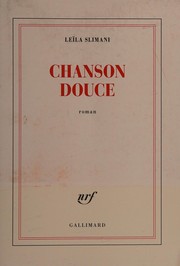
The killing is on the first page; the novel is the reconstruction. Short, cold and propulsive, and a useful early signal that the Goncourt is comfortable rewarding a thriller if the prose is exact.
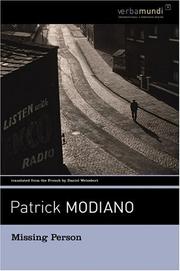
An amnesiac detective investigates his own identity through Occupation-era Paris. Modiano later took the Nobel for essentially writing this book over and over, so this is the efficient way in — and it introduces the wartime memory that half the later winners here are also about.
The Gary Affair and the Best-Loved Winners
IntermediateRead the two novels at the centre of the prize's most famous scandal alongside two accessible modern winners, and understand how the one-win rule shaped the prize's history.
▸ Study plan for this stage
Pace: Six to eight weeks for roughly 1,320 pages. Read The Roots of Heaven first, about 375 pages over two weeks — the order is load-bearing. The Life Before Us is under 200 pages and can be read in three or four evenings. The Houellebecq is around 290 pages, a week to ten days; The Great Swindle at about
- The one-win rule is the prize's defining constraint, and Romain Gary is the only person to have broken it: he won a second Goncourt under the invented identity of Émile Ajar, maintaining the pseudonym for years and using a cousin as the public front for the fictitious author.
- Read The Roots of Heaven before The Life Before Us. The scandal only means anything once you know that the man who wrote the second book had already won, and had already been filed by critics as a writer in decline.
- The Roots of Heaven follows a man campaigning to save the elephants in French Equatorial Africa who becomes a symbol that everyone around him — colonial officials, journalists, nationalists — appropriates for their own purposes. The ecological subject is genuinely early; the theme is what a cause do
- The Life Before Us is narrated by an Arab boy raised in a Paris tenement by an elderly Jewish former prostitute, in his own mangled French. The voice is the whole book, and it is the reason the critics who had written Gary off believed a new writer had arrived.
- Translating that voice is the central problem for any English edition, since the humour and pathos both come from broken idiom. It is worth reading a page aloud to hear how much of the effect survives.
- The Map and the Territory — catalogued in English without its leading article — is Houellebecq's most controlled novel: an artist becomes famous photographing Michelin maps, and a character named Michel Houellebecq is murdered partway through.
- Houellebecq is a genuinely divisive figure in French letters, and this is the novel most often cited by readers who dislike his other books. Whether the self-insertion is a joke, a defence or a provocation is left open by the text.
- The Great Swindle has two trench survivors selling war memorials that will never be built, and a crime writer taking the Goncourt was itself that year's controversy. It is the most plot-driven book on the path and the bridge into the heavier postwar novels.
- In The Roots of Heaven, who successfully appropriates Morel's campaign, and does the novel think the cause survives the appropriation?
- What specifically about The Life Before Us convinced critics it was a new writer? Identify the features, not the general impression.
- Gary won twice by deception. Does that make him the prize's greatest embarrassment or its most eloquent critic? Argue it from what the two books are like.
- In The Map and the Territory, what is achieved by murdering a character called Michel Houellebecq? Consider at least two readings.
- The Great Swindle is a genre novel that won a literary prize. What in it justifies the award, and what would a critic object to?
- Comparing The Roots of Heaven and The Life Before Us, what changed in Gary's writing between them — and how much of the change is voice rather than substance?
- Read a page of The Life Before Us aloud and write 200 words on how the translated voice works and where it strains.
- Write 400 words on the Gary affair as a problem for the prize, arguing first that the rule should have been enforced and then that the deception vindicated him.
- In The Map and the Territory, list every moment the novel comments on art markets and reputation. Then ask what the book is saying about literary prizes.
- Take the fraud at the centre of The Great Swindle and write a paragraph on why war memorials, specifically, make it work as more than a caper.
- Revise your one-sentence definition of the Goncourt's taste, and note what the Gary and Lemaitre cases forced you to add.
Next up: The prize has now shown you its scandal and its populism; the next stage shows it rewarding argument, in books that were events in French intellectual life.

A man in French Equatorial Africa campaigns to save the elephants and becomes a symbol nobody can control. Gary's first Goncourt — read it first of the pair, because the scandal only means anything once you know he had already won.
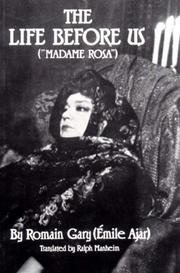
An Arab boy raised in a Paris tenement by an elderly Jewish former prostitute, narrated in his own mangled French. It won the Goncourt under the name Émile Ajar, a pseudonym Gary maintained for years using a cousin as a public front — the only person to win twice, and only by fraud. Also the better novel of the two.

An artist becomes famous photographing Michelin maps, and a character called Michel Houellebecq is murdered partway through. Houellebecq's most controlled and least deliberately offensive novel; note that English catalogue records usually file it without the leading article, as Map and the Territory.
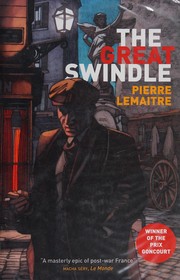
Two survivors of the trenches run a fraud selling war memorials that will never be built. A crime writer taking the Goncourt was itself the year's controversy; read it as the most plot-driven book on this path and as the bridge into the heavier postwar novels.
The Postwar Heavyweights
IntermediateTake on three mid-century winners that were events in French intellectual life, and see what the Goncourt looks like when it is rewarding argument as much as narrative.
▸ Study plan for this stage
Pace: Nine to ten weeks for about 1,260 pages. Man's Fate is around 285 pages but dense — two to three weeks. The Mandarins at roughly 590 pages is long and deliberately talky; four weeks at 25 pages a sitting. The Last of the Just is about 390 pages and needs three weeks, with the final section read slow
- Man's Fate takes the failed communist uprising in Shanghai in 1927 and turns it into the founding text of the committed French political novel — action written as a set of ethical positions held by men who expect to die.
- Malraux built a personal legend out of adventuring, and the relationship between that self-mythology and the novel's earnestness is part of what you are reading. The book is short enough that its density never becomes a slog.
- The Mandarins puts Paris intellectuals after the Liberation into a long argument about what to do with a victory they helped win, with characters transparently based on Sartre, Camus and Beauvoir herself.
- The novel is long and talky by design: the arguments are the events. Its central questions — whether to publish evidence of Soviet camps, whether political commitment permits private life — are the actual disputes of the period conducted in fiction.
- The Mandarins describes the collapse of the world Malraux's novel believed in, which is why the order matters: revolutionary solidarity in the first book, and in the second the same people discovering what their side has done.
- The Last of the Just follows eight centuries of one Jewish family, from a massacre at York to Auschwitz, structured around the legend of the thirty-six righteous men on whom the world depends.
- It was a publishing sensation on winning and was the first Goncourt to take the Holocaust as its direct subject. The final section is the hardest reading on the path so far and should be approached deliberately rather than stumbled into.
- The legend-driven structure raises a question the book knows it is raising: whether a mythic frame can hold a historical atrocity, or whether it consoles where consolation is not available.
- What ethical position does each major character in Man's Fate hold, and how does Malraux use action to test rather than illustrate it?
- In The Mandarins, what is actually at stake in the argument about publishing evidence of the camps? State both sides at their strongest.
- Beauvoir puts recognisable people into fiction. What does the novel gain from the disguise, and what does it lose?
- Read as a sequence, what does The Mandarins say about the world of Man's Fate? Is it a rebuttal, a sequel or an elegy?
- Does the thirty-six-righteous-men frame in The Last of the Just make the Holocaust more comprehensible or more bearable — and are those the same thing?
- These three were events in French intellectual life. What does it mean for a prize to reward a book for its argument, and does the Goncourt still do it?
- For Man's Fate, write one paragraph per major character stating his position on political violence, using only what he says and does.
- Take one extended argument scene from The Mandarins and reconstruct it as a dialogue outline, marking who concedes what. It is the fastest way to see how carefully Beauvoir built them.
- Write 300 words on whether The Mandarins would be a better novel with half the talk cut, and be specific about what would go.
- Chart the structure of The Last of the Just by century, noting how many pages each era receives. The acceleration is the book's argument.
- Revise your definition of the Goncourt's taste again, and note what these three add that the modern winners did not show.
Next up: You have read the prize at its most argumentative; the last stage takes the three winners that genuinely demand commitment.
The failed 1927 communist uprising in Shanghai, written by a man who built his own legend out of adventuring. The founding text of the committed French political novel, and short enough that its density never becomes a slog.
Paris intellectuals after the Liberation arguing about what to do with their victory, with characters transparently based on Sartre, Camus and Beauvoir herself. Long and talky by design — read it after Malraux, whose world it is describing the collapse of.

Eight centuries of one Jewish family, from a York massacre to Auschwitz, structured around the legend of the thirty-six righteous men. A publishing sensation on its win and the first Goncourt to take the Holocaust as its direct subject; place it last in this stage because the final section is the hardest reading here so far.
The Long and the Difficult
IntermediateFinish with the three winners that genuinely require commitment, and be able to say which of them earns its length.
▸ Study plan for this stage
Pace: Five to six months for roughly 1,910 pages, and the order is not negotiable. The Ogre at about 375 pages is the accessible difficulty — three weeks. The Proust volume at around 560 pages needs six to eight weeks at a deliberately slow pace; nobody reads it quickly and nothing is gained by trying. Th
- The Ogre follows a French garage mechanic taken prisoner in 1940 who ends up recruiting boys for a Nazi military academy, convinced throughout that he is protecting them. It won by unanimous vote of the academy, which is rare.
- The novel is dense with myth and symbol — the ogre, the carrier of children, inverted signs — but the story itself never stalls, which makes it the right first difficult book of the stage.
- Tournier's central technique is a narrator whose self-understanding is completely at odds with what he is doing, sustained without authorial comment. The reader supplies the judgement the book withholds.
- The Proust volume is the second part of In Search of Lost Time and the only part of it to win the Goncourt. The award outraged veterans' groups, who wanted the prize to go to a war novel rather than to a wealthy invalid writing about a seaside holiday.
- That controversy is the sharpest test of what a literary prize is for: whether it rewards the book that speaks to the moment or the book that will last. Both positions had serious defenders at the time.
- This volume is where the narrator moves from family interiors to Balbec, Saint-Loup, Elstir and the girls of the title, and it is where Proust's method becomes visible as method rather than as digression. Read the modern translation of the title rather than looking for the older Within a Budding Gro
- The Kindly Ones is nine hundred pages narrated by an unrepentant SS officer, written in French by an American, and it is the most divisive Goncourt of the century — hailed in France and largely condemned in the English-language press.
- The disagreement about it is genuine and unresolved, and it is about method: whether extended first-person immersion in a perpetrator's consciousness is a legitimate way to write about the Holocaust, or whether the novel's mythic and sexual material undermines its historical seriousness. This path d
- How does Tournier keep the reader's judgement active while the narrator of The Ogre offers none? Find the technique, not just the effect.
- What is the symbolic system of The Ogre, and does it clarify the historical material or aestheticise it?
- The veterans wanted a war novel. Make the strongest case for their objection to the Proust award, and then the strongest case against it.
- What changes in Proust's method in this volume compared with what you know of the first? Point to a specific passage where the method becomes visible.
- The Kindly Ones was received very differently in France and in English. What features of the book could account for the split?
- Having finished the path: what does the Goncourt reward? Compare your answer with the sentence you wrote in stage one and account for every revision.
- For The Ogre, keep a two-column note: what the narrator says he is doing, and what he is doing. Review it at the end; the divergence is the novel.
- Read the Proust volume with a fixed daily page count you can sustain, and write one sentence a day on what you actually read. The record matters more than the pace.
- Take one long Proust sentence and diagram its clauses. Doing this once explains more about the prose than any commentary.
- For The Kindly Ones, write 500 words stating the case for the novel and 500 against, drawing on the text rather than on reviews, and stop without a verdict.
- Rank all thirteen books on this path by how far each justifies its length, with one line of reasoning each.
- Write a final one-page account of what the Goncourt is for, and name the winner on this path that best embodies it and the one that least does.
Next up: This closes the path: you have read the prize across a century, from a genre puzzle to its most contested novel, and can meet any future winner knowing what tradition it is entering.

A French garage mechanic taken prisoner in 1940 ends up recruiting boys for a Nazi military academy, convinced he is protecting them. Dense with myth and symbol, and won the Goncourt by unanimous vote, which is rare — a good first difficult book because the story itself never stalls.

The second volume of In Search of Lost Time, and the only part of it to win the Goncourt — a decision that outraged veterans' groups, who wanted the prize to go to a war novel rather than to a wealthy invalid writing about a seaside holiday. Read this modern translation of the title rather than the older Within a Budding Grove, which most catalogues only return as part of an omnibus.
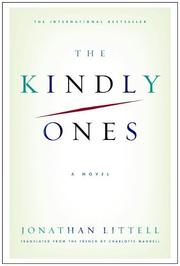
Nine hundred pages narrated by an unrepentant SS officer, written in French by an American. The most divisive Goncourt of the century — hailed in France, largely condemned in the English-language press — and by some distance the most punishing book on this path. It belongs at the end or nowhere.
Discussion
Keep reading
Paths that share books, cover the same subject, or open a related topic.