Easy Rawlins Reading Order: Where to Start
Walter Mosley's Easy Rawlins novels should be read in publication order, because that is also the order of Easy's own life: the series starts in 1948 and each book moves forward through Black Los Angeles decade by decade, so reading out of order spoils marriages, deaths and the standing of Easy's friend Mouse. This path covers the first twelve books, which take the story from Devil in a Blue Dress to the revival novels of the 2010s. There are further books after Charcoal Joe; by then you will not need a guide.
Start here: the first two
BeginnerMeet Easy, Mouse and postwar Los Angeles, and understand the series' engine — a Black veteran who solves problems because the police will not.
▸ Study plan for this stage
Pace: About a week for both. Devil in a Blue Dress runs a little over 200 pages and A Red Death about 280, and Mosley's chapters are four to six pages long, so they move faster than the period detail suggests. Give the first fifty pages of Devil in a Blue Dress room to breathe anyway: the voice is carryin
- The house on 116th Street is the engine, not the scenery. Easy takes the job in Devil in a Blue Dress because a mortgage payment is due, and property pressure recurs in nearly every book after it
- Easy is not a licensed investigator and does not want to be one. He works because the LAPD will not come into Watts and his neighbours will not talk to the LAPD
- The two voices: Easy narrates in careful, schooled English and drops into Texas dialect the moment he needs something from someone. Track when he switches and what it buys him
- Mouse, whose real name is Raymond Alexander, is the series' permanent moral problem — Easy's protection and Easy's guilt in the same body
- 1948 Los Angeles as a destination. Easy, Mouse and half the cast came from Texas and Louisiana in the Second Great Migration, and Mosley treats that as the defining fact about them
- A Red Death maps the Red Scare onto the same leverage: the IRS, an FBI agent and a Communist organiser are three ways of squeezing a Black man who owns something
- The favour ledger. Every case leaves Easy owing someone or being owed, and Mosley carries that balance forward between novels rather than resetting it
- Why does Easy accept DeWitt Albright's money, and what does that answer tell you about what the series thinks a detective story is for?
- What does Easy do at the end of Devil in a Blue Dress that he cannot undo, and how does A Red Death immediately charge him for it?
- How does Mosley use Easy's shifting speech register as a tool inside a scene rather than as characterisation?
- In A Red Death, who is actually threatening Easy — the IRS, the FBI, or the men in his own neighbourhood — and why is the answer not obvious?
- What does Mouse do for Easy that Easy cannot do for himself, and why does Easy keep flinching from it?
- Write down what Easy owns at the end of each book. Two entries now, and keep the list going: the property line is the clearest through-line in the whole series
- Keep a running page in your notes for Mouse — what he does, what Easy tells himself about it afterwards. By book five the gap between the two columns is the point
- Mark the dates. Devil in a Blue Dress is 1948 and A Red Death is 1953; write the year at the front of your notes for each book, because the series is a decade-by-decade history of Black Los Angeles and it is easy to lose the calendar
- Read the first chapter of Devil in a Blue Dress aloud. Mosley writes for the ear, and hearing it once retunes how you read the rest
Next up: You now know the debt Easy is carrying and what Mouse costs him, which is exactly what the 1990s run spends five books compounding.
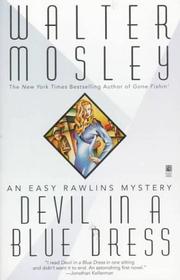
1948, Watts, a man out of a job and a white stranger paying him to find a woman. The first book and the only correct start: everything in the series follows from what Easy does here.
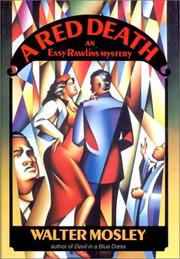
1953, the IRS and an FBI agent hunting a Communist organiser. It picks up Easy's property from book one directly, which is why order matters from the very beginning.
The 1990s core
IntermediateFollow the original run through the 1950s and 1960s, watching Easy's family and his own respectability accumulate as the stakes rise.
▸ Study plan for this stage
Pace: Five to six weeks, roughly a book every ten days. These run 250 to 350 pages each and the cases get more tangled, but the reason to slow down is the domestic material — Easy's marriage and his children take over stretches of White Butterfly and Black Betty, and skimming them will make the later book
- Whose death gets investigated. White Butterfly states the series' central argument outright: three Black women are murdered without urgency and the fourth victim, who is white, produces a task force
- Easy's respectability project — the buildings, the janitorial job, the family — and Mosley's steady demonstration that respectability does not protect him
- Jesus and Feather. Easy's improvised family arrives in these books and becomes the thing he can actually be blackmailed with
- Black Betty reaches back into Easy's Houston childhood, which is where the series starts treating Texas as unfinished business rather than backstory
- A Little Yellow Dog ends on the event that reorganises everything after it. Read it in place and do not read plot summaries of it first
- Gone Fishin' was published sixth but set in 1939. Mosley wrote it first and could not sell it until he was famous, and it explains the Easy-and-Mouse bond precisely when the previous book has made you need the explanation
- The 1950s and early 1960s as a moving background: restrictive covenants, the growth of Black home ownership, and the LAPD under Parker are all doing plot work
- What does White Butterfly say about which victims generate police attention, and how does Mosley make that argument through structure rather than speeches?
- What has Easy gained by Black Betty that he had not gained by A Red Death, and what has it cost him?
- Why does Mosley place Gone Fishin' after A Little Yellow Dog rather than at the start of the series, and what would you lose by reading it first?
- How does the arrival of Jesus and Feather change what a threat against Easy means?
- Where in these four books does Easy lie to himself, and how does the first-person narration let you see it happening?
- Keep the year-and-property list going. By the end of A Little Yellow Dog you should be able to state Easy's job, his address, his dependants and his standing with Mouse in one sentence per book
- After Gone Fishin', go back and reread the Mouse scenes in Devil in a Blue Dress. They read as a different book once you know what happened in Texas in 1939
- Note every time Easy is offered official employment or official protection and refuses it. The pattern is the series' argument about institutions
- Stop for a day after A Little Yellow Dog before starting Gone Fishin'. The tonal jump is deliberate and works better if you let the ending sit
Next up: The 1990s run leaves Easy at the end of something, and the 2000s books pick him up in a Los Angeles that is about to burn.
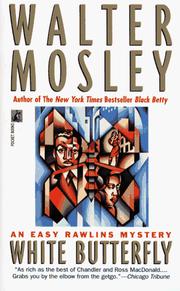
1956, and a serial killer the police only care about once a white victim appears. The book where the series' argument about whose death counts is stated most plainly.
1961, a missing housekeeper from Easy's Texas childhood, and Mouse out of prison. A turning point in Easy's personal life that later books never stop referring to.

1963, Easy working as a school custodian and trying to stay straight. It ends on the event that reshapes the rest of the series, so it cannot be read out of place.
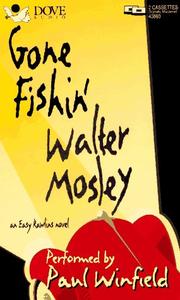
A prequel set in 1939 Texas, published after A Little Yellow Dog. Read it in publication order as Mosley intended: it explains Easy and Mouse's bond precisely when you most need it explained.
Watts, and the series at its peak
IntermediateRead the 2000s revival, in which the Watts riots become the centre of the series and Easy is a licensed investigator rather than a favour-doer.
▸ Study plan for this stage
Pace: Three to four weeks for the three books. Little Scarlet deserves to be read slowly and in as few sittings as possible; it is the shortest emotional distance Mosley ever wrote between a case and a city, and reading it in fragments flattens it.
- Bad Boy Brawly Brown returns after a six-year publishing gap and deals immediately with the aftermath of A Little Yellow Dog. It is a book about Black nationalist organising and about a man who has lost his footing
- Little Scarlet is set in the days directly after the August 1965 Watts uprising, with the LAPD asking Easy for help because no white officer can walk those streets. The inversion of the whole series premise is the point
- Easy becomes a licensed investigator in this stretch. Notice how much the licence does not change
- Cinnamon Kiss moves the action to San Francisco and to the counterculture, and puts Easy under a different kind of pressure — a sick child and a robbery he is seriously considering
- Mosley's post-riot Los Angeles is a changed physical place. Streets, businesses and the tone of every police encounter differ from White Butterfly, and the difference is deliberate
- The series' politics sharpen here. Where the early books show individual white leverage, these show institutions negotiating with a neighbourhood they cannot enter
- Why does Mosley set Little Scarlet in the immediate aftermath rather than during the uprising, and what does that timing let him do?
- What does the LAPD want from Easy in Little Scarlet, and what does he get in exchange that he could not get before?
- How does Bad Boy Brawly Brown handle the fallout of A Little Yellow Dog, and would the book work at all for a reader who skipped it?
- What is Easy actually afraid of in Cinnamon Kiss, and how is that different from what he feared in the 1950s books?
- Many readers name Little Scarlet the best in the series. Make the case for or against it against Devil in a Blue Dress
- Before Little Scarlet, spend twenty minutes reading a factual account of the 1965 Watts uprising. The novel assumes the outline and spends its pages on the aftermath
- Compare the first police encounter in Devil in a Blue Dress with the first police encounter in Little Scarlet, side by side. Seventeen years of series history is compressed into that difference
- Track Easy's licence: list what he can now do legally and what he still has to do the old way. The list is shorter than you expect
- Note where Mouse is in each of these three books. His absence is used as deliberately as his presence
Next up: Easy is at his most established and most exposed here, which is the exact position the final three books take apart.

1964, Black nationalist organising and a missing young man. The return after a six-year gap, and it deals directly with the aftermath of A Little Yellow Dog.
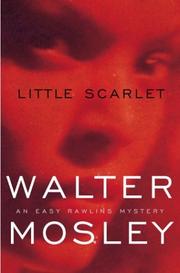
The days immediately after the 1965 Watts riots, with the LAPD asking Easy for help because no one else can walk the streets. Many readers consider it the best in the series.
1966, San Francisco, and a sick child forcing Easy toward a robbery. It follows Little Scarlet's changed Los Angeles closely.
The ending, and the revival
IntermediateReach the apparent end of the series and then the return, and be able to explain where a reader can reasonably stop.
▸ Study plan for this stage
Pace: Three weeks. Blonde Faith and Little Green should be read close together — Little Green picks up seconds after Blonde Faith ends, and a long gap between them wastes the effect Mosley built a six-year silence around. Charcoal Joe can wait a while afterwards.
- Blonde Faith closes the original arc on a cliff that stood unresolved from 2007 to 2013. It is a legitimate stopping point if you want one, and a lot of readers take it
- Little Green opens on the Sunset Strip in 1967, seconds after the previous book, and is meaningless read out of order. It is also the series' clearest engagement with the counterculture as seen from Watts
- Charcoal Joe has Easy running his own agency with partners — the fullest version of the professionalisation the series has been circling since he first refused a licence
- Mouse's standing across these three books is the real plot. Blonde Faith puts him in the worst position he has ever been in and the revival novels answer it
- Mosley's late style is looser and more reflective. Easy at fifty is a different narrator from Easy at twenty-eight, and the prose changes with him
- Where this path stops and the series does not. Mosley kept writing Easy Rawlins after Charcoal Joe, and there are two books this path leaves out of the middle: the story collection Six Easy Pieces, which sits between Bad Boy Brawly Brown and Little Scarlet, and Rose Gold, which sits between Little G
- What is unresolved at the end of Blonde Faith, and why did that ending work as a series conclusion for six years?
- How does Little Green use the gap between 1967 Watts and 1967 Sunset Strip, and what does Easy see there that the reader is meant to see differently?
- What has changed about how Easy earns a living by Charcoal Joe, and does the series treat that as a victory?
- Across twelve books, what has actually changed for Black Los Angeles and what has not? Answer with specific scenes rather than impressions
- If you were recommending a stopping point to someone, would you say Blonde Faith or Charcoal Joe, and why?
- Read Blonde Faith and Little Green within a fortnight of each other. Anything longer and the join stops working
- Finish the property-and-year list you started in stage one, then read it end to end. It is a twenty-year social history in about a page
- Write a paragraph on Mouse across all twelve books — what he is for, and what Mosley is arguing by keeping him around
- Decide deliberately whether you are stopping here or continuing. If continuing, the remaining novels run in publication order after Charcoal Joe, and the two mid-series books named above are the ones to backfill first
Next up: This is the end of the path: from here the series continues in publication order and you no longer need a map to follow it.

1967, Mouse accused of murder and Easy at his lowest. It closes the original arc on a cliff that stood for six years — a legitimate stopping point if you want one.

1967 again, picking up seconds after Blonde Faith on the Sunset Strip. The revival, and meaningless without the book before it.
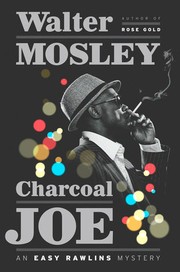
1968, Easy with his own agency and a client nobody sensible would take. The natural end of this path; the later novels continue the same publication order if you want to keep going.
Discussion
Keep reading
Paths that share books, cover the same subject, or open a related topic.