Best Books to Understand Walter Benjamin, in Order
This curriculum guides an intermediate reader into the full depth of Walter Benjamin's thought across four carefully sequenced stages. It begins with his most accessible and celebrated essays, builds toward his dense theoretical and historical writings, and closes with biographical and scholarly works that illuminate the man and his legacy as a whole.
The Essential Essays: First Encounters
IntermediateGain fluency in Benjamin's core concepts — aura, reproducibility, the storyteller, the flâneur — through his most celebrated and approachable essays, building the vocabulary needed for everything that follows.
▸ Study plan for this stage
Pace: 8–10 weeks, ~25–30 pages/day (with 2–3 reflection days per week). Start with "Illuminations" (4–5 weeks), then move to "Reflections" (3–4 weeks). Both collections contain essays of varying length; pace yourself through shorter pieces first to build momentum before tackling longer, denser essays.
- Aura: the unique presence and authenticity of an original work of art, and how mechanical reproduction destroys it
- Reproducibility and mass culture: how photography, film, and printing fundamentally alter our relationship to art and reality
- The storyteller vs. the novelist: oral tradition and narrative authority in the age of information
- The flâneur: the urban wanderer as a figure of modernity, observation, and detachment in the city
- Messianic time and historical materialism: Benjamin's critique of linear progress and his vision of revolutionary interruption
- Allegory and montage: fragmented, non-linear modes of meaning-making that resist totality
- The dialectical image: the collision of past and present that generates critical insight
- Commodity fetishism and phantasmagoria: how capitalism obscures material reality through spectacle
- What does Benjamin mean by 'aura,' and how does mechanical reproduction affect it? Give concrete examples from his essays.
- How does Benjamin distinguish between the storyteller and the novelist, and what does this distinction reveal about modernity?
- Who is the flâneur, and what is Benjamin's ambivalent attitude toward this figure as a model for critical observation?
- Explain Benjamin's critique of the idea of progress. How does his concept of messianic time challenge linear history?
- What is the relationship between allegory and montage in Benjamin's method? How do these techniques resist conventional meaning-making?
- How does Benjamin use the concept of the 'dialectical image' to read history and culture? Provide an example from the essays.
- Close-read 'The Work of Art in the Age of Mechanical Reproduction' (from Illuminations) and annotate every instance where Benjamin discusses aura. Then write a 2-page reflection on how this essay applies to digital reproduction and social media today.
- Compare Benjamin's treatment of the storyteller in 'The Storyteller' essay with a contemporary narrative form (podcast, TikTok, novel, or film). Write a 3-page analysis of how oral authority and narrative distance have shifted.
- Take a walk through an urban space (city street, shopping district, park) and practice flânerie: observe without a fixed destination for 60–90 minutes. Document your observations in a notebook, then write a 2-page reflection on what you noticed and how Benjamin's concept of the flâneur illuminates your experience.
- Create a visual montage (using collage, digital images, or drawings) that embodies Benjamin's idea of the 'dialectical image'—juxtapose past and present, or fragments that generate unexpected meaning. Write a 1-page artist's statement explaining your choices.
- Select one essay from 'Reflections' and outline its argument in a non-linear format (mind map, diagram, or fragmented notes). Then write a 2-page essay explaining how Benjamin's own fragmented style mirrors his critique of totality.
- Analyze a contemporary advertisement or luxury brand campaign through the lens of Benjamin's concept of 'phantasmagoria' and commodity fetishism. Write a 2–3 page critical reading that exposes how capitalism obscures material reality.
Next up: This stage equips you with Benjamin's essential vocabulary and conceptual toolkit—aura, reproducibility, the flâneur, messianic time—so that you can move into more specialized and difficult texts (such as the Arcades Project or Benjamin's writings on fascism and aesthetics) with confidence and the ability to recognize how these core ideas evolve and deepen in new contexts.

The indispensable starting point: Hannah Arendt's selection gathers Benjamin's most famous essays — 'The Work of Art in the Age of Mechanical Reproduction,' 'The Storyteller,' and 'Theses on the Philosophy of History' — with her landmark introductory essay that frames his life and thought for new readers.

Read immediately after Illuminations to broaden the picture: this companion volume collects his autobiographical prose, political essays, and the crucial 'Surrealism' and 'Naples' pieces, showing the range of his voice beyond the canonical essays.
Biography: The Life Behind the Work
IntermediateUnderstand Benjamin's intellectual biography, friendships, exile, and the historical pressures that shaped his writing, so that his theoretical obsessions feel grounded and urgent rather than abstract.
▸ Study plan for this stage
Pace: 4–5 weeks, ~40–50 pages/day. Start with Eiland's biography (approximately 400–450 pages), then move to Scholem's account (approximately 200–250 pages). Allow 1–2 weeks for Eiland, then 1–2 weeks for Scholem, with 1 week of overlap/review.
- Benjamin's formation in Weimar Germany: his early intellectual influences, family background, and the cultural ferment of 1920s Berlin
- The Frankfurt School connection and Benjamin's fraught relationship with Adorno and Horkheimer, particularly around funding and theoretical direction
- Benjamin's exile trajectory (1933 onwards): displacement from Germany, refuge in Paris, and the psychological/intellectual toll of statelessness
- The friendship with Gershom Scholem as intellectual anchor: how Scholem's Zionism and mysticism offered Benjamin both grounding and tension
- Benjamin's obsession with fragments, ruin, and historical catastrophe as rooted in lived experience of Weimar collapse and Nazi rise
- The material conditions of Benjamin's writing life: poverty, dependence on patrons, precarious publishing, and how these shaped his theoretical output
- Benjamin's messianic thinking and theology as responses to historical trauma, not abstract philosophy
- The suicide in Portbou (1940) as the tragic endpoint: understanding the desperation and historical forces that led to his death
- How did Benjamin's upbringing in a wealthy Berlin Jewish family and his early engagement with German Idealism shape his later theoretical concerns?
- What was the nature of Benjamin's relationship with the Frankfurt School, and how did economic dependence affect his intellectual independence?
- Trace Benjamin's geographical and psychological journey through exile: what were the key stations (Berlin, Paris, Ibiza, etc.) and what did each cost him?
- How did Benjamin's friendship with Scholem function as both intellectual partnership and personal lifeline, and where did they fundamentally disagree?
- In what ways do Benjamin's theoretical obsessions (allegory, ruin, messianism, the angel of history) emerge directly from his lived experience of historical catastrophe?
- What were the material circumstances of Benjamin's life (poverty, patronage, publishing struggles) and how did they constrain or enable his writing?
- Create a detailed timeline of Benjamin's life (1892–1940) marking key biographical events alongside major historical events (Weimar founding, Nazi rise, Spanish Civil War, etc.). Note which of Benjamin's major works were written during each period.
- Read Eiland's account of Benjamin's relationship with Adorno, then write a 2–3 page analysis of how financial dependence on the Frankfurt School may have influenced Benjamin's theoretical positions or silences.
- Compile a 'geography of exile' map showing Benjamin's movements 1933–1940 (Berlin → Paris → Ibiza → Marseille → Portbou). For each location, note how long he stayed, what he wrote, and what emotional/material pressures he faced.
- After reading Scholem's account, write a dialogue or letter exchange between Benjamin and Scholem on a point of disagreement (e.g., Zionism, messianism, or the nature of Jewish tradition). Ground it in specific passages from both books.
- Select one of Benjamin's major works mentioned in Eiland (e.g., *The Arcades Project*, *Theses on the Philosophy of History*, or *The Origin of German Tragic Drama*) and write a 1–2 page 'biography' of how that work emerged from Benjamin's life circumstances at the time.
- Create a character sketch of Benjamin based on Scholem's portrait of him as a friend: What were his habits, contradictions, vulnerabilities, and strengths as a person? How do these human qualities illuminate his theoretical work?
Next up: This stage grounds Benjamin's abstract theoretical concepts in the urgency of lived historical trauma and personal relationships, preparing you to engage with his actual texts (*The Arcades Project*, *Theses on the Philosophy of History*, essays on art and technology) not as timeless philosophy but as urgent interventions born from exile, friendship, and the collapse of European civilization.

The definitive scholarly biography, exhaustive yet readable; reading it now — after the essays but before the harder theory — lets you map every major concept onto the specific moment, friendship, or crisis that produced it.
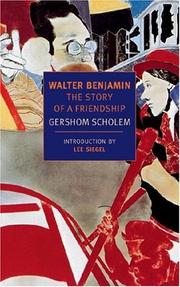
Benjamin's closest friend and intellectual sparring partner offers an intimate, first-person account of their decades-long dialogue; it illuminates the Jewish-mystical dimension of Benjamin's thought that Eiland's biography surveys but Scholem lived.
Theory of History and the Messianic
ExpertMaster Benjamin's philosophy of history — his critique of progress, his concept of 'now-time,' dialectical images, and the messianic — through his own late writings and the best scholarly guide to them.
▸ Study plan for this stage
Pace: 4–5 weeks, ~25–30 pages/day, with 2–3 days per week for reflection and note-taking
- Benjamin's critique of historicism and linear progress: rejecting the notion that history moves inevitably forward
- Jetztzeit (now-time): the revolutionary moment when the past becomes actionable in the present
- Dialectical images: the method of reading history as frozen constellations of contradictions that flash up in the present
- The messianic dimension of history: how redemption operates not as teleology but as interruption and rupture
- Weak messianism: the idea that even small, seemingly powerless acts carry historical and redemptive potential
- The angel of history: Benjamin's figure for how we must face the past while being propelled into the future
- Materialist historiography: grounding historical understanding in material conditions and class struggle rather than ideas
- The relationship between theory and praxis: how Benjamin's philosophy of history demands political engagement
- How does Benjamin's concept of Jetztzeit (now-time) differ from conventional historical periodization, and why is this distinction crucial to his messianic philosophy?
- What does Benjamin mean by 'dialectical images,' and how do they function as a method for reading history differently than traditional historians?
- How does Benjamin critique the idea of progress, and what alternative understanding of history does he propose?
- Explain the role of the messianic in Benjamin's philosophy of history: is it religious, political, or something else entirely?
- What is 'weak messianism,' and how does it relate to Benjamin's vision of revolutionary potential in everyday moments?
- How does Weber's interpretation in this book help clarify Benjamin's often cryptic and fragmentary late writings on history?
- Close-read one of Benjamin's Theses on the Concept of History (as discussed in Weber) and write a 500-word exegesis identifying the key historical claim and its messianic implications
- Create a visual map or constellation diagram showing how dialectical images work: select a historical moment and trace how past and present collide within it
- Write a comparative analysis (800 words) of Benjamin's critique of progress versus one other philosopher's view of history (e.g., Hegel, Marx, or a contemporary thinker)
- Annotate a passage from Weber's book that explains now-time, then translate that explanation into your own words and apply it to a contemporary political or cultural moment
- Develop a short essay (1000 words) on what 'weak messianism' might mean for political action today—how does Benjamin's philosophy speak to contemporary activism?
- Engage in a Socratic dialogue (written or recorded) with a peer: one person defends linear progress, the other defends Benjamin's messianic interruption; use specific concepts from Weber's book
Next up: By mastering Benjamin's messianic philosophy of history and his method of dialectical reading, you are now equipped to apply these frameworks to specific historical texts, artworks, and political moments—preparing you to engage with Benjamin's concrete analyses of modernity, technology, and culture in subsequent stages.

Weber's close readings of Benjamin's key conceptual terms ('translatability,' 'criticizability,' 'reproducibility') provide the most rigorous philosophical unpacking of the late theory, preparing you to read the Arcades Project without getting lost.
The Arcades Project and Its Scholarship
ExpertEngage seriously with Benjamin's monumental unfinished masterwork on 19th-century Paris, and then situate it within the broader scholarly conversation about its method, legacy, and meaning.
▸ Study plan for this stage
Pace: 8–10 weeks, ~40–50 pages/day, with 1–2 weeks per book for deep engagement and note-taking
- The Arcades Project as a methodological experiment: montage, constellation, and the rejection of linear narrative in favor of fragmentary, dialectical presentation
- Benjamin's concept of the 'dialectical image' and how it captures the historical truth of 19th-century commodity culture and urban modernity
- The archive as both material object and philosophical method: how Benjamin's actual notes, citations, and organizational principles embody his theoretical commitments
- Susan Buck-Morss's 'somatic history' and her argument that Benjamin's work is fundamentally about the body's sensory engagement with the historical world
- The relationship between Baudelaire, flânerie, and the figure of the collector in understanding Benjamin's approach to Paris and history
- The unfinished status of the Arcades Project: what this incompleteness reveals about Benjamin's method and the impossibility of totalization
- How Benjamin's work on the 19th century functions as a critique of both his own present (1930s–40s) and modernity itself
- The scholarly debates surrounding the Arcades Project's interpretability, coherence, and political implications
- What is the 'dialectical image' and how does Benjamin use it to analyze 19th-century Paris? How does this concept differ from conventional historical representation?
- How does the fragmentary, montage-like structure of the Arcades Project enact its own theoretical claims about history and meaning-making?
- What role does Benjamin's archive—his actual notes, citations, and organizational systems—play in understanding both the method and the content of the Arcades Project?
- How does Susan Buck-Morss's concept of 'somatic history' reframe our understanding of Benjamin's project, and what does it suggest about the relationship between the body, sensation, and historical knowledge?
- What is the significance of the figure of the flâneur and the collector in Benjamin's analysis of 19th-century Paris, and how do these figures relate to his broader historical methodology?
- How should we interpret the Arcades Project's unfinished state? What does its incompleteness tell us about Benjamin's philosophical and political commitments?
- Create a detailed outline of Andrew Benjamin's argument about the Arcades Project's method and significance. Identify his key disagreements with other scholars and trace how his interpretation shapes your reading of the primary text.
- Examine a single section of Benjamin's Archive (e.g., one of the major thematic clusters like 'Baudelaire' or 'Commodities'). Annotate the notes, trace the citations, and write a 2–3 page analysis of how the fragmentary form itself generates meaning.
- Construct a 'dialectical image' of your own based on a contemporary urban space or historical moment. Explain how this image captures contradictions and historical truths in the way Benjamin intended, and reflect on the method's strengths and limitations.
- Diagram the relationship between Benjamin's three key figures—the flâneur, the collector, and the allegorist—as they appear across all three texts. How do these figures embody different modes of historical engagement?
- Write a comparative essay (4–5 pages) on how Andrew Benjamin and Susan Buck-Morss each interpret the Arcades Project's significance. What does each scholar emphasize, and what are the consequences of their different approaches?
- Create an annotated bibliography of the secondary scholarship on the Arcades Project that the three texts reference. Organize it by interpretive school (e.g., Marxist, phenomenological, aesthetic) and write brief notes on how each approach illuminates different aspects of Benjamin's work.
Next up: This stage equips you with deep familiarity with Benjamin's most ambitious and methodologically innovative work, positioning you to explore how the Arcades Project's insights apply to specific historical problems and to engage with Benjamin's other writings on aesthetics, technology, and politics with fuller understanding of his underlying philosophical commitments.

The summit of the curriculum: Benjamin's vast constellation of quotations, fragments, and 'convolutes' on capitalism, modernity, and urban experience. Read it now — after biography, essays, and theory — so its method feels like a culmination rather than a chaos.

A visually rich companion of Benjamin's notebooks, sketches, and manuscript pages that makes the working process of the Arcades Project tangible, offering a humanizing coda to the theoretical monument you have just traversed.
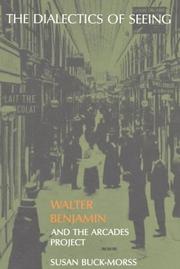
The finest scholarly guide to the Arcades Project: Buck-Morss reconstructs Benjamin's method, his sources, and his visual thinking with extraordinary clarity, and reading it alongside or just after the Arcades Project consolidates everything the curriculum has built.
Discussion
Keep reading
Paths that share books, cover the same subject, or open a related topic.