Earthsea Reading Order: Where to Start
This curriculum guides you through Ursula K. Le Guin's Earthsea in the order that best builds emotional and thematic understanding — starting with the original trilogy that established the world, moving into the later novels that deepen and complicate it, and finally exploring the short fiction that fills in its corners. Each stage builds on the last, so that by the end you experience Earthsea as Le Guin herself expanded and revisited it over five decades.
The Original Trilogy — Foundations of Earthsea
BeginnerUnderstand the world of Earthsea: its magic system, its archipelago setting, its core characters, and the philosophical themes of balance, shadow, and death that underpin everything that follows.
▸ Study plan for this stage
Pace: 6–8 weeks total: Week 1–2 — A Wizard of Earthsea (~20–25 pages/day); Week 3–4 — The Tombs of Atuan (~20 pages/day); Week 5–6 — The Farthest Shore (~20–25 pages/day); Week 7–8 — review, reflection, and exercises. All three novels are short, so a relaxed pace of 20–25 pages/day leaves ample time for j
- The True Name system: in Earthsea, every person, creature, and thing has a secret true name that gives power over it — knowing a name is knowing an essence.
- The Balance (the Equilibrium): magic in Earthsea is not free; every act of power has a consequence, and the health of the world depends on keeping forces in proportion.
- Ged's shadow and the Jungian shadow-self: in A Wizard of Earthsea, the shadow Ged unleashes represents the denied, dark parts of the self — integration, not destruction, is the resolution.
- The Labyrinth and the Tombs of Atuan: Tenar's world is one of darkness, ritual, and imprisonment; her arc is about reclaiming identity and agency from an institution that erased her name.
- The hole in the world / the breach in the wall between life and death: in The Farthest Shore, a wizard named Cob has torn open a passage that drains magic and meaning from the living world.
- Death as natural and necessary: Le Guin consistently frames death not as an enemy to be defeated but as an essential part of the Balance — the attempt to escape it is the trilogy's central danger.
- Ged as the Archmage and mentor: across the three books, Ged moves from reckless student to wise guide, embodying the cost and responsibility of power.
- The Archipelago as a living world: the islands, languages, and cultures of Earthsea are not mere backdrop — they reflect the diversity and interdependence that the Balance requires.
- In A Wizard of Earthsea, why does Ged ultimately have to embrace rather than destroy his shadow, and what does this resolution say about the nature of the self?
- How does the magic system's reliance on true names reinforce the trilogy's broader philosophical themes of knowledge, responsibility, and power?
- What does Tenar's journey in The Tombs of Atuan reveal about identity — specifically, what is lost when a name is taken away, and what is regained when it is restored?
- In The Farthest Shore, what is the symbolic significance of the hole Cob has made, and why does Le Guin frame the desire for immortality as a catastrophic act rather than a noble one?
- How does the concept of the Equilibrium function differently in each of the three books — what is out of balance in each, and how is balance restored?
- By the end of The Farthest Shore, Ged has spent all his power. What does Le Guin suggest about the relationship between sacrifice, wisdom, and the end of a heroic life?
- True Name Journal: After finishing A Wizard of Earthsea, write a short personal essay (1–2 pages) exploring what your own 'true name' might represent — what aspects of yourself you keep hidden, and what it would mean to fully own them. Connect this explicitly to Ged's confrontation with his shadow.
- Archipelago Map: Draw or annotate a map of the Earthsea archipelago as you read, marking every island visited across all three books, noting one cultural or geographical detail per island. This builds a concrete sense of the world's diversity and scale.
- Balance Ledger: For each major act of magic in all three books, create a two-column ledger — 'What was gained' vs. 'What it cost.' By the end of the trilogy, review the ledger and write a paragraph summarizing what Le Guin's magic system argues about power.
- Character Arc Timeline: Create a visual timeline of Ged across all three novels, marking key turning points in his character. Annotate each point with a quote from the text. Consider: how does his relationship to power change from Roke to the dry land?
- Comparative Theme Essay: Write a 2–3 page essay comparing how 'darkness' functions differently in A Wizard of Earthsea (the shadow) versus The Tombs of Atuan (the literal underground labyrinth and the Nameless Ones). What is Le Guin saying about darkness in each case?
- Re-read the Ending of The Farthest Shore: Re-read the final three chapters slowly, then write a one-page reflection on Le Guin's treatment of death and endings. Does the conclusion feel like a defeat, a triumph, or something else entirely — and why?
Next up: Mastering the trilogy's foundational rules — the true name system, the Equilibrium, and the necessity of death — gives the reader the philosophical vocabulary needed to appreciate how Tehanu and the later works deliberately challenge, complicate, and expand everything the original three books established.

The essential starting point — it introduces Ged, the magic of True Names, and the central metaphor of confronting one's own shadow. All later Earthsea works assume familiarity with this book.
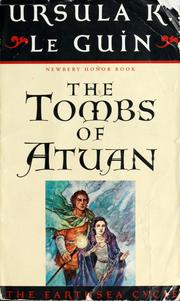
Shifts perspective to a young priestess, Tenar, expanding the world beyond Ged and introducing themes of captivity, faith, and liberation. Reading it second lets you see Earthsea through fresh eyes while Ged's legend is still new.
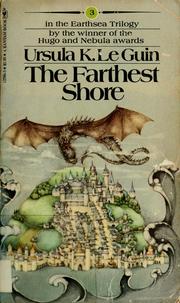
Completes the original trilogy with a meditation on mortality and the cost of immortality. It pays off the themes seeded in the first two books and brings Ged's arc to a close — essential before moving to the later novels.
The Later Novels — Earthsea Revisited and Reimagined
IntermediateExperience Le Guin's mature return to Earthsea, in which she revisits and challenges the assumptions of the original trilogy — particularly around gender, power, and the role of women — and follows Tenar and a new generation of characters.
▸ Study plan for this stage
Pace: 6–7 weeks total: Weeks 1–4 for Tehanu (~20–25 pages/day, allowing time for reflection on its quieter, denser prose), and Weeks 5–7 for The Other Wind (~25–30 pages/day). Budget at least one full rest/reflection day per week to journal and revisit key passages.
- Deconstruction of the Archmage myth: Tehanu reframes Ged's loss of power not as tragedy but as an invitation to examine what masculine heroism costs — and conceals
- Tenar as protagonist: her interiority, domestic life, and hard-won wisdom are centered as legitimate and powerful, directly challenging the male-dominated lens of the original trilogy
- The 'other wind' as cosmological revision: Le Guin dismantles the dry land of the dead established in the earlier books, revealing it as a historical error rather than an eternal truth — showing that even the world's foundations can be reimagined
- The child Therru/Tehanu: her burned, scarred body and her dragon nature make her a symbol of the marginalized, the damaged, and the transformative — those whom power overlooks but cannot ultimately contain
- Gender and institutional power: both novels interrogate the all-male mage system on Roke, asking what knowledge and magic have been suppressed or distorted by excluding women
- The living and the dead — renegotiating the boundary: The Other Wind's central crisis forces characters to question inherited cosmology and find a more just relationship between the living world and the afterlife
- Healing as a form of power: tending, nurturing, and surviving trauma (Tenar's life, Therru's recovery) are recast as acts of profound agency, not passivity
- Continuity and change across the cycle: both novels reward readers who remember the earlier trilogy, using callbacks and reversals to deepen meaning rather than simply extend plot
- How does Tehanu reposition Tenar — last seen as a young woman in The Tombs of Atuan — and what does her middle-aged, domestic life argue about where meaningful story actually lives?
- Ged arrives in Tehanu stripped of his wizardly power. How does Le Guin use his diminishment to critique the heroic arc she herself constructed in A Wizard of Earthsea?
- Who is Therru, and how does her dual identity as a burned child and a creature of dragon-fire function as the novel's central symbol?
- In The Other Wind, what is fundamentally wrong with the dry land of the dead, and what does correcting it require of the living characters — practically and philosophically?
- How do both novels treat the Roke mages and the institution they represent? What does Le Guin suggest must change, and what resistance does that change meet?
- Across both novels, what new vision of balance (the concept central to the original trilogy) emerges — and how does it differ from the equilibrium Ged sought in the earlier books?
- Close-reading journal: After finishing Tehanu, find three scenes where domestic or caregiving labor is described in detail (e.g., tending Therru's wounds, farm work). Write a paragraph on each arguing how Le Guin frames these acts as a form of power or knowledge.
- Character comparison essay (500–800 words): Compare Ged in A Wizard of Earthsea (from memory or notes) with Ged in Tehanu. Focus specifically on silence, shame, and identity — what has he lost, what has he gained, and what does Le Guin seem to be saying by writing him this way?
- Cosmology mapping: Draw or diagram the structure of the afterlife as it is understood at the START of The Other Wind (inherited from the earlier trilogy), then draw it again as it is understood at the END. Annotate what changed, who drove the change, and what it cost.
- Thematic tracking log: As you read The Other Wind, keep a running list every time a character questions or defies an inherited rule or tradition. At the end, review the list — what pattern emerges about how Le Guin thinks change happens in societies and cosmologies?
- Perspective rewrite: Choose one scene in Tehanu told from Tenar's point of view and rewrite a single page from Ged's perspective. Then reflect in a short paragraph: what does the original choice of perspective reveal that your rewrite obscures?
- Synthesis discussion or essay: After both books, write or discuss — 'Le Guin returned to Earthsea to fix something.' What was it? Use specific evidence from both Tehanu and The Other Wind to argue what she believed needed correcting and whether you think she succeeded.
Next up: By experiencing Le Guin's willingness to dismantle and rebuild even her own mythology — questioning gender, death, and power at their roots — the reader is prepared to engage with the short fiction and essays of Earthsea, where these themes are explored in concentrated, experimental, and sometimes explicitly autobiographical form.
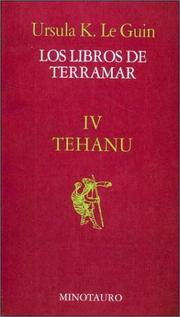
Written 18 years after the trilogy, this direct sequel to The Tombs of Atuan deliberately subverts the heroic arc of the earlier books. Reading it after the trilogy makes its quiet, radical reframing of power and womanhood land with full force.
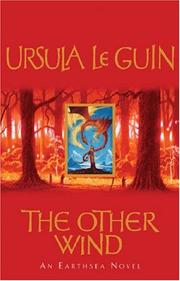
The final novel, bringing together characters from across the entire series to resolve the great unfinished question about the land of the dead. It rewards readers who know the full trilogy and Tehanu before arriving here.
The Short Fiction — The World in Full
IntermediateFill in the gaps, side stories, and thematic experiments of Earthsea through Le Guin's short fiction, gaining a richer, more complete picture of the world's history, peoples, and ideas.
▸ Study plan for this stage
Pace: 2–3 weeks, ~20–25 pages/day; Tales from Earthsea contains five stories plus an essay ("A Description of Earthsea"), so treat each story as its own reading unit (1–3 days each) and reserve 2–3 days at the end for the essay and a full review session.
- The evolution of the Hardic school of wizardry — its founding, politics, and institutional culture as revealed in 'The Finder' and 'A Description of Earthsea'
- Gender, power, and exclusion: how women's magic (the Roke-excluded witches and the Pelnish lore) operates in the margins of a male-dominated system, especially in 'Darkrose and Diamond' and 'Dragonfly'
- The nature of dragons as neither wholly good nor evil — liminal, truth-bound creatures whose language IS the Old Speech, explored most fully in 'Dragonfly'
- The Old Speech (Language of the Making) as a living cosmological force, not merely a tool, and what it means that dragons cannot lie in it
- Earthsea's social underbelly: class, poverty, and the lives of ordinary people who are not Archmages or kings, foregrounded in 'The Finder' and 'Darkrose and Diamond'
- Institutional corruption and reform: how the school on Roke calcifies, excludes, and must be periodically renewed — a direct thematic bridge to the changes Ged initiates in the main novels
- Le Guin's use of the short form to conduct thematic experiments — each story tests a single 'what if' about Earthsea's rules, history, or social structure
- The 'Description of Earthsea' essay as world-building document: how Le Guin herself frames geography, history, and magic as a living, revisable mythology
- How does 'The Finder' reframe the founding of the school on Roke, and what does it reveal about the compromises and exclusions baked into that founding moment?
- In 'Darkrose and Diamond,' what does Diamond's choice between music and magic argue about the relationship between art, identity, and power in Earthsea?
- How does 'Dragonfly' challenge the gender rules of Roke, and in what ways does it set up the transformation of those rules that readers of the later novels have already witnessed?
- What does the collection as a whole suggest about whose stories the main Earthsea novels left out, and why does Le Guin return to fill those gaps?
- How does 'A Description of Earthsea' function differently from the fiction — what does reading it as an essay rather than a story change about how you understand the world's construction?
- Across the five stories, what consistent critique of institutions (schools, guilds, gender hierarchies) does Le Guin develop, and how does it connect to the arc of the main novels?
- Story-by-story theme log: After finishing each story, write a single paragraph identifying (1) which gap in Earthsea's history or society it fills, and (2) one idea it adds that the main novels never addressed directly.
- Character marginalization map: Create a simple chart listing the protagonist of each story alongside their gender, social class, and relationship to institutional power (insider/outsider/excluded). Look for patterns across all five stories and write a short reflection on what Le Guin is arguing through her choice of protagonists.
- Close-read the Old Speech: Select two passages — one from 'The Finder' and one from 'Dragonfly' — where the Old Speech or dragon-language is used or discussed. Annotate both for what they reveal about the cosmological rules of magic, then compare: has Le Guin's conception shifted, deepened, or stayed consistent?
- Essay vs. fiction comparison: Read 'A Description of Earthsea' and flag three facts or details that directly illuminate or complicate something from one of the five stories. Write a one-page reflection on how the essay and the fiction work together as a single document of world-building.
- Rewrite an excluded perspective: Choose a scene from any of the five stories told from the point of view of an institutional insider (a Roke Master, a guild member, a village elder). Write one page retelling that scene from their perspective — then reflect on how the shift in viewpoint changes the story's moral weight.
- Thematic bridge essay: In 300–400 words, argue how the reforms and revelations in 'Dragonfly' feel inevitable given what 'The Finder' reveals about Roke's founding. Use specific textual evidence from both stories to build your case.
Next up: By mapping the full social, historical, and institutional texture of Earthsea through its short fiction, the reader is now equipped to engage with Le Guin's ideas at their most philosophical and self-aware — making the next stage's deeper critical or thematic analysis feel grounded in a genuinely complete picture of the world.
A collection of five stories set across different eras of Earthsea history, including the founding of Roke and a story bridging Tehanu and The Other Wind. Best read after the novels so the historical and character references resonate fully.
Discussion
Keep reading
Paths that share books, cover the same subject, or open a related topic.