Best Books to Understand Seneca, in Reading Order
This curriculum moves from an accessible first encounter with Seneca's world and ideas, through his own writings in the best modern translations, into the historical and philosophical depths of his life at Nero's court and his place in the Stoic tradition. Each stage builds the vocabulary, context, and intimacy with Seneca's voice needed to fully appreciate the next, ending with advanced scholarly and comparative reading for those who want to understand him as a thinker, a politician, and a man.
First Encounters: Who Was Seneca?
BeginnerGain a vivid, readable introduction to Seneca's life, times, and reputation before opening a single letter — so his words land with full biographical and historical weight.
▸ Study plan for this stage
Pace: 4–5 weeks, ~40–50 pages/day. Start with "Dying Every Day" (approx. 300 pages) over 2 weeks, then "How to Be a Stoic" (approx. 250 pages) over 2–3 weeks, allowing time for reflection between books.
- Seneca's dual life: powerful Roman administrator and moral philosopher wrestling with wealth, politics, and virtue
- The historical context of the early Roman Empire under Nero—court intrigue, power, and the constant threat of death
- Seneca's evolution from ambitious courtier to advocate of detachment and inner freedom
- Stoicism as a practical philosophy for managing emotions, fear, and external circumstances beyond our control
- The tension between Seneca's ideals and his actions—his hypocrisy as a window into human struggle
- Key Stoic concepts: virtue as the only true good, indifference to externals, the dichotomy of control, and living in accordance with reason
- Seneca's legacy: how his letters and essays became a bridge between ancient Stoicism and modern life
- What were the major events and relationships that shaped Seneca's life, and how did his position under Nero influence his philosophy?
- How did Seneca's circumstances—his wealth, political power, and proximity to danger—create the central tension in his life and thought?
- What is Stoicism, and how does Seneca exemplify both its ideals and its practical challenges?
- What does it mean to live according to nature and reason in Stoic philosophy, and why did Seneca emphasize this despite his own struggles?
- How do Seneca's letters and essays function as a form of philosophical therapy, and what makes them relevant to modern readers?
- What is the dichotomy of control, and how does understanding it change the way we approach life's challenges?
- Create a timeline of Seneca's life (birth to death) marking major political events, relationships with emperors, and shifts in his philosophical thinking. Note where Romm's narrative reveals turning points.
- Write a character sketch of Seneca based on 'Dying Every Day,' capturing both his ambitions and his moral convictions. Then identify 2–3 moments where these conflict.
- After finishing Romm, write a one-page reflection: 'What would Seneca advise me about?' Choose a personal worry or external circumstance you can't control, then apply Stoic principles from 'How to Be a Stoic' to it.
- Create a 'Seneca's Contradictions' chart: list his ideals in one column and his actual behaviors in another (e.g., preached poverty but was wealthy). Discuss why understanding these contradictions matters for reading his letters later.
- Read one short passage from 'How to Be a Stoic' (Pigliucci's modern examples) and one historical anecdote from 'Dying Every Day' side by side. Write a paragraph on how Seneca's ancient struggles mirror modern dilemmas.
- Compile a glossary of key Stoic terms from both books (virtue, indifferent, dichotomy of control, passion, etc.) with definitions in your own words and one example from Seneca's life for each.
Next up: This stage transforms Seneca from a historical figure into a living voice—you now understand the man behind the philosophy, the pressures he faced, and the Stoic framework he used to navigate them, preparing you to read his actual letters and essays with biographical depth and philosophical comprehension.
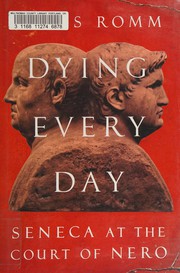
A gripping, scholarly yet accessible narrative of Seneca's life under Nero — the perfect orientation before reading Seneca himself. It answers the essential question: who was this man, and why does he matter?
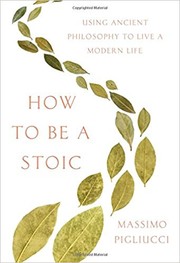
A gentle, modern introduction to Stoic philosophy using Epictetus as a guide, giving the beginner the core vocabulary — virtue, indifferents, the dichotomy of control — that Seneca assumes his readers already share.
Seneca's Own Voice: The Letters
BeginnerRead Seneca's most beloved and personal work in a superb modern translation, absorbing his practical Stoicism letter by letter, in the order he wrote them.
▸ Study plan for this stage
Pace: 8–10 weeks, ~20–25 pages/day (approximately 150 pages per week across both books)
- Virtue as the sole true good: Seneca's argument that external circumstances (wealth, health, reputation) are indifferents and only virtue determines a good life
- The practice of premeditatio malorum (negative visualization): mentally rehearsing hardships to reduce fear and build resilience
- Emotional regulation through reason: how to examine and redirect destructive emotions like anger, grief, and fear using rational analysis
- The role of conscience (conscientia) and self-examination: daily reflection on one's actions and progress toward wisdom
- Death as a natural, indifferent event: understanding mortality not as evil but as a necessary part of existence that liberates us from fear
- Friendship and community as essential to virtue: the importance of wise mentors, peer relationships, and contributing to the common good
- Gradual progress (proficiens) over perfection: accepting that becoming wise is a lifelong journey, not an instant achievement
- Simplicity and detachment from luxury: practicing moderation to strengthen the mind and reduce dependence on external things
- According to Seneca in the Letters, why is virtue the only true good, and how does this change the way we should respond to loss, illness, or misfortune?
- What is premeditatio malorum, and how does Seneca argue that imagining future hardships actually reduces suffering rather than increasing it?
- How does Seneca distinguish between emotions we cannot help feeling and the judgments we make about them, and what role does reason play in managing destructive emotions?
- What does Seneca mean by 'indifferents' (adiaphora), and what examples does he give of things that are neither good nor evil in themselves?
- In 'How to Die,' how does Seneca reframe death, and what practical advice does he offer for living without fear of mortality?
- What is the significance of daily self-examination (conscientia) in Seneca's Letters, and what should a practitioner look for when reviewing their day?
- Daily journaling: Each evening, spend 10–15 minutes reviewing your day as Seneca recommends—note moments where you acted virtuously, where you were ruled by emotion, and what you would do differently. Track patterns over weeks.
- Premeditatio malorum practice: Once or twice weekly, spend 15 minutes imagining a realistic hardship (loss of job, illness, criticism, financial setback). Write down your initial fear, then use Seneca's reasoning to reframe it as manageable or indifferent.
- Virtue inventory: Create a personal list of what you consider truly good (virtue, wisdom, integrity, courage) versus what you've been taught to want (wealth, status, comfort). Revisit this monthly and notice shifts in your thinking.
- Simplicity challenge: For one week, practice eating plain food, wearing simple clothes, or using only basic necessities. Reflect on how this affects your mind and your dependence on luxury.
- Letter dialogue: Choose one letter from the Letters that resonates with a current challenge in your life. Write a response letter to Seneca, asking him questions or testing his advice against your situation.
- Mentor conversation: Identify a wise person in your life (real or historical) and write out a dialogue between yourself and that person about a moral question, using Seneca's method of inquiry and reasoning.
Next up: This stage grounds you in Seneca's most intimate and practical teachings, establishing the core principles of Stoic virtue and emotional resilience that you'll now examine more systematically through his essays and rhetorical works in the next stage.
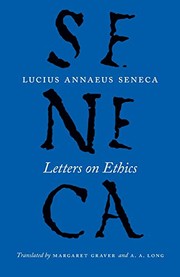
Margaret Graver and A. A. Long's 2015 translation (University of Chicago Press) is the most accurate and readable modern English version of all 124 Epistulae Morales — the essential Seneca text, read first in full.

James Romm's selection and translation of Seneca's writings on death provides a focused thematic companion immediately after the Letters, deepening one of Seneca's central preoccupations in a slim, digestible volume.
The Essays: Stoicism in Practice
IntermediateWork through Seneca's major prose essays to see his Stoic philosophy applied to anger, mercy, the good life, and time — moving from personal letters to sustained philosophical argument.
▸ Study plan for this stage
Pace: 4–5 weeks, ~25–30 pages/day, with 2–3 days per week for reflection and exercises
- The dichotomy of control: distinguishing between what is in your power (judgments, desires, actions) and what is not (external events, others' opinions, fortune)
- Hardship as a tool for virtue: how adversity tests and strengthens character rather than diminishing the good life
- The Stoic good life: defined by virtue and wisdom rather than wealth, health, or pleasure
- Anger as a destructive passion rooted in false judgments about harm and injustice
- Mercy as rational compassion: understanding how the Stoic sage responds to human weakness without losing principle
- The role of time and mortality: using awareness of life's brevity to prioritize what truly matters
- Practical wisdom (phronesis): applying Stoic principles to everyday situations and relationships
- What does Seneca mean by the 'dichotomy of control,' and how does this principle help you navigate hardship?
- According to Seneca, why is hardship necessary for developing virtue, and how does this reframe the concept of happiness?
- How does Seneca distinguish between anger and other emotions, and what false judgments does anger rely on?
- What is Seneca's definition of mercy, and how does it differ from weakness or sentimentality?
- How should awareness of human mortality and the brevity of life influence your daily choices and priorities?
- What practical steps does Seneca recommend for managing anger in real relationships and conflicts?
- Daily reflection journal: Each evening, identify one situation where you faced adversity or frustration. Write down what was in your control and what was not, then note how Seneca's principles might have helped you respond differently.
- Anger audit: Track moments when you felt anger over 3–4 days. For each instance, identify the false judgment underlying it (e.g., 'I was wronged,' 'This shouldn't happen'). Reframe using Seneca's logic.
- Hardship reframe: Choose one current difficulty in your life. Write a 1–2 page reflection on how this hardship might be strengthening a specific virtue (courage, patience, wisdom). Use examples from the essays.
- Mercy in practice: Identify someone you resent or judge harshly. Write a compassionate analysis of their situation using Seneca's framework—what weaknesses or ignorance might explain their behavior?
- Mortality meditation: Spend 10 minutes daily reflecting on the brevity of life. Write three specific ways this awareness changes how you prioritize your time and relationships.
- Essay dialogue: Choose one key passage from either book and write a dialogue between yourself and Seneca, questioning his claims and working through how they apply to a modern situation you face.
Next up: This stage grounds Stoic theory in concrete emotional and ethical challenges, preparing you to explore Seneca's letters and more intimate philosophical correspondence, where he applies these principles to friendship, learning, and the journey toward wisdom.

Elaine Fantham's translation (University of Chicago Press) collects the key dialogues — On Providence, On the Shortness of Life, On Tranquility of Mind, On the Happy Life — in one volume, ideal for reading the essays as a coherent body of thought.

Robert Kaster and Martha Nussbaum's translation of On Anger and On Clemency (University of Chicago Press) tackles Seneca's most politically charged essays, essential for understanding his role advising Nero and his theory of the emotions.
Seneca and the Stoic Tradition
IntermediatePlace Seneca within the broader history of Stoic philosophy and compare him with his predecessors and successors, building a richer philosophical framework around his ideas.
▸ Study plan for this stage
Pace: 6–7 weeks, ~25–30 pages/day (alternating between the two books to build comparative understanding)
- The historical development of Stoicism from the Early Stoa (Zeno, Chrysippus) through the Middle Stoa (Panaetius, Posidonius) to the Roman Stoa (Seneca, Marcus Aurelius)
- Core Stoic physics and metaphysics: the role of logos, divine reason pervading the cosmos, and determinism versus human agency
- The Stoic ethics of virtue as the sole good and the path to eudaimonia (flourishing) through living in accordance with nature and reason
- Seneca's innovations and adaptations within Stoicism: his emphasis on practical psychology, emotional regulation, and the therapeutic role of philosophy
- Marcus Aurelius as a later Roman Stoic: how his meditations reflect, refine, and sometimes diverge from earlier Stoic doctrine
- The relationship between Stoic theory and practice: how both Seneca and Marcus Aurelius translate abstract principles into lived wisdom
- Key differences in emphasis between Seneca's rhetorical, persuasive approach and Marcus Aurelius's introspective, personal approach to Stoic philosophy
- How did Stoicism evolve from Zeno and the Early Stoa through Seneca and Marcus Aurelius, and what were the major philosophical shifts at each stage?
- What is the Stoic concept of logos, and how does it function in both the cosmos and human reason according to Sandbach's account?
- How do Seneca and Marcus Aurelius each define virtue as the highest good, and what role does living 'according to nature' play in their ethical frameworks?
- What are the key differences between Seneca's approach to Stoicism (as presented in his works) and Marcus Aurelius's approach, particularly in tone and application?
- How do both Seneca and Marcus Aurelius address the Stoic paradox of determinism and moral responsibility—if all is fated, how can we be responsible for our choices?
- What practical techniques do Seneca and Marcus Aurelius recommend for managing emotions and achieving tranquility, and how do these reflect broader Stoic principles?
- Create a timeline chart mapping the major Stoic philosophers from Zeno to Marcus Aurelius, noting key doctrinal contributions of each school (Early, Middle, Roman Stoa) using Sandbach as your primary source.
- Read 3–4 key passages from Seneca's letters or essays (referenced in Sandbach or available separately) and annotate them against Sandbach's explanation of Stoic doctrine to identify where Seneca innovates or emphasizes particular ideas.
- Comparative passage analysis: select 5 passages from Marcus Aurelius's Meditations that directly echo or develop Stoic principles explained in Sandbach, and write a 1–2 page reflection on how Marcus Aurelius personalizes these doctrines.
- Write a 3–4 page essay: 'Seneca and Marcus Aurelius as Stoic Practitioners' examining how each philosopher translates Stoic theory into practical wisdom, using specific textual examples from both books.
- Create a concept map showing the relationships between Stoic physics (logos, determinism), metaphysics (the divine cosmos), and ethics (virtue, living according to nature), using Sandbach's framework and illustrating how Seneca and Marcus Aurelius apply these ideas.
- Dialectical journal: for 10–15 key passages from Meditations, record the passage, identify the Stoic principle it reflects (using Sandbach's taxonomy), and note how it differs from or extends Seneca's treatment of the same principle.
Next up: This stage establishes Seneca's place within the full arc of Stoic thought and shows how his ideas were refined and internalized by later practitioners like Marcus Aurelius, preparing you to examine Seneca's specific works in depth and understand how his philosophy addresses particular life challenges and ethical dilemmas.

A concise, authoritative scholarly survey of Stoic philosophy from Zeno to Marcus Aurelius — gives the reader the full intellectual tradition so Seneca's innovations and debts become clear.

Reading Marcus Aurelius after Seneca is the classic comparison: both are Roman Stoics writing personally, but their tone, style, and circumstances differ sharply, illuminating what is distinctively Senecan about Seneca.
Advanced: Scholarship and Legacy
ExpertEngage with serious literary and philosophical scholarship on Seneca to understand his style, his contradictions, his influence on later thought, and the debates that still surround him.
▸ Study plan for this stage
Pace: 8–10 weeks, ~40–50 pages/day, with 1–2 days per week for reflection and note-synthesis
- Griffin's biographical method: how Seneca's life circumstances shaped his philosophical positions and apparent contradictions
- The problem of Seneca's sincerity: tensions between his Stoic ideals and his political compromises, wealth, and proximity to power
- Seneca's literary style and rhetorical innovation: his use of paradox, aphorism, and dramatic dialogue as philosophical tools
- Seneca's influence on Renaissance and early modern thought: how later thinkers selectively appropriated and reinterpreted his work
- The debate over Seneca's authenticity and consistency: scholarly disagreements about whether his contradictions reflect genuine development or performative philosophy
- Seneca's relationship to Stoicism: his departures from orthodox Stoic doctrine and his synthesis of competing philosophical traditions
- The role of power and patronage in Seneca's thought: how his position under the Julio-Claudian emperors inflected his ethics and politics
- How does Griffin use biographical context to explain apparent contradictions in Seneca's philosophy, and what is her overall thesis about his sincerity?
- What were the major turning points in Seneca's life (political, personal, philosophical), and how did they reshape his intellectual priorities?
- How did Seneca's literary style—his use of aphorism, paradox, and dialogue—serve his philosophical aims, and how did this influence later writers?
- What does Griffin identify as Seneca's most significant departures from orthodox Stoicism, and what philosophical or historical reasons does she offer for them?
- How did Renaissance and early modern thinkers interpret and use Seneca's work, and what does this reception history reveal about their own concerns?
- What are the major scholarly debates that Griffin engages with regarding Seneca's consistency, authenticity, and philosophical development?
- Create a detailed timeline of Seneca's life (birth through death) marking major political events, personal crises, and shifts in his philosophical output; annotate each with how Griffin connects biography to intellectual change
- Select 3–4 key passages from Seneca's works that Griffin discusses; analyze how his literary style (aphorism, paradox, rhetorical structure) functions philosophically and compare Griffin's interpretation with your own reading
- Write a 2–3 page analytical essay addressing the 'sincerity problem': using Griffin's evidence, argue whether Seneca's contradictions reflect genuine philosophical development, performative compromise, or something else
- Map Seneca's departures from orthodox Stoicism (as Griffin identifies them) and create a chart showing which departures Griffin attributes to biographical circumstances, philosophical innovation, or engagement with other schools
- Research and annotate one Renaissance or early modern thinker's use of Seneca (e.g., Montaigne, Bacon, or a Stoic revival figure); compare their interpretation with Griffin's account of Seneca's actual positions
- Compile a 'scholarly debate tracker' as you read: list major interpretive disagreements Griffin engages with (e.g., about Seneca's relationship to power, his philosophical consistency, his literary intentions) and note her position on each
Next up: This stage equips you with a sophisticated, historically grounded understanding of Seneca's contradictions and legacy—the foundation for either specialized research on particular aspects of his thought, comparative study of his influence on specific later thinkers, or critical engagement with contemporary philosophical debates about Stoicism and ethics.
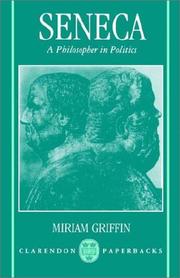
The definitive academic biography and political study of Seneca — rigorous, detailed, and indispensable for anyone who wants to understand the tension between his Stoic ideals and his life of wealth and power.
Discussion
Keep reading
Paths that share books, cover the same subject, or open a related topic.