Best Books on Parkour, in Reading Order
This curriculum takes a beginner from zero knowledge of parkour through its foundational movements, physical conditioning, safe progression, and deep philosophical roots. Each stage builds on the last — starting with mindset and basic movement literacy, moving into structured training and body preparation, and culminating in the rich cultural and philosophical tradition that gives parkour its soul.
Foundations: What Parkour Is and How to Begin
BeginnerUnderstand what parkour is, its origins, core vocabulary, and the beginner-safe fundamentals of movement — building the mental and physical baseline before any serious training.
▸ Study plan for this stage
Pace: 2–3 weeks, ~20–25 pages/day (approximately 150–180 pages total)
- Parkour's origins in David Belle's Méthode Naturelle and French military training, and how it differs from freerunning
- The philosophy of efficient movement: using only necessary effort to overcome obstacles and navigate urban/natural environments
- Core vocabulary: vaults, precision jumps, rolls, balance techniques, and flow as the connective principle between movements
- The importance of body awareness, spatial awareness, and mental discipline before attempting advanced techniques
- Safe progression: starting with low-height drills, understanding your limits, and building foundational strength and flexibility
- The role of fear management and confidence-building in parkour training
- Basic movement fundamentals: proper landing mechanics, rolling techniques, and how to condition the body for impact
- What is the historical origin of parkour, and how does it differ philosophically from freerunning?
- What does 'efficiency of movement' mean in parkour, and why is it central to the discipline?
- Name and describe at least four fundamental movement techniques covered in the handbook.
- Why is learning to roll and land properly essential before progressing to higher obstacles?
- How should a beginner approach fear and mental barriers when starting parkour training?
- What role does flow play in connecting individual parkour movements together?
- Practice basic rolls (forward and backward) on a mat or soft surface for 10–15 minutes daily, focusing on smooth weight distribution and control
- Perform balance drills on a low beam, curb, or line for 5–10 minutes to build spatial awareness and proprioception
- Execute precision jumps between two low platforms (6–12 inches apart) to develop accuracy and landing mechanics without height risk
- Conduct a body-weight conditioning routine (squats, lunges, push-ups, planks) 3–4 times per week to build the foundational strength needed for parkour
- Walk through an obstacle course you design in your home or yard, focusing on smooth transitions and flow rather than speed
- Keep a training journal documenting which movements feel natural, which feel awkward, and what your current physical limitations are
Next up: Mastering these foundational concepts and safe movement patterns prepares you to progress to intermediate techniques—higher vaults, wall runs, and more complex sequences—with the body awareness and mental confidence necessary to train safely and effectively.
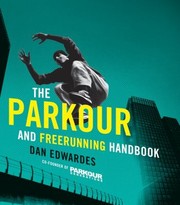
Written by one of Parkour Generations' lead coaches, this is the most accessible and widely-used entry-level guide, covering basic techniques, safety principles, and the ethos of the discipline in plain language. Read this first to get a reliable map of the entire landscape.
Conditioning: Building the Body for Movement
BeginnerDevelop the strength, mobility, and body awareness required to train parkour safely and progressively, using proven physical preparation methods.
▸ Study plan for this stage
Pace: 8–10 weeks, ~25–30 pages/day with 3–4 rest days per week for physical practice
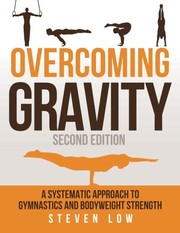
- Progressive calisthenics: mastering bodyweight progressions through the 10 standards (push, pull, legs, core, bridge, handstand, lever, pistol squat, front lever, back lever) as foundational strength
- The concept of greasing the groove: frequent, low-intensity practice of movement patterns to build neural pathways and strength without fatigue
- Mobility as a prerequisite for strength: understanding how restricted range of motion limits power output and increases injury risk
- Movement quality and body awareness: identifying and correcting movement dysfunctions through systematic self-assessment and positional work
- The relationship between flexibility, stability, and control: why passive stretching alone is insufficient without active strength in end ranges
- Individualized progression: scaling exercises to your current capacity and advancing systematically rather than jumping to advanced variations
- Preparation for parkour-specific demands: building the foundational strength and mobility patterns that enable safe, efficient movement in parkour
- Recovery and consistency: understanding that adaptation happens through repeated stimulus and adequate rest, not intensity alone
- What are the 10 standards of Convict Conditioning, and why does Paul Wade recommend mastering them as a foundation before advanced training?
- How does the greasing the groove method work, and why is it more effective for building strength and movement quality than traditional high-volume training?
- What is the difference between mobility and flexibility, and why does Kelly Starrett emphasize that mobility (strength in range of motion) is critical for parkour?
- How do you identify and correct a movement dysfunction using the concepts from Becoming a Supple Leopard, and what role does body awareness play?
- Which specific progressions from Convict Conditioning are most relevant to parkour movements (e.g., push-ups, pull-ups, handstands), and how should you sequence them?
- What is the relationship between tight muscles, poor positioning, and injury risk in parkour, and how do the mobility principles from Starrett's book prevent these issues?
- Complete a full assessment of your current fitness level using the 10 standards from Convict Conditioning: test your max reps for push-ups, pull-ups, squats, and handstand hold, and identify your starting progression level for each
- Implement a greasing the groove protocol for one movement (e.g., pull-ups or handstand holds): perform 3–5 low-rep sets throughout the day, 5–6 days per week, and track progress over 4 weeks
- Perform a full-body mobility audit using Starrett's movement screens: test your squat depth, shoulder mobility (overhead position), hip mobility (90/90 position), and thoracic spine rotation, and identify restrictions
- Practice one mobility drill from Becoming a Supple Leopard daily (e.g., couch stretch, deep squat hold, or shoulder pass-throughs) for 2 weeks, documenting changes in range of motion and movement quality
- Build a 4-week conditioning routine combining 2–3 Convict Conditioning progressions with 2–3 mobility drills from Starrett's book, training 4–5 days per week with rest days for recovery
- Record yourself performing a basic parkour movement (e.g., a broad jump, vault approach, or balance walk) at the start and end of this stage, comparing body awareness, control, and efficiency to identify improvements
Next up: This stage equips you with the foundational strength, mobility, and body awareness to safely execute parkour-specific techniques, setting the stage for learning actual movement skills like vaults, precision jumps, and flow in the next stage.
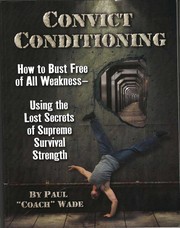
Parkour demands bodyweight mastery above all else. This book's progressive calisthenics system — from beginner to advanced — directly maps onto the strength demands of parkour and teaches the patient, step-by-step progression mindset the discipline requires.
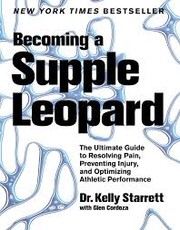
Injury prevention and joint mobility are critical for parkour longevity. Starrett's system teaches practitioners how to move correctly, address mobility restrictions, and maintain the body — essential reading before training volume increases.
Structured Training & Safe Progression
IntermediateLearn how to structure a parkour training practice intelligently — progressing skills safely, avoiding common injuries, and developing a long-term athlete's mindset.
▸ Study plan for this stage
Pace: 4–5 weeks, ~40–50 pages/day (approximately 300–350 pages total)
- The biomechanics of efficient running and movement: how proper form reduces injury risk and improves performance
- Progressive adaptation: how the body builds resilience and capability through gradual, intelligent training stress
- The role of footwear and ground connection in movement efficiency and injury prevention
- Mental resilience and long-term athlete mindset: persistence, patience, and trusting the process over quick gains
- Community and culture in training: how shared practice, mentorship, and cultural values support sustainable progression
- Recovery, rest, and the importance of listening to your body as part of intelligent training structure
- Balancing ambition with caution: knowing when to push and when to back off to avoid overtraining and burnout
- What does McDougall argue about the relationship between running form, footwear, and injury prevention, and how does this apply to parkour movement?
- How do the Tarahumara runners exemplify intelligent progression and long-term athletic development without modern training technology?
- What mental and cultural factors does McDougall identify as essential to sustaining athletic practice over years, not just weeks?
- How can you apply the concept of 'listening to your body' from the book to structure your own parkour training to avoid overuse injuries?
- What role does community and mentorship play in the book's narrative, and why is this relevant to safe, structured parkour progression?
- How does McDougall's discussion of running economy and efficiency inform how you should approach learning and refining parkour techniques?
- Analyze your current parkour movement (or running, if you don't practice parkour): video yourself and identify inefficiencies in form. Compare to McDougall's principles of efficient movement and note 2–3 specific changes to test over the next week.
- Create a 12-week progressive training plan for one parkour skill (e.g., precision jumps, wall runs, or vaults). Structure it with clear phases: foundation, development, and refinement. Include rest days and deload weeks based on principles from the book.
- Experiment with footwear: if you typically train in cushioned shoes, spend 2–3 sessions in minimal footwear (or barefoot on safe surfaces) and journal how your movement, proprioception, and fatigue patterns change. Reflect on McDougall's arguments about ground connection.
- Interview or observe a more experienced parkour athlete or coach about their training philosophy. Ask specifically: How do they progress safely? How do they know when to push vs. rest? How has their mindset evolved over years of practice? Document insights and compare to McDougall's themes.
- Design a 'recovery protocol' for your training week: identify 2–3 active recovery activities, sleep targets, nutrition priorities, and mental check-ins. Track for 2 weeks and assess how this structured approach affects your performance and injury risk.
- Write a personal 'athlete's manifesto' (500–750 words) that articulates your long-term parkour goals, your commitment to intelligent progression, and how you will balance ambition with caution. Ground it in specific lessons from *Born to Run*.
Next up: This stage establishes the philosophical and biomechanical foundation for safe, intelligent training—teaching you to think like a long-term athlete rather than a thrill-seeker—which prepares you to dive into sport-specific technical progressions and advanced programming in the next stage.

While focused on running, this book powerfully reframes how humans are built to move efficiently and joyfully with minimal gear — reinforcing parkour's core belief in the body's natural capability and building the endurance base that sustained training demands.
Philosophy, Culture & the Deeper Discipline
ExpertUnderstand the philosophical, psychological, and cultural roots of parkour — including its relationship to Stoicism, self-mastery, urban space, and the original vision of its founders.
▸ Study plan for this stage
Pace: 8–10 weeks, ~25–35 pages/day. Start with Meditations (3–4 weeks), move to The Obstacle is the Way (2–3 weeks), then Flow textbook outline (2–3 weeks). Allow 1 week for synthesis and reflection.
- Stoic virtue and discipline as the foundation for parkour's mental approach: accepting what you cannot control, focusing on effort and character
- The dichotomy of control—distinguishing between external obstacles and internal responses, central to both Stoicism and parkour practice
- Obstacles as opportunities for growth and creative problem-solving, not barriers to avoid
- Flow state (optimal experience) as the psychological mechanism behind mastery and the meditative quality of parkour movement
- The role of challenge-to-skill balance in achieving flow and sustained engagement with parkour training
- Urban space as a text to be read and engaged with philosophically, not merely conquered physically
- Self-mastery through discipline, repetition, and the internalization of Stoic principles in movement
- Parkour's cultural origins in French philosophy and the founders' vision of human potential and freedom through movement
- How does Marcus Aurelius's concept of virtue and the dichotomy of control apply to a parkour practitioner facing fear or failure?
- What does Ryan Holiday mean by 'the obstacle is the way,' and how does this reframe how a parkour athlete should approach physical and mental barriers?
- How does Mihaly Csikszentmihalyi define flow, and what conditions must a parkour practitioner create to consistently enter flow states during training?
- What is the relationship between Stoic discipline and the psychological concept of flow in achieving mastery in parkour?
- How did the founders of parkour (David Belle and others) integrate philosophical principles into their vision of the discipline, and what role did urban space play in that vision?
- How can understanding the challenge-to-skill balance from flow psychology improve your approach to progression and training design in parkour?
- Journal daily for 2 weeks using Meditations as a prompt: write one Stoic principle you encountered and reflect on how it applies to a specific parkour challenge or fear you face.
- Practice the 'obstacle reframing' exercise: identify three physical or mental obstacles in your parkour training, then rewrite each one using Holiday's framework—what strength or skill does this obstacle demand of you?
- Design a training session intentionally structured to achieve flow: map out the progression of challenges, ensure skill-to-challenge balance, and document your subjective experience of flow (or near-flow) states.
- Conduct a 'philosophical walk' through an urban space: move through it as a parkour practitioner while simultaneously observing it as a text reflecting the founders' vision of human freedom and spatial engagement.
- Write a 1,500–2,000 word reflection connecting all three texts: how do Stoicism, obstacle-reframing, and flow psychology work together to define parkour as a discipline rather than just a physical activity?
- Create a personal 'parkour philosophy statement' (300–500 words) that synthesizes what you've learned about the deeper discipline, grounding it in specific passages from the three books.
Next up: This stage establishes the philosophical and psychological bedrock of parkour as a discipline, preparing you to explore the practical biomechanics, training methodology, and community structures that operationalize these principles in the next stage.

The original traceurs, especially Sébastien Foucan and David Belle, were deeply influenced by Stoic philosophy — the ideas of obstacle as opportunity, discipline, and self-mastery are inseparable from parkour's ethos. This is the primary source text for that philosophy.

Holiday translates Stoic principles into a modern, action-oriented framework that mirrors parkour's core teaching: every wall, gap, or barrier is an opportunity to grow. Read after Meditations to see how this philosophy applies directly to training and life.
Advanced parkour practitioners consistently describe the 'flow state' as the goal of their practice. This landmark psychology text explains the science behind that experience and helps practitioners understand how to structure challenge and skill to reach it consistently.
Discussion
Keep reading
Paths that share books, cover the same subject, or open a related topic.