Greek and Roman classics: an ordered reading list to start
This curriculum moves from the earliest Greek epic poetry through the great tragedians and historians, then crosses into Roman literature and philosophy, ending with the Stoic thinkers who shaped Western thought for centuries. Each stage builds the mythological, cultural, and literary vocabulary needed to fully appreciate the next, so that by the end the reader can engage with any classical text with genuine depth and context.
The Epic Foundations
BeginnerAbsorb the mythological world, heroic values, and narrative style that underpin virtually all later Greek and Roman literature.
▸ Study plan for this stage
Pace: 12–14 weeks, ~40–50 pages/day (mix of primary text and secondary material)
- Kleos (eternal glory) as the driving force of heroic action and the Homeric value system
- The role of the gods in human affairs: divine intervention, fate (moira), and human agency in the Iliad and Odyssey
- The hero's journey and homecoming (nostos): Odysseus's long return as a structural and thematic model
- Xenia (guest-friendship) as a sacred social contract governing hospitality and reciprocal obligation
- Genealogy and cosmology in Theogony: how Hesiod systematizes divine lineage and explains the origins of the Olympian order
- Oral formulaic style: epithets, repetition, and narrative conventions that shape the Homeric epics
- The tension between fate and free will: how characters navigate predetermined outcomes while exercising choice
- Mythos as foundational narrative: how these three texts establish the mythological framework for all later Greek and Roman literature
- What is kleos, and how does the pursuit of eternal glory motivate the actions of Achilles, Hector, and Odysseus differently?
- How do the gods intervene in the Trojan War (Iliad) and Odysseus's journey (Odyssey), and what does this reveal about the Greek understanding of fate versus human choice?
- What is xenia, and how does it function as a moral and social principle in the Odyssey? Provide examples of both proper and violated xenia.
- Trace Odysseus's nostos (homecoming): what obstacles does he face, and how do they test his heroic identity and values?
- How does Hesiod's Theogony differ in purpose and style from Homer's epics, and what role does genealogy play in establishing cosmic order?
- Identify and explain the function of Homeric epithets and formulaic language in the Iliad and Odyssey. How do these devices aid oral transmission and characterization?
- Create a genealogical chart of the major Olympian deities and Titans from Theogony, noting key conflicts and power transitions (e.g., Kronos → Zeus). Annotate with brief descriptions of each figure's domain and significance.
- Trace Odysseus's journey on a map of the Mediterranean and Aegean, marking each major stop in the Odyssey. For each location, note the mythological encounter and what virtue or vice it tests in the hero.
- Collect 10–15 Homeric epithets from the Iliad (e.g., 'swift-footed Achilles,' 'grey-eyed Athena') and analyze their metrical function and thematic resonance. How do they reinforce character identity?
- Write a comparative character study (2–3 pages) of Achilles (Iliad) and Odysseus (Odyssey): how do their approaches to kleos, mortality, and homecoming differ? Which is the 'greater' hero and why?
- Identify three instances of xenia in the Odyssey (e.g., Telemachus with Nestor, Odysseus with the Phaeacians, Odysseus's suitors). For each, explain how the principle is honored or violated and what consequences follow.
- Rewrite a key scene from the Iliad or Odyssey (e.g., Achilles' rage, Odysseus's encounter with the Cyclops) in modern prose, preserving the core conflict but translating the heroic values into a contemporary setting. Reflect on what changes and what endures.
Next up: This stage establishes the mythological pantheon, heroic ethos, and narrative conventions that all subsequent Greek drama, lyric poetry, and Roman literature will reference, adapt, and critique—preparing you to recognize allusions and understand how later authors engage with these foundational texts.
The bedrock of the Western canon — start here to meet the gods, heroes, and moral questions every later author assumes you know. Use the Emily Wilson or Robert Fagles translation for clarity and momentum.
The natural companion to the Iliad, it shifts from war to homecoming and introduces the cunning, interior hero who will echo through Virgil and beyond. Read it second so the Trojan War context is already alive in your mind.
A short but essential map of the Greek gods and the creation of the cosmos; reading it after Homer fills in the divine backstory Homer assumed his audience already knew.
The Athenian Stage
BeginnerExperience the full range of Greek drama — tragedy and comedy — and understand how the Greeks used theatre to wrestle with fate, justice, and the gods.
▸ Study plan for this stage
Pace: 8–10 weeks, ~25–30 pages/day. Allocate roughly 3 weeks per major playwright (Aeschylus, Sophocles, Euripides), with 1–2 weeks for review, reflection, and exercises.
- Tragic structure and the role of fate: how Aeschylus, Sophocles, and Euripides each depict human agency versus divine inevitability
- The chorus as a dramatic device: its function in commenting on action, representing collective wisdom or fear, and shaping audience perspective
- Justice and revenge cycles: the Oresteia's exploration of blood-debt and legal justice; how Sophocles and Euripides question the morality of vengeance
- The tragic hero and hubris: pride, moral blindness, and the consequences of defying gods or natural law across all three playwrights
- Gender and power in Greek drama: how female characters (Clytemnestra, Antigone, Medea) challenge or embody social hierarchies
- Dramatic irony and knowledge: the gap between what characters know and what the audience knows, especially in Sophocles' use of prophecy
- Comedy's role in Athenian society: how comic plays offered social critique, parody, and catharsis alongside tragedy
- Religious and philosophical questions: how drama engages with the nature of the gods, justice, and human suffering
- How does Aeschylus use the Oresteia trilogy to move from cycles of revenge to a legal system of justice? What role does Athena play in this transformation?
- Compare how Aeschylus, Sophocles, and Euripides each portray the relationship between fate and human choice. Which playwright gives humans the most agency?
- What is the function of the chorus in Greek drama, and how does it differ across the three playwrights you've studied?
- Analyze the concept of hubris in at least two plays from different authors. How does excessive pride lead to downfall, and what does this reveal about Greek values?
- How do female characters in these plays (such as Clytemnestra, Antigone, or Medea) challenge or reinforce the social order of ancient Athens?
- What is dramatic irony, and how does Sophocles use it to create tragic effect? Provide specific examples from the plays you've read.
- Character map exercise: Create a detailed chart for one play from each playwright, tracking each character's motivations, conflicts, and moral choices. Note where their understanding of the situation differs from the audience's.
- Chorus analysis: Select one choral ode from the Oresteia, one from Sophocles I, and one from Medea and other plays. Annotate each to identify how the chorus comments on action, reveals thematic concerns, and shapes audience emotion.
- Comparative justice essay: Write a 2–3 page analysis comparing how justice is pursued and defined in the Oresteia versus one play from Sophocles or Euripides. How do legal, divine, and personal justice conflict?
- Dramatic irony identification: Choose one Sophoclean play and mark every instance of dramatic irony. Write brief notes explaining what the character believes versus what the audience knows, and how this gap creates tragic effect.
- Gender and power discussion: Select one female character from each playwright (e.g., Clytemnestra, Antigone, Medea). Write a comparative paragraph on how each uses or is denied power, and what her story suggests about women's agency in Athens.
- Fate versus agency debate: Prepare arguments for and against the statement 'The characters in these plays are slaves to fate.' Use specific scenes from at least two different plays to support each side.
Next up: Mastery of Greek drama's themes—fate, justice, gender, and the divine—prepares you to engage with Roman adaptations and philosophical responses to these same questions, as well as to understand how later Western literature inherits and transforms the tragic tradition.

The only surviving Greek tragic trilogy, it picks up directly after the Trojan War and dramatizes the birth of justice — a perfect bridge from Homer into drama.

This University of Chicago volume collects Oedipus the King, Oedipus at Colonus, and Antigone — the three plays that define Greek tragedy's exploration of fate and moral duty.
Euripides is the most psychologically modern of the tragedians; reading him after Aeschylus and Sophocles lets you feel how he deliberately subverts the heroic tradition you have just absorbed.
History, Philosophy & Comedy
IntermediateUnderstand how the Greeks thought about history, politics, and the good life — and how comedy punctured the same ideals tragedy elevated.
▸ Study plan for this stage
Pace: 8–10 weeks, ~25–30 pages/day. Herodotus (3–4 weeks), Aristophanes comedies (2–3 weeks), Plato's Trial and Death of Socrates (2–3 weeks). Build in 1 week for review and synthesis.
- Herodotus's inquiry (historia) as a method: how eyewitness accounts, cultural observation, and causal reasoning shape historical narrative
- The role of divine will, human agency, and contingency in historical events (Herodotus's treatment of fate and hubris)
- Athenian democracy and civic participation as backdrop to both history and comedy
- Comedy as social critique: how Aristophanes uses satire, obscenity, and fantasy to mock war, politics, and intellectual pretension
- The tension between idealism and realism: tragedy elevates noble suffering; comedy deflates it with bodily humor and practical concerns
- Socratic philosophy as a challenge to conventional wisdom and democratic consensus (Plato's Apology and Phaedo)
- The death of Socrates as a historical and philosophical watershed: how philosophy itself becomes a form of resistance
- Intertextual dialogue: how Plato's Socrates implicitly responds to the sophists and demagogues Aristophanes satirizes
- What does Herodotus mean by historia, and how does his method differ from earlier mythological accounts? Give examples from The Histories.
- How does Herodotus explain causation in historical events? What role do the gods, human character (hubris), and chance play in his narratives?
- How do Aristophanes's comedies (The Acharnians, The Clouds, Lysistrata) use obscenity, fantasy, and direct address to critique Athenian politics and war?
- What is the relationship between Aristophanes's mockery of Socrates in The Clouds and Plato's defense of Socrates in the Apology? How do they present different versions of the same figure?
- What is Socrates's conception of virtue and knowledge (especially in the Apology)? Why does he refuse to compromise or flee, even facing death?
- How does Plato's portrayal of Socrates's death (in the Phaedo) elevate philosophy itself as a way of life? What does this suggest about the relationship between philosophy and politics?
- Timeline exercise: Create a chronological map of major events in Herodotus (Persian Wars, key battles, cultural encounters). Annotate with Herodotus's explanations of causation—where does he invoke divine will, hubris, or human miscalculation?
- Comparative close reading: Select one passage from Herodotus describing a historical turning point (e.g., the fall of Croesus, the Battle of Marathon). Analyze how he blends observation, inference, and moral judgment.
- Comedy annotation: Read one scene from each Aristophanes play (e.g., the opening of The Acharnians, Strepsiades entering the Thinkery in The Clouds, the women's occupation of the Acropolis in Lysistrata). Mark instances of obscenity, fantasy, and direct political critique. What is the target, and what is the comedic strategy?
- Socratic irony exercise: Collect 5–6 moments from the Apology where Socrates claims ignorance or turns an accusation back on his accusers. Write a short paragraph explaining how each instance exemplifies his method and his challenge to Athenian values.
- Dialogue reconstruction: After reading the Phaedo, write a 1–2 page dialogue between Socrates and one of the Aristophanic characters (e.g., Strepsiades or a chorus member) on the nature of the good life. Use the actual arguments from both texts.
- Synthesis essay (2–3 pages): How do Herodotus, Aristophanes, and Plato each represent the relationship between individual and state? Use specific examples from all three authors to show how history, comedy, and philosophy offer different answers.
Next up: This stage establishes how Greeks debated the good life through history, satire, and philosophy; the next stage will likely deepen engagement with systematic philosophy (ethics, metaphysics, politics) and/or explore how Roman thinkers inherited, adapted, and critiqued these Greek frameworks.
The 'father of history' writes with the storytelling energy of Homer; reading him here rewards your epic training and introduces the Persian Wars that shaped classical Athens.
A hilarious and sharp satire of Socrates and intellectual fashion; it provides essential comic counterweight to the tragedians and illuminates Athenian public life.

Collecting the Euthyphro, Apology, Crito, and Phaedo, this slim volume introduces Socratic philosophy in dramatic, accessible form — the ideal entry point before tackling Rome.
The Roman World
IntermediateTrace how Rome absorbed, transformed, and monumentalized the Greek tradition in epic poetry, lyric verse, and personal reflection.
▸ Study plan for this stage
Pace: 8–10 weeks, ~40–50 pages/day (adjusting for dense verse and commentary)
- Roman literary adaptation: how Virgil, Ovid, and Horace deliberately rework Greek sources (Homer, Hesiod, earlier lyricists) while asserting Roman identity and values
- The Aeneid as foundational myth: Aeneas as the bridge between Troy and Rome, establishing Augustan ideology and Roman destiny (fatum)
- Metamorphosis as a literary and philosophical principle: Ovid's use of transformation narratives to explore instability, desire, and the limits of human control
- Augustan poetics and patronage: how these three poets navigate the cultural politics of Augustus's reign and the role of literature in empire-building
- Lyric subjectivity in the Odes: Horace's invention of the personal voice in Latin poetry, blending Greek lyric forms with Roman moral philosophy
- Intertextuality and allusion: recognizing how Roman poets embed Greek texts within their own work, creating layers of meaning and cultural conversation
- Meter, language, and untranslatability: the formal properties of Latin verse and how translation choices affect our understanding of these texts
- How does Virgil use the figure of Aeneas to reconcile Greek heroic tradition (as exemplified in Homer's Odyssey and Iliad) with Roman political ideology under Augustus?
- What is Ovid's philosophical stance toward metamorphosis, and how does his treatment of transformation differ from earlier Greek sources like Hesiod's Theogony?
- Identify three specific moments in the Aeneid where Virgil deliberately echoes or revises Homeric scenes; what do these revisions reveal about Roman values?
- How do Horace's Odes redefine the lyric tradition inherited from Greek poets like Sappho and Pindar, and what role does the personal voice play in his moral philosophy?
- What is the relationship between patronage (especially Maecenas's role) and the literary choices made by these three poets?
- How do the Metamorphoses function as a counter-narrative to the epic monumentalism of the Aeneid, and what does Ovid's emphasis on flux suggest about Roman power?
- Read the Aeneid in parallel with relevant passages from Homer's Odyssey (Book 1–6 of the Aeneid vs. Odyssey 5–8); annotate at least five moments where Virgil echoes, inverts, or transforms Homeric language and plot, and write a 500-word analysis of one revision
- Create a genealogical chart tracing how Ovid's Metamorphoses references and transforms Greek myths from Hesiod's Theogony and earlier sources; select three transformation narratives and compare Ovid's version to its Greek precursor
- Memorize and recite 10–15 lines from each of the three poets in Latin (or in a facing-page translation); focus on passages that exemplify their distinctive voices and formal techniques
- Write three short essays (300–400 words each) addressing: (1) Aeneas's relationship to pietas and duty in the Aeneid; (2) the role of desire and loss in the Metamorphoses; (3) Horace's concept of the mean (aurea mediocritas) in the Odes
- Perform a close reading of one complete Ode by Horace (e.g., 1.11, 2.14, or 3.30); identify its Greek lyric form, its addressee, its moral argument, and how Horace adapts Greek conventions to Roman contexts
- Create a visual or written map of the Aeneid's narrative structure, marking key episodes and their Homeric parallels; annotate how each episode advances Virgil's themes of duty, fate, and the founding of Rome
Next up: This stage establishes how Roman poets consciously absorbed and transformed Greek literary forms to create a distinctly Roman cultural identity; the next stage will explore how later Roman writers (and eventually medieval and Renaissance authors) inherited and further adapted these foundational texts, demonstrating the enduring power of Greco-Roman literary tradition.
Rome's answer to Homer, consciously built on the Iliad and Odyssey — every echo and departure will now be visible to you, making this a deeply rewarding read at this stage.

Ovid retells the entire sweep of Greek and Roman myth with wit and brilliance; read after Virgil to see how a later Roman poet plays irreverently with the same tradition.

The finest Latin lyric poetry, full of reflections on friendship, mortality, and the good life; best appreciated once you have the mythological and historical context the earlier books provide.
The Stoic Culmination
ExpertEngage with the philosophical tradition that drew on everything before it to ask how a human being should live — and leave with a practical, enduring framework from antiquity.
▸ Study plan for this stage
Pace: 8–10 weeks, ~25–30 pages/day, with 1–2 days per week for reflection and synthesis
- The dichotomy of control: distinguishing what is within your power (judgments, desires, aversions) from what is not (body, property, reputation), and focusing effort only on the former
- Virtue as the sole true good and the path to eudaimonia (flourishing); all external things are 'preferred indifferents' but not essential to living well
- Amor fati and acceptance of fate: aligning your will with the rational order of the universe (logos) rather than resisting what you cannot change
- Prosoche (mindfulness): continuous attention to your own thoughts, impressions, and assent—the practice of examining whether your judgments align with reason
- Cosmopolitanism and duty: recognizing your role as a citizen of the world and a member of a rational community, with obligations to others grounded in shared humanity
- The role of hardship and adversity as training (askesis) for virtue; obstacles become opportunities to practice wisdom, courage, and equanimity
- Practical wisdom (phronesis) applied to daily life: using reason to navigate emotions, relationships, work, and mortality with clarity and purpose
- What is the dichotomy of control, and how does Seneca, Epictetus, and Marcus Aurelius each use it to address suffering and anxiety?
- How do the three authors define virtue, and why do they argue it is the only true good? What role do external things play in a flourishing life?
- What does it mean to align your will with fate or the logos? How does this differ from passive resignation, and what practical steps do the texts suggest?
- How does prosoche (mindful attention to your impressions) function as a foundational practice in Stoic philosophy, and what does it look like in daily application?
- What is the Stoic view of duty and community? How do Seneca, Epictetus, and Marcus Aurelius each articulate your obligations to others?
- How do the three texts treat adversity, loss, and mortality? What philosophical resources do they offer for maintaining equanimity in the face of hardship?
- Daily prosoche practice: For 2 weeks, spend 10 minutes each morning identifying one impression or judgment you're likely to face that day, then write how you would examine and assent to it rationally (following Epictetus's method of impressions)
- Dichotomy of control audit: List 5 current worries or frustrations, categorize each as within or outside your control (using Seneca's framework), and write one action for what you can control and one acceptance statement for what you cannot
- Letter to yourself: Write a personal letter in the style of Seneca's letters, addressing a specific difficulty in your life and applying his reasoning about virtue, fate, and duty to your situation
- Meditations reflection journal: After reading each major section of Marcus Aurelius, write 1–2 pages reflecting on how his specific observations about human nature, mortality, or duty apply to your own life and choices
- Adversity as training: Identify one recurring hardship or frustration, then reframe it as askesis (training for virtue) by writing how it could develop your wisdom, courage, or justice—practice this reframing for 3 weeks
- Cosmopolitan exercise: Spend one week consciously treating strangers, colleagues, and difficult people as fellow members of a rational community; journal how this shift in perspective changes your interactions and judgments
Next up: This stage equips you with a coherent, practice-tested philosophical framework for living well—one grounded in reason, virtue, and acceptance—that will enable you to evaluate later philosophical schools, modern interpretations of ancient thought, or applied ethics with both critical depth and personal conviction.

Seneca writes in elegant, conversational Latin prose and is the most literary of the Stoics; his letters tie together Roman culture, Greek philosophy, and personal ethics in a way that feels immediate.
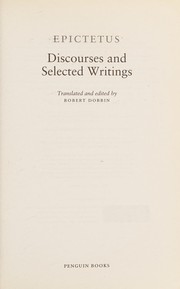
The freed slave's blunt, urgent voice offers the philosophical backbone of Stoicism; reading him after Seneca shows how the same ideas sound across very different lives and social positions.

The perfect capstone: a Roman emperor's private journal, saturated with Homer, the tragedians, and Stoic philosophy — a living demonstration of everything this curriculum has built toward.
Discussion
Keep reading
Paths that share books, cover the same subject, or open a related topic.