Seneca presents a problem no other Stoic does. The letters counsel simplicity, indifference to wealth and readiness for death, and they were written by one of the richest men in Rome, a political operator who tutored Nero, drafted his speeches, and stayed in office through the murder of the emperor's mother. He was eventually ordered to kill himself, which he did with considerable composure.
You can read the philosophy without the biography, and many people do. But the writing gets sharper when you know the circumstances, because Seneca is frequently arguing with himself — the essays on anger, on wealth, on the shortness of life read differently when you know what the author's days actually contained. So the order below puts the life first.
Life and orientation
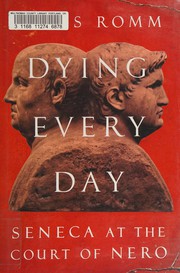
James Romm's Dying every day is the biography to read, and it takes the compromise seriously rather than explaining it away. Romm sets the Stoic texts directly beside the political record and lets the discomfort stand. It is also a genuinely gripping account of the Neronian court.
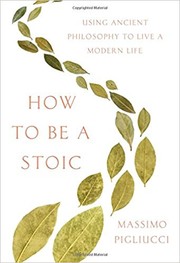
Massimo Pigliucci's How to Be a Stoic is the modern practical introduction — what the doctrine actually claims, how the dichotomy of control works, and how a contemporary reader might use it. It covers the school broadly rather than Seneca specifically, which is what makes it a good second book: you learn the framework before reading the letters that assume it.
The Letters, then the essays
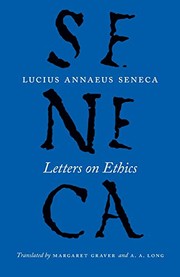
Letters on Ethics is the heart of the path — 124 letters to Lucilius, written in the last years of his life, and the single greatest body of practical philosophy from antiquity. The Chicago complete translation by Graver and Long is the scholarly standard; older selections such as the Penguin Letters from a Stoic cover the famous ones. Read a few at a time. They were built for that.
How to die is a short curated anthology of the passages on mortality, drawn from across the corpus. If the full letters are too much at once, it works well as a sampler. Hardship and Happiness collects the consolations and the essays on providence and tranquillity — this is where the argument that adversity is training rather than misfortune gets its fullest statement.
Anger, mercy, revenge holds De Ira and De Clementia, and the second is the uncomfortable one: an essay on the virtue of mercy addressed to the young Nero. Read as philosophy it is fine; read as a document of what Seneca was trying to accomplish inside that court it is remarkable.
The wider school
F. H. Sandbach's The stoics is the compact scholarly account of the whole tradition, from Zeno and Chrysippus onward, and it corrects the common impression that Stoicism is only the Roman practical writers. Marcus Aurelius's Meditations is the obvious companion — private notes rather than public letters, and a useful contrast in register and in circumstance, since Marcus held the power Seneca only advised.
Close with Miriam T. Griffin's Seneca, the standard scholarly study of Seneca as a political figure. It is the most demanding book here and the right final word, because it is the one that most carefully weighs how far a philosopher can serve a tyrant and still be doing philosophy. Historians disagree about the verdict; Griffin lays out the evidence rather than delivering one.
If Stoicism sends you toward the rival school, the Epicurus path covers the tradition Seneca quoted constantly and never joined. Follow the full path to keep these in order.
Follow the full ordered path here: Best Books on Seneca, in Reading Order.