How to learn Ancient Rome
This curriculum takes you from a vivid, story-driven introduction to Ancient Rome all the way through primary sources and specialist scholarship. Each stage builds on the last: you first absorb the narrative arc of Roman history, then deepen your understanding of society and politics, then wrestle with the Romans' own words, and finally engage with cutting-edge historical debate.
Foundations: The Roman Story
BeginnerGrasp the full sweep of Roman history — from the Republic through the fall of the Empire — and build the basic vocabulary of people, places, and events needed for everything that follows.

The ideal entry point: a lively, authoritative single-volume history by one of the world's leading classicists that challenges myths and explains why Rome still matters. Read it first to get your bearings.
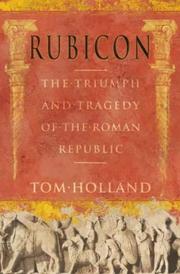
A gripping narrative of the Republic's dramatic collapse, covering Caesar, Pompey, and Cicero. Reading it second gives the beginner a deep, story-driven anchor in Rome's most consequential era.
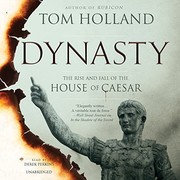
Picks up exactly where Rubicon ends, covering the Julio-Claudian emperors. Together the two Holland books give a seamless narrative from Republic to Empire before you go deeper.
Society, Culture & Daily Life
BeginnerMove beyond political narrative to understand how Romans actually lived — their homes, beliefs, social hierarchies, and the city of Rome itself.
▸ Study plan for this stage
Pace: 3–4 weeks, ~20–25 pages/day — "The Storm Before the Storm" is approximately 280 pages; a relaxed beginner pace allows time to pause, re-read key passages, and complete exercises without feeling rushed.
- The Roman Republic's social hierarchy — the tension between the patrician elite (optimates) and the populist reformers (populares) — as the backbone of Roman political and daily life
- The patron-client system (patronage/clientela): how personal loyalty, favors, and obligation structured Roman society from the street level up to the Senate
- Roman political culture and its institutions: the Senate, the assemblies, the consulship, and how these bodies reflected and enforced social norms
- The role of the Roman mob and the urban poor (the plebs urbana): how ordinary Romans in the city experienced politics, bread shortages, and public spectacle
- Roman military culture and its social consequences: how prolonged foreign wars displaced small farmers, created a landless proletariat, and fueled the crises Duncan describes
- The breakdown of the mos maiorum (ancestral customs): Duncan's central thesis that the unwritten rules holding Roman society together began to erode before Caesar was even born
- Violence as a political and social tool: how the murders of the Gracchi and the rise of figures like Marius and Sulla normalized brutality in public life
- The city of Rome as a physical and social space: overcrowded insulae, the Forum as a stage for public life, and the contrast between elite otium (leisure) and plebeian struggle
- According to Duncan, what is the mos maiorum, and why does its erosion matter more to understanding Rome's fall than any single political event?
- How did the patron-client relationship function in everyday Roman life, and how does Duncan show it operating among the major figures of the late Republic?
- What economic and social pressures faced by ordinary Romans — small farmers, urban poor, soldiers — created the conditions that populares like the Gracchi tried to exploit?
- How did the careers of Marius and Sulla reflect and accelerate changes in Roman military culture and its relationship to society at large?
- In what ways does Duncan portray the Roman Senate as both a social institution and a political one — and where do those two roles come into conflict?
- What parallels does Duncan draw (explicitly or implicitly) between the late Republic's social fractures and modern democratic societies, and do you find them convincing?
- **Annotated Character Map:** As you read, build a one-page diagram of the major figures (Gracchi, Marius, Sulla, Livius Drusus, etc.) and draw lines showing their patron-client relationships, family alliances, and political factions. Label each line with the nature of the bond. This makes the social web visible.
- **'A Day in the Life' Writing Exercise:** Using details Duncan provides about Roman urban life, write a 300–400 word first-person journal entry from the perspective of a Roman plebeian living in the city during either the Gracchan crisis or Sulla's dictatorship. What do you see, fear, eat, and owe to your patron?
- **Mos Maiorum Tracker:** Keep a running list as you read of every moment Duncan identifies where a Roman leader broke with tradition or precedent. After finishing, review the list and write two sentences answering: 'At what point did the breaking of norms become the new norm?'
- **Compare Two Commanders:** Write a one-page comparison of Marius and Sulla focusing not on their battles but on their social backgrounds, their relationships with their soldiers, and how each man's rise reflects changes in Roman society rather than just Roman politics.
- **Vocabulary & Context Glossary:** Maintain a personal glossary of Latin terms Duncan uses (mos maiorum, optimates, populares, clientela, proscription, triumph, etc.). For each term, write not just a definition but a one-sentence note on what it reveals about Roman values or social structure.
- **Reflection Discussion (or Journal) Prompt:** Duncan is a podcaster writing narrative history for a general audience. After finishing, write a short reflection: What social or cultural details felt most vivid and convincing? What felt underexplored? What questions about daily Roman life does the book leave you wanting answered?
Next up: By grounding you in the social tensions, power structures, and cultural norms of the late Republic through Duncan's narrative lens, this stage equips you to engage with more detailed or primary-source-driven accounts of Roman history — whether deeper dives into the Imperial period, Roman religion, or the lives of specific social classes — with a lived, human framework already in place.

Focuses on the generation before Caesar — Marius, Sulla, and the breakdown of Republican norms — adding crucial social and political context that bridges narrative history to deeper analysis.

A rich anthropological portrait of Roman society, covering food, religion, family, and spectacle. Reading it here grounds the political history you've absorbed in the texture of everyday Roman experience.
Going Deeper: Politics, Power & Empire
IntermediateDevelop a sophisticated understanding of how Roman political institutions worked, how the Empire was administered, and what 'Roman-ness' meant across a vast, diverse world.
▸ Study plan for this stage
Pace: 8–10 weeks total: Spend the first 4–5 weeks on Heather's "The Fall of the Roman Empire" (~25–30 pages/day, including time to pause and take notes on institutional detail), then 4–5 weeks on Goldsworthy's "Caesar" (~20–25 pages/day, reading more slowly to track the biographical and political narrativ
- The structural tensions between Roman political institutions (Senate, popular assemblies, magistracies) and the growing demands of empire — as revealed through Heather's analysis of late imperial administration
- The role of the military in Roman political life: how army loyalty, frontier defense, and generalship shaped and ultimately destabilized imperial authority (central to both Heather and Goldsworthy)
- Romanization and the meaning of 'Roman-ness': how identity, citizenship, law, and culture were extended across a diverse empire, and how peripheral peoples both adopted and resisted Roman norms (Heather's treatment of barbarian federates and Goldsworthy's Gallic campaigns)
- The cursus honorum and the mechanics of Roman political careers: how Caesar's rise through quaestor, aedile, praetor, and consul illustrates the formal and informal rules of Republican power (Goldsworthy)
- Patronage, clientela, and the informal networks of power: how personal relationships, debt, and obligation underpinned Roman political competition (Goldsworthy's Caesar)
- Imperial overstretch and the logistics of administering a vast frontier: Heather's argument about the economic and military costs of defending the Rhine-Danube line and the eastern frontier
- The transformation from Republic to Principate to Dominate: using Caesar's career as the hinge moment and Heather's late empire as the endpoint to trace the full arc of Roman governmental evolution
- Barbarian agency: Heather's revisionist insistence that Gothic, Hunnic, and other groups were active political actors, not merely passive forces — challenging older 'decline and fall' narratives
- According to Heather, what were the primary structural and external causes of Rome's fall, and how does his argument differ from older 'internal decay' theories like Gibbon's?
- How does Goldsworthy's biography of Caesar illustrate the way Roman Republican institutions could be simultaneously robust and vulnerable to manipulation by an ambitious individual?
- What does the treatment of non-Roman peoples in both books reveal about how 'Roman-ness' was defined, negotiated, and weaponized as a political tool?
- How did the Roman military evolve from the citizen-soldier legions of Caesar's era to the federate-heavy armies of Heather's late empire, and what were the political consequences of that evolution?
- Using evidence from both books, how did geography and frontier logistics shape Roman political decision-making at both the Republican and Imperial levels?
- What does Caesar's career, as reconstructed by Goldsworthy, tell us about the relationship between military glory, popular politics, and the breakdown of Republican norms — and can any of Heather's late-imperial dynamics be traced back to those same fault lines?
- Dual timeline chart: Create a two-column timeline — one tracking the key political institutions and offices described in Goldsworthy's Caesar (SPQR, Senate votes, provincial commands), the other tracking the administrative structures Heather describes in the late empire. Annotate where institutions changed, merged, or collapsed.
- Argument mapping: Write a one-page summary of Heather's central thesis on Rome's fall, then write a one-page counter-summary using only evidence Goldsworthy provides about Republican-era strengths. Where do they agree or disagree about Rome's underlying vulnerabilities?
- Character political profile: Using Goldsworthy's Caesar, map Caesar's career onto the cursus honorum. For each office he held, note what power it granted, what norm he bent or broke, and what the Senate's response was. This builds a concrete picture of how Republican politics actually functioned.
- Map exercise: Using a blank map of the Roman world, mark the frontiers Heather discusses (Rhine, Danube, Euphrates) and the regions Caesar campaigned in (Gaul, Britain, the East). Annotate each zone with the key political or military challenge it posed. This grounds both books geographically.
- Comparative essay (500–700 words): 'Was Rome's fall inevitable given the political precedents set in the late Republic?' Use at least three specific pieces of evidence from each book to argue a position.
- Reading journal — 'Then vs. Later' entries: Each time Goldsworthy describes a Republican institution or norm, write a brief journal entry speculating (or researching) what happened to that institution by the time of Heather's late empire. This builds the habit of reading Roman history as a long, connected arc.
Next up: By mastering how Roman political institutions were built (through Caesar's career) and how they ultimately buckled (through Heather's analysis), the reader is now equipped to explore the cultural, social, and intellectual dimensions of Roman civilization — asking not just how Rome was governed, but what Romans believed, created, and left behind.

A landmark work of modern scholarship on Rome's decline and fall, synthesizing military, political, and demographic forces. It rewards readers who already know the basic story and are ready for analytical argument.
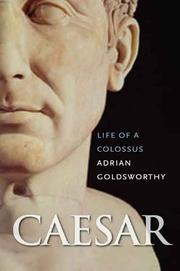
The definitive modern biography of Julius Caesar, combining military history, political analysis, and social context. At this stage you have the background to appreciate its depth and nuance.
The Romans in Their Own Words: Primary Sources
IntermediateRead what the Romans themselves wrote — history, philosophy, biography, and satire — developing the ability to interpret ancient evidence directly rather than through a modern filter.
▸ Study plan for this stage
Pace: 10–12 weeks total: ~3 weeks on The Twelve Caesars (~30 pages/day), ~3 weeks on Meditations (~15–20 pages/day with journaling time), ~4–5 weeks on The Histories of Tacitus (~25 pages/day, slower due to density of political narrative)
- Source criticism: understanding that every ancient author has a bias, agenda, and audience — Suetonius writes imperial gossip for entertainment, Marcus Aurelius writes private philosophy for self-improvement, and Tacitus writes political history with a senatorial, anti-tyranny bias
- Genre distinctions in Roman literature: biography (Suetonius), philosophical memoir (Marcus Aurelius), and annalistic history (Tacitus) each make different truth-claims and must be read differently
- The 'good emperor vs. bad emperor' framework: Suetonius's Twelve Caesars establishes a moral typology of rulers that shaped how Rome understood power and legitimacy
- Stoic philosophy as a governing ideology: in Meditations, Marcus Aurelius applies Stoic principles (reason, duty, impermanence, self-mastery) not as abstract theory but as a daily discipline for a man holding supreme power
- The Roman concept of virtus and its political dimensions: how personal virtue was inseparable from public duty in Roman self-understanding, visible across all three authors
- Tacitus's method of 'implication without accusation': his use of irony, innuendo, and selective silence to indict emperors like Domitian without direct attack — a survival strategy and a literary technique
- The tension between Republic and Principate: all three authors write in the shadow of the lost Republic, and their works are shaped by nostalgia, accommodation, or resistance to autocratic rule
- Reading ancient evidence directly: identifying what a primary source can and cannot tell us, distinguishing the author's testimony from historical fact, and cross-referencing internal evidence within the texts
- How does Suetonius organize his biographies, and what does his choice of anecdotes and categories (physical appearance, omens, vices, virtues) reveal about Roman values and his own literary purpose?
- In Meditations, what specific Stoic doctrines does Marcus Aurelius return to most frequently, and how does the tension between his philosophical ideals and his role as emperor manifest in the text?
- Where do Suetonius and Tacitus cover overlapping events (e.g., the reigns of Tiberius, Nero, Galba), and how do their accounts differ — what does the comparison reveal about each author's bias and method?
- How does Tacitus use the Senate as a moral lens? What does his portrayal of senatorial cowardice and complicity under the Julio-Claudians tell us about his own political values?
- What can Meditations tell us that no other source can — and what are its limits as historical evidence about Marcus Aurelius's reign and the Roman world of the 2nd century CE?
- How do all three authors construct the idea of the 'ideal Roman'? What virtues, behaviors, and attitudes does each text implicitly or explicitly endorse?
- Bias audit: After finishing each book, write a one-page 'author profile' — who was this person, who was their audience, what did they want readers to think, and what might they be hiding or distorting? Compare all three profiles at the end.
- Parallel passage comparison: Find at least two emperors covered by both Suetonius and Tacitus (Tiberius and Nero are ideal). Write a side-by-side comparison of the same event or character trait as each author describes it, then write a paragraph analyzing whose account you find more credible and why.
- Stoic practice log: While reading Meditations, keep a daily journal in the style of Marcus Aurelius — write 3–5 sentences each day applying one of his doctrines to a modern personal challenge. This builds intimate understanding of the text's purpose and form.
- Annotate for rhetoric: In a selected chapter of Tacitus (e.g., the opening books of The Histories covering the Year of the Four Emperors), underline every instance of irony, indirect accusation, or loaded word choice. Write a marginal note explaining what Tacitus implies but does not state outright.
- Create a 'source reliability matrix': Build a simple table with rows for major events/figures covered across the three books and columns for each author. Mark what each author says, note contradictions, and rate each account's likely reliability based on the author's proximity to events, motive, and genre.
- Write a mock Roman biography entry in the style of Suetonius for a modern public figure, using his organizational categories (origins, appearance, public deeds, private vices, omens, death). This exercise makes his literary conventions visceral and memorable.
Next up: Mastering how Romans described themselves — their values, their power, their failures — in their own words gives the reader the interpretive confidence to engage with modern scholarly debates about Rome, where historians argue over exactly these primary sources to reconstruct Roman society, economy, and decline.

Gossipy, vivid, and endlessly readable imperial biographies from a near-contemporary source. A perfect first primary text because it is accessible and directly echoes the narrative history you already know.

The private philosophical notebook of Rome's philosopher-emperor offers an unparalleled window into Roman Stoic thought and the inner life of power. It pairs beautifully with the political histories read earlier.

Tacitus is Rome's greatest historian — sharp, cynical, and stylistically brilliant. Reading him last among the primary sources lets you apply your full accumulated knowledge to evaluate his arguments and biases.
Mastery: Specialist Scholarship & Big Questions
ExpertEngage with the major historiographical debates about Rome — its economy, its identity, its legacy — and think about Ancient Rome the way professional historians do.
▸ Study plan for this stage
Pace: 4–5 weeks, ~25–30 pages/day — Syme's dense, Tacitean prose rewards slow, deliberate reading; plan for re-reading key chapters (especially the prosopographical sections) and allow extra time for note-taking on individual figures and factions.
- The Roman Revolution as a oligarchic coup, not a constitutional reform — Syme's central thesis that Augustus's Principate was the seizure of power by a new ruling class, not the restoration of the Republic
- Prosopography as a historical method — tracing political history through the careers, marriages, and alliances of named individuals rather than through institutions or ideology
- The 'new men' and the displacement of the old nobility — how Caesarian and Augustan patronage networks elevated Italian and provincial families at the expense of the traditional Roman aristocracy
- The role of language and propaganda — how Augustan vocabulary ('libertas,' 'res publica restituta,' 'princeps') masked autocratic reality, a lesson drawn explicitly from Syme's reading of Tacitus and Sallust
- Faction and clientela as the true engines of Roman politics — the informal bonds of loyalty, obligation, and mutual interest that structured elite competition
- The Tacitean influence on Syme's style and moral vision — understanding how Syme's own mid-20th-century political context (the rise of fascism) shaped his interpretation of Augustan autocracy
- The transformation of the Senate — from sovereign body to instrument of the Princeps, and how individual senators navigated collaboration and survival
- Historiographical self-awareness — Syme's explicit engagement with his ancient sources (Livy, Tacitus, Sallust, Augustus's own Res Gestae) as politically interested texts, not neutral records
- According to Syme, in what sense was the Augustan settlement a 'revolution,' and who were its winners and losers among the Roman elite?
- How does Syme use prosopography to build his argument, and what are the strengths and limitations of this method for understanding Roman political history?
- How does Syme argue that Augustan political language functioned as propaganda, and what specific terms or concepts does he identify as ideologically loaded?
- In what ways does Syme's own historical moment — writing in the late 1930s — visibly shape his portrait of Augustus and the nature of one-man rule?
- How did the civil wars of 49–31 BCE restructure the Roman ruling class, and what role did patronage and marriage alliances play in consolidating Augustus's new order?
- How does Syme assess his ancient sources — particularly Tacitus and the Res Gestae — as historical evidence, and what does this reveal about the practice of critical historiography?
- Prosopographical mapping: Choose one chapter focused on a specific political faction or family network and build a relationship diagram — nodes for individuals, edges for marriage, adoption, military service, and patronage. Assess what political conclusions the network structure supports.
- Source comparison: Read Augustus's Res Gestae (freely available online) alongside the chapters in which Syme discusses Augustan self-presentation. Write a one-page analysis of how Syme 'reads against the grain' of that primary source.
- Historiographical reflection essay: Write 600–800 words arguing either for or against the proposition that Syme's anti-Augustan bias undermines his thesis. Use specific passages from The Roman Revolution as evidence.
- Vocabulary audit: Compile a glossary of 15–20 Latin political terms Syme discusses (e.g., auctoritas, princeps, libertas, novus homo, clientela) with Syme's definition, the term's official/traditional meaning, and the gap between the two.
- Parallel reading exercise: Select a chapter on the Senate under Augustus and compare Syme's account with a passage from Tacitus's Annals (Book I is ideal). Annotate where Syme follows, extends, or contradicts his ancient source.
- Big-question position paper: Draft a 1,000-word response to the question 'Was Augustus a revolutionary or a conservative?' using only evidence and arguments drawn from The Roman Revolution, then note where you agree or disagree with Syme's own conclusion.
Next up: Syme's mastery of elite political networks and his insistence on reading sources as ideologically constructed texts equips the reader with the critical toolkit — prosopography, source skepticism, and historiographical self-awareness — needed to engage independently with primary sources, specialist journal articles, and the ongoing scholarly debates that define the frontier of Roman studies.
A 20th-century masterpiece that reinterpreted Augustus's rise as a ruthless seizure of power by a new ruling class. Essential reading for understanding how modern scholarship on Rome was shaped.
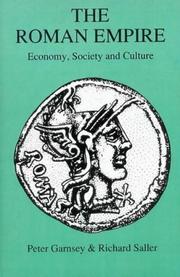
A rigorous, evidence-based analysis of how the Roman economy and social structures actually functioned. It completes the curriculum by replacing narrative with structural analysis, the hallmark of advanced historical thinking.
Discussion
Keep reading
Paths that share books, cover the same subject, or open a related topic.