Self-discipline and willpower: the best books to build lasting habits, in order
This curriculum builds from accessible, science-backed introductions to self-control all the way through advanced behavioral psychology and motivational neuroscience. Each stage deepens the reader's vocabulary and mental models so that later, more technical books feel intuitive rather than overwhelming. By the end, the reader will have a rigorous, evidence-based understanding of willpower, habit formation, and the deeper drivers of sustained self-discipline.
Foundations: The Science of Self-Control
BeginnerUnderstand what willpower and self-discipline actually are, where they come from biologically and psychologically, and why they succeed or fail — building a solid conceptual vocabulary for everything that follows.
▸ Study plan for this stage
Pace: 6–7 weeks, ~40–50 pages/day (approximately 3–4 hours of reading per week, allowing time for reflection and note-taking)
- The habit loop: cue, routine, reward — how habits form and persist at the neurological level
- Keystone habits and their cascading effects on other behaviors and identity
- Willpower as a limited, depletable resource (ego depletion) that can be strengthened through practice
- The role of glucose and physical state in willpower capacity and decision fatigue
- Craving and desire as the engine of habit change — why willpower alone fails without addressing cravings
- Self-discipline as a skill that improves with practice, not an innate trait
- The distinction between motivation, willpower, and habit — and why habits are the most sustainable
- How belief and identity shape the success or failure of self-control attempts
- What are the three components of the habit loop, and why is understanding the reward critical to changing habits?
- How does ego depletion work, and what does research show about whether willpower is truly a limited resource?
- What is a keystone habit, and how can changing one habit create a cascade of other positive changes?
- Why does willpower alone often fail at producing lasting behavior change, and what does Baumeister suggest as an alternative?
- How do glucose levels, sleep, and physical state affect your capacity for self-control and decision-making?
- What is the relationship between belief, identity, and sustained self-discipline according to these authors?
- Map your own habit loop for one existing habit (positive or negative): identify the cue, the routine, and the actual reward you're seeking. Write it down and notice patterns over 3–5 days.
- Identify one keystone habit in your life (or one you want to build). Predict and track what other behaviors shift as a result over 2–3 weeks.
- Conduct a personal ego depletion experiment: track your willpower capacity at different times of day and after different activities (exercise, meals, decision-making). Record when you feel most and least able to resist temptation.
- Choose one habit you want to change. Instead of relying on willpower, redesign the cue or the reward. Test the new routine for 1–2 weeks and document what works.
- Practice a willpower-building exercise (e.g., using your non-dominant hand for daily tasks, maintaining posture, or resisting a small craving) for 2 weeks. Track whether your general self-control capacity improves in other areas.
- Interview someone who has successfully changed a long-standing habit. Ask them about the role of belief, identity, and willpower in their process. Compare their story to the frameworks in both books.
Next up: This stage establishes the biological and psychological foundations of self-control—showing you *why* willpower works and fails—preparing you to move into practical strategies for building specific disciplines and designing environments that make self-control automatic rather than effortful.

A perfect entry point — it introduces the habit loop (cue, routine, reward) in plain language with compelling stories, giving the reader a practical framework for understanding automatic behavior before diving into the science of willpower.

Written by the psychologist who pioneered ego-depletion research, this book translates decades of lab science into accessible lessons on how willpower works as a limited resource and how to manage it — the essential scientific foundation of the topic.
Building Blocks: Habits, Identity & Behavior Change
BeginnerLearn concrete, evidence-backed systems for building good habits and breaking bad ones, and understand how identity shapes long-term self-discipline.
▸ Study plan for this stage
Pace: 4–5 weeks, ~40–50 pages/day. Week 1–2: "Atomic Habits" (306 pages); Week 3–4: "Tiny Habits" (352 pages); Week 5: Review, synthesis, and capstone exercises.
- The habit loop: cue, craving, response, reward—and how small changes in any component create lasting behavioral shifts
- Identity-based habits: building self-discipline by aligning actions with your desired identity rather than relying on motivation alone
- The 1% improvement principle: how tiny, incremental changes compound into remarkable results over time
- Behavior design and habit stacking: using existing routines as anchors to attach new habits with minimal friction
- Motivation is overrated; systems and environmental design matter more—remove friction for good habits, add friction for bad ones
- The role of immediate rewards and celebration in habit formation—why feeling good after a behavior is critical for repetition
- Breaking bad habits by understanding their function and replacing them with better alternatives that serve the same need
- Explain the habit loop and give a specific example of how you could intervene at each stage (cue, craving, response, reward) to change one of your own habits.
- How does identity-based habit formation differ from outcome-based habit formation, and why is identity more sustainable for long-term self-discipline?
- What is habit stacking, and how could you use it to build a new habit you want to develop?
- Why does James Clear argue that motivation is less important than system design, and what does this mean for how you approach self-discipline?
- Describe B. J. Fogg's Tiny Habits method and explain how it differs from the 'go big' approach to behavior change.
- How can you use immediate rewards and celebration to reinforce a habit you're trying to build, according to Fogg's research?
- Map your own habit loop: Pick one habit you want to change (good or bad). Identify the cue, craving, response, and reward. Then design an intervention at one stage and test it for 3 days.
- Identity audit: Write down 3–5 identities you want to embody (e.g., 'disciplined person,' 'healthy person'). For each, list 2–3 small actions that reinforce that identity. Commit to one for 2 weeks.
- Habit stacking plan: Choose an existing daily routine (e.g., morning coffee, brushing teeth). Stack a new tiny habit onto it using the formula: 'After [current habit], I will [new habit].' Track it for 1 week.
- Environmental design challenge: Identify one bad habit and one good habit. Redesign your environment to add friction to the bad habit and remove friction from the good one. Document the changes and results over 1 week.
- Immediate reward experiment: Pick a habit you're building. Design a small, immediate reward that you'll give yourself right after completing it (e.g., a favorite snack, 2 minutes of music). Use it for 10 days and journal how it affects consistency.
- Behavior design worksheet: Using Fogg's framework, design a tiny habit by identifying: (1) the anchor (existing routine), (2) the new behavior (very small), and (3) the celebration (immediate reward). Practice it daily for 2 weeks and refine based on what sticks.
Next up: This stage builds the foundational mechanics of how habits work and how to design them intentionally; the next stage will likely deepen your understanding of motivation, willpower depletion, and the psychological/neurological factors that sustain or sabotage self-discipline over time.
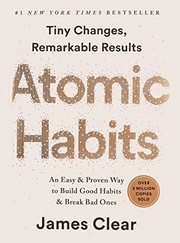
Builds directly on Duhigg's habit loop by adding the critical dimension of identity-based change and the '1% better' compounding model — highly practical and grounded in behavioral research.

BJ Fogg's Behavior Model (Motivation × Ability × Prompt) offers a complementary, research-backed lens to Atomic Habits, emphasizing design over willpower and showing how to make discipline feel effortless.
Going Deeper: Motivation, Goals & the Psychology of Self-Regulation
IntermediateMove beyond habits into the deeper psychology of motivation, goal-setting, and self-regulation — understanding why we pursue goals and how mental strategies determine success or failure.
▸ Study plan for this stage
Pace: 8–10 weeks, ~25–30 pages/day. "Drive" (4–5 weeks, ~20 pages/day), then "Succeed" (4–5 weeks, ~25 pages/day). Include 1–2 reflection days per week.
- Intrinsic vs. extrinsic motivation: Pink's framework showing how autonomy, mastery, and purpose drive behavior more powerfully than external rewards
- The three elements of intrinsic motivation: Autonomy (control over task, time, technique, team), Mastery (the drive to improve), and Purpose (connection to something larger than oneself)
- Goal-setting psychology: Halvorson's distinction between performance goals (proving ability) and learning goals (developing ability), and why learning goals predict sustained success
- The role of mental contrasting and implementation intentions: How visualizing obstacles and pre-planning responses dramatically increases goal achievement
- Self-regulation as a limited resource: Understanding ego depletion and how willpower can be strategically managed rather than simply 'pushed harder'
- The psychology of failure and resilience: Why how you interpret setbacks determines whether you persist or give up, and how to cultivate a growth mindset
- Motivation across contexts: How the same person's motivation shifts depending on whether goals feel autonomous vs. controlled, and how to redesign environments to support intrinsic motivation
- What are the three elements of intrinsic motivation according to Pink, and why does research show they produce better long-term performance than extrinsic rewards?
- How do performance goals and learning goals differ, and why does Halvorson argue that learning goals are more predictive of sustained success?
- What is mental contrasting, and how does combining it with implementation intentions increase the likelihood of achieving a goal?
- How does the concept of ego depletion challenge the idea that willpower is simply about 'trying harder,' and what does this mean for self-regulation strategy?
- According to Halvorson, what is the difference between a fixed mindset and a growth mindset in response to failure, and how does this affect motivation?
- How can you redesign your environment or reframe a task to shift from extrinsic to intrinsic motivation, using Pink's framework?
- Autonomy audit: Map one major goal or recurring task in your life. Identify which elements (task, time, technique, team) feel controlled vs. autonomous. Redesign at least one element to increase autonomy and track how your motivation shifts over 2 weeks.
- Mastery project: Choose a skill you want to improve (writing, public speaking, coding, etc.). Commit to deliberate practice for 3 weeks using Halvorson's learning-goal framework—focus on progress, not performance. Document what you learn about your learning process.
- Mental contrasting + implementation intentions exercise: Pick a goal you've been avoiding or struggling with. Write down the goal, visualize success, then identify the biggest obstacle. Create 3–5 'if-then' implementation intentions (e.g., 'If I feel overwhelmed, then I will break it into 15-minute chunks'). Test these for 2 weeks.
- Motivation diagnosis: Reflect on 2–3 goals where you've succeeded and 2–3 where you've failed. For each, identify whether it was intrinsically or extrinsically motivated, a performance or learning goal, and whether you had clear implementation intentions. What patterns emerge?
- Ego depletion experiment: Track your willpower over one week by noting times you successfully resisted temptation and times you gave in. Correlate these with sleep, nutrition, and decision fatigue. Redesign one day to reduce decision load and observe the effect.
- Growth mindset reframe: Identify a recent failure or setback. Write two versions of the story: one with a fixed mindset ('I'm not good at this') and one with a growth mindset ('I haven't learned this yet'). Practice the growth mindset version daily for one week and journal how it affects your motivation to try again.
Next up: This stage equips you with the psychological foundations of motivation and goal-setting, preparing you to move into the next stage where you'll learn tactical systems and habits to sustain self-discipline over time and integrate these insights into daily practice.
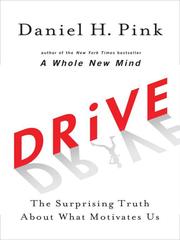
Introduces self-determination theory and the science of intrinsic motivation, explaining why autonomy, mastery, and purpose are more powerful long-term engines of discipline than rewards or punishments.

A rigorous but readable synthesis of goal-pursuit research — covering implementation intentions, why-vs-how thinking, and self-regulation strategies — that bridges motivation theory and practical self-discipline.
Advanced: Neuroscience, Stress & the Limits of Willpower
IntermediateUnderstand the neurological and physiological underpinnings of self-control, how stress and emotion hijack discipline, and how to work with your brain's biology rather than against it.
▸ Study plan for this stage
Pace: 4–5 weeks, ~25–30 pages/day (approximately 1 chapter per day, with 2–3 days for review and integration)
- Willpower as a biological system: the three types of willpower (I won't, I will, I want) and their neurological basis in the prefrontal cortex
- Ego depletion and the limited-resource model: how willpower is a finite resource that weakens with use and stress
- The stress-willpower connection: how chronic stress and the fight-or-flight response undermine self-control through cortisol and amygdala activation
- The 'what the hell' effect: how shame, guilt, and all-or-nothing thinking sabotage willpower and lead to self-destructive cycles
- Working with your biology: using the parasympathetic nervous system, self-compassion, and acceptance to restore willpower capacity
- The role of emotion regulation: how understanding emotional triggers and using reappraisal strengthens self-control
- Social contagion and willpower: how others' behavior, stress, and self-control directly influence your own through mirror neurons and social synchrony
- Practical neuroscience: translating brain science into sustainable habits by aligning willpower strategies with how your nervous system actually works
- What are the three types of willpower McGonigal describes, and which brain regions are responsible for each?
- How does the ego depletion model explain why willpower weakens throughout the day, and what does neuroscience reveal about this process?
- Explain the stress-willpower paradox: why do we lose self-control precisely when we need it most, and what happens in the brain during stress?
- What is the 'what the hell' effect, and how does shame-based thinking make willpower problems worse rather than better?
- How can activating the parasympathetic nervous system and practicing self-compassion restore willpower capacity when willpower is depleted?
- Why does McGonigal argue that accepting your impulses (rather than fighting them) can actually strengthen self-control?
- Map your personal willpower depletion: track your energy, stress levels, and self-control capacity across a full week to identify when your willpower is strongest and weakest—then correlate these patterns with sleep, food, and stress triggers
- Practice the 'pause and plan' technique: when facing a willpower challenge, pause for 10 seconds, take three slow breaths to activate your parasympathetic nervous system, and then consciously choose your response rather than reacting automatically
- Conduct a shame audit: identify one area where you use shame or guilt to motivate yourself (e.g., 'I'm so lazy, I need to exercise more'). Reframe it with self-compassion and track whether this reduces the 'what the hell' effect over two weeks
- Create a stress-response protocol: design a 2–3 minute routine (breathing, movement, or grounding exercise) that you can deploy when stress spikes to prevent the amygdala hijack and preserve willpower
- Experiment with emotion reappraisal: when facing a temptation or difficult task, practice reinterpreting the situation (e.g., 'This craving means my body is seeking comfort, not that I'm weak') and journal how this shifts your willpower experience
- Conduct a social audit: identify one person or environment where you consistently lose willpower, and one where you feel strong. Analyze the differences and experiment with either changing the environment or building in accountability structures
Next up: This stage equips you with the neurobiological *why* behind willpower struggles, positioning you to move into practical, systems-based approaches that leverage this understanding—such as designing environments, habits, and social structures that work *with* your brain's biology rather than requiring constant willpower expenditure.
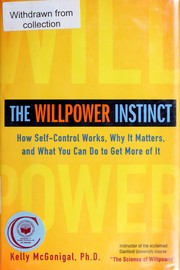
Based on McGonigal's Stanford course, this book bridges neuroscience and psychology — explaining how the prefrontal cortex governs self-control, how stress depletes it, and how mindfulness and physiology can restore it.
Mastery: Deep Self-Knowledge & Long-Term Resilience
ExpertIntegrate everything through the lenses of stoic philosophy, psychological resilience, and long-term grit — developing a personal, sustainable philosophy of self-discipline that goes beyond tactics.
▸ Study plan for this stage
Pace: 8–10 weeks, ~25–30 pages/day (alternating between books, with reflection days)
- Grit as a trainable skill: passion + perseverance over talent and IQ, developed through deliberate practice and growth mindset
- The role of failure and struggle in building resilience: how setbacks strengthen character and clarify purpose
- Stoic dichotomy of control: distinguishing what is within your power (effort, judgment, intention) from what is not (outcomes, others' opinions, external events)
- The practice of negative visualization and amor fati: accepting adversity as essential to growth and reframing obstacles as opportunities
- Purpose and long-term vision as anchors: how a clear, intrinsic goal sustains effort through difficulty and prevents burnout
- Virtue as the highest good: aligning self-discipline with character development rather than external rewards
- The internal locus of resilience: building psychological strength through consistent small choices and philosophical reflection
- What is grit according to Duckworth, and how does it differ from talent? How does stoic philosophy in Meditations support or expand this definition?
- How does Marcus Aurelius use the dichotomy of control to manage difficulty, and how does this relate to Duckworth's concept of perseverance through setback?
- What role does purpose (or 'passion' in Duckworth's framework) play in sustaining long-term self-discipline, and how does stoic virtue provide a philosophical foundation for this?
- How can you apply negative visualization and amor fati to a current challenge or goal in your life? What shifts when you reframe obstacles as necessary?
- What is the relationship between deliberate practice (Duckworth) and daily philosophical practice (Marcus Aurelius)? How do both build resilience?
- How would you articulate your personal philosophy of self-discipline based on these two books? What are its core principles and how will you live it?
- Read 'Grit' (Part I–IV) over 3–4 weeks, taking notes on: (a) moments when Duckworth describes grit in action, (b) the role of failure in her examples, (c) how passion and perseverance interact. Identify one area of your life where you want to build grit.
- Parallel reading: Read 'Meditations' (Books I–IV) simultaneously, marking passages that address adversity, control, and virtue. Create a two-column chart: 'Duckworth's Grit' vs. 'Marcus Aurelius on Resilience.' What overlaps?
- Deliberate practice project: Choose one skill or goal you're pursuing. Design a 4-week deliberate practice plan (inspired by Duckworth's framework) with specific, measurable sub-goals. Track effort and reflection, not just outcomes.
- Stoic journaling (daily, 10–15 min): Each morning or evening, write using Marcus Aurelius's method: (a) What is outside my control today? (b) What is within my control? (c) How will I practice virtue? Do this for 3–4 weeks in parallel with reading.
- Negative visualization exercise: Pick a goal or relationship you care about. Spend 15 minutes imagining its loss or failure in detail. Then write: How would this strengthen me? What would I learn? How does this shift my perspective on perseverance?
- Synthesis essay (2,000–2,500 words): 'My Philosophy of Self-Discipline.' Integrate Duckworth's grit framework with Marcus Aurelius's stoic principles. Include: (a) your definition of self-discipline, (b) how you'll cultivate it, (c) how you'll sustain it through setback, (d) one concrete example from your life.
- Meditations close-read: Select 3–5 passages from Meditations that resonate most with your understanding of resilience. Memorize one short passage and recite it daily for one week. Reflect on how it changes your thinking.
- Grit interview: Interview someone you admire for their perseverance (mentor, family member, colleague). Ask: (a) What is your long-term passion? (b) How do you respond to failure? (c) What role does philosophy or belief play in your resilience? Reflect on how their answers align with Duckworth and Marcus Aurelius.
Next up: This stage synthesizes grit and stoicism into a coherent personal philosophy of self-discipline; the next stage will likely apply this philosophy to specific life domains (career, relationships, health) or deepen the practice through advanced texts on virtue ethics, habit formation, or existential resilience.
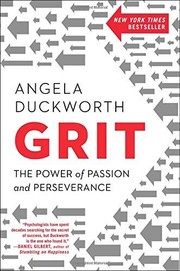
Duckworth's landmark research on grit reframes self-discipline as a long-game quality built from passion and deliberate practice — a crucial capstone that connects all prior science to sustained, lifelong achievement.

The ultimate philosophical anchor for self-discipline — reading Aurelius last allows the reader to recognize Stoic principles (dichotomy of control, daily practice, virtue as habit) through the full lens of modern science already absorbed.
Discussion
Keep reading
Paths that share books, cover the same subject, or open a related topic.