Best Books on Martin Luther King Jr, in Order
This curriculum moves from King's own accessible words, through the definitive biographical accounts, into the broader movement that shaped and surrounded him, and finally to the radical, often-suppressed late King — the thinker who challenged capitalism, the Vietnam War, and systemic poverty. Each stage builds the vocabulary, historical context, and emotional grounding needed to fully absorb the next, so that by the end the reader holds a complete, unromanticized portrait of one of history's most consequential figures.
King in His Own Words
BeginnerHear King's voice directly — his theology, his moral vision, and his rhetorical power — before anyone else interprets him for you.
▸ Study plan for this stage
Pace: 8–10 weeks, ~25–30 pages/day. Start with *Stride toward Freedom* (4–5 weeks), then *Letter from Birmingham Jail* (1 week), then *Strength to Love* (3–4 weeks) to allow time for reflection and rereading key passages.
- Nonviolence as a positive force and spiritual discipline, not mere passivity—King's theological foundation rooted in Christian agape love
- The role of moral conscience and civil disobedience: when and why breaking unjust laws becomes a moral imperative
- King's vision of the Beloved Community as the ultimate goal of the freedom struggle, transcending racial division
- The interconnection of justice, love, and redemption: how King frames racial injustice as a spiritual and moral crisis for all humanity
- Rhetorical power and persuasion: how King uses personal narrative, biblical language, and logical argument to move hearts and minds
- The distinction between surface-level integration and deep transformation of human relationships and institutions
- King's critique of gradualism and complacency: urgency of 'now' versus the false comfort of waiting for change
- What does King mean by nonviolence as a 'way of life' rather than merely a tactic, and how does his theology shape this understanding?
- In *Letter from Birmingham Jail*, what is King's argument for civil disobedience, and how does he respond to the charge that he is breaking the law?
- How does King define the Beloved Community, and what role does love (agape) play in achieving it?
- What is King's critique of gradualism and 'wait' in the struggle for justice? Why does he insist on urgency?
- How does King use personal experience and narrative in *Stride toward Freedom* to illustrate his theological and moral convictions?
- In *Strength to Love*, what does King identify as the sources of strength for those engaged in the freedom struggle, and how do they sustain moral courage?
- Close-read one sermon or chapter from *Strength to Love* and annotate King's use of biblical references, metaphors, and rhetorical devices; write a one-page reflection on how these elements work together to persuade the reader.
- Reread the opening chapters of *Stride toward Freedom* and create a timeline of King's formative experiences (family, education, ministry) that shaped his philosophy; note how he himself traces these influences.
- Read *Letter from Birmingham Jail* aloud (or listen to an audio recording) and mark the passages where King's tone shifts; write a brief analysis of how tone reinforces his argument at each turn.
- Select three key passages—one from each book—that best capture King's vision of nonviolence, the Beloved Community, or moral conscience; memorize or practice reciting them to internalize his voice and cadence.
- Write a dialogue between King (using his own words from these texts) and a hypothetical critic who argues that nonviolence is too slow or that waiting for change is acceptable; ground the dialogue entirely in quotations and ideas from the three books.
- Create a visual map or concept diagram showing how King's theology (from *Strength to Love*), his personal journey (from *Stride toward Freedom*), and his call to action (from *Letter from Birmingham Jail*) interconnect and reinforce one another.
Next up: This stage establishes King's own voice, values, and arguments as the foundation; the next stage will likely examine how historians, theologians, and critics have interpreted, challenged, and built upon these primary texts.

King's own account of the Montgomery Bus Boycott is the perfect entry point: it is accessible, narrative-driven, and introduces his core ideas of nonviolent resistance in his own clear prose.
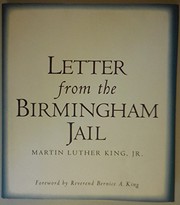
This single document — widely available as a standalone essay or pamphlet — is the most concentrated expression of King's moral and philosophical argument; reading it early sets the intellectual foundation for everything that follows.
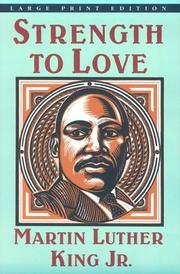
A collection of King's sermons that reveals the preacher and theologian beneath the activist; it deepens understanding of why his movement was spiritually grounded and not merely political.
The Definitive Biography
BeginnerGain a full, chronological, rigorously researched narrative of King's life — the man, the contradictions, the courage, and the cost.
▸ Study plan for this stage
Pace: 12–14 weeks, ~40–50 pages/day (accounting for dense historical narrative and note-taking)
- King's formative years and intellectual development: his family background, theological education, and early philosophical influences (Thoreau, Gandhi, Niebuhr) that shaped his approach to nonviolence
- The Montgomery Bus Boycott as a catalyst: how a local act of resistance became a national movement and established King as a leader
- The strategic philosophy of nonviolent direct action: the theological and practical reasoning behind King's commitment to nonviolence despite violence against his movement
- The role of the Black church and religious community as the organizational and spiritual foundation of the Civil Rights Movement
- King's personal contradictions and private struggles: his doubts, fears, infidelities, and the human cost of leadership and constant danger
- The evolution of King's thinking from local activism to national prominence to his later radical critiques of capitalism, militarism, and systemic injustice
- The interconnected network of activists, organizations, and allies (SCLC, SNCC, local leaders) that made the movement possible—not King alone
- The escalating violence, surveillance, and opposition King faced: from local white resistance to FBI harassment, and how this shaped his later years
- What were the key intellectual and spiritual influences on King's early life and education, and how did they shape his commitment to nonviolence?
- How did the Montgomery Bus Boycott begin, and what made it a turning point in King's life and in the broader Civil Rights Movement?
- What were King's core arguments for nonviolent direct action, and how did he respond to critics—both white opponents and Black activists—who questioned this strategy?
- How did King's thinking evolve from the mid-1950s through the early 1960s, and what new concerns emerged in his later work as documented in *Pillar of Fire*?
- What personal struggles, doubts, and contradictions did King face, and how did these human dimensions affect his leadership and decision-making?
- How did the FBI's surveillance and harassment of King influence his safety, his family, and his ability to lead the movement?
- Create a detailed timeline of King's life from birth through the early 1960s, marking key personal milestones, intellectual turning points, and major movement events; compare it with a standard historical timeline to identify what Branch emphasizes
- Write a 2–3 page character study of King based on Branch's portrayal, focusing on one contradiction (e.g., his commitment to nonviolence vs. his private anger, or his public moral authority vs. his personal infidelities); use specific scenes from the books as evidence
- Trace the organizational structure of the Civil Rights Movement as Branch describes it: map out the key institutions (churches, SCLC, SNCC, etc.), leaders, and relationships; identify how King fit into this ecosystem rather than standing alone
- Select three major speeches or statements by King mentioned in the books (e.g., his sermon on loving enemies, his response to the White Citizens' Council) and analyze the theological and strategic reasoning Branch attributes to them
- Create a 'King's Intellectual Influences' document: identify the thinkers and texts Branch credits with shaping King's thought (Thoreau, Gandhi, Niebuhr, etc.); read one primary source from each and write a paragraph on how it appears in King's work
- Compile a chronology of violence against King and the movement as documented in *Parting the Waters* and *Pillar of Fire*; reflect on how escalating danger might have shaped his evolving views on nonviolence and systemic change
Next up: This stage provides the comprehensive biographical foundation and narrative arc necessary to understand King's mature thought and legacy; the next stage will likely examine his specific speeches, writings, and philosophical arguments in depth, building on the human and historical context established here.

The first volume of Branch's Pulitzer Prize-winning trilogy covers 1954–63 and is the gold-standard biography of King and the early movement; having read King's own words first makes this rich narrative land with far greater force.
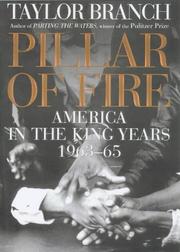
The second volume (1963–65) carries the story through the Civil Rights Act and Selma; it should be read immediately after Parting the Waters to maintain narrative momentum and deepen the biographical arc.
The Movement Around Him
IntermediateUnderstand that King was embedded in a vast, complex movement — one shaped by organizers, women, rival factions, and ordinary people whose stories are essential context.
▸ Study plan for this stage
Pace: 4–5 weeks, ~40–50 pages/day. Start with "Eyes on the Prize" (approximately 400 pages over 2 weeks), then move to "Freedom Is a Constant Struggle" (approximately 200 pages over 2 weeks), with 1 week for review and synthesis.
- The Civil Rights Movement as a decentralized network of local organizers and grassroots activists, not a top-down hierarchy centered on King
- The critical role of women organizers (Ella Baker, Fannie Lou Hamer, Rosa Parks) whose leadership and strategic thinking shaped the movement's direction
- Competing ideologies and factions within the movement (SNCC, SCLC, Nation of Islam, Black Power advocates) and how they challenged and evolved King's approach
- The economic and systemic roots of racial oppression that extended beyond legal segregation, as explored through Davis's framework of interconnected struggles
- King's evolution and limitations: understanding how he was pushed, influenced, and sometimes constrained by the broader movement around him
- The connection between the Civil Rights Movement and other liberation struggles globally, and how movements learn from and inspire one another
- Ordinary people's everyday resistance and courage as the foundation of sustained social change, not exceptional leaders alone
- How does Juan Williams's 'Eyes on the Prize' challenge the narrative that King single-handedly led the Civil Rights Movement? What specific examples does he provide of other leaders and organizers?
- Who were the key women organizers in the movement, and what were their distinct contributions to strategy, mobilization, and vision? How does Williams portray their roles?
- What were the major ideological tensions within the Civil Rights Movement (e.g., between SNCC and SCLC, or between nonviolence and self-defense), and how did these shape the movement's trajectory?
- In 'Freedom Is a Constant Struggle,' how does Angela Davis connect the Civil Rights Movement to broader systems of oppression (prisons, labor, imperialism)? What is her argument about the limits of legal reforms alone?
- How did King's thinking and tactics evolve in response to pressure and critique from other movement actors? What were his blindspots or areas where he was pushed further by others?
- According to Davis, why is understanding the movement as a 'constant struggle' rather than a historical victory important for contemporary activism?
- Create a visual map (timeline or network diagram) of at least 15 key figures from 'Eyes on the Prize' beyond King—include organizers, women leaders, and rival faction leaders—with their roles, key actions, and relationships to one another.
- Write a 2–3 page character study of one woman organizer from Williams's book (e.g., Ella Baker, Fannie Lou Hamer, or Rosa Parks), focusing on her strategic vision and how she influenced the movement differently than King did.
- Identify and analyze 3–4 moments in 'Eyes on the Prize' where the movement fractured, disagreed, or took a different direction than King advocated. For each, explain the competing perspectives and outcomes.
- Read a key speech or essay by Angela Davis (excerpted in 'Freedom Is a Constant Struggle') and write a 2-page reflection on how her analysis of systemic oppression reframes what you learned from Williams about the Civil Rights Movement.
- Conduct a comparative analysis: choose one major campaign or moment covered in both Williams and Davis (e.g., the prison industrial complex's roots in segregation, or economic justice struggles). Write 2–3 pages on how each author illuminates different dimensions of it.
- Interview or survey 2–3 people (peers, mentors, or community members) about which Civil Rights figures they know and why. Compare their answers to the fuller picture you've gained from these books. Reflect on what narratives dominate popular memory and why.
Next up: This stage establishes that King was one crucial voice within a vast, multifaceted movement shaped by collective struggle, ideological debate, and ordinary people's courage—preparing you to examine King's own thought, evolution, and legacy with nuance, recognizing both his contributions and his embeddedness in forces larger than himself.
The companion book to the landmark PBS documentary series gives a panoramic, accessible view of the entire Civil Rights Movement, showing King in relation to the broader struggle rather than as a lone hero.

Davis connects the Civil Rights Movement to global struggles for liberation, pushing the reader to see the movement's radical dimensions and its living legacy — a crucial bridge toward the advanced stage.
The Radical Late King
IntermediateEncounter the King that mainstream memory often erases: the fierce critic of capitalism, militarism, and systemic poverty who was deeply unpopular at the time of his assassination.
▸ Study plan for this stage
Pace: 6–7 weeks, ~40–50 pages/day (approximately 280–350 pages/week). Start with "Where Do We Go From Here" (roughly 3 weeks, ~180 pages), then move to "At Canaan's Edge" (roughly 3–4 weeks, ~500+ pages). Build in 1 week for review and synthesis.
- King's economic critique: his argument that capitalism itself perpetuates poverty and inequality, not merely individual prejudice or lack of opportunity
- The Vietnam War as moral and spiritual crisis: King's conviction that militarism and imperialism are inseparable from domestic racism and poverty
- The concept of 'true revolution' vs. reformism: King's growing belief that incremental civil rights gains were insufficient without structural transformation
- King's unpopularity in 1967–1968: how his radical positions alienated mainstream America, the media, and even some civil rights allies
- The Poor People's Campaign as King's final vision: economic justice and redistribution as the unfinished agenda of the movement
- King's spiritual and theological evolution: how his faith deepened his critique of systemic evil, not just individual sin
- The intersection of race, class, and militarism: King's analysis of how these systems reinforce one another globally
- What specific economic system does King critique in 'Where Do We Go From Here,' and what does he propose as an alternative?
- How does King connect the Vietnam War to the struggle for civil rights and economic justice at home?
- Why was King's stance on Vietnam and poverty so unpopular with mainstream America and the media in 1967–1968?
- What was the Poor People's Campaign, and how did it represent a shift in King's vision for the movement?
- According to Taylor Branch's account in 'At Canaan's Edge,' what internal tensions and external pressures did King face in his final years?
- How did King's theological understanding of sin and redemption evolve to encompass systemic and structural injustice?
- Read and annotate King's 'Beyond Vietnam' speech (referenced in both texts) alongside relevant passages from 'Where Do We Go From Here.' Identify three specific connections between his anti-war stance and his economic critique.
- Create a timeline of King's public positions from 1965–1968, marking moments of increasing radicalism. Use Branch's 'At Canaan's Edge' to identify the events and relationships that shifted his thinking.
- Write a 2–3 page comparative analysis: How does King's vision in 'Where Do We Go From Here' differ from the earlier civil rights goals of the mid-1960s? Use specific quotes from both texts.
- Research and summarize the Poor People's Campaign (using Branch's account). Then write a brief proposal for what King might have advocated for a contemporary issue (housing, healthcare, education) using his framework.
- Debate exercise: Assign roles (King, a moderate civil rights leader, a mainstream journalist, a radical activist). Use passages from both texts to argue whether King's late positions were politically viable or necessary.
- Create a visual map (concept map or infographic) showing King's analysis of how racism, militarism, and capitalism interconnect. Ground each connection in specific evidence from the two books.
Next up: This stage reveals the King that institutional memory suppresses—the uncompromising radical whose vision extended far beyond legal desegregation—preparing you to grapple with how his legacy has been sanitized, contested, and reclaimed by different movements and communities in the decades since his death.
King's final book, written in 1967, is his most radical — demanding guaranteed income, condemning the Vietnam War, and indicting American capitalism; it is essential and best read after the biographical foundation is in place.

The concluding volume of Branch's trilogy (1965–68) chronicles King's most radical and embattled years through his assassination; it is the most emotionally and intellectually demanding of the three and belongs here at the end.
Legacy, Myth, and the Unfinished Work
ExpertCritically examine how King's legacy has been sanitized, co-opted, and contested — and what his unfinished project demands of us today.
▸ Study plan for this stage
Pace: 8–10 weeks, ~40–50 pages/day. *The Radical King* (anthology, ~400 pages) over 4–5 weeks; *To Redeem the Soul of America* (~500 pages) over 4–5 weeks. Build in 1–2 weeks for synthesis and critical reflection.
- King's radical economic and anti-imperialist critique: how mainstream narratives have stripped away his demands for wealth redistribution, opposition to militarism, and structural systemic change
- The distinction between King's actual evolving thought (documented in *The Radical King*) and the 'sanitized' version used in civil rights mythology
- Fairclough's argument about the SCLC's internal tensions, King's strategic choices, and the limits of nonviolence as a movement strategy
- Co-optation and selective memory: how King's legacy has been invoked by political figures and institutions that contradict his core commitments
- The unfinished agenda: poverty, militarism, racism as interconnected systems that King identified but the movement did not fully address
- King's evolution from civil rights to human rights framing and what that shift reveals about the scope of his vision
- The role of institutional power, compromise, and moral witness in social movements—tensions Fairclough explores through King's life
- What specific economic and anti-war positions did King articulate in his later years, and how do they differ from the mainstream civil rights narrative?
- How does *The Radical King* anthology challenge the 'sanitized' version of King, and what speeches or writings are most revealing of this gap?
- According to Fairclough, what internal conflicts existed within the SCLC and King's leadership, and how did these shape the movement's trajectory?
- What does Fairclough mean by the limits of nonviolence, and how does he document King's own wrestling with this question?
- How has King's legacy been co-opted by political and institutional actors, and what would King likely say about these uses of his name?
- What constitutes the 'unfinished work' that King left behind, and what demands does it place on contemporary movements for justice?
- Close-read 3–4 speeches from *The Radical King* (e.g., 'Beyond Vietnam,' 'Where Do We Go from Here?', 'The Other America') and annotate the passages that reveal King's systemic critique; compare these to how King is quoted in mainstream media or political speeches.
- Create a two-column chart: 'King's Actual Positions' (from *The Radical King*) vs. 'Sanitized/Mainstream Narrative.' Fill it with concrete examples from both texts and identify patterns in what gets erased.
- Write a 2–3 page critical analysis of one instance of King's legacy being invoked or co-opted (e.g., a politician's speech, a corporate diversity initiative, a museum exhibit). Use evidence from both books to argue whether this use aligns with or contradicts King's actual vision.
- Trace King's intellectual evolution across *The Radical King* chronologically (early speeches to late speeches). Write a brief essay on how his thinking shifted regarding the relationship between racism, poverty, and militarism.
- Using Fairclough's account of SCLC internal dynamics, create a timeline or narrative of a key moment of tension or strategic choice (e.g., the Memphis campaign, the Poor People's Campaign). Analyze what was at stake and what alternatives existed.
- Design a 'What Would King Do?' exercise: take a contemporary social issue (housing inequality, mass incarceration, U.S. military intervention) and write a 1–2 page position paper in King's voice, grounded in specific passages from *The Radical King* and Fairclough's analysis of his thought.
Next up: This stage equips you to distinguish King's actual radical vision from its institutional domestication, positioning you to examine how contemporary movements can reclaim and extend his unfinished work rather than merely commemorate a sanitized version of it.

West curates King's most challenging speeches and writings with incisive commentary, directly confronting the domestication of King's image and restoring his prophetic radicalism for a contemporary audience.
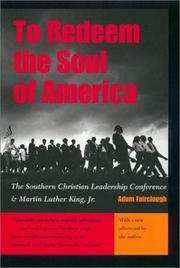
A rigorous scholarly assessment of the Southern Christian Leadership Conference and King's strategic leadership, this book rewards readers who now have the full biographical and ideological context to evaluate King's choices critically.
Discussion
Keep reading
Paths that share books, cover the same subject, or open a related topic.