Understanding your personality type: the best books to explore traits and self-knowledge
This curriculum moves from accessible self-discovery to rigorous science, ensuring the reader builds genuine intuition about personality before encountering the research that confirms, complicates, or refutes popular frameworks. Each stage deliberately challenges the assumptions of the previous one, so the learner arrives at balanced, evidence-grounded self-knowledge rather than a fixed label.
Foundations: What Is Personality?
BeginnerBuild a working vocabulary for personality, understand why humans differ, and get an honest first look at the most widely used frameworks — including their appeal and their limits.
▸ Study plan for this stage
Pace: 4–5 weeks, ~40–50 pages/day. "Quiet" (first 2–3 weeks, ~25 pages/day); "The Personality Brokers" (following 2 weeks, ~40 pages/day)
- Introversion vs. extroversion as a spectrum, not a binary—and why this distinction matters across cultures and contexts
- The historical origins of personality science: Jung's archetypes, Myers-Briggs development, and how personality frameworks emerged from real human observation
- The power and limits of personality typologies—why they're useful tools but not destiny or complete truth
- How personality frameworks became commercialized and embedded in institutions (schools, workplaces, therapy), and the consequences of that shift
- The role of culture, environment, and social expectation in shaping how personality manifests and is measured
- Personality as both innate trait and performed behavior—the gap between who we are and who we present ourselves to be
- Why personality frameworks appeal to us psychologically: the human need for self-understanding, categorization, and validation
- What is introversion according to Cain, and how does her definition challenge common stereotypes about introverts in Western culture?
- How did Carl Jung's work on psychological types influence the development of the Myers-Briggs Type Indicator, and what were his original intentions?
- What are the main criticisms of personality typologies discussed in 'The Personality Brokers,' and why do these frameworks persist despite their limitations?
- How have personality frameworks like Myers-Briggs been used in institutional settings (workplaces, schools, therapy), and what does Emre suggest about the consequences?
- What role does culture play in personality expression and assessment, according to both Cain and Emre?
- Why do personality frameworks appeal to people on a psychological level, and what human needs do they fulfill?
- Take the Myers-Briggs assessment (or a free equivalent like 16Personalities) before reading 'The Personality Brokers.' Write down your type and initial reaction, then revisit this after finishing both books to reflect on how your understanding has shifted.
- Create a two-column chart: one side lists Cain's evidence for introversion as a valid, valuable trait; the other lists societal pressures that undervalue it. Use specific examples from 'Quiet.'
- Interview 3–4 people about their personality type (MBTI, Enneagram, or other framework they know). Ask: Do you believe it? Why or why not? Does it change how you see yourself? Synthesize their responses with Emre's analysis of why these frameworks stick.
- Write a 1–2 page personal narrative: Describe a moment when you felt pressure to act against your natural personality type. How did Cain's or Emre's ideas help you understand that moment differently?
- Trace the 'journey' of one personality concept from Jung through Myers-Briggs to modern usage (e.g., introversion, intuition, thinking vs. feeling). Use both books to show how the meaning or application shifted.
- Design a thought experiment: If personality frameworks didn't exist, how would you describe yourself to someone? What would you lose or gain in that description?
Next up: This stage establishes the vocabulary, history, and critical perspective needed to evaluate specific personality systems in depth—you now understand both why frameworks matter and why they're incomplete, positioning you to explore particular types (MBTI, Enneagram, Big Five, etc.) with both curiosity and healthy skepticism in the next stage.
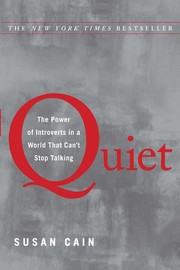
A perfect entry point: it uses the introversion/extraversion dimension (central to almost every personality model) to show how a single trait shapes life in concrete, relatable ways — without overclaiming or reducing people to a type.

Tells the fascinating, critical history of the Myers-Briggs Type Indicator, the world's most famous personality test. Reading this second gives the learner an honest, skeptical lens on popular frameworks before diving deeper.
The Science: Big Five and What Research Actually Shows
BeginnerUnderstand the Big Five (OCEAN) model — the scientific consensus framework — and learn what personality psychology can and cannot reliably tell us about behavior, change, and prediction.
▸ Study plan for this stage
Pace: 4–5 weeks, ~25–30 pages/day. Start with "Personality" by Nettle (approximately 200 pages, 2–2.5 weeks), then move to "The Character Edge" by Caslen (approximately 250 pages, 2–2.5 weeks).
- The Big Five (OCEAN) model: Openness, Conscientiousness, Extraversion, Agreeableness, and Neuroticism as the empirically validated dimensions of personality
- How the Big Five traits are measured, distributed across populations, and stable over time (trait consistency vs. situational variation)
- The evolutionary and biological foundations of personality differences—why these traits exist and what they were selected for
- The limits of personality psychology: what it can predict (broad behavioral tendencies) versus what it cannot (specific behaviors, outcomes, or change without effort)
- The distinction between personality traits and character—traits are relatively fixed, while character involves deliberate development and virtue
- How personality traits interact with environment, context, and choice to shape behavior and life outcomes
- Evidence-based applications: how understanding your Big Five profile can inform self-awareness without determinism
- The role of agency and intentional practice in developing character strengths beyond innate personality traits
- What are the five dimensions of the Big Five model, and how would you describe someone high versus low on each dimension?
- Why does personality psychology emphasize that traits are probabilistic tendencies rather than deterministic predictors of behavior?
- What does Nettle argue about the evolutionary origins of personality variation, and why didn't evolution produce a single 'optimal' personality type?
- How does Caslen distinguish between personality traits and character, and why is this distinction important for personal development?
- What are the main limitations of personality assessment in predicting specific life outcomes, and what factors beyond personality matter?
- How can understanding your Big Five profile be useful without falling into the trap of determinism or self-fulfilling prophecies?
- Complete a Big Five assessment (e.g., IPIP-NEO or similar) and map your scores to the OCEAN dimensions. Write a 1-page reflection on which traits feel accurate and which feel incomplete or context-dependent.
- Read Nettle's discussion of evolutionary trade-offs (e.g., why high extraversion and high conscientiousness are both adaptive in different contexts). Identify a personal strength and a corresponding vulnerability in your own trait profile.
- Create a 'trait × situation' matrix: pick one Big Five trait you scored high or low on, then list 5 situations where that trait helps you and 5 where it hinders you. Reflect on how context shapes expression.
- From Caslen's framework, identify one character strength you want to develop that is *not* your natural personality tendency. Design a 2-week micro-practice to build it (e.g., if you're low in conscientiousness, commit to a specific daily planning ritual).
- Compare two people you know well (or fictional characters) using the Big Five framework. Predict how their trait profiles might lead to different choices, then test your predictions against their actual behavior.
- Write a 'personality limitations' memo: list three important life outcomes you care about (e.g., career success, relationship quality, health), then identify what personality traits matter for each—and what other factors (skills, luck, effort, values) matter equally or more.
Next up: This stage grounds you in the scientific consensus about personality structure and its limits, preparing you to move beyond trait description into practical frameworks for self-assessment, intentional change, and applying personality insights to specific life domains (relationships, career, growth).
The clearest, most accessible introduction to the Big Five written by an evolutionary psychologist. It explains each trait with real research and evolutionary reasoning, making the science feel concrete rather than abstract.

Bridges science and practical application by examining how stable character traits — grounded in Big Five research — predict real-world outcomes, offering a grounded counterpoint to purely theoretical accounts.
Going Deeper: Identity, Narrative, and the Limits of Typing
IntermediateMove beyond trait scores to understand how personality interacts with culture, story, and context — and why rigid self-labeling can be as misleading as it is illuminating.
▸ Study plan for this stage
Pace: 6–7 weeks, ~25–30 pages/day. McAdams (~400 pages) over 2–2.5 weeks, then Mischel (~300 pages) over 2–2.5 weeks, with 1–2 weeks for integration and reflection exercises.
- Life narratives as the primary way humans organize and understand personality — not static traits but evolving stories we construct and revise
- The narrative identity framework: how personality emerges through the stories we tell about our past, present, and imagined future
- Situational specificity and behavioral variability: personality is not consistent across contexts; the same person behaves differently in different situations
- The person-situation interaction: personality traits predict behavior only when situation and trait align; context matters as much as disposition
- The limitations of trait psychology: trait scores capture tendencies but miss the dynamic, contextual, and narrative dimensions of real human behavior
- Cultural and social construction of personality: how culture shapes which narratives are available and which traits are valued
- The coherence problem: how we maintain a sense of unified identity despite behavioral inconsistency across situations
- The danger and utility of self-labeling: understanding when personality categories illuminate versus constrain self-understanding
- According to McAdams, what is a life narrative, and how does it function as a form of personality? How does this differ from trait-based approaches?
- What does McAdams mean by 'redemption sequences' and 'contamination sequences,' and why are these narrative patterns psychologically significant?
- How does Mischel's concept of situational specificity challenge the traditional trait model of personality? What evidence does he provide?
- What is the person-situation interaction, and why is it crucial for understanding why personality traits alone are poor predictors of behavior?
- How do culture and social context shape both the narratives people construct and the traits that are emphasized or valued in personality assessment?
- What are the practical and psychological risks of over-identifying with a personality type or label, and when can such labels still be useful?
- Write your own life narrative (8–10 pages): Identify key chapters, turning points, and recurring themes. Then analyze it using McAdams' framework—where are your redemption sequences? Contamination sequences? What does this reveal that a trait score would miss?
- Conduct a situational behavior audit: Track your own behavior across 5–7 different contexts (work, family, close friends, social gatherings, alone) over one week. Document how your actions, tone, and priorities shift. Reflect on which situations bring out different 'versions' of you.
- Interview someone about their personality using both trait language and narrative language. First, ask them to describe themselves using common trait terms (e.g., 'Are you introverted or extroverted?'). Then ask them to tell a story about a time they surprised themselves or acted against type. Compare what each approach reveals.
- Create a 'personality-situation matrix': List 5–6 core traits you associate with yourself. For each, identify 2–3 situations where you strongly express that trait and 2–3 where you don't. What patterns emerge? When does context override trait?
- Analyze a personality label you've internalized (e.g., 'I'm an introvert,' 'I'm not creative,' 'I'm anxious'). Write about how this narrative has shaped your choices and self-perception. Then identify one situation where you acted contrary to this label. What made that possible?
- Read a case study or biography and apply both McAdams' narrative framework and Mischel's situational analysis. How does the person's behavior vary across contexts? What narrative do they construct to make sense of their inconsistencies?
Next up: This stage equips you to recognize personality as dynamic, contextual, and narrative—preparing you to evaluate how personality frameworks can be applied wisely in real life without reducing human complexity to scores or labels.
Introduces the narrative identity framework: the idea that personality is not just a set of traits but a life story we construct. This reframes everything learned so far and adds crucial depth.
The classic, paradigm-shifting work that challenged the idea of stable, cross-situational traits — the 'person-situation debate.' Essential for understanding why personality science is more nuanced than any single test suggests.
Advanced Synthesis: Change, Wellbeing, and Practical Wisdom
ExpertIntegrate everything into a mature, evidence-based view of personality — one that acknowledges stability and change, avoids determinism, and translates self-knowledge into genuine personal growth.
▸ Study plan for this stage
Pace: 4–5 weeks, ~25–30 pages/day (approximately 180–200 pages total)
- Personal projects as the bridge between personality traits and meaningful life goals — how what we do matters more than what we are
- The distinction between trait personality (stable, inherited) and free traits (adaptable roles we adopt) — and why this distinction liberates us from determinism
- Biogenic needs (sleep, nutrition, exercise) as foundational to personality expression and wellbeing — the biological substrate that enables or constrains growth
- Narrative identity and life stories as tools for integrating past, present, and future into a coherent sense of self
- The role of social context, relationships, and 'niche construction' in shaping how personality manifests and evolves
- Evidence-based strategies for sustainable change: working with your personality rather than against it, and knowing when to adapt versus when to persist
- The mature view of personality: neither fixed nor infinitely plastic, but developmentally responsive to intention, environment, and sustained effort
- What is the difference between trait personality and free traits, and why does this distinction matter for personal change?
- How do personal projects function as a bridge between who you are (personality) and who you want to become (wellbeing and growth)?
- What role do biogenic needs play in personality expression, and how can attending to them improve both stability and adaptability?
- How can you construct a narrative identity that integrates your personality traits, values, and life experiences into a coherent story?
- What is 'niche construction,' and how can you deliberately shape your environment and relationships to support your growth goals?
- What does it mean to work 'with' your personality rather than against it, and what are concrete examples from the book?
- Map your top 3–5 personal projects: What are you working toward? How do they connect to your core values and personality strengths? Which ones energize you, and which drain you?
- Identify a free trait you've adopted (e.g., acting more extroverted in professional settings). Reflect on the cost of maintaining it and whether it serves your wellbeing — then decide whether to keep, modify, or release it.
- Conduct a biogenic audit: Track your sleep, nutrition, and exercise for one week. Note how variations correlate with your mood, energy, and personality expression. Identify one sustainable change.
- Write your narrative identity: Tell the story of who you are, including key turning points, challenges overcome, and how your personality has evolved. Identify themes that connect past to present to future.
- Design your niche: List the environments, relationships, and daily structures that bring out your best self. What changes could you make to spend more time in these niches and less in misaligned ones?
- Create a personality-aligned change plan: Choose one area where you want to grow. Using Little's framework, identify whether you should adapt a free trait, modify your personal projects, adjust your niche, or attend to biogenic needs — then commit to one concrete action.
Next up: This stage establishes personality as a dynamic, context-responsive system grounded in biology and narrative meaning, preparing readers to apply this mature understanding to specific life domains (relationships, work, creativity, resilience) or to deepen their practice through longitudinal self-study and evidence-based interventions.

Written by a leading personality psychologist, this book synthesizes trait science with the concept of 'personal projects' — showing how people transcend their fixed traits through motivated action, offering the most balanced final picture.
Discussion
Keep reading
Paths that share books, cover the same subject, or open a related topic.