Best Books to Understand Gandhi, in Reading Order
This curriculum moves from Gandhi's own voice outward — first hearing his story and philosophy in his words, then deepening through the best biographies, and finally stress-testing everything through serious scholarly and moral criticism. Each stage assumes the vocabulary and context built by the one before it, so the criticisms in Stage 4 land with full force only after the earlier immersion.
Gandhi in His Own Words
BeginnerUnderstand Gandhi's life arc, his core moral vocabulary (satyagraha, ahimsa, brahmacharya, swaraj), and his own account of how his convictions formed — directly from the source.
▸ Study plan for this stage
Pace: 8–10 weeks, ~40–50 pages/day (with reflection breaks). *Autobiography* (~400 pages) over 5–6 weeks; *Hind Swaraj* (~100 pages) over 2–3 weeks, then 1 week for synthesis and review.
- Satyagraha (truth-force): Gandhi's core method of non-violent resistance rooted in absolute commitment to truth, not mere tactical pacifism
- Ahimsa (non-violence): The ethical principle of causing no harm, extending beyond physical violence to thoughts, words, and economic exploitation
- Brahmacharya (celibacy/self-restraint): Gandhi's personal discipline and renunciation as prerequisites for moral authority and spiritual clarity
- Swaraj (self-rule): Both individual self-mastery and collective independence from colonial rule, inseparable from moral regeneration
- Experiments with Truth: Gandhi's autobiographical method—treating life as a laboratory for testing moral convictions, with willingness to revise and learn
- Critique of Western Civilization: Gandhi's diagnosis in *Hind Swaraj* of industrial modernity, railways, and machine culture as spiritually corrosive
- Swadeshi (self-sufficiency): Economic independence through local production and rejection of foreign goods as a form of non-cooperation
- The formation of conviction: How Gandhi's moral vocabulary emerged from lived experience—South Africa, experiments, failures, and spiritual seeking
- What does Gandhi mean by satyagraha, and how does it differ from passive resistance or mere non-violence? Cite specific examples from his South African campaigns in the *Autobiography*.
- How does Gandhi's practice of brahmacharya relate to his claim to moral authority? What role does self-restraint play in his vision of swaraj?
- In *Hind Swaraj*, what is Gandhi's central critique of modern Western civilization, and what alternative does he propose?
- Trace Gandhi's intellectual and spiritual evolution in the *Autobiography*: what were his key turning points, and how did his understanding of truth and non-violence deepen?
- How are ahimsa and swaraj interconnected in Gandhi's thought? Why does he insist that true independence must be moral, not merely political?
- What does Gandhi mean by swadeshi, and how does it function as a form of satyagraha in *Hind Swaraj*?
- Close-read 3–4 key passages from the *Autobiography* (e.g., his account of the Natal Indian Congress, the Tolstoy Farm experiment, or his reflections on celibacy) and write a 500-word analysis of how each reveals his understanding of satyagraha or ahimsa in practice.
- Create a timeline of Gandhi's life arc from the *Autobiography*, marking major moral crises, experiments, and shifts in conviction. Annotate each with the principle (satyagraha, ahimsa, brahmacharya, swaraj) that emerged or deepened at that point.
- Read *Hind Swaraj* as a dialogue and write a 3-page response: What is the 'Editor' (Gandhi) arguing against the 'Reader,' and what is his alternative vision? How does this critique connect to the experiments described in the *Autobiography*?
- Conduct a 'vocabulary audit': collect 10–15 uses of satyagraha, ahimsa, swaraj, and brahmacharya across both texts. For each, note the context and write a one-sentence definition in your own words. How does the meaning evolve or deepen across the texts?
- Write a personal reflection (2–3 pages): Identify one area of your own life where you could practice ahimsa or swaraj as Gandhi defines them. What would it require? What resistance (internal or external) might you face?
- Compare Gandhi's vision of swaraj in the *Autobiography* (individual self-mastery) with his vision in *Hind Swaraj* (collective independence and swadeshi). Write a 2-page essay on how these two dimensions are meant to reinforce each other.
Next up: This stage grounds you in Gandhi's own voice and the lived origins of his moral vocabulary, preparing you to engage critically with secondary interpretations, historical debates about his legacy, and the tensions between his ideals and their implementation in the independence movement.
The autobiography is the essential starting point: Gandhi narrates his own spiritual and political evolution in plain, accessible prose, establishing every key term and episode the rest of the curriculum will revisit and interrogate.
Written as a dialogue, this short manifesto is Gandhi's most concentrated statement of his civilizational critique of modernity and his vision of nonviolent self-rule — read it immediately after the autobiography while his voice is fresh.
The Philosophy of Nonviolence
BeginnerBuild a rigorous conceptual understanding of satyagraha and ahimsa as a political and ethical system, moving from Gandhi's own theoretical writings to the thinker who applied them most consequentially.
▸ Study plan for this stage
Pace: 8–10 weeks, ~25–30 pages/day (alternating between Gandhi and King; Gandhi's text first, then King's parallel application)
- Satyagraha as 'truth-force': the fusion of moral truth-seeking with political resistance, distinct from passive acceptance or violent coercion
- Ahimsa (nonviolence) as an active, constructive principle requiring courage and sacrifice, not mere abstention from harm
- The role of self-suffering and voluntary acceptance of punishment as a means to appeal to the opponent's conscience and transform social structures
- Satyagraha's applicability across contexts: how Gandhi's South African experiments translate to different political and cultural settings
- The relationship between individual moral transformation and collective political action in nonviolent struggle
- Conscience as the ultimate arbiter in satyagraha: the appeal to shared humanity and moral law above state law
- What is the fundamental difference between satyagraha and both passive submission and violent resistance, according to Gandhi's South African writings?
- How does Gandhi define ahimsa, and why does he argue it requires active courage rather than mere passivity?
- What role does self-suffering play in satyagraha as a political strategy, and how does it aim to transform an opponent?
- How does King adapt and apply Gandhi's concepts of satyagraha and ahimsa to the American civil rights context, and what modifications does he make?
- What does it mean to appeal to conscience in satyagraha, and how does this differ from appealing to fear or self-interest?
- How do Gandhi and King each understand the relationship between personal moral discipline and the success of a nonviolent campaign?
- Close-read and annotate 3–4 key passages from 'Satyagraha in South Africa' where Gandhi explicitly defines satyagraha or ahimsa; write a 500-word synthesis of these definitions in your own words
- Create a comparative chart mapping Gandhi's South African campaigns (Natal Indian Congress, Passive Resistance, etc.) against King's major campaigns (Montgomery Bus Boycott, Birmingham, March on Washington); identify structural parallels and differences
- Write a 750-word reflective essay: 'If satyagraha requires self-suffering, what are its ethical limits? When might it become self-destructive rather than transformative?' Ground your argument in specific examples from both texts
- Conduct a dialogue exercise: write out a debate between Gandhi (from South Africa) and a hypothetical violent revolutionary, where you articulate Gandhi's counterarguments to the claim that nonviolence is ineffective
- Identify and analyze 3 passages from 'Stride toward Freedom' where King explicitly references or builds upon Gandhi's philosophy; write brief notes on how King contextualizes these ideas for his American audience
- Design a hypothetical satyagraha campaign for a contemporary injustice: outline the core principles, the self-imposed discipline required, the appeal to conscience, and the anticipated obstacles—then reflect on its plausibility
Next up: This stage grounds you in the philosophical and practical foundations of nonviolent resistance, preparing you to examine how subsequent thinkers and movements have critiqued, extended, or departed from Gandhi's vision in their own historical contexts.

This collection of Gandhi's writings on the theory and practice of nonviolent resistance gives the philosophical backbone that the autobiography only implies — read here before biographers interpret it for you.

King's account of the Montgomery Bus Boycott shows satyagraha translated into a new context; reading it here sharpens your understanding of what is universal versus historically specific in Gandhi's method.
The Major Biographies
IntermediateSee Gandhi's full life and legacy through the eyes of the two most authoritative biographers, gaining historical depth, political context, and a rounded portrait that the autobiography deliberately omits.
▸ Study plan for this stage
Pace: 8–10 weeks, ~40–50 pages/day (approximately 3–4 weeks per biography, with 1–2 weeks for review and integration)
- Gandhi's early life in India, South Africa, and England: how his formative experiences shaped his political philosophy and moral vision
- The development of Satyagraha (non-violent resistance) as both a philosophical principle and a practical political strategy, tested across multiple campaigns
- Gandhi's complex relationship with Indian nationalism, the Congress Party, and competing visions for India's independence and post-independence future
- The tension between Gandhi's personal asceticism and his role as a mass political leader; his use of symbolic action and self-suffering as political tools
- Gandhi's evolving positions on caste, communal violence, partition, and Hindu-Muslim relations, and how these shifted across his lifetime
- The role of Gandhi's spiritual and religious beliefs (Hinduism, Christianity, Islam) in shaping his politics and his appeal to different audiences
- How the two biographies differ in emphasis, interpretation, and access to sources—understanding Gandhi through multiple lenses rather than a single narrative
- How did Gandhi's experiences in South Africa fundamentally alter his understanding of injustice and non-violence, and how did these lessons transfer to his work in India?
- What were the key differences between Yogesh Chadha's and Rajmohan Gandhi's interpretations of Gandhi's role in partition and communal violence?
- How did Gandhi's concept of Satyagraha evolve from theory to practice across the Salt March, Quit India, and other major campaigns?
- What were Gandhi's main disagreements with other Indian nationalist leaders (Nehru, Ambedkar, Bose, etc.), and what do these reveal about competing visions for independent India?
- How did Gandhi balance his personal spiritual practice with his need to mobilize millions of ordinary Indians, and what tensions did this create?
- What is the historical evidence for Gandhi's influence on post-independence India, and where do the two biographies agree or diverge on assessing his legacy?
- Create a detailed timeline of Gandhi's life (1869–1948) marking major events, campaigns, imprisonments, and ideological shifts; compare how Chadha and Rajmohan Gandhi emphasize different turning points
- Read and annotate 2–3 primary source documents (e.g., excerpts from Gandhi's writings on Satyagraha, his letters, or speeches) alongside relevant chapters from both biographies to see how each biographer interprets the same source material
- Write a comparative essay (1,500–2,000 words) analyzing how Chadha and Rajmohan Gandhi differ in their treatment of one major episode (e.g., the Salt March, partition, or Gandhi's assassination) and what those differences reveal about their historical methods
- Map Gandhi's key relationships with other nationalist figures (Nehru, Ambedkar, Jinnah, Bose, etc.); for each, note the points of agreement and conflict, and identify which biographer provides more detail or a more sympathetic reading
- Create a visual chart tracking the evolution of Gandhi's positions on three major issues (e.g., caste, communal violence, economic policy) across his lifetime, citing specific passages from both biographies
- Conduct a 'biography audit': identify 3–5 claims made by Chadha about Gandhi's motivations or impact, then check how Rajmohan Gandhi addresses the same claims—note areas of consensus and dispute
Next up: By reading Gandhi through two authoritative but distinct biographical lenses, you now have a richly contextualized, multi-perspective understanding of his life and legacy that prepares you to engage critically with specialized studies of particular themes (e.g., his economic thought, his relationship to caste, his influence on global movements) and to evaluate competing historical interpretations
A thorough, readable single-volume biography that situates Gandhi firmly in Indian and colonial history — the ideal bridge from Gandhi's self-portrait to the more demanding scholarly literature.
Written by Gandhi's grandson and a serious historian, this biography draws on family archives and offers the most complete and balanced scholarly account of his life; read after Chadha so the detail enriches rather than overwhelms.
Serious Criticisms and Reassessments
ExpertEngage honestly with the strongest scholarly and moral challenges to Gandhi — on caste, race, gender, and the limits of nonviolence — so that your admiration or disagreement is fully informed rather than hagiographic.
▸ Study plan for this stage
Pace: 8–10 weeks, ~40–50 pages/day (with 1–2 reflection days per week). Week 1–2: Ambedkar (150 pp); Week 3–4: Guha (400 pp); Week 5–7: Lelyveld (400 pp); Week 8–10: synthesis and review.
- Ambedkar's fundamental critique: caste as a structural system that nonviolence alone cannot dismantle, and Gandhi's failure to prioritize caste abolition over Hindu-Muslim unity
- The distinction between Gandhi's public ideology and his private beliefs, particularly on race, sexuality, and bodily autonomy (Lelyveld's biographical method)
- Gandhi's evolving positions on caste before and during his political rise, and the gap between his rhetoric and material support for Dalit liberation (Guha's contextual history)
- The limits of satyagraha as a universal moral tool when applied to power imbalances rooted in social hierarchy rather than colonial occupation
- Gender and bodily autonomy: Gandhi's experiments with celibacy, his views on women's sexuality, and the tension between his ascetic ideals and feminist critique
- The question of whether Gandhi's nonviolence was a principled choice or a strategic accommodation to Hindu majority interests
- Race and the South African period: how Gandhi's early racial attitudes and later universalism were shaped by context, not conviction
- The relationship between hagiography and historical truth: how to read Gandhi as a flawed historical actor rather than a moral icon
- What is Ambedkar's core argument about why caste cannot be reformed through nonviolence, and how does he distinguish between caste and class oppression?
- According to Guha, how did Gandhi's position on caste evolve from his early years in India through the independence movement, and what evidence suggests a gap between his public statements and private actions?
- What does Lelyveld reveal about Gandhi's attitudes toward race, sexuality, and bodily autonomy, and how do these revelations complicate the standard narrative of Gandhi as a moral universalist?
- How do the three authors differently explain Gandhi's relationship to Hindu nationalism and the majority Hindu interest, and what are the implications for understanding his nonviolence?
- What are the strongest criticisms each author levels at Gandhi, and where do they disagree with one another in their assessments?
- How would you explain to someone who reveres Gandhi why these critiques matter, and what does 'honest admiration' mean in light of them?
- Close-read Ambedkar's opening argument (pages 1–30) and write a one-page summary of his definition of caste and why he rejects religious reform. Then list three moments in Guha or Lelyveld where Gandhi's actions (or inactions) on caste seem to confirm or contradict Ambedkar's critique.
- Create a timeline of Gandhi's public statements on caste (from Guha) and cross-reference them with Lelyveld's biographical details about his private life and relationships. Note where the two diverge and hypothesize why.
- Read Lelyveld's chapters on South Africa (pp. 1–100) and identify three specific claims about Gandhi's racial attitudes. For each, ask: Is this a product of his era, a personal failing, or a structural blindness? Justify your answer with textual evidence.
- Write a dialogue between Ambedkar and Gandhi (imagined, but grounded in their actual positions as presented in these books) on the question: 'Can nonviolence liberate the oppressed?' Use at least two direct quotes from each author.
- Select one major criticism from each book (e.g., Ambedkar on caste, Guha on Hindu-Muslim politics, Lelyveld on sexuality/celibacy) and write a 2–3 page response as if you were Gandhi's defender, then write a 2–3 page rebuttal from the critic's perspective. Reflect on which argument you find more persuasive and why.
- Compile a list of 10–15 'hard questions' about Gandhi that these three books raise but do not fully resolve. Use these as prompts for discussion or further reading.
Next up: This stage equips you to move beyond hagiography and engage Gandhi as a historical figure whose vision was both genuinely transformative and genuinely limited by the blindnesses of his time and ideology—preparing you to synthesize these critiques into a mature, nuanced understanding of his legacy and its contested meaning for contemporary social movements.

Ambedkar's searing critique of caste Hinduism, and his direct intellectual confrontation with Gandhi over untouchability, is the single most important counter-voice in the Gandhi literature and cannot be skipped.
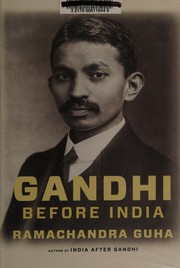
Guha's meticulous scholarship on Gandhi's South African years surfaces the early racial attitudes and contradictions that hagiographies suppress — essential for an honest reckoning with the full man.
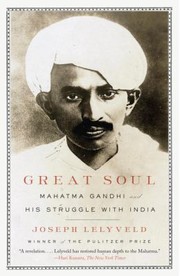
A Pulitzer Prize–winning journalist's unflinching reassessment of Gandhi's personal life, political compromises, and legacy; placed last because its provocations are most productively read after deep familiarity with the primary sources and major biographies.
Discussion
Keep reading
Paths that share books, cover the same subject, or open a related topic.