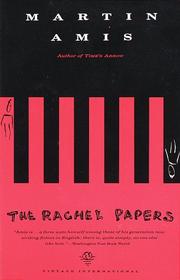
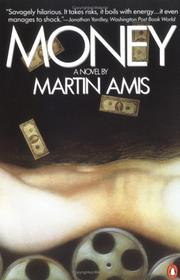
Start with Money. The obvious alternative is The Rachel Papers, his 1973 debut, and it is a bad first Amis for a simple reason: it is a clever young man's book about a clever young man, and it is not yet doing the thing he became famous for. What you are here for is the voice, and Money is where the voice arrives fully formed.
John Self — advertising man, transatlantic hustler, drinking and eating and spending himself toward collapse — narrates his own ruin in prose of extraordinary velocity. The novel is repellent and very funny and almost entirely without a plot in the conventional sense. Fifty pages will tell you whether the style is exhilarating or exhausting, and both reactions are common and defensible. There is no point easing into Amis; the whole question is whether you can take him at full strength.
The London novels
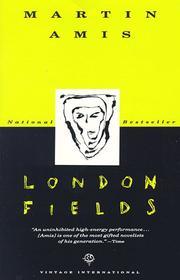
Money, London Fields and The Information are grouped as a loose trilogy of place and theme, not of story — no shared characters, no continuing plot, read in any order.
London Fields is the big one: a murder announced on the first page, a narrator dying of something, a woman arranging her own killing, all set against a vaguely apocalyptic late 1980s. It is his most ambitious novel and his most criticised. The charge that its female characters, Nicola Six in particular, are constructed rather than inhabited has been made seriously and by serious readers, and it is a live argument rather than a settled one; go in aware of it and form your own view. It is also long, and the last hundred pages are the slowest thing in his work.
The Information is about two novelist friends, one successful and one not, and the not-successful one's campaign to ruin the other. Most readers rank it the weakest of the three — the literary-envy material is narrower than the money material — but the sentences are still remarkable.
The history books
Time's Arrow is the one to read next, and it is short. It narrates the life of a Nazi doctor entirely backwards, so that the machinery of the death camps appears to be creating people rather than destroying them. It is a formal stunt, it knows it is a formal stunt, and it works — the device does something no straight account could. Read it in one sitting.
House of Meetings is set in a Soviet labour camp above the Arctic Circle, narrated decades later by a survivor writing to his stepdaughter. It is the least showy book he wrote and one of the best. The Zone of Interest returns to Auschwitz, this time as a comedy of manners among the camp administrators and their wives. That register is deliberately intolerable and some readers refuse it outright; others think it is the sharpest thing he did with the subject. Both responses are reasonable.
The nonfiction
Experience is his memoir, and a substantial number of readers, including some who dislike the novels, consider it the best book he wrote. It moves between his father, the disappearance and murder of his cousin, and a long entanglement with dentistry, and the famous hardness gives way to something else entirely. Read it even if you abandon the fiction.
The War Against Cliché collects twenty-five years of criticism. It is the clearest statement of what he thought writing was for, it is very funny about bad books, and it is the best possible companion to the novels.
Where to stop
Money, Time's Arrow and Experience are a complete Amis: the voice, the formal daring and the man behind both. That is under a thousand pages. Take House of Meetings if you want a fourth. Everything else is for readers who have already decided. His late-career standing is genuinely disputed — several critics hold that the work after the 1990s never matched what came before — and you do not need to settle that question to read the good ones. More reading paths are on Discover.
Follow the full reading path →