Best Books on Malcolm X, in Reading Order
This curriculum moves from Malcolm X's own voice outward — first letting him tell his own story, then layering in scholarly biography, primary speeches, and finally the contested historiography of his final transformation and assassination. Each stage builds the context needed to read the next critically and deeply.
His Own Voice — The Foundation
BeginnerAbsorb Malcolm X's life, worldview, and rhetorical power directly from the source before any outside interpretation colors your reading.
▸ Study plan for this stage
Pace: 8–10 weeks, ~40–50 pages/day (approximately 3–4 hours of focused reading)
- Malcolm X's transformation from street hustler to Nation of Islam minister, and his evolving understanding of Black liberation
- The rhetorical power of Malcolm X's speeches: his use of repetition, historical evidence, and moral urgency to persuade audiences
- Malcolm X's critique of white supremacy, integration, and the limitations of the Civil Rights Movement's nonviolent approach
- The concept of Black self-determination and self-respect as central to Malcolm X's worldview and political philosophy
- Malcolm X's break with the Nation of Islam and his pivot toward orthodox Islam and pan-African solidarity
- The distinction between Malcolm X's early separatist ideology and his later, more nuanced internationalist vision
- Malcolm X's analysis of economic exploitation, colonialism, and the interconnection between domestic racism and global imperialism
- What were the key turning points in Malcolm X's personal journey, and how did each one reshape his understanding of race, religion, and liberation?
- How does Malcolm X use evidence, historical examples, and rhetorical devices in his speeches to build his arguments about Black liberation?
- What is Malcolm X's fundamental critique of the Civil Rights Movement and nonviolent resistance, and what alternative does he propose?
- How did Malcolm X's ideology evolve after leaving the Nation of Islam, and what new directions did his thinking take?
- What does Malcolm X mean by 'any means necessary,' and how does this phrase encapsulate his approach to Black self-defense and liberation?
- How does Malcolm X connect racism in America to colonialism and imperialism globally, and why does he see these as part of the same system?
- Close-read 2–3 of Malcolm X's most famous speeches from 'By Any Means Necessary' (e.g., 'The Ballot or the Bullet,' 'Message to the Grassroots'), annotating his rhetorical techniques, evidence, and logical structure
- Create a timeline of Malcolm X's ideological evolution from his Autobiography, marking key moments and noting how his views on integration, self-defense, and Black nationalism shifted
- Write a 2–3 page analytical essay comparing Malcolm X's worldview at two different points in his life (e.g., as a Nation of Islam minister vs. after his break), using direct quotes from both books
- Engage in a Socratic dialogue or debate with a peer: one person argues Malcolm X's position on self-defense and 'any means necessary,' the other argues a Civil Rights Movement perspective, using evidence from the texts
- Create a visual map or concept diagram showing Malcolm X's key arguments about the interconnection between racism, colonialism, economic exploitation, and Black liberation
- Record yourself delivering one of Malcolm X's shorter speeches or a passage from the Autobiography with attention to his cadence, emphasis, and emotional intensity—then reflect on how his rhetoric shapes meaning
Next up: This stage establishes Malcolm X's authentic voice and core ideas as your foundation, preparing you to engage critically with how historians, scholars, and other thinkers have interpreted, debated, and built upon his legacy.
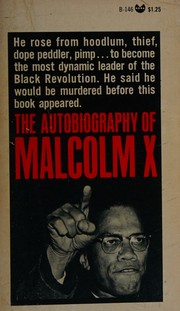
The essential starting point — Malcolm narrates his own transformation from street hustler to Nation of Islam minister to pan-Africanist. Everything else in this curriculum is in conversation with this book.
A curated collection of his speeches and interviews from 1964–65, read immediately after the Autobiography so you hear his mature, post-NOI voice while the memoir is still fresh.
The Speeches in Full
BeginnerEncounter Malcolm's major addresses in their complete, unedited form to understand his rhetorical range, evolution, and the specific audiences he was addressing.
▸ Study plan for this stage
Pace: 6–8 weeks, ~25–30 pages/day (with 2–3 days per week for reflection and note-taking)
- Malcolm's rhetorical evolution from Nation of Islam minister to independent voice, visible across speeches spanning 1952–1965
- The distinction between speeches to Muslim audiences versus speeches to broader Black nationalist and civil rights audiences
- Malcolm's use of historical narrative, biblical/Quranic references, and logical argumentation to construct his case against white supremacy and for Black self-determination
- The concept of 'the ballot or the bullet' as a turning point: Malcolm's shift toward armed self-defense and political independence after leaving the Nation of Islam
- Malcolm's analysis of colonialism, imperialism, and the global context of Black liberation struggles
- How Malcolm's tone, vocabulary, and strategic messaging shift depending on his audience and historical moment
- The relationship between Malcolm's personal transformation and his public rhetoric across different periods
- How does Malcolm's rhetoric and political vision differ between his speeches as a Nation of Islam minister and his speeches after leaving the organization in 1964?
- What are the key arguments Malcolm makes in 'The Ballot or the Bullet' and how do they reflect his break from the Nation of Islam?
- How does Malcolm use historical examples and global context (colonialism, imperialism) to support his argument for Black self-determination?
- What specific rhetorical techniques does Malcolm employ to persuade different audiences—Muslim followers, secular Black nationalists, and international listeners?
- How does Malcolm's position on armed self-defense evolve across the speeches, and what justifications does he offer for this stance?
- What is Malcolm's critique of white liberalism and integration, and how does he present alternatives in his speeches?
- Read 'The Ballot or the Bullet' (1964) in full and annotate 5–7 passages where Malcolm shifts his tone or introduces a new argument; note the rhetorical effect of each shift
- Compare two speeches from different periods (e.g., one from 1952–1963 as a Nation of Islam minister, one from 1964–1965 as an independent) and create a two-column chart contrasting his language, themes, and audience appeals
- Transcribe or paraphrase one complete speech (10–15 minutes of speaking) and identify the logical structure: what is the opening claim, what evidence does he provide, and what conclusion does he draw?
- Listen to audio recordings of at least 2–3 speeches (if available) and note how Malcolm's vocal delivery, pacing, and emphasis reinforce or complicate the written text
- Write a 2–3 page analysis of how Malcolm uses a specific historical reference (e.g., the Congo, slavery, colonialism) across multiple speeches to build his argument
- Create a timeline of Malcolm's major speeches with 2–3 sentence summaries of each, marking the key turning points in his thinking and positioning
Next up: This stage grounds you in Malcolm's unfiltered voice and strategic thinking, preparing you to examine how his ideas were received, debated, and contextualized by his contemporaries and critics in the next stage.
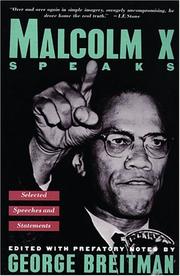
The landmark collection of his most important speeches (1963–65), edited by George Breitman — the standard primary-source text used in universities worldwide.
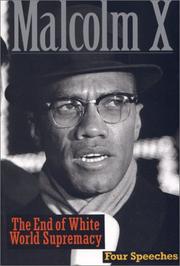
Collects his earlier Nation of Islam sermons, giving essential contrast to the later speeches and showing how dramatically his thinking shifted after leaving the NOI.
The Major Biographies
IntermediateTest and deepen the self-portrait of the Autobiography against rigorous, independently researched scholarly biographies that restore context Malcolm himself omitted or reshaped.
▸ Study plan for this stage
Pace: 8–10 weeks, ~40–50 pages/day. Marable's biography (~600 pages) requires 2–3 weeks; Payne's work (~700 pages) requires 3–4 weeks. Allow 2–3 weeks for overlap, synthesis, and note consolidation.
- Marable's archival method: how newly discovered documents (FBI files, family records, prison correspondence) reveal contradictions between Malcolm's public narrative and private reality
- The Detroit Red years and early criminality: how Marable contextualizes Malcolm's pre-Nation period to complicate the Autobiography's redemption narrative
- Payne's genealogical and family-centered approach: tracing Malcolm's ancestry, maternal trauma, and Earl Little Sr.'s radicalism as foundational to understanding Malcolm's ideology
- The Nation of Islam's internal politics and Malcolm's role: how both biographies document his rise, influence, and the theological/financial tensions that led to his break
- Factual corrections and omissions: specific instances where the Autobiography misrepresents dates, relationships, or events (e.g., his mother's institutionalization, his father's death)
- Malcolm's evolution on race, integration, and Black nationalism: how scholarly context reveals the development of his thinking beyond the Autobiography's compressed timeline
- The final year and assassination: how Marable and Payne independently investigate the NYPD, FBI, and Nation of Islam's roles with documentary evidence
- What major factual claims from the Autobiography does Marable's archival research contradict or complicate, and what new evidence does he present?
- How does Payne's focus on Malcolm's family history and ancestry (particularly his mother's and father's backgrounds) reshape your understanding of his early ideological formation?
- What role did Malcolm's criminality and prison experience play in his conversion, according to Marable, and how does this differ from the Autobiography's account?
- How do Marable and Payne each explain the theological and political tensions between Malcolm and Elijah Muhammad, and what documentary evidence do they cite?
- What were the circumstances surrounding Malcolm's mother's mental breakdown and institutionalization, and why does the Autobiography minimize this event?
- Based on both biographies, what was Malcolm's actual position on integration and interracial cooperation by 1964–65, and how did it evolve from his earlier Nation of Islam years?
- Create a detailed timeline comparing the Autobiography's account of Malcolm's life with Marable's and Payne's versions, marking discrepancies in red and noting which biography provides documentary evidence for corrections.
- Read Marable's chapters on the Detroit Red period and Payne's genealogical sections side-by-side; write a 2–3 page synthesis explaining how each author contextualizes Malcolm's early life differently and what this reveals about narrative authority.
- Annotate Marable's discussion of Malcolm's FBI file and prison correspondence; extract 5–6 direct quotes that contradict the Autobiography, and write a short analysis of what each reveals about Malcolm's actual thoughts or circumstances.
- Chart the theological evolution of Malcolm's thinking on race and integration across both biographies, using chapter summaries and key passages; identify where Marable and Payne agree and where they diverge in interpretation.
- Research one specific claim from Payne's genealogical work (e.g., about Earl Little Sr.'s activism or Malcolm's mother's family background) using external sources; write a brief report on whether Payne's account holds up under independent verification.
- Write a comparative essay (4–5 pages) on how Marable's archival approach and Payne's family-centered approach each illuminate different aspects of Malcolm's character and ideology that the Autobiography obscures.
Next up: Having tested the Autobiography's reliability against rigorous scholarly evidence and understood Malcolm's ideological evolution in full historical context, you are now prepared to examine the contested legacy of his final year and assassination through specialized studies that focus on the specific actors, institutions, and theories surrounding his death.
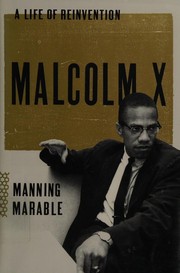
The Pulitzer Prize–winning biography, drawing on decades of archival research — the most comprehensive scholarly life available and the book that reframed the entire field.
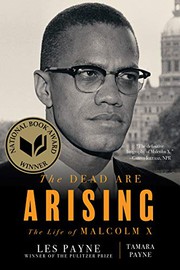
A deeply reported, street-level biography completed by Payne's daughter Tamara after his death; it challenges several of Marable's conclusions and is essential for seeing where scholars disagree.
The Final Year and the Assassination Debate
ExpertEngage with the contested historiography around Malcolm's break with the Nation of Islam, his ideological evolution toward human rights, and the unresolved questions surrounding his murder.
▸ Study plan for this stage
Pace: 4–5 weeks, ~40–50 pages/day (accounting for dense historiographical analysis and note-taking on competing interpretations)
- The contested nature of Malcolm's break from the Nation of Islam: timing, ideological triggers, and competing narratives in Breitman vs. Ball
- Malcolm's shift toward human rights discourse and internationalism in his final year, and how different historians interpret its significance
- The role of FBI surveillance, COINTELPRO, and state involvement in the assassination debate
- Breitman's argument about Malcolm's revolutionary trajectory and Ball's critique of reinvention narratives
- The evidentiary gaps and unresolved questions in the assassination: who was responsible and what remains unknown
- How historiography itself shapes our understanding of Malcolm's legacy—the difference between documented fact, inference, and speculation
- What are the key differences between Breitman's and Ball's interpretations of Malcolm's ideological evolution, and what evidence does each author prioritize?
- How did Malcolm's human rights framework differ from his earlier Nation of Islam teachings, and what does this shift reveal about his political maturation?
- What role does Breitman assign to state surveillance and FBI involvement in the assassination, and how does Ball evaluate this claim?
- What are the major unresolved questions surrounding Malcolm's murder, and why does the historical record remain contested?
- How does Ball critique the 'reinvention' narrative often applied to Malcolm, and what alternative framing does he propose?
- What historiographical lessons can you draw from comparing these two texts about how historians construct competing narratives from the same period?
- Create a detailed timeline of Malcolm's final year (1964–1965) using both texts, marking key ideological statements, organizational moves, and assassination-related events; note where Breitman and Ball diverge in interpretation
- Construct a two-column comparison chart: list Breitman's main arguments about the assassination on one side and Ball's critiques of those arguments on the other, with supporting evidence from each text
- Write a 2–3 page analytical essay addressing: 'To what extent does the evidence support the claim that Malcolm's assassination was politically motivated rather than a result of personal conflict?' Use specific citations from both texts
- Identify and annotate all instances where Breitman and Ball explicitly disagree about facts, causation, or interpretation; for each disagreement, assess which author's evidence seems stronger and why
- Research and compile a separate document on one unresolved question from the assassination (e.g., the role of specific individuals, the extent of state involvement) using only evidence cited in these two texts; write a brief memo explaining what remains unknowable
- Conduct a historiographical analysis: write a 1–2 page reflection on how Breitman's and Ball's different theoretical frameworks (Breitman's focus on revolutionary trajectory vs. Ball's focus on narrative construction) lead them to different conclusions about the same events
Next up: This stage equips you with the critical tools to evaluate contested historical claims and understand how ideology shapes historiography—preparing you to synthesize Malcolm's legacy across competing interpretations and apply these lessons to broader questions about how we construct historical truth.

An early but still-cited investigation into the political circumstances of the assassination, introducing the evidentiary and conspiratorial questions that later scholars would revisit.

A scholarly anthology of critical responses to Marable's biography, essential for understanding the fierce debate his revisionism sparked and for reading all prior books with a more critical eye.
Discussion
Keep reading
Paths that share books, cover the same subject, or open a related topic.