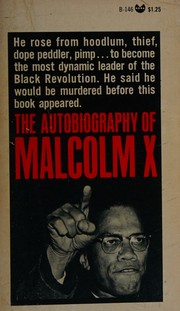
Almost everyone who knows Malcolm X knows him through a single book, and that book is a collaboration completed after his death. The The Autobiography of Malcolm X was written with Alex Haley, a journalist with his own view of where the story should land, and finished when its subject could no longer revise it. That does not make it unreliable — it remains one of the essential American life stories — but it does mean the arc it presents is partly Haley's arc.
The correction is straightforward: read what Malcolm actually said, in the order he said it. His positions changed fast, particularly in the last year after the split from the Nation of Islam and the pilgrimage to Mecca, and the speeches let you watch the change happen rather than accept a retrospective summary of it.
Start with the life, then the voice
Read The Autobiography of Malcolm X first anyway. It is where the Lansing childhood, the Boston and Harlem years, the prison conversion and the rise within the Nation of Islam are told with a narrative force nothing else matches.
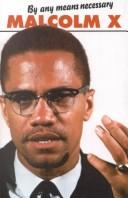
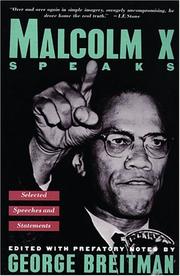
Then move to the speeches. By any means necessary collects the 1964 and 1965 material from the period of the Organization of Afro-American Unity, when he was working out an internationalist, human-rights framing of the Black freedom struggle. Malcolm X Speaks, edited by George Breitman, is the standard collection of the final year and includes The Ballot or the Bullet. The end of white world supremacy gathers four earlier addresses from the Nation of Islam period, and reading these against the later ones is the fastest way to see how much moved and how quickly.
The biographies, and the fight over them
Manning Marable's Malcolm X won the Pulitzer Prize and is the most ambitious scholarly life, drawing on FBI files and previously unused sources. It is also the most contested book on this path: Marable questions portions of the Autobiography's account, revises the picture of the marriage, and reassesses the assassination, and a number of scholars and people close to Malcolm rejected both his methods and his conclusions.
Les Payne's Dead Are Arising, completed by his daughter Tamara Payne after his death, rests on decades of original interviews with people who knew Malcolm before he was famous, including surviving family and early Nation members. It is the strongest book on the early life and often reads as a corrective to Marable.
The assassination, and the argument about the record
The assassination of Malcolm X by George Breitman lays out the case, assembled from the trial record and contemporary reporting, that the official account left central questions unanswered — questions that gained weight when two of the three convictions were vacated in 2021.
Close with Jared A. Ball's A Lie of Reinvention, an edited collection of scholars responding directly and critically to Marable's biography. Reading it after Marable rather than instead of him is the point: you get the charge and the defence, and you are left to weigh them. That is the honest position on Malcolm X's legacy generally — the disagreements about what he meant and where he was heading in 1965 are unresolved, and any book that presents them as settled is telling you less than it seems to.
Browse more reading paths on Discover, or follow the full path to keep these in order.
Follow the full ordered path here: How to Read Malcolm X, in Order.
Ready to learn something deeply?
Build a reading path — free