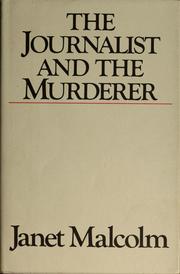
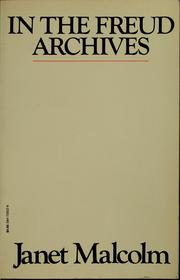
Start with The journalist and the murderer. Its opening sentence — that every journalist who is not too stupid or too full of himself to notice knows that what he does is morally indefensible — is the frame for everything Janet Malcolm ever wrote, and the rest of her body of work reads as a set of variations on it. Beginning anywhere else means meeting the variations before the theme.
Her charge is specific rather than moralising: the journalist gains a subject's trust in order to betray it, and the betrayal is structural rather than a lapse of character. She builds the case out of a real lawsuit between a convicted murderer and the writer who profiled him, and her own position in it is never innocent. Read In the Freud archives immediately afterwards, because it performs the argument rather than stating it — a vicious fight among psychoanalysts over Freud's papers, reported by someone doing precisely what the first book condemns. Malcolm was then sued for libel over it, and the litigation ran for a decade, which makes the ethics uncomfortably concrete.
A practical note: everything of hers is short. A Malcolm book runs 160 to 230 pages, which makes reading the whole catalogue realistic in a way that most bodies of work are not.
Where the method came from
Psychoanalysis, the impossible profession is her first major book and functions as the source code for everything after it. Transference — the patient's feelings about the analyst standing in for feelings about someone else — is the concept she later transplants wholesale onto the relationship between journalist and subject. Resistance, and the analyst's principled suspicion of a patient's own account of themselves, is the posture she takes toward every subject she will ever write about. It is the least famous of her major books and the one that makes the others make sense.
Biography as a crime scene
The Silent Woman is ostensibly about the biographers of Sylvia Plath and is actually about the impossibility of biography — her best book after the first, and it depends on that book's terms. Her image of the biographer as a burglar going through a house is the sentence most readers carry away.
Reading Chekhov is a travel book, a critical study and a comedy about her own bad faith as a tourist in Russia. It is the gentlest thing she wrote and a genuine relief at this point, and it shows that the severity elsewhere is a chosen instrument rather than her only register. Two lives takes Gertrude Stein and Alice Toklas and asks the hardest question she ever asked a subject: how two Jewish women survived Vichy France unmolested. That is biography with the sympathy deliberately withheld.
The courtroom books
A trial is the ideal Malcolm setting: two incompatible stories, a required verdict, and no possibility of both sides being heard fairly. The crime of Sheila McGough is the least read of her books and the most contrarian, a defence of a convicted lawyer that essentially nobody else believed; its argument is that McGough was convicted for being a bad storyteller rather than a criminal. It is where readers most often decide she has overreached, and testing that judgement is the reason to read it. Iphigenia in Forest Hills covers a murder trial in Queens and is the purest late demonstration of her method — compressed, exact, and openly partisan. She admits outright that she has taken a side, which after seven books of dissecting other people's biases is the point rather than a lapse.
The essays and the memoir
Forty-One False Starts is her best collection. The title piece, a profile of the painter David Salle assembled from forty-one abandoned openings, shows the choices a profile normally hides — which is exactly what she spent a career arguing that profiles conceal. Nobody's Looking at You collects the late essays and is lighter, funnier and more sociable than the books.
End with Pictures, published as Still Pictures — her posthumous memoir, written in fragments around old photographs, with an afterword by Ian Frazier. It is the sharpest irony in the catalogue: a writer who spent a career arguing that autobiography is unreliable, writing hers, and refusing to build a continuous life story out of it. Read in this order the argument compounds, and the memoir is only fully legible as the last statement of a case against the memoir.
More reading paths in criticism and reportage on Discover.
Follow the full ordered path here: Janet Malcolm Reading Order: Where to Start.
Ready to learn something deeply?
Build a reading path — free