Best Books to Understand Karl Popper, in Order
This curriculum takes an intermediate reader from Popper's own clearest self-explanations, through his two landmark works, into serious critical engagement, and finally out to his living legacy in science and politics. Each stage builds the conceptual vocabulary needed for the next, so that by the end the reader can evaluate Popper's ideas on their own terms and understand why they remain contested and influential today.
Popper in His Own Words — The Accessible Entry Points
IntermediateGrasp Popper's core ideas — falsifiability, critical rationalism, and the growth of knowledge — in his most readable prose before tackling his technical masterworks.
▸ Study plan for this stage
Pace: 8–10 weeks, ~40–50 pages/day (mix of reading and reflection)
- Falsifiability as the demarcation criterion between science and non-science: how a theory must be testable and capable of being proven wrong
- Critical rationalism: the commitment to rational criticism and the rejection of dogmatism, including rational criticism of reason itself
- The problem of induction and why we cannot prove theories true through observation alone, only refute them
- Conjectures and refutations as the engine of knowledge growth: bold hypotheses followed by rigorous testing and error elimination
- Popper's intellectual autobiography in *Unended Quest*: how his ideas developed in response to logical positivism, Marxism, and psychoanalysis
- The open society and its enemies: how critical rationalism supports democratic pluralism and opposes totalitarian thinking
- Objective knowledge and World 3: the notion that knowledge exists independently of individual minds as abstract objects
- The asymmetry between verification and falsification: why confirming instances are weak evidence but a single refutation is decisive
- What is falsifiability and why does Popper consider it the defining feature of scientific theories rather than verifiability?
- How does Popper's solution to the problem of induction differ from traditional empiricist approaches, and what is his alternative method?
- Explain the process of conjectures and refutations: how does this cycle drive the growth of knowledge according to Popper?
- What is critical rationalism and how does it avoid both dogmatism and relativism?
- How did Popper's encounters with Marxism, psychoanalysis, and logical positivism shape his philosophical outlook, as recounted in *Unended Quest*?
- What is the relationship between Popper's epistemology (theory of knowledge) and his political philosophy regarding open societies?
- Read *Unended Quest* chapters 1–3 and write a 2–3 page personal reflection on how Popper's early intellectual crises (Marxism, psychoanalysis, positivism) parallel or differ from your own encounters with dogmatic thinking
- Select three scientific theories (one from physics, one from biology, one from social science) and for each, identify: (a) what would falsify it, (b) what evidence could confirm it, and (c) whether the falsifiable predictions are testable in principle
- Read the essay 'Science as Falsification' in *Conjectures and Refutations* and write a critical response: where do you think Popper's criterion is strongest and where might it face challenges?
- Construct a detailed case study: take a historical scientific controversy (e.g., the shift from Newtonian to Einsteinian physics, or the acceptance of plate tectonics) and analyze it through Popper's framework of conjectures and refutations
- Debate exercise: argue both for and against the claim that 'Popper's falsifiability criterion excludes legitimate sciences like evolutionary biology or psychology'—use specific examples from *Conjectures and Refutations*
- Read Popper's essays on the open society in *Conjectures and Refutations* and create a one-page diagram showing how critical rationalism logically connects to democratic governance and pluralism
Next up: This stage equips you with Popper's core concepts in accessible language, preparing you to engage with the technical rigor and systematic architecture of *The Logic of Scientific Discovery* and *Objective Knowledge*, where these ideas are formalized and defended against sophisticated objections.

Popper's intellectual autobiography, written for a general audience. It introduces his key ideas in narrative form and explains how he arrived at falsificationism, making it the ideal first encounter with his thought.

A collection of Popper's most accessible essays on the philosophy of science and knowledge. Reading it here cements the vocabulary — demarcation, corroboration, verisimilitude — needed for his denser books ahead.
The Two Masterworks — Logic of Science and Open Society
IntermediateWork through Popper's two foundational texts: the technical argument for falsificationism as the logic of scientific discovery, and his sweeping political-philosophical defence of liberal democracy.
▸ Study plan for this stage
Pace: 12–14 weeks, ~40–50 pages/day. Allocate 4–5 weeks to *The Logic of Scientific Discovery* (450 pages), then 8–9 weeks to *The Open Society and Its Enemies* (800+ pages combined). Build in review weeks after each major text.
- Falsificationism as the demarcation criterion: how falsifiability (not verifiability) distinguishes science from pseudoscience and metaphysics
- The asymmetry between verification and falsification: why no number of positive instances can prove a theory, but one negative instance can disprove it
- Popper's critique of induction: the problem of induction and why empirical observation cannot logically justify universal laws
- The growth of knowledge through conjecture and refutation: science advances by bold hypotheses tested against reality, not by accumulating observations
- Historicism and its dangers: the false belief that history follows discoverable laws that allow prediction of future social development
- The open society as a framework for piecemeal social engineering: gradual, testable reforms versus utopian blueprints
- Popper's critique of Plato and Marx: how closed-system thinking and historical determinism undermine human freedom and rational criticism
- The paradox of tolerance and the defense of liberal democracy: why unlimited tolerance of intolerance threatens the open society itself
- What is falsificationism, and how does Popper use it to distinguish science from pseudoscience? Why is falsifiability more important than verifiability?
- Explain the asymmetry between verification and falsification. Why can no amount of confirming evidence prove a scientific theory true?
- What is the problem of induction, and how does Popper's solution differ from traditional empiricist approaches to justifying scientific knowledge?
- How does Popper's model of 'conjecture and refutation' describe the growth of scientific knowledge? Give an example from a specific scientific theory discussed in the text.
- What is historicism, and why does Popper argue it is both logically flawed and politically dangerous? How does he apply this critique to Marx and Plato?
- Explain the difference between utopian social engineering and piecemeal social engineering. Why does Popper advocate for the latter?
- What is the paradox of tolerance, and how does it justify limiting the freedom of those who would destroy the open society?
- How do Popper's arguments in *The Logic of Scientific Discovery* provide philosophical grounding for the defense of liberal democracy in *The Open Society and Its Enemies*?
- Read Popper's Preface and Introduction to *The Logic of Scientific Discovery*; write a 1–2 page summary of his central problem and why he rejects induction as the foundation of science.
- Select three scientific theories (e.g., Newton's mechanics, Einstein's relativity, evolutionary theory). For each, identify: (a) the core falsifiable predictions, (b) what evidence would refute it, (c) how it has been tested. Document your findings in a table.
- Work through Popper's discussion of probability and corroboration (Chapters 10–11 of *Logic*). Write a short essay explaining why 'corroboration' is not the same as 'confirmation' and why this distinction matters.
- Read Popper's critique of Plato in *The Open Society* (Volume 1). Create a detailed outline of his argument that Plato's ideal state is a closed society, then write a 2–3 page response: where do you find his argument strongest or weakest?
- Analyze Marx through Popper's lens in *The Open Society* (Volume 2). Identify three instances where Popper claims Marx commits the error of historicism. For each, explain the logical flaw and the political consequence.
- Construct a thought experiment: design a utopian social reform and a piecemeal alternative addressing the same problem (e.g., poverty, education, healthcare). Write 2–3 pages comparing them using Popper's framework—which is more rational and why?
- Create a concept map linking falsificationism (*Logic*) to the open society (*Open Society*). Show how Popper's epistemology (theory of knowledge) supports his political philosophy. Include at least 8 connections.
- Debate the paradox of tolerance: write two 1-page position papers—one defending Popper's view that intolerance may justify limiting freedom, one arguing for absolute tolerance. Then write a 1-page synthesis of your own position.
Next up: This stage equips you with Popper's complete philosophical system—his logic of science and his defense of liberal democracy—providing the foundation to examine how subsequent thinkers have extended, challenged, or refined his ideas on falsificationism, the limits of prediction, and the conditions for human freedom.
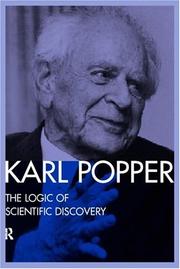
Popper's central work in philosophy of science, establishing falsifiability as the criterion of demarcation. Reading it after the essay collections means the reader already has the intuitions and can focus on the rigorous argument.

Popper's landmark attack on historicism and totalitarianism, engaging Plato, Hegel, and Marx. It should follow the science book because Popper applies the same critical-rationalist method to political philosophy here.
Deepening the Science — Objectivity, Knowledge, and the Mind
IntermediateExplore Popper's later and more ambitious philosophical system: objective knowledge, World 3, and the mind-body problem — extending his epistemology beyond the laboratory.
▸ Study plan for this stage
Pace: 8–10 weeks, ~40–50 pages/day (accounting for Popper's dense philosophical prose and need for re-reading difficult passages)
- World 3: The realm of objective knowledge (theories, problems, arguments) as autonomous from both physical reality and individual minds
- Objective knowledge without a knowing subject: how knowledge can exist independently of any conscious knower
- The three-world ontology: World 1 (physical objects), World 2 (subjective experiences/consciousness), and World 3 (abstract contents)
- The mind-body problem and Popper's interactionist solution: how consciousness causally interacts with the physical brain without reducing to it
- Emergence and downward causation: how higher-level mental phenomena can exert causal influence on lower physical levels
- The growth of knowledge as the evolution of World 3: how scientific and cultural progress occurs through problem-solving in the realm of objective ideas
- Refutation and criticism as mechanisms of intellectual progress: the role of critical engagement with World 3 contents
- The limits of physicalism: why a purely physical account cannot explain consciousness, intentionality, or the existence of abstract objects
- What is World 3, and how does it differ from World 1 and World 2 in Popper's ontology?
- How can knowledge exist objectively without requiring a knowing subject, and what are the implications of this claim?
- What is Popper's solution to the mind-body problem, and how does the concept of downward causation address the apparent gap between mental and physical?
- How does Popper argue that consciousness and subjective experience cannot be fully reduced to or explained by physical brain states alone?
- What role does World 3 play in the growth of human knowledge and cultural evolution?
- How do criticism and refutation operate within World 3, and why are they essential to intellectual progress?
- Map the three worlds: Create a detailed diagram showing World 1, World 2, and World 3 with concrete examples (e.g., a physical brain, the experience of pain, the theory of evolution) and arrows showing how they interact.
- Analyze a scientific theory as World 3 content: Take a theory from your field of interest and describe it as an autonomous object in World 3—what problems does it solve? What new problems does it generate? How has it evolved through criticism?
- Defend and critique the mind-body problem: Write a 2–3 page response to the following: 'If consciousness is just brain activity, how can it causally influence physical events?' Use Popper's interactionist framework.
- Trace knowledge growth in a historical case: Choose a scientific or philosophical controversy (e.g., heliocentrism vs. geocentrism, or the development of quantum mechanics) and show how World 3 evolved through problem-solving and critical engagement.
- Distinguish reduction from emergence: Identify a complex phenomenon (consciousness, language, morality) and explain why Popper would argue it cannot be fully reduced to its physical components, using the concept of emergence.
- Engage with a philosophical objection: Read a contemporary critique of Popper's three-world ontology (e.g., from physicalist philosophers) and write a response defending or refining Popper's position.
Next up: This stage establishes Popper's mature metaphysical and epistemological system—the three-world framework and his solution to the mind-body problem—which provides the philosophical foundation for understanding how his ideas apply to specific domains like evolutionary biology, artificial intelligence, and the nature of human rationality in the next stage.

Popper's mature epistemology, introducing the three-worlds framework and evolutionary epistemology. It builds directly on The Logic of Scientific Discovery and rewards readers who already know his core arguments.
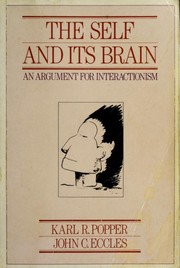
A co-authored dialogue with neuroscientist John Eccles applying Popper's philosophy to consciousness and the mind-body problem — showing the reach of his framework into biology and cognitive science.
The Critics — Kuhn, Lakatos, Feyerabend, and the Debate
ExpertEngage the most important philosophical challenges to Popper — paradigm shifts, research programmes, and anarchist epistemology — so the reader can assess where Popper's account succeeds and where it falls short.
▸ Study plan for this stage
Pace: 8–10 weeks, ~40–50 pages/day. Kuhn (4 weeks, ~35 pages/day), Lakatos (2.5 weeks, ~45 pages/day), Feyerabend (2.5 weeks, ~50 pages/day). Build in 1 week for synthesis and comparative analysis.
- Paradigm shifts and incommensurability: Kuhn's challenge to cumulative progress and the idea that scientific revolutions involve shifts to incomparable frameworks
- Normal science vs. revolutionary science: the distinction between puzzle-solving within an established paradigm and the crisis-driven transition between paradigms
- Research programmes and protective belts: Lakatos's refinement of Popper's falsificationism, allowing theories to survive refutation through auxiliary hypotheses while maintaining a rational core
- Degenerating vs. progressive research programmes: Lakatos's criterion for when a programme should be abandoned, addressing Popper's problem of when to reject a theory
- Anarchist epistemology and methodological pluralism: Feyerabend's argument that no single method guarantees progress and that 'anything goes' in the pursuit of knowledge
- The theory-ladenness of observation: how all three critics challenge Popper's assumption of theory-neutral empirical facts
- Rationality and historical contingency: tensions between rational reconstruction (Lakatos) and historical narrative (Kuhn, Feyerabend) in explaining scientific change
- The problem of demarcation revisited: how these critics expose limits in Popper's falsificationist criterion for distinguishing science from non-science
- What is a paradigm in Kuhn's sense, and how does the shift from one paradigm to another differ from the accumulation of knowledge within normal science?
- How does Lakatos's concept of a research programme with a hard core and protective belt attempt to preserve Popper's rationalism while accommodating the historical persistence of theories despite anomalies?
- What does Feyerabend mean by 'anything goes,' and how does this anarchist epistemology challenge both Popper's falsificationism and Lakatos's rational reconstruction?
- In what ways do Kuhn, Lakatos, and Feyerabend each argue that observation is theory-laden, and what are the implications for Popper's empirical basis?
- How do the three critics differently account for the rationality of scientific choice when paradigms or programmes are incommensurable or lack a neutral standard of comparison?
- Where does Popper's account of science succeed in light of these critiques, and where does it require substantial revision or abandonment?
- Create a detailed paradigm map for a historical scientific revolution (e.g., Copernican astronomy, Darwinian evolution, quantum mechanics): identify the old and new paradigms, list incommensurable concepts, and trace the transition. Compare your analysis to Kuhn's framework.
- Reconstruct a real research programme (e.g., Newtonian mechanics, Darwinian evolutionary theory, or classical physics) using Lakatos's terminology: identify the hard core, protective belt, and auxiliary hypotheses. Assess whether it was progressive or degenerating at key junctures.
- Read a primary source text from a scientist working within a paradigm shift (e.g., Einstein on relativity, Darwin on evolution) and annotate it for theory-ladenness: mark passages where observation is interpreted through theoretical assumptions.
- Debate exercise: Assign roles (Popper, Kuhn, Lakatos, Feyerabend) and stage a dialogue on a contemporary scientific controversy (e.g., climate science, string theory, or AI safety). Each speaker must defend their epistemological position and critique the others.
- Write a comparative essay (1500–2000 words) analyzing how Kuhn, Lakatos, and Feyerabend each respond to a specific problem in Popper's falsificationism (e.g., the demarcation problem, the role of auxiliary hypotheses, or the rationality of theory choice).
- Case study analysis: Select a scientific field in crisis or transition (e.g., the shift from Ptolemaic to Heliocentric astronomy, or from classical to quantum physics). Write a dual narrative: one using Kuhn's paradigm-shift language, one using Lakatos's research-programme framework. Reflect on what each framework illuminates and obscures.
Next up: This stage equips you to recognize the limits of Popper's falsificationism and understand how subsequent philosophers have refined, challenged, or abandoned his framework—preparing you to evaluate contemporary philosophy of science and assess which epistemological approach best fits the actual practice of science.

The single most influential challenge to Popper's picture of science. Kuhn's concept of paradigms and normal science directly contests falsificationism and must be read to understand the post-Popperian debate.
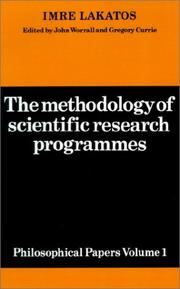
Lakatos was Popper's student and greatest internal critic; his 'sophisticated falsificationism' refines and partly rescues Popper against Kuhn. Reading it here lets the reader triangulate between the two giants.

The most radical critique: Feyerabend argues there is no single scientific method at all, directly targeting Popper. It closes the critical stage by pushing the reader to decide what, if anything, survives of Popper's project.
Popper's Legacy — Influence in Science, Politics, and Society Today
ExpertSee how Popper's ideas have been absorbed, transformed, and applied in contemporary science, economics, and political thought — understanding his enduring relevance and the ongoing debates he sparked.
▸ Study plan for this stage
Pace: 4–5 weeks, ~25–30 pages/day (Magee's book is ~150–180 pages; allows time for reflection and cross-referencing with earlier stages)
- Popper's influence on 20th-century philosophy of science and the rejection of logical positivism
- How falsifiability became the standard demarcation criterion in scientific methodology across disciplines
- Popper's impact on political philosophy: open society, totalitarianism, and liberal democracy
- The reception and critique of Popper's ideas in economics, social science, and policy-making
- Popper's legacy in debates about scientific progress, paradigm shifts, and the nature of knowledge
- Contemporary applications and limitations of Popperian thought in modern scientific practice
- How Popper's work shaped responses to pseudoscience, conspiracy theories, and evidence-based reasoning
- What were the major criticisms of logical positivism that Popper addressed, and how did his falsifiability criterion reshape philosophy of science?
- How have Popper's ideas about the open society influenced contemporary political and economic thought?
- In what ways has Popper's work been applied, modified, or challenged by later philosophers and scientists?
- How does Popper's epistemology address the problem of induction, and what are the ongoing debates about his solution?
- What role does Popper's thinking play in contemporary discussions about pseudoscience, scientific literacy, and evidence-based policy?
- How have economists and social scientists adopted or adapted Popperian methodology, and what tensions arise from these applications?
- Create a timeline mapping Popper's key ideas to their influence on specific scientific fields (e.g., physics, medicine, psychology) — note where falsifiability has been adopted and where it faces challenges
- Write a 2–3 page essay comparing Popper's vision of the open society with one contemporary political or economic debate (e.g., regulation, free speech, institutional design)
- Identify a modern pseudoscientific claim or conspiracy theory and analyze it using Popperian criteria — explain why it fails falsifiability and what makes it unfalsifiable
- Read one peer-reviewed critique of Popper's philosophy (e.g., from Kuhn, Lakatos, or a contemporary source) and write a response defending or refining Popper's position
- Interview or survey 3–5 scientists or policy-makers about whether they use Popperian thinking in their work; document their answers and reflect on the gap between theory and practice
- Create a visual argument map showing how Popper's ideas flow into contemporary debates in one domain (science, politics, or economics) — include counterarguments and unresolved tensions
Next up: This stage consolidates Popper's entire intellectual legacy and prepares you to either engage in specialized applications (e.g., Popper in specific scientific disciplines, economics, or political movements) or to synthesize your learning into a comprehensive critical assessment of his enduring relevance and limitations.
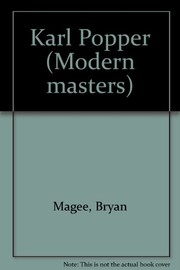
A concise, authoritative intellectual biography by a philosopher who knew Popper personally. It synthesises his whole legacy and is ideal for consolidating everything the reader has learned before turning to contemporary applications.
Discussion
Keep reading
Paths that share books, cover the same subject, or open a related topic.