Science and Technology Studies: The Best Books on How Science Gets Made, in Order
Science and technology studies asks how scientific knowledge and technical systems actually get made — in laboratories, committees, standards bodies and controversies — rather than how a textbook says they should be made. This path starts with a survey and the two books that opened the question, moves into the ethnographies that went and watched scientists work, then back to the seventeenth century where the experiment itself was invented, out to technology, and finally to the field's own grand theory and the attacks on it. It is a social-science reading list, not a philosophy-of-science one: the argument here is about practice, not about justification.
The question the field is asking
BeginnerUnderstand what STS claims that a conventional account of science does not, and get the vocabulary — construction, controversy, closure, the experimenter's regress — before meeting the primary literature. Note the boundary: Kuhn is a historian and philosopher who set the problem, not an STS practitioner, and STS spent decades arguing with the reading of him you will pick up here.
▸ Study plan for this stage
Pace: About three weeks for 602 pages, and all three are short trade-format books rather than monographs. Read Sismondo's 216-page survey first over a week at roughly 30 pages a session, treating it as a map you will come back to. Kuhn's 210 pages take a second week but read far slower than their length s
- Paradigm, normal science, anomaly and incommensurability as Kuhn defines them — and the fact that STS argues with the popular reading of these terms rather than adopting it
- The experimenter's regress: you need a working experiment to know a result is right, and a right result to know the experiment worked
- Construction as a claim about how facts are produced, not a claim that findings are arbitrary
- Controversy and closure — a fact looks settled only after the arguing stops, so live disputes are the field's best evidence
- The distinction Sismondo draws between the sociology of scientific knowledge, SCOT and actor-network theory, so the later books read as rival programmes rather than one voice
- Why STS treats science as something people do in specific places, against a philosophy-of-science account of what science ought to be
- What does Sismondo say STS explains that a philosophy-of-science account leaves out, and where does he concede the critics have a point?
- In Kuhn's account, what makes a period of science normal, and what has to happen before an anomaly becomes a crisis?
- Pick one of Collins and Pinch's seven cases and state the experimenter's regress in it: what would have counted as the experiment working?
- Where does Sismondo's summary of Kuhn differ from what you actually found in Kuhn's own chapters?
- What is a controversy study, and why does STS prefer a dispute that was still open to one that has been settled for a century?
- Take Collins and Pinch's relativity chapter and the cold fusion chapter and write out, for each, the point at which the community decided the apparatus was working. Note which side had to concede first and on what grounds.
- Read Sismondo's chapter summarising Kuhn before reading Kuhn, then again after. Mark every place the survey's compression changed what you took the argument to be.
- Build a one-page glossary from Sismondo — construction, closure, boundary work, the strong programme, symmetry — and keep it beside you for the rest of the path, adding the sense each later author gives the same word.
- Write 300 words defending the claim that Kuhn is not an STS practitioner, using only what is in his own text about what a paradigm shift consists of.
Next up: You now have the vocabulary and the founding problem stated abstractly, which is exactly the state in which the laboratory ethnographies were written to be read — they go and look for construction and closure happening in front of them.

The one genuinely field-wide survey, written to be a first book: it maps the schools, names the arguments between them, and tells you which primary texts are worth your time. Read it first so the ethnographies later do not read as isolated case studies.

The book everything downstream reacts to, including by rejecting it — paradigms, normal science and incommensurability are the shared vocabulary. Note that the catalogue record for this one carries a junk year and an odd co-author credit; the work is Kuhn's 1962 monograph.

Collins and Pinch retell seven famous experiments — relativity, cold fusion, the Sun's neutrinos — showing how much interpretive work sits between an apparatus and a fact. Short, concrete, and the clearest demonstration of the experimenter's regress you will find before tackling Latour.
Go and watch them work: the laboratory ethnographies
IntermediateFollow the move that founded the field — treating a laboratory as a strange culture to be described rather than a place where nature speaks. By the end you should be able to say what an inscription device is, why credibility circulates like currency, and how three different fieldworkers reached different conclusions from the same method.
▸ Study plan for this stage
Pace: Around six weeks for 1,125 pages, and the pace should fall as you go. Laboratory life (294pp) and Science in action (276pp) are Latour's, in that order — the first is fieldwork, the second turns the fieldwork into method, and reading them back to back over two and a half weeks at 40 pages a session
- The inscription device: the machinery that turns a substance into a trace, a chart, a figure in a paper
- Credibility as a circulating currency — grants, positions, citations and results converting into each other
- The black box, and Latour's rule that you study a technical claim while it is still open rather than after it closes
- Following the actors: taking scientists' own accounts seriously as data without accepting them as explanation
- Epistemic culture — that molecular biology and high-energy physics organise evidence, authorship and machines in ways that do not translate
- What a laboratory ethnography can and cannot show, given that Laboratory life studies one lab and Traweek studies two national settings
- Why the same constructivist method produces a hostile-sounding book in one author's hands and a sympathetic one in another's
- What does Latour mean by an inscription device, and what work does the concept do that simply saying instrument would not?
- State three of Science in action's methodological rules and show each one operating somewhere in Laboratory life.
- What does Traweek's comparison of American and Japanese high-energy physics establish that Latour and Woolgar's single site could not?
- How does Knorr Cetina distinguish the two epistemic cultures she studies, and what is her evidence that the difference is not just subject matter?
- Where does each of these four authors say a fact comes from, and can those four answers all be true at once?
- Take one figure or table described in Laboratory life and trace it backwards through the text to the material it started as. Write the chain out as a list of transformations.
- Apply Science in action's follow-the-actors rule to a current dispute reported in a newspaper: list the allies each side has recruited and identify which black box is being reopened.
- Set Traweek's account of how a physicist's career is built against Knorr Cetina's account of authorship in particle physics. Write a page on where the two descriptions of the same field agree and where they do not.
- Reread the opening chapter of Laboratory life after finishing Knorr Cetina and mark every claim Latour and Woolgar make about laboratories in general that their single site could not support.
Next up: Ethnography can only watch a settled method being practised; the next stage goes back to the point where that method was still an argument someone could lose.
Latour and Woolgar's Salk Institute fieldwork is the founding text of laboratory ethnography and the origin of the argument that facts are constructed rather than found. Read it before anything else of Latour's — his later theory only makes sense as a generalisation of this.

The methodological manual: follow scientists and engineers through society, treat black boxes as things that were once open, and read a citation as an alliance. It converts the fieldwork of the previous book into a set of rules you can apply yourself.

An anthropologist inside high-energy physics in the United States and Japan, which is the control case Latour's single-lab study lacks: same physics, two very different cultures of doing it. Traweek is also the corrective to the assumption that constructionist ethnography must be hostile to its subjects.

The comparison that ends the idea of a single scientific method: molecular biology and particle physics turn out to organise evidence, authorship and machines in incompatible ways. Placed last in this stage because it presumes you already know what a lab study looks like.
Where the experiment came from
IntermediateSee the historical version of the same argument, which is where STS is at its strongest evidentially: the experimental method had to be invented and defended, against real opponents, on grounds that were partly political. Understand why the Hobbes–Boyle dispute is treated as the field's foundational case study rather than a curiosity.
▸ Study plan for this stage
Pace: About six weeks for 960 pages across two Shapin books that must be read in order. Leviathan and the air-pump (448pp) is co-written with Simon Schaffer and is the harder of the two: it quotes extensively from seventeenth-century sources, and the chapters reconstructing Boyle's literary technology and
- The three technologies Shapin and Schaffer identify — material, literary and social — by which a matter of fact was made
- Virtual witnessing: writing an experimental report so that a reader who was not present counts as having seen it
- The Hobbes objection, taken seriously — that Boyle's programme secured agreement by restricting what could be disputed, not by settling it
- Trust as a precondition of testing rather than a substitute for it, which is A Social History of Truth's central move
- Gentlemanly honour codes as an epistemological instrument, and who was excluded by them
- Why a historical case gives STS firmer evidential ground than a claim about science in general
- What exactly was at stake between Hobbes and Boyle, and why is it wrong to describe it as a dispute about whether the vacuum existed?
- What is virtual witnessing, and what features of Boyle's prose were doing the work?
- Shapin argues testimony had to be trusted before it could be tested. What is his evidence, and what would count against it?
- Who could and could not serve as a credible witness in Shapin's seventeenth century, and how was that boundary maintained?
- Does A Social History of Truth debunk experimental knowledge or explain how it became possible? Argue from the text.
- Take one of Boyle's experimental reports as Shapin and Schaffer reproduce it and mark every sentence doing social rather than technical work — naming witnesses, hedging, conceding failure.
- Write Hobbes's objection in your own words in 200 words, as strongly as you can, then write Boyle's best reply. Do not resolve it.
- List the categories of person Shapin shows were excluded from credible testimony, and for each find the passage where he gives the justification contemporaries offered.
- Return to the golem chapters from stage one and identify which of Shapin and Schaffer's three technologies is doing the most work in each modern case.
Next up: Having seen the experimental settlement built and defended, you can ask the same question of machines, where the negotiation is still going on and the stakes are openly political.
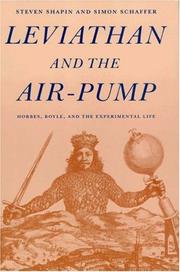
Shapin and Schaffer on Boyle's air-pump versus Hobbes's objections — the book that showed a settled scientific method was once a contested political settlement about who may witness a fact. The single most cited work in the field and the best answer to the charge that STS deals only in assertion.

The sequel argument: seventeenth-century English science ran on gentlemanly codes of honour because testimony had to be trusted before it could be tested. Read after the air-pump book, which it presumes, and note that it is doing history of trust rather than debunking.
The other half of the field: technology
BeginnerMove from science to technology, where the field's claims are easier to test and its politics most direct. Learn the social-construction-of-technology programme and its main internal critique — that describing how a technology was negotiated says nothing about whether the outcome was good.
▸ Study plan for this stage
Pace: Roughly seven weeks for 1,036 pages, and the three books are structurally different objects. The Social construction of technological systems (445pp, Bijker, Hughes and Pinch) is an edited collection — read it as position papers, one or two chapters a sitting over three weeks, and do not expect a si
- SCOT: interpretive flexibility, relevant social groups, and closure applied to artifacts rather than facts
- Large technical systems and reverse salients, Hughes's contribution and the one that scales beyond a single device
- Winner's charge that describing a negotiation is not evaluating it — the internal critique the collection cannot answer on its own terms
- Do artifacts have politics: the difference between a design that embodies a political arrangement and one that merely suits it
- Classification as infrastructure — a category system that becomes invisible once it works, and expensive to change once it is invisible
- Boundary objects and residual categories: what happens to the cases a classification cannot hold
- Why the technology half of STS produces sharper policy claims than the science half
- Reconstruct the bicycle case: which relevant social groups were involved, and what did closure consist of?
- What is Winner's objection to constructivist accounts, and which chapter of the Bijker, Hughes and Pinch collection is most vulnerable to it?
- Take Winner's strongest example of an artifact with politics and state the constructivist reply to it.
- What do Bowker and Star mean by saying classification systems become infrastructure, and what is their evidence from the apartheid case?
- The collection, Winner and Sorting Things Out use the word political in three different senses. Distinguish them.
- Which of these three books gives you the most usable method, and which the most usable politics?
- Apply the SCOT template from the bicycle chapter to a technology you use daily: name the relevant social groups, the interpretive flexibility that once existed, and when closure happened.
- Write Winner's objection as a two-page referee report on the bicycle chapter, quoting both texts.
- Take one classification Bowker and Star analyse and find a case it handles badly. Describe what happens to a person who falls into that residual category.
- Reread Hughes's chapter on large technical systems after finishing Sorting Things Out and note where an infrastructure argument and a systems argument are describing the same thing in different words.
Next up: You have now seen the field's method applied to facts, to history and to machines, which is the evidence base its most ambitious theory generalises from — and the base its critics say the theory outruns.

The Bijker, Hughes and Pinch collection that launched SCOT, large technical systems and actor-network theory in one volume — the bicycle chapter alone is the standard teaching case. An edited collection, so read it as a set of position papers rather than a single argument.

Winner's political-theory answer to the constructivists: artifacts have politics, and a purely descriptive account of how a design got settled ducks the question of who it was settled against. The essential dissenting voice inside the technology half of the field.

Bowker and Star on classification — disease codes, apartheid race categories, nursing work — as the infrastructure that quietly decides what counts. It shows the field's method applied to something that is neither a laboratory nor a machine, which is where STS has travelled furthest since.
The grand theory, and the attack on it
BeginnerRead the field at its most ambitious and at its most exposed, and form your own view. The goal is not to pick a side but to be able to state the strongest version of each: what actor-network theory buys you, and what its critics say it costs in clarity and in the ability to say that some claims are simply better supported than others.
▸ Study plan for this stage
Pace: About four weeks for 471 pages, the shortest stage on the path and the hardest per page. We Have Never Been Modern is only 157pp but is Latour arguing philosophy rather than reporting fieldwork; take two weeks, reread the constitution chapters, and hold each claim against Laboratory life to see whic
- Purification and translation — the two operations Latour says the moderns perform while denying one of them
- The hybrid or quasi-object, and why Latour thinks the nature/society split cannot account for it
- Symmetry extended to non-humans, the move that separates actor-network theory from the earlier sociology of scientific knowledge
- The realism charge: whether a constructivist account can still say one claim is better supported than another
- The difference between attacking a field's weakest published work and attacking its central texts
- Reflexivity — that the same analysis, applied to STS itself, is a problem the field has acknowledged and not solved
- State Latour's modern constitution in your own words. Which parts of it do the lab studies you read in stage two actually evidence?
- What does extending symmetry to non-humans buy an analyst, and what does Winner's objection from the previous stage cost it?
- Which of Gross and Levitt's charges are aimed at the primary texts you have read, and which at work you have not?
- Where is Higher superstition unfair to a particular author, and does the unfairness damage the general argument or only that instance?
- Can you hold that facts are constructed and that some claims are better supported than others? Write the position out and find its weakest point.
- Make two columns for We Have Never Been Modern: claims grounded in the fieldwork you read in stage two, and claims that are not. Count them.
- For each of Gross and Levitt's named targets that you have read in the original, write one paragraph judging whether the summary in Higher superstition is accurate.
- Write the strongest one-page case for the field and the strongest one-page case against it, then mark which of the two you found easier to write and ask why.
- Return to Sismondo's survey from stage one and check how it handles the science wars. Note anything it left out that you now think a first book should have said.
Next up: With the theory and its critics both read in the original, you can judge new work in the field on its evidence rather than on which side it is taken to be on.

Latour's most ambitious and most contested book, generalising the lab studies into a claim about modernity itself — the purification of nature from society that never actually happened. Left until now because it argues over the earlier fieldwork rather than presenting new evidence.
Gross and Levitt's sustained attack from the working-scientist side, and the book that set off the science wars of the 1990s. It is polemical and frequently unfair to particular authors, which is exactly why it should be read after the primary texts rather than instead of them.
Discussion
Keep reading
Paths that share books, cover the same subject, or open a related topic.