Philosophy of Science: Best Books to Read, in Order
This curriculum takes an intermediate learner from the classic questions of how science works—demarcation, falsification, and induction—through the revolutionary ideas of paradigms and research programs, and finally into the deep philosophical debates about scientific realism, truth, and the nature of explanation. Each stage builds the conceptual vocabulary needed to fully appreciate the next, turning a curious reader into someone who can engage seriously with the philosophy of science at a graduate level.
Foundations: How Science Works
IntermediateUnderstand the core problems of scientific reasoning—induction, falsification, and the demarcation of science from non-science—and gain the vocabulary to discuss them precisely.
▸ Study plan for this stage
Pace: 8–10 weeks, ~40–50 pages/day (Popper: 4–5 weeks; Hempel: 3–4 weeks). Popper is dense and requires slower engagement; Hempel is more accessible and can be read at a brisker pace.
- Falsifiability as the criterion of demarcation: how Popper distinguishes science from non-science through the logical asymmetry between verification and refutation
- The problem of induction: why no amount of confirming observations can logically prove a universal theory, and why this matters for scientific reasoning
- Deductive-nomological (D-N) explanation: Hempel's model of scientific explanation as deduction from laws and initial conditions
- The covering-law model: how particular events are explained by subsuming them under general laws
- Corroboration vs. confirmation: Popper's distinction between testing a theory's resilience and claiming it is proven true
- The role of background knowledge and auxiliary hypotheses: how theories are embedded in networks of assumptions that affect what counts as a refutation
- Explanation vs. prediction: the structural symmetry between explaining past events and predicting future ones (Hempel's thesis)
- Probabilistic explanation and statistical laws: how Hempel extends the D-N model to handle indeterministic sciences
- What is falsifiability, and why does Popper argue it is a better criterion for demarcating science from non-science than verifiability?
- Explain the problem of induction: why can empirical confirmation never logically prove a universal scientific theory?
- What is the deductive-nomological (D-N) model of explanation, and what are its main components according to Hempel?
- How does Hempel's covering-law model explain particular events, and what role do laws and initial conditions play?
- What is the difference between corroboration and confirmation in Popper's philosophy, and why is this distinction important?
- Describe the role of auxiliary hypotheses and background knowledge in scientific testing. How do they complicate the idea of a simple refutation?
- According to Hempel, what is the structural relationship between scientific explanation and prediction?
- How does Hempel extend the D-N model to probabilistic and statistical explanations, and what challenges does this raise?
- Falsifiability test: Take three claims (e.g., 'astrology influences personality,' 'evolution explains biodiversity,' 'homeopathy cures disease'). For each, identify what observation would falsify it. If none can be specified, explain why it fails Popper's criterion.
- Induction problem exercise: Collect 20 observations of a phenomenon (e.g., 'every swan I've seen is white'). Write out why these observations, no matter how numerous, cannot logically entail a universal law. Then identify what single observation would refute the law.
- D-N model reconstruction: Take a historical scientific explanation (e.g., why ice floats, or why the sky is blue). Break it down into its D-N components: the explanandum, the explanans, the laws invoked, and the initial conditions. Assess whether it fits Hempel's model.
- Auxiliary hypothesis analysis: Choose a famous scientific controversy (e.g., the perihelion of Mercury, or the Michelson-Morley experiment). Identify the core theory, the auxiliary hypotheses, and the background assumptions. Show how different choices about which hypothesis to revise lead to different scientific outcomes.
- Corroboration vs. confirmation: Describe a scientific test (e.g., testing a drug's efficacy). Write two accounts: one using Popper's language of corroboration, one using language of confirmation. Reflect on what each framing emphasizes or obscures.
- Explanation-prediction symmetry: Take a historical event (e.g., a solar eclipse, or a disease outbreak). Write a post-hoc explanation of why it occurred. Then rewrite it as a prediction made before the event. Discuss whether the two have the same logical structure and what Hempel's thesis implies.
Next up: Mastering these foundational problems—induction, falsification, and the structure of explanation—equips you to critically examine how these ideals are actually applied and contested in specific scientific domains, preparing you to engage with philosophy of particular sciences (physics, biology, etc.) and contemporary debates about scientific realism and progress.
The essential starting point: Popper's falsificationism defines the problem of demarcation and sets the agenda for nearly all subsequent philosophy of science. Reading it first gives you the standard against which every later thinker argues.
A concise, lucid introduction to confirmation, explanation, and the hypothetico-deductive model. It consolidates the logical empiricist framework that Popper challenged, making the debate concrete and accessible.
Revolutions: Paradigms and Scientific Change
IntermediateGrasp how science actually develops historically—through paradigms, anomalies, and revolutions—and understand the sociological and rational challenges to a purely logical picture of science.
▸ Study plan for this stage
Pace: 8–10 weeks, ~40–50 pages/day. Kuhn (4 weeks, ~30 pages/day); Lakatos (2–3 weeks, ~40 pages/day); Feyerabend (2–3 weeks, ~50 pages/day). Build in 1 week for synthesis and comparative analysis.
- Paradigm as a disciplinary matrix: shared exemplars, values, and commitments that define normal science and constrain what counts as a legitimate problem or solution
- Normal science as puzzle-solving within a paradigm, and the role of anomalies in destabilizing paradigmatic consensus
- Scientific revolution as a discontinuous, incommensurable shift in worldview—not cumulative progress but gestalt-like conversion
- Research programmes (Lakatos) as sequences of theories with a hard core, protective belt, and heuristic rules—a rational reconstruction of Kuhn's revolutions
- Degenerating vs. progressive research programmes: how to evaluate competing frameworks without a neutral observation language
- Methodological anarchism (Feyerabend): the historical claim that science has no single method, and the normative claim that pluralism and counterinduction are epistemically fertile
- Incommensurability and theory-laden observation: how different paradigms/programmes may be untranslatable and lack a common measure
- The sociological and irrational dimensions of theory choice: authority, rhetoric, politics, and persuasion alongside rational criteria
- What is a paradigm in Kuhn's sense, and how does it differ from a single theory or a set of methodological rules?
- How does Kuhn distinguish between normal science and revolutionary science, and what role do anomalies play in triggering revolutions?
- What does Kuhn mean by incommensurability, and why does he claim that paradigm shifts cannot be justified by logic or neutral observation alone?
- How does Lakatos's concept of a research programme attempt to preserve rationality and progress while accommodating Kuhn's historical insights about revolutions?
- What is the difference between a degenerating and a progressive research programme, and how can we rationally choose between them?
- What is Feyerabend's methodological anarchism, and what historical examples does he use to argue that science has no universal method?
- How do Kuhn, Lakatos, and Feyerabend each address the problem of theory-laden observation and the role of non-rational factors in science?
- Why does Feyerabend advocate for counterinduction and pluralism, and what does he mean by the claim that 'anything goes'?
- Map a historical case study (e.g., Copernican revolution, quantum mechanics, germ theory) using Kuhn's framework: identify the dominant paradigm, the anomalies that accumulated, the crisis period, and the revolutionary shift. Note what was incommensurable between old and new paradigms.
- Apply Lakatos's research programme structure to the same case: define the hard core, identify the protective belt of auxiliary hypotheses, trace the heuristic rules, and assess whether the programme was progressive or degenerating at key junctures.
- Construct a detailed comparison table of Kuhn, Lakatos, and Feyerabend on five dimensions: (1) the nature of scientific progress, (2) the role of anomalies, (3) the rationality of theory choice, (4) the status of observation, (5) the place of non-rational factors. Identify genuine disagreements and areas of convergence.
- Write a 1,500–2,000 word critical essay: 'Can Lakatos's research programmes rescue the rationality of science from Kuhn's and Feyerabend's challenges?' Use specific textual examples from all three authors.
- Select a contemporary scientific controversy (e.g., climate science, string theory, alternative medicine) and analyze it through the lens of each author. How would Kuhn, Lakatos, and Feyerabend each diagnose the disagreement? What would each recommend?
- Debate exercise (solo or with peers): Take the role of each author in turn and defend their position against the others. For example: defend Feyerabend's anarchism against Lakatos's rationalism, or defend Kuhn's incommensurability against Feyerabend's claim that anything goes.
Next up: This stage establishes that science is neither a purely logical, cumulative enterprise nor a free-for-all, but a historically contingent, socially embedded practice—a foundation for examining how contemporary philosophy of science addresses realism, underdetermination, and the relationship between science and its social context.

The most influential book in 20th-century philosophy of science. Kuhn's concepts of paradigm, normal science, and incommensurability are indispensable and must be read before engaging with any response to him.
Lakatos directly responds to both Popper and Kuhn, offering research programmes as a more sophisticated unit of appraisal. Reading it here shows how the field self-corrects and refines its own ideas.

The radical anarchist counterpoint: Feyerabend argues there is no single scientific method. Reading it after Lakatos—his close colleague—makes the provocation land with full force and prevents dogmatism.
Evidence, Inference, and Explanation
IntermediateDevelop a rigorous understanding of how evidence confirms theories, how scientific explanation works, and how probability and Bayesian reasoning underpin modern philosophy of science.
▸ Study plan for this stage
Pace: 6–7 weeks, ~25–30 pages/day. Week 1–2: Kitcher (Part I & II, ~60 pages). Week 3–4: Kitcher (Part III & IV, ~60 pages). Week 5–6: Howson (~80 pages). Week 7: Review and integration exercises.
- Kitcher's account of scientific progress as increasing explanatory power and unification, not mere accumulation of facts
- The role of conceptual frameworks and problem-solving strategies in determining what counts as evidence
- How scientific explanation works through reduction to fundamental laws and principles (Kitcher's unificationist model)
- Howson's Bayesian framework for understanding confirmation: how prior probabilities, likelihoods, and posterior probabilities govern rational belief updating
- The distinction between deductive-nomological explanation and inductive-statistical explanation, and their limitations
- How auxiliary hypotheses and background knowledge shape which observations count as evidence for or against a theory
- The problem of old evidence and how Bayesian reasoning handles historical cases of theory confirmation
- Inference to the best explanation as a bridge between evidence and theoretical commitment
- According to Kitcher, what distinguishes genuine scientific progress from mere accumulation of true statements? How does his unificationist model of explanation support this view?
- How do conceptual frameworks and problem-solving strategies (in Kitcher's account) determine which observations function as evidence for a scientific theory?
- Explain the Bayesian approach to confirmation in Howson's framework: how do prior probabilities, likelihoods, and posterior probabilities interact to update rational belief in a hypothesis?
- What is the problem of old evidence, and how does Bayesian reasoning (as presented in Howson) resolve or illuminate this problem?
- Compare deductive-nomological and inductive-statistical explanations. What are their respective strengths and weaknesses according to the texts?
- How do auxiliary hypotheses and background knowledge complicate the relationship between evidence and theory confirmation? Use examples from either text.
- Reconstruct Kitcher's unificationist model of explanation using a concrete case study (e.g., Newton's laws unifying terrestrial and celestial mechanics). Identify the fundamental laws, the phenomena unified, and the reduction patterns.
- Take a historical scientific controversy (e.g., phlogiston vs. oxygen, or geocentrism vs. heliocentrism). Map out the conceptual frameworks, problem-solving strategies, and evidence each side appealed to, following Kitcher's framework.
- Work through a Bayesian confirmation problem from Howson: assign prior probabilities to competing hypotheses, calculate likelihoods for observed data under each hypothesis, and compute posterior probabilities. Reflect on how sensitive the conclusion is to prior assumptions.
- Identify a case where auxiliary hypotheses shield a core theory from refutation (e.g., the addition of epicycles to save geocentrism, or auxiliary hypotheses in quantum mechanics). Analyze how Bayesian reasoning would evaluate the rational credibility of such moves.
- Write a 2–3 page analysis of a scientific explanation from your field of interest, evaluating whether it fits the deductive-nomological model, the inductive-statistical model, or neither. Discuss what this reveals about the limits of these models.
- Construct a Bayesian analysis of the 'old evidence' problem: take a piece of evidence known before a theory was proposed (e.g., Mercury's perihelion precession, known before general relativity), and show how Bayesian reasoning can account for why this evidence now confirms the theory.
Next up: This stage equips you with rigorous tools for evaluating how evidence supports theories and how explanation works, preparing you to examine the limits of these frameworks—such as underdetermination, the theory-ladenness of observation, and the role of non-empirical virtues in theory choice—in subsequent stages of the curriculum.
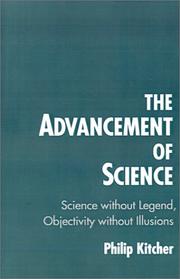
Kitcher synthesizes the post-Kuhn landscape, defending a sophisticated rationalist account of scientific progress. It bridges the historical turn of Stage 2 with the analytic rigor of what follows.
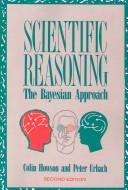
The definitive introduction to Bayesian confirmation theory, which has become the dominant framework for understanding evidence. It equips the reader with the probabilistic tools needed for advanced debates.
Deep Debates: Realism, Truth, and the Nature of Science
ExpertEngage with the hardest questions: Does science describe a mind-independent reality? Are successful theories true? What is the relationship between science and metaphysics?
▸ Study plan for this stage
Pace: 8–10 weeks, ~40–50 pages/day with 2–3 days per week for reflection and note-taking. Suggested pacing: Van Fraassen (3 weeks), Churchland (2.5 weeks), Nagel (2.5 weeks), plus 1 week for synthesis and debate preparation.
- Constructive empiricism: the view that science aims to produce empirically adequate theories rather than true descriptions of reality
- The distinction between observables and unobservables, and why Van Fraassen argues we need not believe in the latter
- Scientific realism and its commitment to the mind-independent existence of theoretical entities
- Churchland's critique of folk psychology and the case for eliminative materialism as an alternative to realism about mental concepts
- The plasticity of mind: how our conceptual schemes and cognitive capacities can be radically revised through scientific progress
- The relationship between reduction, explanation, and ontological commitment in scientific theories
- Nagel's account of the unity of science, reduction, and the logical structure of scientific explanation
- The metaphysical presuppositions embedded in scientific methodology and how they shape what counts as a legitimate theory
- What is constructive empiricism, and how does Van Fraassen's position differ from traditional scientific realism?
- Why does Van Fraassen argue that we should not believe in unobservable entities even if our best theories posit them?
- What is Churchland's eliminative materialism, and what does he mean by the 'plasticity of mind'?
- How does Churchland use the history of science to argue that our current conceptual schemes (including folk psychology) may be radically mistaken?
- What is Nagel's account of scientific reduction, and how does it relate to the question of whether science describes a unified reality?
- How do the positions of Van Fraassen, Churchland, and Nagel differ on the relationship between scientific theories and metaphysical truth?
- Create a detailed comparison chart mapping Van Fraassen's constructive empiricism against scientific realism: list the key commitments, strengths, and weaknesses of each position as you encounter them in *The Scientific Image*.
- Select one theoretical entity from contemporary physics (e.g., electrons, dark matter, or quarks) and write a 2–3 page dialogue between a constructive empiricist and a scientific realist debating whether we should believe in its existence.
- Analyze Churchland's case study of a historical theory (e.g., phlogiston or caloric) from *Scientific Realism and the Plasticity of Mind*: identify what conceptual resources scientists had to abandon and what new ones they had to develop.
- Write a critical response to Churchland's eliminative materialism: identify at least two objections to his view and develop counterarguments, grounding your response in specific passages from the text.
- Using Nagel's framework from *The Structure of Science*, map out the logical structure of explanation in one scientific domain (e.g., thermodynamics, evolution, or quantum mechanics): identify the bridge laws, reduction relations, and metaphysical assumptions at play.
- Construct a 'metaphysical audit' of a scientific theory of your choice: list all the implicit metaphysical commitments (about causation, time, properties, laws, etc.) that the theory seems to presuppose, and discuss whether Van Fraassen, Churchland, or Nagel would endorse them.
Next up: This stage equips you to recognize that the deepest questions in philosophy of science are inseparable from metaphysics and epistemology; the next stage will likely explore how these debates shape specific domains (e.g., physics, biology, psychology) or how contemporary developments (e.g., quantum mechanics, artificial intelligence) force us to revise our answers.

Van Fraassen's constructive empiricism is the most powerful modern challenge to scientific realism. It reframes the entire realism debate and is the unavoidable reference point for every subsequent position.
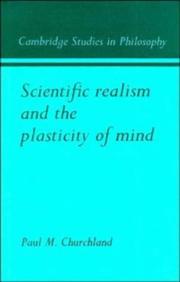
Churchland's direct realist reply to van Fraassen, connecting philosophy of science to philosophy of mind and neuroscience. Reading it immediately after van Fraassen dramatizes the debate at its sharpest.
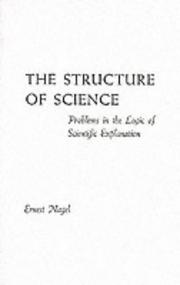
A magisterial treatment of reduction, explanation, and the unity of science. Returning to this classic at the advanced stage reveals how deep the questions of scientific structure truly run, tying the whole curriculum together.
Discussion
Keep reading
Paths that share books, cover the same subject, or open a related topic.