The history of science: how we learned to know
This curriculum traces the story of science from ancient curiosity to modern discovery, building understanding in four stages. It begins with broad, narrative-driven histories to establish context and key figures, then zooms into the pivotal Scientific Revolution, before diving into landmark discoveries and the scientists who made them, and finally reaching more analytical works that explain how science actually works as a human enterprise.
The Big Picture: Science as a Human Story
BeginnerGain a sweeping, accessible overview of how science evolved across civilizations — building the timeline, vocabulary, and cast of characters needed for everything that follows.
▸ Study plan for this stage
Pace: 6–8 weeks total. Week 1–3: "The Disappearing Spoon" (~25–30 pages/day, reading thematically by chapter clusters). Week 4–8: "A Short History of Nearly Everything" (~30–35 pages/day). Allow 1–2 buffer days per week for note-taking and reflection. Read both books in order — Kean's focused, story-drive
- Science as a human, social enterprise — discoveries are made by flawed, competitive, often eccentric people embedded in their historical moment (illustrated vividly through the feuds, obsessions, and accidents in both Kean and Bryson)
- The periodic table as a organizing framework for the history of chemistry and physics — Kean uses element-by-element stories to show how each discovery unlocked the next
- The concept of paradigm-shifting discoveries — moments (radioactivity, the structure of the atom, plate tectonics, the Big Bang) when an entire worldview had to be rebuilt, as Bryson narrates across multiple sciences
- Scale and deep time — Bryson repeatedly reorients the reader to geological, cosmic, and evolutionary timescales, making the recency of human science feel both humbling and astonishing
- The cumulative, collaborative nature of scientific knowledge — no discovery stands alone; both books show how each scientist inherited, challenged, and extended prior work across generations and civilizations
- Risk, failure, and serendipity — from poisonous element hunters in Kean to the near-misses of geology and biology in Bryson, chance and persistence are recurring engines of progress
- Interdisciplinarity — chemistry bleeds into physics, physics into cosmology, geology into biology; both books resist siloing and model how sciences cross-pollinate
- The role of measurement, instrumentation, and naming — Kean's elements and Bryson's units (the parsec, the mole, the geological era) show that science advances when humans agree on precise shared language
- Using specific stories from The Disappearing Spoon, explain how the discovery of at least two elements changed the broader trajectory of science or society — what does this reveal about how scientific progress actually happens?
- Bryson opens A Short History of Nearly Everything with the sheer improbability of existence. In your own words, what argument is he making about humanity's place in the universe, and how does the rest of the book support it?
- Both Kean and Bryson feature scientists who were ignored, ridiculed, or scooped. Choose one example from each book and explain what those stories tell us about the social and institutional forces that shape scientific acceptance.
- How does Bryson convey the concept of deep time (geological and cosmic), and why does he consider it one of the hardest ideas for humans to genuinely internalize? Do you agree after reading?
- The periodic table in Kean's book is described almost as a living map of human curiosity. How does the table's structure reflect the history of discovery rather than just the logic of chemistry?
- After reading both books, how would you define 'scientific progress' to someone who had never studied science? Draw on at least one concrete episode from each book to support your definition.
- Build a living timeline: As you read, maintain a single chronological document (paper or digital) logging every scientist, discovery, and approximate date mentioned across both books. By the end, you should have a personal 'spine' of scientific history spanning ancient observation to the 20th century.
- Element story cards: For every element featured in The Disappearing Spoon, write a 3-sentence index card covering (1) who discovered it and when, (2) the human drama behind the discovery, and (3) one downstream consequence for science or society. Review the deck after finishing Bryson.
- Concept mapping across books: After finishing both books, draw a large concept map connecting at least 10 discoveries or scientists that appear in (or are implied by) both Kean and Bryson. Draw arrows showing cause-and-effect or influence relationships, and annotate each arrow with one sentence.
- The 'explain it to a stranger' test: Choose one chapter from each book and write a 200-word plain-English summary as if explaining it to a curious 14-year-old. Focus on why the discovery mattered, not just what it was — this forces you to internalize the 'so what' of each story.
- Scale exercise inspired by Bryson: Recreate one of Bryson's scale demonstrations (e.g., the solar system on a football field, or compressing Earth's history into a single year). Either physically walk it out, draw it, or build a simple spreadsheet. Then write 3 sentences on what the exercise changed about your intuition.
- Reflection journal — 'Science as a human story': After finishing both books, write a one-page personal response to this prompt: 'Before this stage I thought science was ___. Now I think it is ___.' Quote at least one passage from Kean and one from Bryson to anchor your reflection.
Next up: ">Having absorbed science as a narrative of human curiosity, rivalry, and accident across both books, the reader is now equipped with the timeline, vocabulary, and cast of characters needed to zoom in on specific scientific revolutions — the natural next step in a history-of-science curriculum.
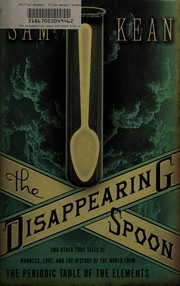
A warm, story-driven entry point that uses the periodic table as a spine to introduce scientific discovery, key figures, and the drama of how knowledge accumulates. Perfect for building enthusiasm and basic vocabulary.

The definitive beginner's panorama of science history — from the Big Bang to modern biology — told through vivid portraits of scientists and their breakthroughs. Establishes the full landscape before later stages zoom in.
The Scientific Revolution: When the Modern World Was Born
BeginnerUnderstand the 16th–17th century transformation — Copernicus, Galileo, Kepler, Newton — that replaced ancient authority with observation, experiment, and mathematics as the basis of knowledge.
▸ Study plan for this stage
Pace: 10–12 weeks total, reading roughly 25–35 pages per day. Suggested breakdown: "The Sleepwalkers" (~550 pp) — weeks 1–5; "Galileo's Daughter" (~420 pp) — weeks 6–8; "The Clockwork Universe" (~400 pp) — weeks 9–11; week 12 reserved for review, reflection, and exercises.
- The Aristotelian-Ptolemaic worldview and why it was so deeply entrenched — philosophically, theologically, and institutionally — before the Revolution began
- Heliocentrism and its radical implications: how Copernicus, Kepler, and Galileo each contributed a distinct piece (hypothesis, mathematical laws, telescopic evidence) rather than one person 'discovering' it all at once
- The role of sleepwalking intuition vs. deliberate method: Koestler's central argument that the great discoverers often stumbled toward truth without fully understanding what they had found
- The interplay of faith and science: how Galileo's conflict with the Church (humanized through his daughter Sister Maria Celeste's letters in Sobel's book) was as much political and personal as it was intellectual
- Kepler's three laws of planetary motion as the crucial mathematical bridge between observational astronomy and Newtonian physics
- The Newtonian synthesis: how Newton, standing on the shoulders of Copernicus, Kepler, and Galileo, unified terrestrial and celestial mechanics under universal gravitation and calculus, as narrated in Dolnick's 'The Clockwork Universe'
- The shift in the basis of knowledge — from ancient textual authority (Aristotle, Ptolemy, Galen) to repeatable observation, controlled experiment, and mathematical law
- The social and institutional context of science: the role of patrons, the Royal Society, correspondence networks, and rivalry (especially Newton vs. Leibniz) in shaping how knowledge was produced and validated
- According to Koestler in 'The Sleepwalkers', in what sense did Copernicus, Kepler, and even Galileo 'sleepwalk' toward their discoveries — and what does this imply about the nature of scientific progress?
- Using Sobel's 'Galileo's Daughter' as your source, how did Galileo's personal relationships, his Catholic faith, and the political dynamics of the Inquisition shape the trajectory of his scientific work and his eventual condemnation?
- What are Kepler's three laws of planetary motion, and why were they indispensable to Newton's later formulation of universal gravitation as explained across 'The Sleepwalkers' and 'The Clockwork Universe'?
- Dolnick describes the 17th-century natural philosophers as believing they were 'reading the mind of God.' How did this theological motivation coexist with — and even drive — the development of rigorous mathematical science?
- How did the Scientific Revolution change the accepted method for settling disputes about the natural world? Contrast the pre-Revolutionary appeal to authority with the post-Newtonian appeal to experiment and mathematics, drawing on all three books.
- Who were the key institutional and social structures (patrons, societies, correspondence networks) that supported or hindered the scientists in these three books, and why does this matter for understanding how science actually works?
- Timeline wall chart: As you read each book, build a single master timeline (paper or digital) placing every major figure, publication (e.g., De Revolutionibus, Sidereus Nuncius, Principia), and event in chronological order. Draw arrows showing intellectual debts — who built on whom. Revisit and expand it after each book.
- Argument reconstruction: After finishing 'The Sleepwalkers', write a one-page summary of Koestler's 'sleepwalking' thesis in your own words, then write a one-paragraph rebuttal. Does the evidence from Sobel and Dolnick support or complicate Koestler's view?
- Letter from the past: Inspired by the real letters in 'Galileo's Daughter', write a fictional one-page letter from Sister Maria Celeste to a fellow nun explaining, in plain language, what her father's telescope revealed and why it frightened the Church. This forces you to translate technical and political content into human terms.
- Kepler's laws in action: Look up a simple online simulator of planetary orbits (e.g., the PhET 'My Solar System' simulation). Adjust orbital parameters and observe how Kepler's laws (ellipses, equal areas, period-distance relationship) play out visually. Connect what you see to the descriptions in 'The Sleepwalkers' and 'The Clockwork Universe'.
- The God-and-gravity question: Dolnick emphasizes that Newton and his contemporaries saw mathematics as the language of divine creation. Write a 300-word reflection: Do you think science and religious motivation are fundamentally in tension, complementary, or something more complicated? Use specific examples from all three books to support your view.
- Book-to-book debate: Create a simple two-column comparison table. Column A: 'What this book says about why the Revolution happened.' Column B: 'What the other books add, contradict, or nuance.' Fill it in for all three books. Identify the single biggest point of tension or surprise across the three authors' perspectives.
Next up: By understanding how the Newtonian synthesis established mathematics and experiment as the gold standard of knowledge, the reader is now equipped to follow how the 18th and 19th centuries extended — and eventually strained — that framework across chemistry, biology, electricity, and geology in the next stage of the curriculum.
A deeply human account of Copernicus, Tycho Brahe, Kepler, and Galileo that shows how messy, personal, and non-linear the revolution really was. Read first to get the narrative before the analysis.

Uses Galileo's letters with his daughter to ground the conflict between science and the Church in intimate human detail, reinforcing the period's stakes and personalities established by Koestler.
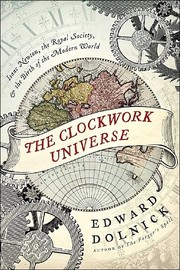
Bridges from Galileo to Newton, explaining how 17th-century thinkers came to see nature as a machine governed by mathematics — the philosophical payoff of the Scientific Revolution.
Great Discoveries and the People Behind Them
IntermediateExplore landmark breakthroughs — evolution, electromagnetism, relativity, quantum mechanics, DNA — understanding both the science itself and the human drama of discovery.
▸ Study plan for this stage
Pace: 10–12 weeks total, reading ~25–35 pages per day. Suggested pacing: Darwin's "On the Origin of Species" in weeks 1–4 (it is dense and rewards slow, annotated reading); Watson's "The Double Helix" in weeks 5–7 (a faster, narrative-driven read); Isaacson's "Einstein" in weeks 8–12 (a long biography bal
- Natural selection and variation: Darwin's core mechanism — heritable variation + differential survival/reproduction = gradual change over generations
- Deep time and the fossil record: Darwin's argument that Earth's age and the geological record support slow, cumulative change
- Common descent: the 'tree of life' idea that all organisms share ancestors, and how Darwin marshals comparative anatomy, embryology, and biogeography as evidence
- The sociology of scientific priority: Watson's account of the race for DNA structure reveals how competition, collaboration, data-sharing (and data-withholding) shape discovery — including the contested role of Rosalind Franklin's X-ray diffraction work
- Model-building as a scientific method: Watson and Crick's use of physical molecular models, guided by Chargaff's base-pairing rules and Franklin's diffraction data, as a strategy distinct from pure bench experimentation
- Special and General Relativity: Isaacson traces Einstein's 1905 thought experiments (the light-beam chase) to the special theory, and then the decade-long struggle to incorporate gravity into the general theory — key ideas include the equivalence principle, spacetime curvature, and the bending of li
- The quantum puzzle and Einstein's ambivalence: Isaacson shows Einstein as both a founder of quantum theory (photoelectric effect, 1905) and its most famous critic ('God does not play dice'), illustrating how even great scientists can resist paradigm shifts they helped create
- Science as a human drama: across all three books, discovery emerges from personality, obsession, rivalry, institutional context, and luck — not just logic
- After reading Darwin, can you explain in plain language why natural selection is sufficient to produce new species over time, and what Darwin himself considered the three strongest objections to his theory?
- Watson's narrative is famously told from a single, self-interested perspective. What does his account reveal — and conceal — about Rosalind Franklin's contribution, and what does this tell you about how scientific credit is assigned?
- How did Einstein's 1905 'miracle year' papers each challenge a foundational assumption of 19th-century physics, and why did Isaacson argue that Einstein's outsider status at the patent office was an asset rather than a handicap?
- All three books show scientists working with incomplete or contested data. Choose one example from each book and compare how the scientist responded to uncertainty — what strategies did Darwin, Watson/Crick, and Einstein each use?
- Isaacson portrays Einstein's relationship with quantum mechanics as a paradox: he helped build it yet fought it. Using specific episodes from the biography, explain why Einstein found quantum indeterminacy philosophically unacceptable.
- Taken together, do these three books support the idea of the lone genius, the collaborative team, or something more complex as the driver of great discovery? Use evidence from all three texts.
- Annotated margin dialogue: While reading Darwin, write a one-sentence 'objection' in the margin every time you feel skeptical, then find Darwin's own rebuttal (he anticipates most of them in the text). At the end, tally which objections he answered satisfactorily and which feel unresolved — this trains close reading of scientific argument.
- Draw the 'tree of life': After finishing 'On the Origin of Species,' sketch Darwin's branching diagram (the book's only illustration) from memory, then populate it with five real organisms of your choice, annotating each branch with the trait or evidence Darwin would cite for that divergence.
- Franklin's data reconstruction: After 'The Double Helix,' research Photo 51 (freely available online). Write a one-page reflection on what structural information a trained crystallographer could extract from it, and compare that to how Watson describes first seeing it — note the gap between his account and the historical record.
- Thought-experiment journal: Isaacson shows Einstein thinking in pictures. Choose one of Einstein's famous thought experiments (the light-beam chase, the falling elevator) and write it out as a first-person narrative from Einstein's perspective, then translate the narrative into the physical principle it demonstrates.
- Comparative 'discovery timeline': Build a single timeline across all three books marking key events (Darwin's Galápagos visit, the Wallace letter, Watson and Crick's model-building sessions, Einstein's 1905 papers, the 1919 eclipse confirmation). Annotate each event with one 'human factor' (rivalry, luck, institutional pressure) and one 'scientific factor' (key data, prior theory) that drove it.
- Synthesis essay — 500 words: Argue for or against this claim: 'The history of science is better understood as a social process than as a sequence of individual insights.' Use at least one specific episode from each of the three books as evidence.
Next up: By seeing how individual breakthroughs in biology and physics were shaped by human context, competing paradigms, and institutional forces, the reader is now primed to zoom out and examine science as a collective, self-correcting system — the natural focus of a next stage on the philosophy and sociology of scientific revolutions.
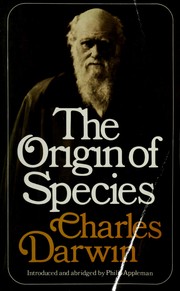
Reading Darwin's own argument — accessible and elegantly written — gives firsthand experience of how a revolutionary scientific idea is built from evidence. A cornerstone of any serious history of science.
A candid, novelistic insider account of the race to discover DNA's structure. Illustrates how modern science actually operates — competition, collaboration, ambition, and serendipity — in a short, gripping read.
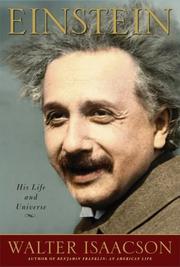
A thorough yet readable biography that explains special and general relativity in context, showing how thought experiments and imagination — not just data — can overturn centuries of physics.
How Science Works: Deeper Analysis
ExpertMove beyond narrative to understand the philosophy and sociology of science — how paradigms shift, how theories are tested, and what it really means for science to 'progress'.
▸ Study plan for this stage
Pace: 6–8 weeks total: Weeks 1–4 for "The Structure of Scientific Revolutions" (~20–25 pages/day, including re-reading dense sections on paradigms and incommensurability); Weeks 5–8 for "The Demon-Haunted World" (~30–35 pages/day, with journaling pauses after each chapter).
- Paradigms and paradigm shifts: Kuhn's central claim that science operates within shared frameworks that are periodically overthrown, not gradually refined
- Normal science vs. revolutionary science: the distinction between puzzle-solving within a paradigm and the crisis-driven ruptures that replace it
- Incommensurability: Kuhn's controversial idea that competing paradigms cannot be fully translated into each other's terms, challenging the notion of linear progress
- The role of anomalies and crises: how accumulating puzzles that resist solution eventually destabilize a reigning paradigm
- Scientific progress as non-teleological: Kuhn's argument that science evolves away from problems rather than toward an ultimate truth
- Sagan's Baloney Detection Kit: a practical toolkit of logical and rhetorical red flags for evaluating claims — from ad hominem attacks to appeals to authority
- The relationship between science and pseudoscience: Sagan's exploration of why pseudoscience is appealing and how to distinguish it from genuine inquiry
- Skepticism as a civic virtue: Sagan's argument that critical thinking and scientific literacy are essential to democracy and human flourishing
- According to Kuhn, what is a 'paradigm' and how does it both enable and constrain scientific inquiry during periods of normal science?
- What conditions must be met, according to Kuhn, for a scientific community to abandon one paradigm in favor of another — and why is this process never purely logical?
- What does Kuhn mean by 'incommensurability,' and what are the strongest arguments for and against this concept as a description of real scientific history?
- How does Sagan's 'Baloney Detection Kit' operationalize the philosophy of science described by Kuhn — and where do the two authors' views on scientific rationality agree or tension with each other?
- Using both books, how would you define the difference between a scientific theory and a pseudoscientific claim? What criteria emerge from each author?
- Sagan argues that science is both a body of knowledge and a way of thinking. How does this dual definition relate to Kuhn's account of how scientific communities actually behave?
- Paradigm Mapping: Choose one historical scientific revolution (e.g., Copernican astronomy, Newtonian to Einsteinian physics, or the germ theory of disease) and write a 1–2 page analysis using Kuhn's framework — identify the old paradigm, the anomalies that accumulated, the crisis, and the shift. Cite specific passages from 'The Structure of Scientific Revolutions'.
- Baloney Detection Audit: Find three real-world claims (one from a news article, one from a social media post, one from an advertisement or political speech) and run each through Sagan's Baloney Detection Kit from 'The Demon-Haunted World'. Document which specific fallacies or red flags apply and why.
- Incommensurability Debate: Write a short (1-page) steelman of Kuhn's incommensurability thesis, then write a 1-page rebuttal. Conclude with your own verdict on whether the concept holds up — grounding both sides in examples from the book.
- Kuhn vs. Sagan Dialogue: Draft a fictional one-page dialogue between Kuhn and Sagan debating whether science is fundamentally rational. Use only positions and arguments that are genuinely attributable to each author based on your reading.
- Personal Skepticism Log: For two weeks alongside your reading of 'The Demon-Haunted World', keep a daily log of one claim you encountered that day. Apply Sagan's tools to evaluate it. At the end, review your log: did your evaluations improve over time?
- Concept Glossary: Build a living glossary of 15+ terms across both books (e.g., paradigm, normal science, anomaly, falsifiability, ad hoc hypothesis, argument from authority). For each term, write the definition in your own words and provide one concrete historical or contemporary example.
Next up: Mastering how paradigms shift (Kuhn) and how to critically evaluate scientific claims (Sagan) equips the reader with the analytical lenses needed to engage with the actual history of specific scientific disciplines — examining whether real episodes in physics, biology, or medicine conform to, complicate, or enrich these theoretical frameworks.

The single most influential book on how science actually changes — through paradigm shifts rather than smooth accumulation. Now that you know the history, Kuhn's framework will click into place with vivid recognition.
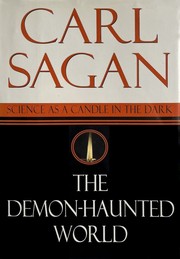
Sagan's passionate defense of the scientific method and critical thinking synthesizes the entire curriculum — asking what science is for and why it matters. A powerful, humanistic capstone to the journey.
Discussion
Keep reading
Paths that share books, cover the same subject, or open a related topic.