Popper is easy to summarise and hard to summarise correctly. The slogan version says a theory is scientific only if it can be refuted by evidence, which is roughly right and leaves out everything that makes the position defensible: what counts as a refutation, why no single failed prediction settles anything, and how you compare two theories that have both survived so far. Popper spent decades on those questions, and the answers are not in the slogan.
He is also two thinkers who happen to share a name. The philosopher of science and the political theorist of the open society wrote in different registers for different audiences, and the connection between them — that both rest on fallibilism, on the claim that we cannot secure certainty and should build institutions that make error correctable — is easier to see if you read the autobiography first.
Popper on Popper
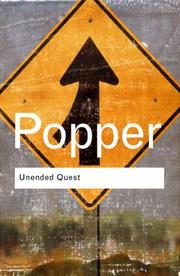
Unended quest is his intellectual autobiography and the ideal opening. It explains, in his own account, how a young man in interwar Vienna came to reject both Marxist historicism and psychoanalysis as unfalsifiable and to take Einstein's willingness to specify what would refute general relativity as the model of scientific honesty. Whether the history is entirely fair to his opponents is another matter, but you get the shape of the whole project in a few hundred readable pages.
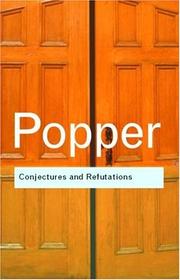
Conjectures and refutations is the next stop and the best single volume of his work. It is a collection, so you can take chapters in any order, and the essays on the problem of demarcation and on the growth of knowledge state the philosophy more clearly than the technical book that preceded them.
The technical and political core
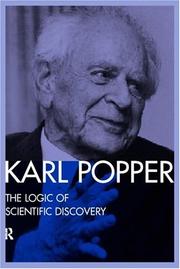
The Logic of Scientific Discovery is the original 1934 statement, and it is a genuinely technical book about probability, corroboration and the logical asymmetry between verification and falsification. Read it after Conjectures and refutations rather than before, when you already know where the argument is going.
The Open Society and Its Enemies (1+2) is the political work, written in New Zealand during the Second World War as what Popper called his war effort. Volume one attacks Plato, volume two Hegel and Marx, and the target throughout is historicism — the belief that history has discoverable laws of development that license present sacrifice. It has been fiercely disputed by classicists and Hegel scholars who consider its readings polemical and selective; that dispute is worth knowing about while you read it, and the book is important either way.
Objective Knowledge introduces the three-worlds scheme and the evolutionary epistemology of his later years. The self and its brain, written with the neuroscientist John Eccles, defends an interactionist dualism that most philosophers of mind have rejected. Include it for completeness and for the argument, not as a summary of current cognitive science.
Read the opposition
Popper is best understood through the people who attacked him. Thomas Kuhn's The Structure of Scientific Revolutions replaced the picture of steady conjecture and refutation with normal science punctuated by paradigm shifts. Imre Lakatos's The Methodology of Scientific Research Programmes is the attempted synthesis, shifting the unit of appraisal from single theories to progressive or degenerating research programmes. Paul Feyerabend's Against Method denies there is any stable scientific method to defend at all.
Close with Bryan Magee's Karl Popper, a short, sympathetic and very lucid overview. Some readers prefer it as an opening rather than a conclusion — if you want a compact orientation before the primary texts, swap it with Unended quest. If the dispute with Kuhn is what draws you, Discover has a separate path devoted to the other side of it. Follow the full path to keep the books in order.
Follow the full ordered path here: Best Books on Karl Popper, in Reading Order.
Ready to learn something deeply?
Build a reading path — free