Gramsci is quoted more than he is read, and the reason is structural. His central work was written in a fascist prison between 1929 and 1935, in notebooks subject to censorship, without access to a library, and with no expectation of publication as a finished book. He wrote in fragments, returned to arguments across years, and used code: Marxism becomes the philosophy of praxis, Lenin becomes Ilyich, class becomes fundamental social group.
So the usual advice to read the primary source first fails here. Open the notebooks cold and you meet disconnected notes on Italian intellectual history, folklore, Machiavelli, and Americanism, with the theoretical apparatus scattered across them. The workable order is to take a short orientation first, then the notebooks with a map in hand, then the interpretive arguments they set off.
Get oriented
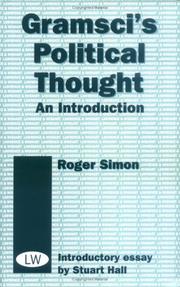
The practical starting point is Gramsci's Political Thought by Roger Simon, a short introduction that lays out hegemony, civil society, the historical bloc, the war of position versus the war of manoeuvre, and the role of intellectuals in plain terms. It is brief and unpretentious, and it gives you the vocabulary the primary texts assume.
Then the notebooks themselves
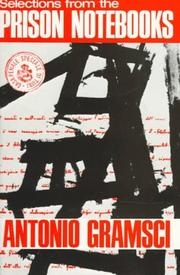
Now Selections from the prison notebooks of Antonio Gramsci, the Hoare and Nowell Smith edition that has been the standard English gateway for decades. Read the sections on intellectuals, on education, on state and civil society, and on Americanism and Fordism. The central move to watch for is his account of why capitalist rule in Western Europe rested less on coercion than on consent manufactured through schools, churches, newspapers, and everyday common sense, and what that implies for how it might be contested.
Read him as notes rather than as a treatise. Cross-references matter more than page order, and the editors' apparatus is doing real work.
Selections from cultural writings collects the journalism and cultural criticism, including his writing on popular fiction, theatre, language, and folklore. This is the material that made him foundational for cultural studies, and it shows the same argument at work on everyday material: culture as a terrain of struggle rather than a reflection of the economy.
The arguments about what he meant
Hegemony and socialist strategy by Ernesto Laclau and Chantal Mouffe is the most consequential and most contested reading. They extend hegemony well beyond class, arguing for a politics of articulated democratic demands and detaching the concept from any privileged revolutionary subject. Critics within the Marxist tradition regard this as abandoning Gramsci's materialism; the authors regard it as following his logic through. The dispute is genuine and unresolved, and reading the book after the notebooks lets you form your own view rather than inherit one.
Gramsci and Marxist Theory (RLE: Gramsci), the collection edited by Chantal Mouffe, gathers earlier essays situating him within Marxist debate, and is useful for seeing what was at stake before the later post-Marxist turn.
Close with Gramsci, Culture and Anthropology by Kate Crehan, which reads him from an anthropologist's standpoint and is particularly good on common sense, subalternity, and how his ideas have been used and misused in cultural analysis. It is the most level-headed corrective in the path.
A reasonable route: Simon, the notebooks, the cultural writings, then Laclau and Mouffe with Crehan close behind. Follow the full path and you will be able to tell what Gramsci argued from what has been attached to his name.
Follow the full ordered path here: Reading Antonio Gramsci: The Best Books, in Order.