Understanding Wittgenstein: The Best Books to Read, in Order
This curriculum is designed for expert-level readers who already possess strong philosophical literacy and want to achieve a deep, integrated understanding of Wittgenstein — his life, his two radically different philosophical systems, and his lasting influence on language and logic. The path moves from biographical and contextual grounding, through the early logical atomism of the Tractatus, into the later philosophy of language in the Investigations, and finally into advanced scholarly interpretation and critique. Each stage builds the conceptual vocabulary and historical sensitivity needed to fully inhabit the next.
The Man and His World
ExpertEstablish a rich biographical, cultural, and intellectual context for Wittgenstein's thought — his Viennese origins, his relationship with Russell and Frege, his wartime experiences, and the personal obsessions that drove his philosophy.
▸ Study plan for this stage
Pace: 8–10 weeks, ~40–50 pages/day (Janik first: 2–3 weeks; Monk second: 5–7 weeks). Allocate extra time for Monk's dense biographical narrative and cross-referencing passages.
- Vienna 1900–1920 as an intellectual and cultural crucible: the tension between Austro-Hungarian tradition and modernist ferment that shaped Wittgenstein's sensibility
- Wittgenstein's family background—the Wittgenstein household as a site of wealth, artistic patronage, and psychological intensity; the suicides of three brothers
- The Russell–Wittgenstein relationship: how Russell's logical atomism and personality catalyzed Wittgenstein's early philosophical ambitions and later ruptures
- Frege's influence on Wittgenstein's conception of logic and language, and the philosophical debt Wittgenstein acknowledged
- Wittgenstein's wartime service (1914–1918) and the Notebooks: how combat, isolation, and existential crisis shaped the Tractatus
- The Tractatus Logico-Philosophicus as autobiography: how personal obsessions (ethics, the mystical, the limits of language) encoded themselves in logical form
- Wittgenstein's post-Tractatus crisis and withdrawal (1920s): the philosophical paralysis and personal turmoil that preceded his return to philosophy
- The relationship between Wittgenstein's personality—his perfectionism, moral intensity, and psychological fragility—and his philosophical method and concerns
- How did the specific cultural and intellectual atmosphere of Vienna 1900–1920 shape Wittgenstein's philosophical concerns and his approach to problems?
- What role did Wittgenstein's family background—particularly the wealth, artistic interests, and family tragedies—play in his psychological makeup and philosophical temperament?
- How did Wittgenstein's encounters with Russell and Frege redirect or crystallize his philosophical ambitions, and what was the nature of his debt to each?
- What was Wittgenstein's experience of World War I, and how did his wartime service and the Notebooks reflect his existential and philosophical preoccupations?
- How does Monk's biography illuminate the personal and psychological dimensions of the Tractatus—the ways in which Wittgenstein's life and obsessions are encoded in the text?
- What was the nature of Wittgenstein's post-Tractatus crisis, and why did he withdraw from philosophy in the 1920s before returning to it?
- Create a timeline of Wittgenstein's life (1889–1951) with key events, relationships, and publications marked; cross-reference it with major events in Viennese cultural history (e.g., Klimt, Schönberg, Kraus) to visualize the context.
- Read selections from Wittgenstein's Notebooks (1914–1916) alongside Monk's account of the wartime period; annotate passages that reveal the connection between his lived experience and his philosophical preoccupations.
- Write a 2–3 page character sketch of Wittgenstein based on Monk's portrayal, focusing on three personality traits (e.g., perfectionism, moral intensity, social awkwardness) and how each manifests in his philosophical work.
- Trace the Russell–Wittgenstein relationship through both Janik and Monk: identify key moments of influence, disagreement, and rupture; write a brief analysis of how Russell's work and personality shaped Wittgenstein's early direction.
- Create a map of Wittgenstein's Vienna: locate key sites (the Wittgenstein house, the University, the Café Central) and research the cultural figures and movements associated with each; reflect on how physical and social geography shaped intellectual life.
- Compile a reading list of works by figures Wittgenstein encountered or was influenced by (Russell, Frege, Schopenhauer, Kierkegaard, Tolstoy); read 1–2 short texts and note how Janik and Monk illuminate Wittgenstein's engagement with these thinkers.
Next up: This stage establishes the biographical, psychological, and cultural foundations that make Wittgenstein's philosophical texts intelligible as expressions of a singular personality and historical moment, preparing you to engage with the Tractatus itself as both a logical treatise and a deeply personal document.
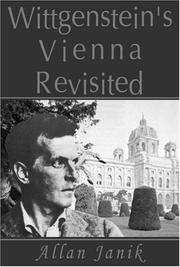
Reconstructs the fin-de-siècle Viennese intellectual milieu — Kraus, Loos, Weininger — that shaped Wittgenstein's deepest preoccupations with language, ethics, and silence. Essential for understanding why the Tractatus ends where it does.
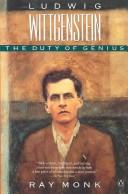
The most celebrated full-life biography, weaving philosophy and personality together with rare elegance. Read after McGuinness to gain the complete arc from the Tractatus to the Investigations and Wittgenstein's death.
The Early Philosophy: Logic and the Tractatus
ExpertMaster the logical and metaphysical system of the Tractatus Logico-Philosophicus — picture theory, logical form, the limits of language, and the mystical — and understand its relationship to Frege and Russell.
▸ Study plan for this stage
Pace: 8–10 weeks, ~40–50 pages/day (Tractatus: 4–5 weeks, ~25 pages/day; Kenny: 4–5 weeks, ~20 pages/day)
- The picture theory of meaning: propositions as logical pictures of possible states of affairs
- Logical form and the structure of reality: how language mirrors the world through shared logical structure
- Elementary propositions, truth-functions, and the truth-table method as the foundation of logical analysis
- The limits of language: what can and cannot be said; the distinction between showing and saying
- The mystical: ethics, aesthetics, and metaphysics as lying beyond the limits of language
- Wittgenstein's relationship to Frege and Russell: how the Tractatus both builds on and critiques their logical systems
- The ladder metaphor and the self-refuting nature of the Tractatus itself
- The transition from logical positivism to the later philosophy: seeds of doubt in the early system
- What is the picture theory of meaning, and how does it explain the relationship between language and reality?
- How does Wittgenstein use logical form to argue that language and the world share a common structure?
- What are elementary propositions, and why are they fundamental to Wittgenstein's logical system?
- What does Wittgenstein mean by 'the limits of language,' and how does he distinguish between what can be said and what can only be shown?
- How does Wittgenstein's treatment of ethics and aesthetics illustrate the mystical dimension of his philosophy?
- What are the key differences and continuities between Wittgenstein's logic and that of Frege and Russell, as explained by Kenny?
- Why is the Tractatus self-refuting, and what does this tell us about the nature of philosophical propositions?
- Work through Tractatus 2.1–2.2 (the definition of facts and objects) and diagram the logical structure of 3–4 simple propositions using the picture theory
- Construct truth-tables for 5–6 compound propositions (using conjunction, disjunction, negation) and verify Wittgenstein's claim that all propositions are truth-functions of elementary propositions
- Analyze a passage from Kenny's chapters on logical form and write a 500-word explanation of how Wittgenstein's system differs from Russell's theory of descriptions
- Identify 3–4 statements from the Tractatus that illustrate the 'showing/saying' distinction, and explain why each one cannot be literally said
- Write a short essay (800–1000 words) on how Wittgenstein's treatment of ethics (Tractatus 6.4–6.421) exemplifies the mystical and the limits of language
- Create a concept map linking Frege's sense/reference distinction, Russell's logical atomism, and Wittgenstein's picture theory, noting points of agreement and divergence
Next up: Mastering the Tractatus's logical system and its internal tensions—especially the self-refuting nature of its metaphysical claims—prepares you to understand why Wittgenstein abandoned this framework and developed the radically different approach of the Philosophical Investigations, where meaning emerges from use rather than logical structure.
The primary text: must be read in the Ogden or Pears-McGuinness translation with full attention to its numbered structure. Reading it now, after biographical grounding, allows the ethical and logical motivations to resonate simultaneously.
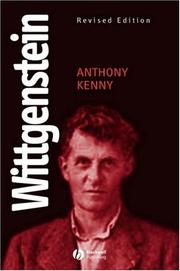
A rigorous yet accessible philosophical guide to both the early and later Wittgenstein by a leading analytic philosopher. Read immediately after the Tractatus to consolidate its logic and prepare the conceptual bridge to the later work.
The Later Philosophy: Language, Games, and the Investigations
ExpertAchieve a deep reading of the Philosophical Investigations — private language, rule-following, family resemblance, forms of life — and understand how radically Wittgenstein broke with his earlier self.
▸ Study plan for this stage
Pace: 8–10 weeks, ~25–30 pages/day (Preliminary Studies: 4–5 weeks; Kripke: 3–4 weeks, with 1–2 weeks for integration and review)
- Language-games as the fundamental unit of meaning: how words gain significance through use in concrete social practices, not through reference to private mental objects
- The private language argument: why a purely private, incommunicable language is incoherent, and how this dissolves Cartesian epistemology
- Rule-following and the skeptical paradox: Kripke's reconstruction of Wittgenstein's challenge to the idea that rules determine their own application, and the role of community in grounding rule-following
- Family resemblance: how concepts like 'game' or 'language' lack necessary and sufficient conditions but are unified by overlapping similarities, rejecting essentialism
- Forms of life: the irreducible, shared human practices and agreements that anchor meaning and make language possible
- The dissolution of philosophical problems: how Wittgenstein's later method shows that traditional metaphysical puzzles arise from misunderstandings of language use, not from deep truths about reality
- The break from the Tractatus: understanding how Wittgenstein abandoned the picture theory, logical atomism, and the ideal language project in favor of descriptive analysis of ordinary language
- Criteria vs. symptoms: the distinction between what constitutes (criteria) versus what indicates (symptoms) a mental state, crucial to rejecting private ostensive definition
- What is a language-game, and how does Wittgenstein's use of this concept challenge the idea that all words function by naming objects?
- Explain the private language argument: why can't someone create a language that only they can understand, and what does this tell us about the nature of meaning?
- What is Kripke's skeptical paradox, and how does Wittgenstein's appeal to community and forms of life address it?
- What does Wittgenstein mean by 'family resemblance,' and how does this concept undermine the search for necessary and sufficient conditions in philosophy?
- How does Wittgenstein's later philosophy represent a radical departure from the Tractatus, and what motivated this shift?
- What is the distinction between criteria and symptoms, and why is it essential to Wittgenstein's critique of private ostensive definition?
- Map out 5–7 language-games from the Preliminary Studies (e.g., giving orders, asking questions, telling jokes) and write a 1–2 page analysis of how meaning is constituted within each game rather than by reference to objects
- Construct a detailed objection to the private language argument, then work through Wittgenstein's response using specific passages from the Preliminary Studies; write a 2–3 page dialogue between a defender of private language and Wittgenstein
- Work through Kripke's skeptical paradox step-by-step: write out the problem formally, then explain how Wittgenstein's solution (community, criteria, forms of life) dissolves it; aim for 3–4 pages
- Choose a philosophical concept (e.g., 'knowledge,' 'justice,' 'art') and apply Wittgenstein's family resemblance method: show that it lacks necessary and sufficient conditions, then trace the overlapping similarities that unify instances
- Identify a passage from the Tractatus (e.g., on the picture theory or logical form) and a corresponding passage from the Preliminary Studies that rejects or revises it; write a 2–page comparative analysis of the shift
- Analyze a concrete example (e.g., pain behavior, following a rule in arithmetic, or recognizing a face) and distinguish between criteria and symptoms; explain how this distinction blocks the private language argument
Next up: This stage equips you with Wittgenstein's mature toolkit for dissolving philosophical puzzles through careful attention to language use and forms of life, preparing you to apply these methods to specific domains—epistemology, aesthetics, mathematics, and the philosophy of mind—in subsequent stages.

The central masterwork of the later philosophy and one of the most important books of the 20th century. Read slowly and repeatedly; the biographical and early-philosophy stages have now equipped you to feel the full weight of the self-critique.
Kripke's 'sceptical paradox' reading of rule-following is the most influential and contested interpretation of the Investigations. Reading it directly after the primary text forces a confrontation with the deepest puzzles of the later philosophy.
Deep Interpretation and Scholarly Debate
ExpertEngage with the major competing interpretive traditions — resolute readings, therapeutic readings, realist responses — and arrive at a critically informed, independent understanding of Wittgenstein's philosophical achievement.
▸ Study plan for this stage
Pace: 10–12 weeks, ~40–50 pages/day, with 1–2 weeks per book for deep engagement and note-taking
- Cavell's ordinary language philosophy and the claim of reason: how Wittgenstein grounds philosophical claims in human forms of life and shared criteria
- The therapeutic reading tradition: Wittgenstein's philosophy as a cure for conceptual confusion rather than a doctrine to be systematized
- Hacker's realist interpretation: the distinction between sense and nonsense, and Wittgenstein's rejection of metaphysical realism in favor of linguistic analysis
- The resoluteness debate: whether Wittgenstein's Tractatus is genuinely resolved by its own propositions or whether it leaves fundamental problems unresolved
- The continuity and rupture between the Tractatus and Philosophical Investigations: how Wittgenstein's later work either abandons or reinterprets his earlier framework
- Language-games and rule-following: the critique of private language and the social/communal basis of meaning
- Criteria vs. symptoms: how Wittgenstein distinguishes between what constitutes the meaning of a word and what merely indicates it
- The limits of language and the unsayable: how different interpretive schools handle Wittgenstein's claims about what lies beyond language
- What does Cavell mean by 'the claim of reason,' and how does he use ordinary language philosophy to defend Wittgenstein against skepticism?
- How do therapeutic and realist readings of Wittgenstein differ in their understanding of what Wittgenstein is trying to accomplish philosophically?
- What is Hacker's critique of resolute readings, and how does his account of sense and nonsense support a realist interpretation?
- How does the resoluteness debate in The New Wittgenstein challenge or complicate the traditional picture of Wittgenstein's philosophical project?
- What role do language-games and criteria play in Wittgenstein's later philosophy, and how do these concepts address problems from the Tractatus?
- How do the three interpretive traditions represented in these books account for the apparent discontinuity between the Tractatus and the Investigations?
- Create a comparative chart mapping Cavell's, Hacker's, and Crary's interpretations across key Wittgensteinian concepts (language-games, criteria, the limits of language, rule-following). Identify points of agreement and fundamental disagreement.
- Write a 2,000-word essay defending one interpretive position (therapeutic, realist, or resolute) using textual evidence from at least two of the three books. Then write a 1,000-word response from the perspective of a competing school.
- Trace the concept of 'criteria' through Cavell's Claim of Reason and Hacker's Part 1, noting how each author uses it to solve different philosophical problems. Discuss whether their uses are compatible.
- Reconstruct Hacker's argument against resolute readings in detail. Then read the corresponding sections in The New Wittgenstein and identify where Crary or other contributors would push back.
- Select three passages from Wittgenstein's Investigations (e.g., on private language, beetle-in-the-box, or family resemblance). Annotate each with how Cavell, Hacker, and Crary would interpret it, noting their divergent emphases.
- Conduct a close reading of one essay from The New Wittgenstein (e.g., Crary's introduction or a chapter on the Tractatus). Write a detailed summary and critical response, identifying its strongest and weakest claims in light of Hacker's realism.
Next up: This stage equips you with the interpretive sophistication and textual grounding to either pursue specialized scholarship on a particular Wittgensteinian problem (e.g., rule-following, intentionality, aesthetics) or to apply Wittgenstein's methods to contemporary philosophical debates in epistemology, philosophy of mind, or ethics.
Cavell's magnum opus develops a profound, literary-philosophical response to the Investigations, centering on skepticism, acknowledgment, and ordinary language. It represents the most serious American engagement with the later Wittgenstein.

Part of Hacker and Baker's monumental analytical commentary on the Investigations; this volume provides the most thorough line-by-line scholarly exegesis available and serves as an indispensable reference for expert readers.
This landmark essay collection presents the 'resolute' or 'therapeutic' readings (Crary, Diamond, Conant) that argue the Tractatus is itself a ladder to be thrown away. It crystallizes the central interpretive controversy of contemporary Wittgenstein scholarship.
Discussion
Keep reading
Paths that share books, cover the same subject, or open a related topic.