Best Turkish Literature to Read, in Order
This curriculum traces Turkish literature from its Ottoman roots through the republican transformation, the twin peaks of Tanpınar and Pamuk, and into the vibrant contemporary scene. Because the learner starts at an intermediate level, the path opens with accessible modern classics that reward re-reading, then layers in historical depth, formal complexity, and finally the most challenging or recently translated voices — each stage building the cultural and aesthetic vocabulary needed for the next.
The Republican Novel: Entry Points
IntermediateGrasp the foundational tensions of modern Turkish identity — East vs. West, tradition vs. secularism, village vs. city — through two of the most celebrated and accessible novels of the early republic.
▸ Study plan for this stage
Pace: 4–5 weeks, ~40–50 pages/day (approximately 280–350 pages per book)
- The rural-urban divide as a lens for Turkish modernization: Kemal's Anatolian village versus Tanpınar's Istanbul bureaucracy
- Resistance and adaptation to state authority: Memed's banditry as folk rebellion versus the Institute's absurdist compliance with modernity
- Time as a contested concept: Kemal's cyclical, oral storytelling tradition versus Tanpınar's obsession with mechanical time regulation
- East-West tension embodied in character and setting: Kemal's Mediterranean landscape and feudal power structures versus Tanpınar's cosmopolitan yet disoriented Istanbul
- Language and narrative form as political acts: Kemal's folk-epic style versus Tanpınar's metafictional, intellectualized prose
- The individual versus the collective: Memed's personal vendetta within village society versus the Institute's nameless bureaucrats absorbed into systems
- Secularism and tradition in daily life: How both novels depict the friction between Ottoman/Islamic continuities and republican modernization
- How does Yaşar Kemal use the landscape and oral tradition of rural Anatolia to critique or complicate the Turkish Republic's modernization project?
- What does Memed's relationship to law, authority, and the state reveal about tensions between individual honor and state power in early republican Turkey?
- How does Tanpınar's depiction of the Time Regulation Institute satirize Turkish bureaucratic modernity, and what does the obsession with time regulation symbolize about the Republic's ambitions?
- Compare the two novels' treatment of tradition: does Kemal romanticize village life while Tanpınar mocks urban intellectualism, or is the relationship more complex?
- What role does Istanbul (or its absence) play in each novel, and how does geography reflect the East-West tension central to Turkish identity?
- How do the narrative styles of the two novels—Kemal's epic realism versus Tanpınar's metafictional irony—embody different responses to Western literary modernism?
- Create a two-column comparison chart: list scenes from Memed, My Hawk and The Time Regulation Institute that illustrate the rural-urban divide, and annotate what each reveals about modernization
- Write a 500-word character study of Memed as a folk hero: what makes him sympathetic despite his violence, and how does Kemal's narrative voice shape our judgment?
- Trace the concept of 'time' across both novels: collect 5–7 passages where time is explicitly discussed or structurally important, and analyze what each reveals about the novel's worldview
- Conduct a close reading of 2–3 passages from each novel that feature dialogue with authority figures (police, officials, elders). How does the language and tone differ between Kemal and Tanpınar?
- Map the geography of each novel: create a sketch or written description of the physical and social spaces (village, city, bureaucratic offices) and note what values or conflicts each space embodies
- Write a dialogue or letter exchange between Memed and a character from the Institute (e.g., Memed writing to the Institute director): what would each misunderstand about the other's world?
Next up: By grasping how Kemal and Tanpınar dramatize the Republic's foundational contradictions—through rural resistance and urban absurdism—you are prepared to examine how later Turkish novelists either deepen, deconstruct, or transcend these binaries in the post-1950s period.
The most internationally celebrated Turkish novel before Pamuk, it introduces the Anatolian landscape, oral epic traditions, and the social conscience of republican-era literature in a gripping, accessible narrative.

Tanpınar's satirical masterpiece on modernization and Ottoman memory is the essential bridge between the old empire and the new republic; reading it here builds the thematic vocabulary for everything that follows.
The Ottoman Inheritance
IntermediateUnderstand the literary and cultural weight of the Ottoman world — its poetry, its court culture, and its long shadow — through prose that explicitly wrestles with that inheritance.
▸ Study plan for this stage
Pace: 6–7 weeks, ~25–30 pages/day, with 2–3 days of reflection/note-taking per week
- Ottoman cultural memory as a haunting presence in modern Turkish consciousness—how the past structures present identity and loss
- The aesthetics of melancholy and introspection in Tanpınar's prose: how Ottoman refinement (adab) translates into psychological depth
- The tension between tradition and modernity in the early Republican era, embodied through characters caught between worlds
- The role of Istanbul/Constantinople as a palimpsest—a city where Ottoman grandeur, imperial decline, and modern ambition coexist
- Narrative technique as cultural inheritance: how these authors use digression, memory, and lyrical reflection to mirror Ottoman literary forms
- Gender and social transformation: how women navigate the collapse of Ottoman hierarchies and the construction of new national identity
- The court culture and intellectual refinement of the Ottoman world as both an aesthetic ideal and a source of paralysis in the modern era
- How does Tanpınar use the protagonist's interior life and obsession with Ottoman aesthetics to explore the psychological weight of cultural inheritance?
- What role does Istanbul play in both novels, and how does the city itself become a character shaped by Ottoman history?
- How do Adıvar's female characters in Part II of Sinekli Bakkal navigate the social and cultural upheaval of the transition from Ottoman to Republican society?
- What is the relationship between narrative form (digression, memory, reflection) and the authors' engagement with Ottoman literary tradition?
- How do both novels portray the tension between nostalgia for Ottoman refinement and the necessity of modern transformation?
- What does 'a mind at peace' mean in Tanpınar's novel, and how is it complicated by the protagonist's relationship to Ottoman cultural memory?
- Create a timeline of Ottoman historical moments referenced or alluded to in both texts; annotate how each moment shapes the characters' consciousness or the narrative mood
- Write character sketches (500 words each) of 2–3 major characters from each novel, focusing on how their relationship to Ottoman culture defines their identity and choices
- Map Istanbul/Constantinople as it appears in both novels: identify specific locations, their Ottoman associations, and their symbolic weight in the narrative
- Analyze 3–4 passages from Tanpınar that exemplify his use of introspection and aesthetic reflection; compare them to 2–3 passages from Adıvar that show how she handles similar themes through action and dialogue
- Write a comparative essay (1500–2000 words) on how each author uses narrative digression and memory to engage with Ottoman literary forms
- Create a visual or written 'inheritance map' showing what Ottoman cultural elements (art, poetry, philosophy, social structures) each protagonist inherits, resists, or transforms
Next up: This stage grounds you in how Turkish literature processes Ottoman cultural memory through introspection and social realism, preparing you to examine how subsequent writers either deepen this psychological excavation or break away from it entirely toward new formal and thematic territories.
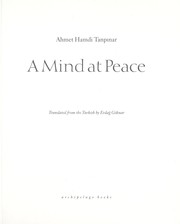
Tanpınar's lyrical novel set in late-Ottoman Istanbul is the single richest meditation on loss, memory, and the classical Turkish aesthetic; it deepens everything learned from The Time Regulation Institute.

One of the first major Turkish novels by a woman, set in the twilight of the empire; it grounds the learner in the social and gendered dimensions of the Ottoman-to-republican transition.
Orhan Pamuk: The Complete Arc
IntermediateEngage deeply with Turkey's Nobel laureate, reading his novels in an order that moves from accessible storytelling to his most formally ambitious work, understanding how he synthesizes Ottoman aesthetics, European modernism, and political memory.
▸ Study plan for this stage
Pace: 6–8 weeks, ~40–50 pages/day for *Snow* (4 weeks), then ~30 pages/day for *Istanbul* (2–3 weeks), with 1 week for synthesis and reflection
- Pamuk's use of the detective/mystery frame as a vehicle for exploring political and existential questions in *Snow*
- The tension between Western modernity and Islamic tradition in Turkish society, embodied in the city of Kars and its characters
- Istanbul as palimpsest: how Pamuk layers Ottoman, Byzantine, and modern histories to construct a personal and national identity
- The role of the narrator as unreliable witness and interpreter—how Pamuk questions the possibility of objective truth
- Aesthetic melancholy (*hüzün*) as a distinctly Turkish/Ottoman sensibility that shapes both novels
- The relationship between memory, geography, and political trauma in constructing meaning
- Pamuk's synthesis of European modernist techniques (fragmentation, metafiction, intertextuality) with Ottoman literary and visual traditions
- How does the detective mystery structure in *Snow* serve Pamuk's larger exploration of truth, interpretation, and political violence?
- What role does the city of Kars play in *Snow*—is it merely a setting, or does it function as a character and symbol in its own right?
- How does Pamuk's portrayal of Islamic fundamentalism and Western secularism in *Snow* complicate simplistic binaries, and what is his own position?
- In *Istanbul*, how does Pamuk use the concept of *hüzün* (melancholy) to connect personal memory with Ottoman and Byzantine history?
- What is the relationship between Pamuk's visual descriptions of Istanbul and his narrative voice? How do images and stories interweave?
- How do *Snow* and *Istanbul* together illustrate Pamuk's method of synthesizing European modernism with Ottoman aesthetics and sensibility?
- Create a character map for *Snow* tracking Ka, Necip, Ipek, and Sunay—annotate their ideological positions and how each represents a different response to modernity vs. tradition
- Write a 2–3 page analysis of a single scene in *Snow* (e.g., the theater performance, the coup, Ka's final conversation) examining how Pamuk uses dialogue and action to explore political conflict
- Trace the geography of *Snow*: map Kars and its key locations (the hotel, the school, the cemetery), then write about how physical space mirrors ideological divisions
- Select three neighborhoods or landmarks from *Istanbul* (e.g., Galata, the Golden Horn, Topkapi Palace) and write a personal reflection connecting Pamuk's descriptions to your own understanding of layered history
- Compile a visual essay: collect images of Istanbul (historical photographs, contemporary photos, Ottoman paintings) and arrange them alongside relevant passages from *Istanbul*, annotating how Pamuk's prose relates to visual representation
- Compare Pamuk's narrative voice in *Snow* (the poet Ka and the narrator) with his voice in *Istanbul* (the essayist-memoirist); write a 2–3 page reflection on how his narrative strategies differ and why
Next up: This stage establishes Pamuk's core aesthetic and thematic preoccupations—the collision of tradition and modernity, the unreliability of narrative, and the melancholic beauty of Ottoman memory—preparing you to engage with his more formally experimental and politically urgent works that deepen these concerns.
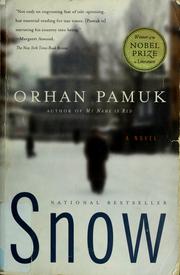
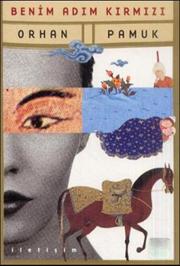
Pamuk's most politically urgent novel — on Islamism, secularism, and the Kurdish question — it applies the historical tensions now to contemporary Turkey and is best read after My Name Is Red.
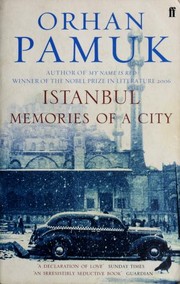
This memoir-essay hybrid on hüzün (melancholy) and the ruins of Ottoman Istanbul is Pamuk's most direct statement of his aesthetic philosophy, tying together all previous stages.
Deeper Currents: Village, Exile, and the Margins
ExpertExpand beyond the Istanbul-centered canon to encounter the rural, the Kurdish, the feminist, and the diasporic voices that complete the picture of Turkish literary culture.
▸ Study plan for this stage
Pace: 4–5 weeks, ~40–50 pages/day (approximately 200 pages total; allow time for re-reading key passages and reflection)
- Alienation and displacement in post-war Anatolia: how rural characters navigate modernization and social fragmentation
- The Motherland Hotel as a liminal space: a microcosm of Turkish society and a site of human vulnerability
- Psychological realism and interior monologue: Atilgan's technique for revealing the inner lives of marginalized figures
- Class, gender, and economic precarity: how the novel exposes the struggles of working-class and female characters
- Existential themes: isolation, meaninglessness, and the search for connection in an indifferent world
- The tension between tradition and modernity: rural values clashing with urban/industrial change
- How does Atilgan use the Motherland Hotel as a setting to explore broader themes of displacement and social fragmentation in Turkey?
- What role do female characters play in the novel, and how does Atilgan portray their economic and social vulnerability?
- How does the novel's narrative technique (interior monologue, fragmented perspective) reflect the psychological states of its characters?
- What does the novel reveal about class divisions and economic inequality in post-war Turkish society?
- How do the characters' relationships to tradition, family, and homeland shape their sense of identity and belonging?
- What existential questions does the novel raise about meaning, connection, and human dignity in modern life?
- Close reading: Select 3–4 passages that reveal a character's inner conflict or alienation; annotate them for narrative technique, tone, and thematic significance
- Character mapping: Create detailed profiles of 4–5 main characters, tracking their economic circumstances, relationships, and psychological states throughout the novel
- Thematic analysis: Trace one major theme (e.g., displacement, gender, class) through the entire text, noting how it develops and complicates across different scenes
- Comparative reflection: Write a 2–3 page essay comparing how Atilgan portrays rural/marginal experience versus how Istanbul-centered Turkish literature typically represents it
- Dialogue reconstruction: Identify a key conversation in the novel and analyze what remains unsaid or unspoken—what does silence reveal about the characters?
- Historical contextualization: Research post-war Turkey (1950s–1960s) and write a brief reflection on how historical conditions of urbanization and economic change are embedded in the novel's setting and conflicts
Next up: This stage's deep engagement with Atilgan's psychological realism and focus on marginalized, rural voices establishes the literary and thematic foundation for encountering other non-canonical Turkish writers—preparing you to recognize how feminist, Kurdish, and diasporic authors build on, challenge, or reimagine the questions of displacement, identity, and social exclusion that Atilgan raises.

A cult existentialist masterpiece of Turkish modernism, this short, intense novel about alienation and obsession shows the European-influenced strand of 20th-century Turkish fiction at its purest.
Contemporary Writing: The New Generation
ExpertEncounter the most significant voices writing in Turkish today, seeing how they inherit, subvert, and reinvent the traditions built across the entire curriculum.
▸ Study plan for this stage
Pace: 4–5 weeks, ~40–50 pages/day (approximately 400 pages total; allows time for reflection on complex narrative structure and historical layers)
- Narrative multiplicity and fragmented storytelling as a reflection of fractured identity and historical trauma
- The Armenian Genocide and Turkish-Armenian relations as a contested historical space that shapes contemporary identity
- Transnational identity and diaspora: how characters navigate belonging across Istanbul, New York, and imagined homelands
- Maternal lineage and female agency as counternarrative to patriarchal and nationalist histories
- Magical realism and the supernatural as tools for processing collective memory and family secrets
- The tension between modernist cosmopolitanism and conservative nationalism in contemporary Turkish society
- How Şafak inherits and subverts the realist tradition of earlier Turkish literature through postmodern techniques
- How does Şafak's use of multiple narrators and non-linear chronology challenge traditional ways of telling historical truth, particularly regarding the Armenian Genocide?
- What role do the female characters—especially Shushan, Auntie Rose, and Asya—play in preserving and transmitting family memory across generations and geographies?
- How does the novel explore the concept of 'bastard' identity, and what does this reveal about belonging, legitimacy, and Turkish national identity?
- In what ways does Şafak employ magical realism, and how does this technique allow her to address historical trauma that realistic narrative alone cannot convey?
- How do the Istanbul and New York settings function symbolically, and what do they reveal about the relationship between tradition and modernity in contemporary Turkish life?
- How does this novel represent a departure from or continuation of the literary traditions you've encountered earlier in the curriculum?
- Create a detailed family tree of the Kazanci and Pamuk families, mapping the connections between Istanbul and New York; annotate it with key secrets and traumas that shape each character's identity.
- Write a comparative character analysis of Asya (Istanbul) and Armanoush (New York): how do their different cultural contexts shape their search for identity and belonging?
- Trace the motif of the djinn throughout the novel; identify each appearance and write a short reflection on what the supernatural element reveals about the characters' emotional or psychological states.
- Select three key scenes involving food, family meals, or cooking; analyze how these domestic moments encode cultural memory, conflict, and transmission of identity.
- Research the historical context of the Armenian Genocide (1915) and the Turkish-Armenian diaspora; write a 2–3 page essay on how Şafak's fictional treatment of this history differs from or complements historical accounts.
- Write an alternative ending or epilogue from the perspective of one minor character (e.g., Shushan, Auntie Rose, or Levon); consider what this character's voice might add to the novel's meditation on family secrets and historical reckoning.
Next up: This novel's sophisticated blending of personal narrative with historical reckoning, its formal experimentation with postmodern techniques, and its transnational perspective establish the template for how contemporary Turkish writers engage with the literary inheritance of the entire curriculum—setting the stage to encounter other major voices who similarly challenge, reinvent, and complicate that

The most widely read contemporary Turkish novel internationally, it confronts Armenian-Turkish memory and female identity; it is best read last, as its intertextual richness is fully visible only after the earlier stages.
Discussion
Keep reading
Paths that share books, cover the same subject, or open a related topic.