Orhan Pamuk Reading Order: Where to Start
Pamuk's novels are all, one way or another, about Istanbul and about people caught between a Western idea of themselves and an Ottoman one — but they vary enormously in difficulty, and starting with the wrong one is the usual reason readers give up. This path opens with the two most accessible major novels, works back to the early postmodern experiments, then moves through the Istanbul books and out to the late panoramic novels, finishing with the ones only committed readers need.
The Two Best Entry Points
BeginnerRead the two novels that carry a strong plot alongside the ideas, so Pamuk's arguments arrive attached to a story.
▸ Study plan for this stage
Pace: About six weeks for the pair — 536 pages of My Name Is Red and 496 of Snow, and neither is a fast 500 pages. Budget a month for Red at twenty pages a day and three weeks for Snow. The warning that matters is at the front of My Name Is Red: it rotates first-person narrators, and the roster includes a
- The chapter-title device in My Name Is Red: every heading is a speaker identifying itself, so the table of contents is effectively a cast list and worth reading first
- The murderer narrates too, under a masked heading, which means you are inside the killer's head several times before you know it — the book's best structural trick
- The quarrel at the centre of Red: whether a picture should show the world as the eye sees it, in the Frankish manner with perspective, or as God sees it, in the Ottoman convention. Every murder in the book descends from that argument
- Blindness as the miniaturist's ideal rather than his catastrophe, which is the single idea most likely to stop a Western reader short
- Snow's structure as a closed system: a poet returns from exile to a snowbound city, the roads shut, and a theatre performance turns into a coup with the audience unable to leave
- Pamuk writing himself in — the narrator of Snow turns out to be a friend of Ka called Orhan, reconstructing the story afterwards, so the whole novel is a secondhand account
- The headscarf argument in Snow given to characters on every side and resolved by none of them, which is the formal choice the book is usually attacked or praised for
- Ka's nineteen poems arranged on a snowflake — a diagram the novel takes seriously as a theory of how a self is organised
- Name five narrators in My Name Is Red who are not people. What does each of them know that a human narrator could not?
- At what page did the rotating-narrator device stop feeling like an obstacle and start doing work for you?
- Once you know who the murderer is, which of his chapters reads most differently on a second look, and what did you miss the first time?
- In Snow, what does staging a coup as a live theatre performance let Pamuk say that a straight account of a coup could not?
- Is Ka a sympathetic figure? Find the passage where the novel most clearly declines to defend him.
- Both books are about people caught between a Western idea of themselves and an Ottoman or Islamic one. Which of the two makes the better argument, and does the better one make the better novel?
- Read the first hundred pages of My Name Is Red in as few sittings as you can manage — ideally two. This book is defeated by fragmentation, and almost everyone who abandons it does so in twenty-page phone-sized instalments.
- Keep a tally of narrators in Red as chapter headings appear. When one heading is deliberately anonymous, mark it. Your list of anonymous chapters is the case file.
- In Snow, draw Ka's snowflake yourself as the poems arrive and place each one where he places it. It takes two minutes per poem and turns an abstract conceit into something you can look at.
- After finishing both, write two sentences on what Freely's English sounds like against Goknar's. You will meet Freely three more times in this path and Ekin Oklap twice, and having an ear for them changes what you attribute to Pamuk.
- Look up one fact: what an Ottoman miniature actually looks like. Fifteen minutes with images of the Shahnameh or the Surname-i Humayun makes half of My Name Is Red concrete rather than theoretical.
Next up: Both entry points hide their machinery inside a strong plot; the next stage strips the plot away and shows you the same machinery being built, in two short novels where Pamuk is visibly working out the doubling he will reuse for the rest of his career.
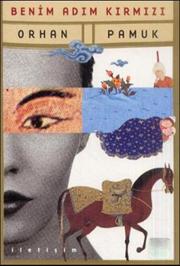
A murder inside a 16th-century workshop of Ottoman miniaturists, narrated in turn by suspects, a corpse, a coin and a dog. Start here: it is a genuine whodunit, and the quarrel about perspective inside it is Pamuk's whole career in miniature.
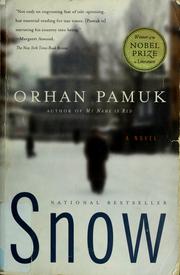
A poet returns from exile to a snowbound eastern city and walks into a coup, a suicide epidemic and an argument about headscarves. His most directly political novel and the other viable starting point — take it second if you want the ideas before the history.
The Early Experiments
IntermediateGo back to the short, tricky novels where Pamuk worked out the doubling and identity-swapping he reuses everywhere.
▸ Study plan for this stage
Pace: Five to six weeks, unevenly split. The White Castle is 184 pages and can be done in a weekend; The Black Book is 503 dense, digressive pages and will take a month. Read them in that order and do not reverse it. Two catalogue problems to name plainly. Our listing for the short novel shows a Spanish-l
- The White Castle's premise as the germ of everything later: a Venetian slave and his Ottoman master are physically identical and slowly trade lives, so East and West are not two subjects but one body
- The plague chapter in The White Castle, where the two men's competing explanations of an epidemic become a competition for who gets to be the rational one
- The unresolved ending of The White Castle — who is speaking, and whether the swap happened at all, is deliberately undecidable, and arguing about it is the point
- The frame narrator of The White Castle, a historian who claims to have found the manuscript, who also appears in Silent House at the end of this path
- The Black Book's double structure: Galip searching Istanbul for his missing wife Ruya, whose name means dream, while Celal's columns run alongside as a second, older Istanbul
- Impersonation as method — Galip begins writing Celal's column, and the novel lets you feel a man dissolve into someone else's prose
- Hurufism and the reading of letters in human faces, taken seriously as a plot mechanism rather than used as decoration
- Freely against Gun: not a matter of accuracy but of rhythm, and the reason The Black Book has two reputations
- In The White Castle, what evidence does the text give that a swap took place, and what evidence undercuts it?
- The plague sequence turns a medical crisis into an argument about identity. How exactly does it manage that?
- In The Black Book, what do Celal's columns supply that the Galip chapters cannot?
- What does Galip actually want by the end — his wife, or Celal's life? Point to the passage where the answer changes.
- Both novels are about becoming someone else. Which one takes the idea further, and which one is the better book? They are not the same question.
- Read The White Castle in one or two sittings. At 184 pages it is designed to be held whole in the head, and stretching it over two weeks blurs the very doubling it is built on.
- Compare translations directly: find the opening page of The Black Book in both the Gun and the Freely versions — bookshop previews or a library copy will do — and read them side by side before you commit to one. This is the clearest demonstration in the whole path of what a translator does.
- Keep a separate list of Celal's columns with a one-line summary each. By the end of The Black Book you will have a second, shorter book on a page, and the pattern in it is what Galip is chasing.
- When The Black Book slows, switch to reading only the columns for an evening, then return. The novel survives that treatment better than most, and it is a better strategy than quitting.
- Note the name of the frame narrator in The White Castle and keep it. He returns in the final stage of this path, and the connection is one of the quiet pleasures of reading Pamuk in full.
Next up: Having watched Pamuk assemble a self out of somebody else's material twice over, you are ready for the two books that name the raw material directly: the city he keeps rebuilding, and the objects he cannot throw away.

A Venetian slave and his Ottoman master, physically identical, gradually trading lives. Under 200 pages and the cheapest way to understand the East-West doubling that runs through everything else.
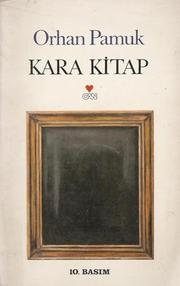
A lawyer searches Istanbul for his missing wife and her half-brother, a newspaper columnist. Difficult, digressive and the novel Pamuk himself treats as his breakthrough — read it after The White Castle has taught you his patience.
The Istanbul Books
IntermediateRead the memoir and the novel that are most explicitly about the city itself, and about the Turkish word for its melancholy.
▸ Study plan for this stage
Pace: Seven to eight weeks. Istanbul comes first and is 404 pages, and the first thing to say about it is that it is not a novel — it is a memoir, of a childhood in a declining Ottoman family and of a city, illustrated throughout with photographs, and it is the best single companion to the fiction on eith
- Huzun, the collective melancholy Pamuk describes as belonging to a whole city rather than to individuals — the organising idea of the memoir and the thing that gets exported into every novel
- Living in the ruins of an empire as an everyday condition rather than a historical fact: burnt-out wooden mansions, a family fortune visibly shrinking floor by floor
- The chapter on the four melancholy Turkish writers, which is Pamuk quietly naming his own tradition and telling you where his sentences come from
- Foreign travellers on Istanbul — Nerval, Gautier, Flaubert — read by a native who is aware he learned to see his own city partly through their eyes
- The photographs as evidence for a claim about a place that no longer exists, and the black-and-white as a deliberate argument about how the city should be remembered
- The Museum of Innocence's collecting logic: Kemal accumulates the objects Fusun touched, including thousands of her cigarette butts, and the novel makes obsession legible by inventory
- Time in the Museum handled as accumulation rather than sequence — the novel is long in the way a collection is large, and the length is the effect
- Pamuk writing himself into the last stretch of the Museum, as he did in Snow, so the novel ends by admitting who assembled it
- How would you define huzun to someone who has not read the book, in a way that distinguishes it from ordinary nostalgia?
- Which memoir chapter most directly explains something you had already read in My Name Is Red, Snow or The Black Book?
- Is Kemal's collecting love, illness, or a way of controlling a woman? The novel gives you material for all three — which does it actually endorse?
- What does knowing that the museum physically exists do to the last hundred pages?
- Pamuk appears as a character at the end of the Museum. What does that admission cost the novel, and what does it buy?
- Read Istanbul before the novel, not after. Reversing the order is possible but wastes the memoir's main function, which is to make the collector's temperament in the Museum feel inherited rather than eccentric.
- Find the ticket in your copy before you start reading. If your edition does not have one, find that out now rather than at the end.
- Keep an inventory as you read the Museum: twenty objects, one line each, in the order Kemal acquires them. The novel is a catalogue, and reading it with your own catalogue open is the most direct way to feel what it is doing.
- Spend twenty minutes with photographs of the actual Museum of Innocence and the Cukurcuma district. If you ever go to Istanbul, take the book — the ticket is genuinely usable.
- Pick one of the four Turkish writers Pamuk names in the memoir and read a page of them in English. It will tell you more about his prose than any essay about him.
Next up: The memoir and the museum are both built around a single consciousness cataloguing a city; the next two novels keep the city and throw the single consciousness away, widening out to a whole population.
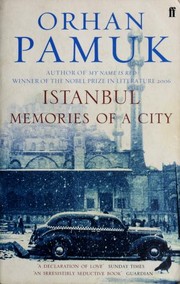
Memoir of a childhood in a declining Ottoman family, and an essay on huzun, the collective melancholy of a city living in the ruins of an empire. Read it here and every earlier novel gets retroactively clearer.

A man loses a woman and spends decades collecting the objects she touched. Long and obsessive, and it lands hardest once Istanbul has explained the collector's temperament. Pamuk built the actual museum too.
The Late Panoramas
BeginnerFollow Pamuk into the big late novels, where the subject widens from one consciousness to a whole population.
▸ Study plan for this stage
Pace: Two months. A Strangeness in My Mind first — be warned that our listing records 352 pages, which understates it badly; the Faber edition runs close to 600, so plan on a month. It follows forty years of Istanbul from below, through a street vendor selling boza, and it opens by giving away its own cen
- The interrupting-witness technique in A Strangeness in My Mind: relatives and neighbours break in to dispute Mevlut's account, so the novel is a story and its own contested oral history at once
- Boza as the book's central object — a mildly fermented drink sold by night from a yoke, obsolete and sentimental, and therefore an exact measure of what forty years of the city did
- Front-loading the plot: the elopement is disclosed early and the suspense is transferred from what happens to how the participants will each explain it
- The city read from the pavement upward — squatter settlements becoming apartment blocks, title deeds, electricity theft, the mechanics of how a megacity actually grows
- Mevlut as Pamuk's least literary protagonist, with no theory of himself, which is why the novel is the warmest thing he has written
- Nights of Plague's frame: a modern historian editing a princess's letters, so the founding of the nation reaches you through a document being interpreted rather than through events
- Quarantine as a political laboratory — who may be confined, by whose authority, and how quickly public health becomes sovereignty
- How a nation invents its own origin story, which is the subject the late novels share and the reason this one belongs last of the major work
- In A Strangeness in My Mind, pick one interruption where a character contradicts the main narration. Whom do you believe, and what in the prose made you choose?
- Why does the novel tell you the outcome of the elopement early? What would a conventional withholding have cost it?
- What does boza let Pamuk measure that a more obviously significant trade could not?
- In Nights of Plague, what does the historian frame do to your trust in the events described?
- The island's nationhood emerges out of an epidemic. Does the novel present that as an accident or as the ordinary way nations are made?
- These are both crowd novels after a run of single-consciousness books. Which loss and which gain do you feel most?
- Before starting A Strangeness in My Mind, read its opening chronology and family material rather than skipping ahead. The novel expects you to have it, and being lost among Mevlut's relatives is the main reason readers stop.
- Keep a list of every character who interrupts the narration and what they dispute. By the end you will have the argument the book is actually having, which is not the same as its plot.
- Read the two novels with something short between them. They are each long, each panoramic, and running them back to back is the surest way to blame the second one for the first one's exhaustion.
- Look up one fact: the population of Istanbul in 1969 against today. The number is the whole subject of A Strangeness in My Mind in a single line.
- After Nights of Plague, write a paragraph on whether the historian narrator is reliable. It is the one interpretive question the novel refuses to settle for you.
Next up: You have now read every major novel; the last stage is genuinely optional material for people who want the earliest work and the writer's own account of what he thinks he has been doing.

Forty years of Istanbul seen from below, through a street vendor selling boza. The warmest book he has written and the best of the late work.

A quarantine on an imagined Ottoman island in 1901, and the birth of a nation out of it. His most conventional historical novel, and read last of the major work — it assumes you already accept his interest in how nations invent their own stories.
For the Committed
BeginnerPick up the remaining pieces: the earliest novel translated late, and Pamuk explaining his own theory of fiction.
▸ Study plan for this stage
Pace: Three weeks, and the lightest stage in the path. Silent House is Pamuk's second novel, published in Turkish in 1983 and not translated into English until 2012, by Robert Finn — around 330 pages, uneven, and interesting mainly because you now know what he became. It is told in rotating voices across
- Silent House as the source of a device Pamuk keeps: multiple first-person voices divided by chapter, which he later uses on a much larger scale in My Name Is Red
- Faruk the historian, who narrates part of Silent House and reappears as the frame narrator who claims to have found the manuscript of The White Castle
- The political weather of 1980 kept mostly offstage, so a coup arrives as pressure rather than as plot — the opposite of Snow's method with the same material
- Schiller's distinction between the naive poet who writes without self-consciousness and the sentimental poet who cannot stop watching himself, which Pamuk borrows for his title and applies to novelists
- The centre of a novel as Pamuk defines it in the lectures — a hidden thing the reader is looking for while reading — and how neatly it describes what My Name Is Red and The Museum of Innocence are doing
- The lectures on how readers picture landscape and objects, which reads as a direct account of the Museum's inventory technique
- Pamuk as a critic of his own practice, unusually willing to name the machinery, which makes this the most useful rereading tool in the path
- Which voice in Silent House is the most convincing, and can you see the later Pamuk in it?
- What does recognising Faruk from The White Castle add, and would the connection matter to a reader who had not read both?
- Apply Pamuk's naive-and-sentimental distinction to two novels you have read in this path. Where does each sit, and does the distinction hold up?
- What does Pamuk say the centre of a novel is, and what is the centre of The Museum of Innocence by his own definition?
- Now that you have his stated method, is there any book in this path where he fails by his own account of what a novel should do?
- Read the lectures in one sitting. They were delivered as six talks and they hold together as talks — spreading them over a fortnight breaks an argument that is deliberately continuous.
- After the lectures, reread one chapter of My Name Is Red with Pamuk's account of the centre in mind. This is the single highest-value reread available at the end of this path.
- Write down, in one sentence each, which Pamuk novel you would recommend to three different kinds of reader. Having read nine books you are now in a position almost nobody is in, and the exercise will show you what you actually think.
- Note the gaps that are ours, not his: our catalogue does not carry The New Life, The Red-Haired Woman or the essay collection Other Colors. Get them wherever you buy books if you want the complete shelf.
Next up: This is the end of the path — the natural next step is The Red-Haired Woman, which is short, late and not in our catalogue, or a reread of My Name Is Red now that the lectures have told you exactly what its author thought he was building.

His second novel, not translated into English for thirty years: a grandmother, three grandchildren and a coming coup, told in rotating voices. Uneven, and only worth it once you know what he became.
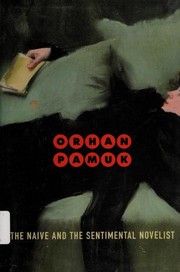
His Norton Lectures on how novels work and what he is trying to do in his own. Short, clear, and the right closing book — it is a commentary on everything above.
Discussion
Keep reading
Paths that share books, cover the same subject, or open a related topic.