Elif Shafak in Order: Where to Start with Her Novels
Shafak has written in two languages across three very different registers — contemporary Istanbul realism, Sufi historical fiction, and English-language literary novels about memory and diaspora — so publication order sends new readers into whichever one they happen to hit first, and a lot of them never come back. This path starts with the two novels that convert readers most reliably, then works outward through the recent Booker-shortlisted fiction, the Ottoman and Istanbul books, and finally the early Turkish-language novels and the non-fiction.
Start Here: The Two Doors
BeginnerRead the two novels that show the range in a single pair — one about a divided island and a tree that narrates, one about a thirteenth-century friendship — and work out which Shafak you are reading for.
▸ Study plan for this stage
Pace: Three to four weeks for the pair. The Island of Missing Trees is the shorter and quicker of the two; The Forty Rules of Love runs to about 370 pages and alternates between two stories, which slows most readers down for the first fifty pages until the alternation becomes automatic. Read them in that
- Shafak's braided structure: two narratives in different times, cut against each other so that each comments on the other rather than merely alternating with it
- The non-human narrator in The Island of Missing Trees — the fig tree — and what a tree can say about a partition that neither of the human lovers can
- Cyprus as divided ground: a Greek Cypriot and a Turkish Cypriot in love across a line, and buried history literally underfoot
- The Sufi strand stated plainly in The Forty Rules of Love through Rumi and Shams of Tabriz, and the forty rules as a device that carries the theology inside the plot
- The frame-story move: Ella the bored American reader is doing what you are doing, which is Shafak announcing her interest in what reading does to a life
- That these two books belong to two different Shafaks — contemporary literary realism and Sufi historical fiction — and the reader who prefers one will use this path differently from the reader who prefers the other
- What does the fig tree know, see and say that Kostas and Defne cannot, and where does that device carry the book that a third human narrator would not have?
- In The Forty Rules of Love, what is the relationship between Ella's story and the Rumi-Shams manuscript? Is one of them the frame, or are they genuinely equal?
- Which of the two books did you find more controlled, and which more generous? Can you name a specific passage in each that made the case?
- The Forty Rules of Love states the Sufi material directly, where later novels only imply it. Does that directness help or cost the novel?
- After both, which Shafak are you reading for — the historical-mystical one or the contemporary-political one? Your answer changes which of the later stages matters most to you.
- Keep a one-line note for each chapter of The Island of Missing Trees recording which narrator is speaking and what year it is. The book withholds a fair amount by controlling this, and the note makes the control visible.
- Copy out five of the forty rules and, for each, find a scene in the Rumi-Shams strand it is describing. The rules are not decorative; each is doing work somewhere in the plot.
- After finishing both, write 250 words on which book you would hand a friend who had never heard of Shafak, and why. You will revise this after the next stage.
- Mark every point in The Island of Missing Trees where the buried past physically surfaces — objects, bodies, the tree itself. The pattern is the novel's argument about memory in miniature.
Next up: You now know the two registers and Shafak's central technique of braiding them, which is exactly what the more formally ambitious recent novels assume you can already follow.

The best first Shafak. A Greek Cypriot and a Turkish Cypriot in love across a partition, half of it narrated by a fig tree — a device that sounds unbearable and is not. Her most controlled book, and the one least dependent on knowing anything about Turkey.

Her biggest seller and the other main entrance: a bored American housewife reads a manuscript about Rumi and Shams of Tabriz, and the two stories braid. Read second because it is where the Sufi strand that runs through everything else is stated most directly.
The Booker Novels
BeginnerMove to the recent English-language fiction where Shafak works at her most ambitious, and see her recurring method — a marginal life reconstructed from the outside in.
▸ Study plan for this stage
Pace: Six to eight weeks, weighted heavily toward the second book. 10 Minutes 38 Seconds in This Strange World is around 320 pages and reads fast once its premise is accepted. There Are Rivers in the Sky is over 700 and carries three separate historical strands, so budget five or six weeks and about 25 pa
- The reconstructive method that runs through both: a marginalised life assembled from the outside in, by other people, after the fact
- The organising conceit of 10 Minutes 38 Seconds — a murdered sex worker's mind still firing after death, each remaining minute keyed to a taste or a smell
- Sensory memory as structure rather than decoration: cardamom, lemon, salt as the actual chapter architecture
- The chosen family of five friends as the book's counterweight to a society that has discarded Leila, and the second half's shift from memory to a physical journey
- The three-strand scale of There Are Rivers in the Sky — Victorian London, Yazidi Iraq, the modern Thames — held together by a single drop of water
- Water and the Epic of Gilgamesh as the connective devices, and the risk Shafak runs by asking a physical object to carry a thematic argument across centuries
- How both novels handle real historical violence — the treatment of Yazidis in particular — without making a documentary of the fiction
- Does the ten-minutes conceit hold for the whole book, or does it become a container Shafak eventually stops needing? Point to where you think it stops doing work.
- Why does 10 Minutes 38 Seconds spend its second half on what happens to Leila's body, rather than ending with her memories?
- In There Are Rivers in the Sky, what does the water actually connect? Distinguish the connections that are causal from the ones that are only rhyming.
- Shafak's method is to reconstruct a life from the outside. What does that gain her, and what kind of interiority does it cost?
- Which of these two novels is better served by its ambition, and which is strained by it?
- List Leila's ten minutes in order with the sense that triggers each. Then look at what the sequence covers and what it skips — the omissions are chosen.
- For There Are Rivers in the Sky, keep a running chart of the three strands with dates and locations. At the halfway point, predict how they will meet, and check your prediction at the end.
- Pick one of Leila's five friends and write a paragraph on what that character is for structurally, not just emotionally. Shafak is economical about this and each of the five is doing a job.
- Compare the opening chapter of 10 Minutes 38 Seconds with the opening of The Island of Missing Trees. Both start with a narrator in an unusual position; write 200 words on how differently they earn it.
Next up: Having seen Shafak at her most formally ambitious in English, you are ready for the books whose stakes are specifically Turkish — including the one that put her in court.

Booker shortlisted, and structured around a murdered sex worker's brain still firing after death, each memory a taste or a smell. Read third: it is the most formally daring thing she has done and it rewards knowing her earlier warmth.

Her most recent and most sprawling novel, following a single drop of water across Victorian London, Yazidi Iraq and the modern Thames. Placed here because its scale is easier to follow once the earlier braided structures are familiar.
Istanbul and the Ottoman Past
IntermediateRead the books rooted most specifically in Turkish history and politics, including the one that got her prosecuted, and understand what is at stake in her writing about memory.
▸ Study plan for this stage
Pace: Seven to nine weeks for three novels of roughly 350-465 pages each. Read The Bastard of Istanbul first, then The Architect's Apprentice, then Honour. That order matters: The Architect's Apprentice is deliberately placed between the two hardest books as decompression, and Honour is the bleakest thing
- The Bastard of Istanbul's central device — an Armenian American family and a Turkish family discovering a shared history neither side's inherited story allows for
- That Shafak was prosecuted in Turkey for insulting Turkishness over sentences spoken by her characters, and acquitted; the charge was over fictional speech, which is the point
- Amnesia as a national condition and as a plot mechanism: the Turkish family's forgetting is not innocence, and the novel refuses to make it either simple guilt
- The Architect's Apprentice's sixteenth-century Istanbul — Sinan, the imperial building programme, an elephant and his keeper — and the pleasure of a Shafak novel with lower political stakes
- Honour's subject: a Kurdish family in London, an honour killing, told from several sides across decades so that no single narrator holds the explanation
- Migration as a rewriting of a family's rules rather than an escape from them, which is Honour's actual argument
- Shafak's recurring refusal to let the reader locate blame in one culture — a technique that has drawn criticism from more than one direction, and is worth arguing with
- In The Bastard of Istanbul, which sentences would a prosecutor have pointed at, and does the novel put them in the mouths of characters it endorses?
- The novel gives the Armenian American family and the Turkish family roughly equal narrative weight. What does that symmetry make possible, and what does it risk flattening?
- The Architect's Apprentice is the most straightforwardly enjoyable book here. Is it also the least ambitious, or is it doing something the political novels cannot?
- Honour is told from multiple sides. Does the multiplicity produce understanding, or does it distribute responsibility until it disappears? Argue from a specific chapter.
- Across all three, what does Shafak seem to think fiction can do about historical violence that history writing cannot?
- Make a family tree for each of the two families in The Bastard of Istanbul before you are fifty pages in. The novel depends on you holding both, and the names are unfamiliar in opposite directions for most readers.
- In Honour, note for each narrating character what they know at the moment they speak. The book's effect comes from the gaps between those states of knowledge, and mapping them makes the design visible.
- Read the prosecution episode as a case: write 400 words on whether a novelist should be answerable for what a character says, arguing both sides before concluding.
- After The Architect's Apprentice, list the historical details you now believe about sixteenth-century Istanbul, then check three of them. Historical fiction earns trust it has not always paid for, and this is a cheap way to see how much Shafak has.
Next up: You have now read the mature, internationally-shaped Shafak; the early Turkish-language books will look stranger, funnier and less finished precisely because you have.

An Armenian American family and a Turkish one discover a shared history. Shafak was tried in Turkey for insulting Turkishness over sentences spoken by her characters and acquitted. Read after the Booker novels so the risk she took is legible.
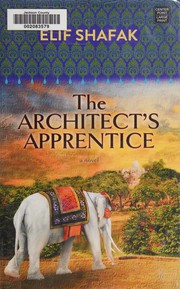
Sixteenth-century Istanbul, the great architect Sinan, an elephant and his keeper. The most straightforwardly enjoyable of the historical novels, and a good decompression after The Bastard of Istanbul.

A Kurdish family in London and an honour killing, told from several sides and across decades. The bleakest book here and the one most concerned with how migration reshapes a family's rules. Read late, not early.
The Early Novels
IntermediateGo back to the Turkish-language fiction in translation, where Shafak is stranger, funnier and much less polished than the international novels suggest.
▸ Study plan for this stage
Pace: Eight to ten weeks for four books, and the least uniform stage of the path. The Gaze is short and difficult; The Flea Palace and The Saint of Incipient Insanities are around 350 pages; Three Daughters of Eve is about 385. Read The Flea Palace first, then The Gaze, then The Saint of Incipient Insanit
- The comic-grotesque mode of The Flea Palace — a decaying Istanbul apartment block and every one of its tenants — which Shafak largely abandoned in the English-language work
- The building as a structural device: ten flats, ten histories, and a smell nobody can locate, which is a comic version of the buried-past machinery in the later novels
- The Gaze as her most experimental book, moving between a modern couple and a nineteenth-century freak show to ask what looking does to the looked-at
- The Saint of Incipient Insanities as her first novel written in English, and the audible difference between prose written in a new language and prose written in a mastered one
- Three Daughters of Eve's two-track argument — an Oxford seminar on God cut against a wealthy Istanbul dinner party — and its status as a summary of the questions the whole body of work keeps asking
- Belief, doubt and refusal as three positions rather than a spectrum, which is what the three women of Three Daughters of Eve are built to hold
- That the early books are less polished and more surprising, and that this is a genuine trade rather than simply immaturity
- What does the comic register of The Flea Palace let Shafak say about Istanbul that the later, warmer books cannot?
- In The Gaze, what is the relationship between the modern strand and the nineteenth-century one? Is it argument, analogy, or something looser?
- Reading The Saint of Incipient Insanities against The Island of Missing Trees, what specifically changed in the English prose? Name two things at sentence level.
- Three Daughters of Eve gives its three positions on faith to three characters. Does the novel favour one, and if so, how can you tell — through argument or through sympathy?
- Having read the early work, do you now read the international novels differently? What did the polish cost?
- For The Flea Palace, keep a flat-by-flat register of the tenants as you meet them. The novel is built as an anthology inside a building and rewards being read as one.
- Take one page of The Saint of Incipient Insanities and one page of The Island of Missing Trees and rewrite each in the other's style. Twenty minutes of this teaches more about her development than any essay.
- In Three Daughters of Eve, write down each of the three women's position on God in a single sentence in her own terms, then in your own. The gap between the two versions is where the novel is working.
- After The Gaze, decide honestly whether you would recommend it, and write two sentences of the recommendation or the warning. It is the one book on this path that genuinely splits readers.
- Revise the 250 words you wrote in the first stage about which Shafak you would hand a friend. Say what changed.
Next up: With the full range of the fiction behind you, the non-fiction stops being a set of opinions and becomes the author explaining, in her own voice, what all of it was for.

A rundown Istanbul apartment block and every one of its tenants, written in a comic-grotesque mode she largely abandoned later. The best of the early Turkish novels, and a genuine surprise for readers who only know the recent work.
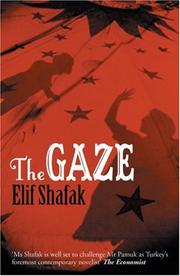
A short, unsettling novel about looking and being looked at, moving between a modern couple and a nineteenth-century freak show. Her most experimental book. Read it here or skip it — it is not for everyone.
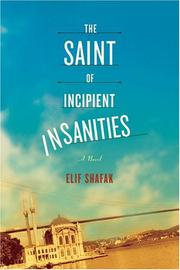
Her first novel written in English, about foreign students in Boston, and audibly the work of a writer learning a new language in public. Completist territory, but useful for hearing how deliberately the later English prose was built.

An Oxford seminar on God and a wealthy Istanbul dinner party, cut against each other. The most argumentative of the novels and best read once you can see it as a summary of the questions the whole body of work keeps asking.
The Non-Fiction
IntermediateFinish with the essays and the memoir, where Shafak speaks in her own voice about writing, motherhood and political division.
▸ Study plan for this stage
Pace: Two weeks, and much lighter than anything preceding it. Black Milk is about 265 pages and reads quickly despite its subject; How to Stay Sane in an Age of Division is a 96-page essay and can be finished in one sitting. Read Black Milk first. Deliberately leave a few days between them.
- Black Milk's central conceit — postpartum depression staged as an argument among the small women who live inside her head, each representing a claim on her life
- The writer-and-mother conflict treated as a structural problem rather than a confession, which is why the book uses a device at all
- The historical company Shafak keeps in Black Milk: other women writers who faced the same bargain, used as evidence rather than as consolation
- How to Stay Sane in an Age of Division as a statement of purpose — pluralism, storytelling and disillusionment argued directly rather than dramatised
- The relationship between the essay's claims for fiction and what the novels actually do, which is the last thing this path is in a position to test
- That the essay is slight without the novels behind it, and substantial with them — an unusually clear case of a book depending on its reader's prior reading
- Why does Black Milk need the internal chorus at all? What would a straight memoir of the same experience have lost?
- Which of the small women wins the argument, and does the book present that outcome as a resolution or as a truce?
- In How to Stay Sane in an Age of Division, what exactly does Shafak claim storytelling can do about political division? State the claim in one sentence, in her terms.
- Test that claim against the novels you have read. Which of them best supports it, and which sits most awkwardly with it?
- Having finished the whole path, what is the through-line — the question Shafak returns to in every register? Answer in one sentence, then check it against three books.
- List the small women of Black Milk with the claim each is making. Then map each one onto a character in the novels who makes the same claim; several map cleanly.
- Underline every assertion in How to Stay Sane in an Age of Division that the novels could either confirm or contradict, then adjudicate three of them from your reading.
- Write the through-line answer as 500 words on Shafak's recurring subject, citing one book from each of the five stages of this path.
- Build a personal reading order you would now give a new reader, different from this one, and write a sentence for each placement defending it.
Next up: This is the end of the path. The obvious next move is outward to the writers Shafak reads alongside — Turkish novelists working the same ground, or the Sufi material behind The Forty Rules of Love in its own right.

A memoir of postpartum depression written as an argument among the small women who live inside her head. The most personal book she has published and the clearest account of the cost of the working life behind the novels.

A short pandemic-era essay on disillusionment, storytelling and pluralism. Read last: it is effectively a statement of purpose for everything above, and it means very little without the novels behind it.