Best Books for a Truck Driving Career, in Order
This four-stage curriculum takes a complete beginner from zero trucking knowledge all the way to running a profitable owner-operator business. Each stage builds on the last: first you earn your CDL, then you master the road, then you absorb the culture and lifestyle, and finally you learn to treat your truck like the small business it is.
Getting Your CDL
BeginnerUnderstand federal trucking regulations, pass the CDL written knowledge exams, and walk into the DMV fully prepared.
▸ Study plan for this stage
Pace: 4–5 weeks, ~40–50 pages/day with daily practice tests
- Federal Hours of Service (HOS) regulations and logbook requirements
- Vehicle inspection procedures (pre-trip, en route, and post-trip inspections)
- Safe driving practices including speed management, braking, and hazardous weather operation
- Hazardous materials (HAZMAT) classification, labeling, and transportation rules
- Air brake system operation and inspection for vehicles equipped with air brakes
- Combination vehicle handling, coupling/uncoupling procedures, and weight distribution
- Traffic laws, right-of-way rules, and commercial vehicle-specific regulations
- Endorsement-specific knowledge (Passenger, Tanker, Doubles/Triples, HAZMAT) based on your target endorsements
- What are the federal Hours of Service limits for driving and on-duty time, and how do you properly complete a logbook?
- Walk through a complete pre-trip vehicle inspection—what critical components must you check and why?
- Explain the differences between air brake and hydraulic brake systems, and describe how to inspect air brakes safely.
- What are the nine hazard classes in HAZMAT transportation, and how do you identify and label each?
- Describe the proper procedure for coupling and uncoupling a tractor-trailer combination, including safety checks.
- How do you safely operate a vehicle in hazardous weather conditions (rain, snow, ice, fog)?
- What are the specific endorsement requirements and knowledge areas for each endorsement you're pursuing?
- If you encounter a brake failure while driving a commercial vehicle, what emergency procedures should you follow?
- Take the full-length CDL written knowledge practice tests from the book at least 3 times, aiming for 80%+ on each attempt
- Create flashcards or use a mobile app for all HOS regulations, HAZMAT classes, and vehicle inspection checkpoints—review daily
- Perform mock pre-trip inspections on an actual truck (or video walkthrough if unavailable) using the book's checklist, timing yourself
- Study one endorsement section per week; take the endorsement-specific practice tests and score 85%+ before moving to the next
- Write out step-by-step procedures for coupling/uncoupling and air brake inspection from memory, then compare to the book
- Take timed practice tests simulating DMV exam conditions (80 questions in 60 minutes for general knowledge) at least twice weekly
- Join a CDL study group or find a mentor to quiz you on weak areas identified in practice tests
- Review and annotate the book's diagrams of vehicle systems (brakes, coupling, HAZMAT placards) and redraw them from memory
Next up: Mastering the written knowledge in this stage gives you the theoretical foundation needed to move into hands-on training, where you'll apply these regulations and procedures in actual vehicle operation, pre-trip inspections, and real-world driving scenarios under professional instruction.

Pairs with the ATA guide by adding test-taking strategy, practice questions, and detailed answer explanations — essential for locking in the material before your written test date.
Life on the Road
IntermediateUnderstand the daily realities of long-haul trucking — hours-of-service rules, logbooks, health, safety culture, and the mental demands of life over the road.
▸ Study plan for this stage
Pace: 4–5 weeks, ~40–50 pages/day. Start with "The Long Haul" (2 weeks), then "Trucking Country" (2–3 weeks). Build in time for reflection and note-taking on personal narratives vs. historical context.
- Hours-of-Service (HOS) regulations and their real-world enforcement challenges — how drivers navigate legal limits and fatigue
- Logbook practices: legal compliance, falsification pressures, and the gap between regulation and practice
- Physical and mental health demands of long-haul trucking: sleep deprivation, isolation, diet, and chronic stress
- Truck driver culture and identity: camaraderie, independence, and the social costs of the profession
- The economic and political history of trucking deregulation and its impact on driver working conditions
- Safety culture in trucking: accident prevention, risk management, and driver accountability
- The relationship between corporate logistics demands and individual driver welfare
- Adaptation strategies: how experienced drivers maintain health, mental resilience, and professional standards under pressure
- What are the federal Hours-of-Service rules, and what are the main ways drivers and companies work around them according to Murphy's account?
- How does Murphy describe the mental and physical toll of long-haul trucking, and what coping mechanisms does he employ?
- What does Hamilton argue about the relationship between trucking deregulation and the decline in driver working conditions and safety?
- How do logbooks function as both a safety tool and a point of tension between regulation and practice in the industry?
- What role does truck driver culture and identity play in how drivers respond to the demands of life on the road?
- According to both books, what are the primary health risks (sleep, nutrition, mental health) faced by long-haul drivers, and how are they typically managed?
- Create a detailed daily schedule for a long-haul trucker based on Murphy's narrative, mapping out HOS compliance, sleep, meals, and downtime — then identify where pressures to violate rules would emerge.
- Analyze a sample logbook entry (real or reconstructed) and identify discrepancies between actual driving time and recorded time; discuss the incentives and risks involved.
- Interview a truck driver (in person or via online forum) about their daily routine, health challenges, and relationship to HOS rules; compare their account to Murphy's and Hamilton's descriptions.
- Create a timeline of trucking deregulation (1980s onward) using Hamilton's historical analysis, marking key policy changes and their documented effects on driver pay, hours, and safety metrics.
- Write a reflective essay: How does Murphy's personal narrative in 'The Long Haul' illustrate or complicate Hamilton's broader historical argument about trucking industry decline?
- Design a hypothetical wellness program for a trucking company that addresses the physical and mental health challenges Murphy describes, grounded in realistic constraints of the industry.
Next up: This stage grounds you in the lived experience and historical forces shaping trucking today, preparing you to explore specialized topics — whether that's advanced safety protocols, technology's role in the industry, or career pathways and economic mobility within trucking.

The most celebrated first-person account of a professional trucker's life; Murphy covers HOS discipline, shipper relationships, and road culture in a way no manual can replicate.

Provides the historical and regulatory backdrop of the trucking industry — deregulation, freight markets, and how driver economics evolved — giving you the 'why' behind today's rules and pay structures.
Owner-Operator Economics
ExpertEvaluate whether owner-operator status makes financial sense, understand lease vs. purchase decisions, set profitable rates, manage fuel and maintenance costs, and handle basic trucking business accounting.
▸ Study plan for this stage
Pace: 4–5 weeks, ~25–30 pages/day, with 2–3 days per week dedicated to working through accounting exercises and financial calculations
- Sole proprietorship structure and legal/tax implications for owner-operators
- Fixed costs vs. variable costs and how to calculate true cost-per-mile for trucking operations
- Profit margin analysis: setting rates that cover all expenses plus reasonable profit
- Bookkeeping fundamentals: income tracking, expense categorization, and record retention for tax purposes
- Lease vs. purchase decision framework using cash flow and ROI analysis
- Fuel and maintenance cost management and how to forecast these variable expenses
- Quarterly tax obligations, estimated tax payments, and self-employment tax calculations
- Break-even analysis: determining the minimum revenue needed to sustain operations
- What are the key differences between fixed costs and variable costs in trucking, and how do you calculate your true cost-per-mile?
- How do you determine a profitable hourly or per-mile rate that accounts for all operating expenses, taxes, and desired profit margin?
- What are the main advantages and disadvantages of leasing versus purchasing a truck, and what financial metrics should you use to compare them?
- What records must you keep for tax purposes, and how should you organize income and expense categories for a trucking business?
- How do you estimate and manage quarterly tax payments as a self-employed owner-operator?
- What is your break-even point, and how do you use it to evaluate whether owner-operator status is financially viable for your situation?
- Create a detailed monthly expense spreadsheet for a hypothetical trucking operation, categorizing all fixed costs (insurance, truck payment/lease, licensing) and variable costs (fuel, maintenance, tolls); calculate total cost-per-mile
- Work through Kamoroff's accounting worksheets to set up a simple bookkeeping system; practice recording 2–3 weeks of sample income and expense transactions
- Build a rate-setting calculator: determine the minimum hourly or per-mile rate needed to cover all expenses plus a 15–20% profit margin for a specific truck and route scenario
- Compare two scenarios (lease vs. purchase) using realistic numbers: calculate total cash outflow, ROI, and break-even timeline for each option
- Estimate quarterly self-employment tax liability based on projected annual net income; practice calculating and setting aside funds for tax payments
- Conduct a break-even analysis: determine how many miles or hours you must work per month to cover all fixed costs, then assess whether that volume is realistic for your market
Next up: This stage equips you with the financial literacy and accounting discipline to evaluate owner-operator viability; the next stage will build on this foundation by addressing operational strategies—such as load optimization, customer acquisition, and compliance—that directly impact the profitability metrics you've now learned to calculate.
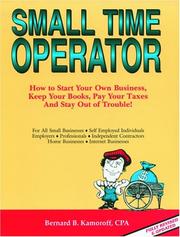
The classic small-business accounting primer; while not trucking-specific, it is universally recommended by owner-operators for mastering bookkeeping, quarterly taxes, and business entity setup — the financial literacy layer that ties the whole stage together.
Discussion
Keep reading
Paths that share books, cover the same subject, or open a related topic.