Archivists are not librarians who handle old paper. The professional core is a distinct body of theory — provenance, original order, appraisal, the record as evidence of a transaction — and the daily work now involves as much digital forensics and metadata standards as it does acid-free boxes.
One honest thing first: this is a credentialed field. Most professional posts expect a graduate qualification in archives, records management or library and information science, often with a practicum, and in some countries a specific professional registration. Books will make you a much better applicant and a much better student. They will not stand in for the qualification, and no reading list can promise a post in a competitive job market. Volunteering or interning in a real repository will do more for your prospects than any three books here.
Start with what a record is
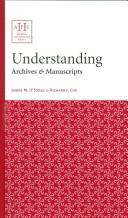
Begin with Understanding archives and manuscripts by James O'Toole and Richard Cox. It is the short conceptual foundation: what makes a record a record, why provenance and original order matter, how archives differ from libraries and museums, and how the profession understands its own purpose. Everything technical later depends on getting this right.
Learn the two core operations
Appraisal and description are the operations that define the job. Selecting and appraising archives and manuscripts by Frank Boles covers the hardest decision an archivist makes — what to keep and what to destroy — and treats it as the value-laden judgement it is rather than a checklist. Arranging and describing archives and manuscripts by Kathleen Roe covers the other half: series, hierarchy, levels of description and the finding aid.
Then the standards themselves. Describing archives, the Society of American Archivists content standard usually called DACS, is the rulebook you will actually apply in a North American repository. And the Encoded Archival Description tag library, version 1.0 documents the XML markup for finding aids — note that EAD has since moved to EAD3, so read this for the structural logic and check current documentation for the exact elements.
Take digital preservation seriously
This is where the profession has changed most, and where entry-level candidates most often fall short. Digital Preservation for Libraries, Archives, and Museums by Edward Corrado and Heather Moulaison Sandy is the practical survey — formats, fixity, storage strategies, repository systems and the organisational commitments preservation requires. Follow it with The theory and craft of digital preservation by Trevor Owens, which is the more thoughtful book: Owens argues that preservation is a series of pragmatic, resource-bounded decisions rather than a solvable technical problem, and it reframes the whole activity usefully.
Understand the outward-facing profession
A Different Kind of Web, edited by Kate Theimer, collects practitioner accounts of archives using participatory and online tools for access and outreach. Some of the specific platforms have dated; the underlying question of how repositories open collections to users who will never visit has only become more pressing.
Close with Archives by Laura Millar, the best single-volume orientation to the profession internationally. Reading it last works well, because by then you can see how the theory, the standards and the digital practice fit into one job description.
What to do alongside the reading
Join a professional association, follow the current standards documentation rather than relying on the printed editions above, and get hands on a real collection however you can. Follow the full path in order to build the theory properly, and treat every standards title on it as a snapshot rather than the current rule.
Follow the full ordered path here: Best Books to Become an Archivist, in Order.