Genetic counseling is a small, competitive profession with an unusual skill profile. Half the job is clinical genetics — inheritance patterns, variant interpretation, test selection, the difference between a pathogenic variant and one of uncertain significance. The other half is sitting with someone while they absorb information about their child, their cancer risk, or their own future, and doing it without steering the decision.
Books can carry you a long way into the first half and a surprising distance into the second. What they cannot do is credential you. In the United States, practice requires a master's degree from an ACGC-accredited program and board certification through the ABGC, and admission to those programs is genuinely competitive. Treat this reading as preparation for applications and coursework, and as a way to find out early whether the work suits you — not as an alternative route in.
Only three books sit on this path, which is honest: the profession's literature is small, and these three are the ones that actually get assigned.
The science underneath
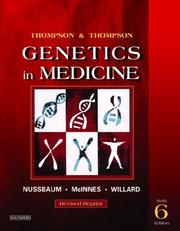
Thompson & Thompson genetics in medicine is the standard clinical genetics text and the one most program curricula lean on. It covers the molecular basis of inheritance, chromosomal disorders, single-gene and complex traits, cancer genetics, pharmacogenomics, and prenatal and newborn screening — with clinical cases threaded through so the mechanisms stay attached to patients. Work through it slowly. Pedigree analysis, penetrance, expressivity and mosaicism are the vocabulary the rest of the field assumes, and this is where you acquire them properly rather than piecemeal.
The profession's own manual
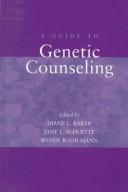
A guide to genetic counseling, edited by Diane Baker, Jane Schuette and Wendy Uhlmann, is the core practice text. It covers the actual structure of a session: taking a family history and drawing the pedigree, contracting with the client about goals, delivering results, psychosocial assessment, and the ethical and legal frame around testing minors, disclosure to relatives, and insurance discrimination. It also treats the counseling relationship itself as a skill with technique — the non-directive stance the field is built on is harder to hold than it sounds, and the book is candid about that.
If you read one book before applying to a program, read this one. It will tell you what the job is on a Tuesday afternoon.
Communicating risk without distorting it
Communicating Risks and Benefits is the outlier and the most quietly important book here. Baruch Fischhoff and colleagues assembled an evidence-based guide, produced for the FDA, on how people actually process probabilistic information — framing effects, denominator neglect, why "1 in 100" and "1%" land differently, how numeracy varies, and what presentation formats reduce misunderstanding.
This matters because a genetic counselor's core output is a probability delivered to someone under stress. The difference between a well-framed risk and a badly framed one changes decisions about screening, pregnancy, and surgery. Most of the discipline's own literature treats communication as an art; this book treats it as a testable science, and reading it against the Baker guide is the most useful pairing on the path.
Three books, read in this order, give you the genetics, the session, and the sentence. Follow the full path, then look up the accredited program list and the shadowing requirements — every program wants evidence you have seen the work done.
Follow the full ordered path here: Best Books for a Genetic Counseling Career, in Order.