People come to hospice and palliative care from two directions. Some are already clinicians who want to stop treating death as a failure. Others are drawn by a personal experience of a good or a terrible death and want to work in that space. Both groups need the same thing before they need any protocol: a clear, non-euphemistic picture of what dying actually looks like in a modern health system, and of what patients and families say they want when someone finally asks.
That is the argument for this order. The narrative and ethical books come first, because they set the goals the clinical work serves. The reference texts come second, once you know what you are aiming at. Grief and family support come last, because they extend past the patient's death and are easiest to understand after everything else.
Understand the problem first
Start with Being Mortal. Gawande's account of how medicine handles aging and dying — the drift toward intervention, the questions clinicians avoid asking, the difference between adding time and preserving what a person values — is the clearest statement of why palliative care exists. It is also the book most likely to be shared with a family you are working with.
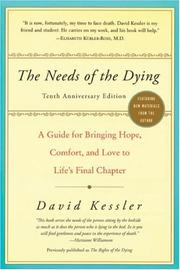
Then The Needs of the Dying by David Kessler, which reframes the same territory from the patient's side: to be treated as a living person, to have pain managed, to not die alone, to be heard. It is short, practical, and it converts abstractions into things you can actually do on a shift.
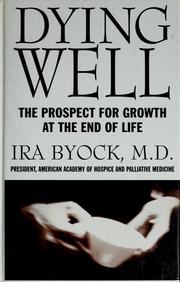
Dying well by Ira Byock adds the clinician's case that dying can hold real development and meaning rather than only decline. Byock is a hospice physician and the case studies are specific; read it as a counterweight to the assumption that the only good outcome is a delayed one.
Finish this stage with Extreme Measures by Jessica Nutik Zitter, an ICU and palliative physician's account of what she calls the end-of-life conveyor belt. It is the sharpest critique here of default aggressive treatment, written by someone who practiced it, and it is honest about the institutional pressures that keep it running.
The clinical references
Oxford Textbook of Palliative Medicine is the field's standard reference — symptom management, pharmacology, communication, ethics, pediatric and non-cancer populations. It is a large, expensive, consultative text rather than a read-through, and it is the one you check when a specific clinical question arises.
Palliative care nursing by Matzo and Sherman is the corresponding nursing text and the more practical daily companion for most hospice roles: assessment, symptom care, cultural considerations, the interdisciplinary team, and the nurse's role at the bedside. If you are heading toward hospice nursing or CHPN certification, this is the core volume.
Family, grief, and the work after death
The Four Things That Matter Most, Byock again, is built around four sentences that resolve most of what goes unsaid between people at the end of a life. It is a communication tool as much as a book, and it is used constantly in family meetings.
Grief Day By Day by Jan Warner is a daily-format support book you are more likely to recommend than to read cover to cover — useful to know well so you can point families to the right sections. Close with The Art of Dying Well by Katy Butler, a practical guide to planning across the last years of life, covering advance directives, care settings, and the decisions families face before a crisis forces them.
Honest limits
This reading builds understanding and vocabulary; it does not confer clinical competence or a credential. Hospice and palliative roles are licensed — nursing, medicine, social work, chaplaincy, or aide certification — and specialty practice requires supervised experience and, usually, board certification. Symptom management in particular must be learned in practice under supervision, not from a textbook. The work also carries a real risk of burnout and moral distress, which is worth planning for rather than discovering. Other care and trade paths sit under related subjects.
Read in this order and you will understand the goal before the protocol. Follow the full path to keep the sequence.
Follow the full ordered path here: Reading Your Way Into Hospice and Palliative Care Work.