Be clear about what reading can and cannot do here. Seat time on a machine is the skill, and it comes from a training program, an apprenticeship, or an employer willing to put you on iron under supervision. No book substitutes for that, and no book substitutes for the licenses, certifications, and medical requirements a jobsite will ask for.
What books do very well is everything surrounding the levers. Why a cut is staked where it is. How much a soil type will swell and shrink. What a grade stake means. Which OSHA standard governs trench entry and why the depth threshold exists. Operators who understand the plan and the site work faster, damage less, and get moved up. That is what this sequence is for.
Learn the work the machine is doing
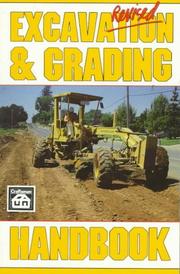
Start with Excavation & grading handbook. Capachi is the standard practical text: staking and grade reading, soil behavior, cut and fill, trenching, compaction, drainage, and production estimating. It is written by and for people on site, in plain terms, and it explains the reasoning behind the specification rather than just the specification. Read it before anything else, because it defines the vocabulary the rest of the path uses.
Then Construction surveying and layout by Crawford. Grade is the whole job, and layout is where grade comes from — control points, elevations, offsets, slopes, and instrument work. You do not need to become a surveyor, but an operator who can read the stakes and check their own grade is a different employee from one who waits to be told.
Safety is not the optional chapter
Construction safety and the OSHA standards by Goetsch covers the regulatory frame that governs everything you will do: excavation and trenching rules, fall protection, struck-by hazards, competent-person requirements, and how the standards are structured so you can find the one that applies. Trench collapse and struck-by incidents are among the leading causes of death in this work, and both are addressed directly by rules in this book. Treat it as core reading, not compliance box-ticking — and treat your employer's site-specific plan and a qualified competent person as the authority over any book.
The certification curriculum
The two NCCER volumes — Heavy Equipment Operations Level One and Heavy Equipment Operations Level Two — are the formal training curriculum used by many programs and employers. Level One covers orientation, safety, basic machine components, earthmoving fundamentals, and introductory operation. Level Two moves into specific machines and production work. They are structured for a classroom with an instructor and a yard, so they read as workbooks rather than narrative, and their real value is that they map to what a certifying program will actually test.
That mapping is the point: if you are heading toward an NCCER-credentialed program, working these before enrollment means you arrive able to focus on machine time instead of terminology. If you are self-directed, they tell you what the industry considers baseline knowledge.
What to expect honestly
Entry into this trade is through training programs, unions, and employers, and requirements vary a great deal by state and by machine class. Books shorten the learning curve; they do not produce a credential or a job, and pay and conditions vary widely. Related trade paths sit under wind turbine technician work if you are comparing options.
Read them in this order and you will show up knowing what the plan means. Follow the full path to keep the sequence.
Follow the full ordered path here: Books for a Heavy Equipment Career, in Reading Order.