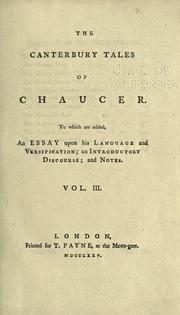
Start with The Western canon itself and then The Canterbury Tales. Harold Bloom's book is the map and the position you are testing; his list of hundreds of works is why the canon gets mistaken for a syllabus, and he later said the publisher wanted that appendix and he regretted it. Chaucer's pilgrims tell stories to pass the time and several of them are filthy: it is the most immediately enjoyable pre-modern work in English and the right first primary text. Use a facing-page or modernised edition without embarrassment.
Do not start with Ulysses. It is the book most often bought and least often finished, and the honest position is that its difficulty is real and unevenly distributed — three or four episodes are genuinely hard and several are not. Paradise Lost is the other early trap: the syntax is the whole obstacle, and John Milton's sentences run twenty lines in Latin word order. Both are on this path. Neither is where a canon reader should begin.
There is no official canon
The phrase now mostly names an argument — about whether a common core of great books exists, who assembled it, and what was left out. Bloom's defence puts Shakespeare at the centre and judges everything by aesthetic strangeness rather than moral or political usefulness, which is a real position and an unpopular one.
The honest objection is not that these books are bad. It is that survival tracked access to leisure, patronage and printing presses, which is a fact about history rather than about literary merit, and Bloom's book does not really answer it. Both things can be true: the objection stands, and the books are still extraordinary. This path is built to be finishable rather than complete, which is the only way a canon list is ever any use.
The map, and two ways in
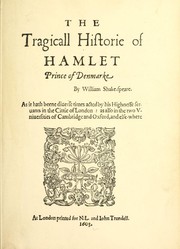
After Bloom and Chaucer, read Hamlet. His entire argument stands or falls on Shakespeare and this is where he places the centre of it. Read it aloud, or alongside a filmed production — treating a play as a novel is the commonest way readers talk themselves into disliking Shakespeare.
The great prose
Don Quixote Annotated is the catalogue's copy of Don Quixote, an annotated edition, which is the right way to read it anyway: an old man reads too many chivalric romances and goes out to live one, and the second half is better than the first. The Complete Essays of Montaigne is not a book to read straight through — take three or four essays at a time from the man who invented the form by writing about his kidney stones, his cat and his fear of dying.
Middlemarch is the easiest long book here and the best novel ever written about intelligent people making avoidable mistakes; it is the strongest single piece of evidence that the canon's nineteenth-century core earns its place. Moby Dick — filed under that spelling, usually printed as Moby-Dick — is a whaling voyage constantly interrupted by essays on cetology, rope, whiteness and God. It failed commercially, was forgotten for seventy years, and was then installed at the centre of American literature, which makes it the clearest case on this path of a canon being assembled after the fact.
The verse that needs a running start
The technique matters more than the willpower: a good modern translation, a short daily portion, and notes you actually consult.
The Divine Comedy is the easiest verse epic to schedule — a hundred short cantos, one a day, finished in three months — and the one where translation choice matters most. Paradise Lost gives Satan the best voice in it; read the first two books aloud until the rhythm arrives, because it does arrive. Faust splits cleanly: Part One is a coherent tragedy and Part Two is a sprawling allegory many readers abandon, so read Part One as a complete work and treat Part Two as genuinely optional rather than pretending otherwise. King Lear is the play Bloom puts above Hamlet and the one that most resists being enjoyed; read it last of the verse, when Dante and Milton have made its density manageable.
The modern end, with a companion
Finish with Ulysses, and use the apparatus. The new bloomsday book, published as The New Bloomsday Book, tells you what is literally happening in each episode; read the corresponding section immediately after each episode rather than before. That single practical habit is what turns Joyce's novel from a book people abandon into a book people finish.
Follow the full ordered path here: The Western Canon: What to Actually Read, and in What Order.