Best Books on the Underground Railroad, in Order
This curriculum moves from vivid, accessible narratives that bring the Underground Railroad to life, through the historical mechanics of escape networks and conductors, and finally into the legal, political, and scholarly frameworks that shaped and sustained the system. Each stage builds the vocabulary, context, and emotional grounding needed to tackle the next, culminating in a rich, multi-dimensional understanding of one of American history's most extraordinary chapters.
First Encounters: Stories That Open the Door
BeginnerBuild an emotional and narrative foundation — understand what enslavement meant, why people fled, and what the Underground Railroad felt like from the inside, before diving into history and analysis.
▸ Study plan for this stage
Pace: 8–10 weeks, ~40–50 pages/day. Read Douglass (120 pages) over 2–3 weeks, Jacobs (300 pages) over 3–4 weeks, and Whitehead (300 pages) over 3 weeks, with 1–2 days between books for reflection.
- The dehumanizing mechanics of slavery as experienced by enslaved people themselves—labor, family separation, psychological control, and denial of literacy and autonomy
- The gendered dimensions of enslavement—how Harriet Jacobs's experience of sexual harassment and reproductive coercion differs from Douglass's account and expands understanding of slavery's violence
- The role of literacy and self-education as acts of resistance and pathways to freedom, particularly in Douglass's narrative
- The Underground Railroad as both a literal network of routes and safe houses and a metaphor for hope, strategy, and collective survival
- The emotional and psychological weight of the decision to flee—fear, longing for family left behind, and the constant threat of recapture
- First-person testimony as a primary historical source and as a tool for reclaiming humanity and agency in the face of dehumanization
- What does Frederick Douglass identify as the turning point in his journey toward freedom, and how does literacy function in his narrative?
- How does Harriet Jacobs's account of hiding in her grandmother's attic differ from Douglass's more public resistance, and what does this reveal about gender and slavery?
- In Colson Whitehead's novel, how does the magical realism of the Underground Railroad as an actual train system change the way you think about the historical network?
- What emotional or psychological toll of enslavement and escape is most powerfully conveyed across these three texts, and which author's voice stays with you most?
- How do these three narratives—two historical, one contemporary fiction—work together to build your understanding of what the Underground Railroad meant to those who used it?
- What does each author suggest about the relationship between freedom and identity? How do they define what it means to be free?
- Close-read one pivotal passage from each book (e.g., Douglass on learning to read, Jacobs on her hiding place, Whitehead on Cora's first train ride) and write a 1-page reflection on how the author conveys emotional truth.
- Create a timeline or map of the physical and emotional journey of one character (Douglass, Harriet, or Cora), marking key turning points and moments of resistance or despair.
- Write a letter from the perspective of one character to someone they left behind or hope to find, using details from the text to ground the emotional stakes.
- Discuss or journal: How does reading these accounts firsthand change your understanding of the Underground Railroad compared to what you might have learned in a textbook?
- Compare how Douglass and Jacobs each use their narrative voice and tone to persuade readers of their humanity and the injustice of slavery—what rhetorical choices does each make?
- After finishing Whitehead, write a short reflection on how his fictional train relates to the historical reality described in Douglass and Jacobs. What does the magical element allow him to explore?
Next up: This stage equips you with intimate, firsthand knowledge of enslavement and escape—the human stakes and emotional reality—so that the next stage can layer in historical context, systemic analysis, and the broader networks and logistics of the Underground Railroad without losing sight of the individuals whose lives depended on it.
The single most important first-person account of American slavery and the burning desire for freedom. Reading Douglass first gives the learner an unshakeable human anchor for everything that follows.

Jacobs's account adds the critical dimension of gender to the freedom narrative and vividly portrays the ingenuity required to hide, resist, and ultimately escape — a perfect complement to Douglass.

This Pulitzer Prize-winning novel uses the Railroad as a literal metaphor to dramatize the geography of freedom and terror. Reading it here, after the primary sources, lets the learner appreciate its historical echoes while remaining accessible and gripping.
The Network: How It Actually Worked
BeginnerUnderstand the real mechanics of the Underground Railroad — its routes, safe houses, codes, and the remarkable conductors who risked everything to run it.
▸ Study plan for this stage
Pace: 4–5 weeks, ~40–50 pages/day. Start with "Bound for Canaan" (approx. 450 pages) over 2–3 weeks, then "Harriet Tubman" (approx. 250 pages) over 1–2 weeks, with overlap for reflection and note-taking.
- The Underground Railroad as a decentralized network of routes, safe houses (stations), and people (conductors, stationmasters) rather than a formal organization
- The role of Quakers, free Black communities, and white abolitionists in operating the network across the North and Canada
- Codes, signals, and disguises used to communicate danger and guide fugitives safely (e.g., quilts, songs, safe house markers)
- The economics and logistics of the network: how safe houses were funded, how conductors sustained operations, and the risks they took
- Harriet Tubman's evolution from fugitive to conductor: her personal escape, her methods, her success rate, and her legendary status
- The geographic routes and destinations: major pathways through the Mid-Atlantic and Northeast, the role of Canada as a final destination
- The courage and sacrifice of ordinary people—both Black and white—who operated the network despite legal consequences and social danger
- What made the Underground Railroad 'underground' and how did its decentralized structure help it survive despite legal opposition?
- Who were the main groups operating the Underground Railroad (Quakers, free Black communities, white abolitionists), and what motivated each group?
- What specific codes, signals, and methods did conductors use to communicate with fugitives and guide them to safety?
- How did Harriet Tubman's personal escape experience shape her methods and effectiveness as a conductor, and what made her legendary?
- What were the major routes of the Underground Railroad, and why was Canada such a critical destination for fugitives?
- What were the real dangers and legal consequences faced by those who operated safe houses and conducted fugitives?
- Create a detailed map of Underground Railroad routes using information from 'Bound for Canaan,' marking major stations, safe houses, and geographic bottlenecks. Annotate with the names of key conductors and stationmasters mentioned in the text.
- Compile a 'conductor's handbook' using examples from both books: list the codes, signals, disguises, and communication methods used, with specific examples from the narratives (e.g., quilts, songs, safe house markers).
- Write a biographical comparison of 3–4 conductors from 'Bound for Canaan' and Harriet Tubman: their backgrounds, methods, success rates, and the risks they took. Use direct quotes from the texts.
- Trace Harriet Tubman's journey in 'Harriet Tubman' (her escape, her first missions, her evolution as a conductor) and connect it to the broader network described in 'Bound for Canaan.' Create a timeline with key dates and milestones.
- Research and write a 1–2 page profile of a specific safe house or station mentioned in 'Bound for Canaan,' imagining a day in its operation: who stayed there, what dangers they faced, how the stationmaster managed it.
- Create a visual 'network diagram' showing the relationships between conductors, stationmasters, fugitives, and abolitionists in a specific region (e.g., Pennsylvania or New York), based on examples from both books.
Next up: This stage equips you with the operational and human details of how the Underground Railroad functioned, preparing you to examine in the next stage the broader historical context, the resistance it faced from slave catchers and the Fugitive Slave Acts, and its ultimate impact on the abolitionist movement and the path to the Civil War.
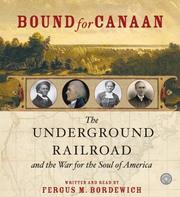
The most comprehensive and readable single-volume history of the Underground Railroad as a whole system. Bordewich maps the network, profiles key figures, and corrects myths — the essential factual backbone of this curriculum.

The definitive biography of the Railroad's most celebrated conductor. Reading it after Bordewich's overview lets the learner see how one extraordinary individual operated within the larger network.
Voices from the Ground: Primary Testimonies
IntermediateEngage directly with the testimonies of freedom seekers and their allies, developing the ability to read and interpret primary historical sources critically.
▸ Study plan for this stage
Pace: 6–8 weeks, ~40–50 pages/day (alternating between Still's records and Craft's narrative; expect slower pace due to dense primary source material and archival format)
- Primary source literacy: distinguishing between firsthand accounts, editorial framing, and historical interpretation in archival documents
- The diversity of escape routes and strategies documented in Still's records—geographic, temporal, and methodological variation across cases
- Gender, race, and class dynamics in freedom seeking, particularly through Ellen Craft's passing strategy and the gendered risks of escape
- The role of networks and intermediaries (conductors, station masters, allies) in facilitating escape, as revealed through Still's systematic documentation
- Rhetorical strategies in testimony: how freedom seekers and their allies constructed narratives to persuade, document, and preserve their experiences
- The tension between individual agency and structural constraint: how enslaved people navigated impossible choices within systems designed to prevent their freedom
- Archival gaps and silences: what Still's records reveal about who could document their stories and whose voices remain absent or mediated
- How does William Still's editorial framework and organizational system shape how we read the individual testimonies in his records? What does his role as recorder and curator reveal about the Underground Railroad's documentation?
- Compare the escape strategies of at least three different individuals or families in Still's records. What factors (geography, resources, family status, skill) determined which routes and methods were available to different freedom seekers?
- What was Ellen Craft's passing strategy, and what does her narrative reveal about the intersections of race, gender, and slavery that other accounts might not capture?
- How do William and Ellen Craft use their narrative to accomplish multiple purposes simultaneously—personal testimony, abolitionist argument, and historical record?
- What evidence of networks and cooperation (between freedom seekers, conductors, and allies) emerges from Still's records? How do these networks operate differently across regions or time periods?
- What limitations or gaps exist in these primary sources? Whose stories are missing, and what might account for their absence from the historical record?
- Close-read 3–4 individual case entries from Still's records (select diverse examples: different regions, family structures, escape methods). For each, annotate: the person's own words vs. Still's editorial additions, key decisions/turning points, and evidence of network support.
- Create a comparative matrix tracking escape routes, methods, and outcomes across at least 8 cases from Still's records. Identify patterns: which strategies appear most frequently? Which variables (geography, family size, resources) correlate with successful escape?
- Analyze Ellen Craft's passing narrative in detail: identify the rhetorical moves she makes, the risks she emphasizes, and how she positions herself as both vulnerable and resourceful. Compare her self-presentation to how Still describes similar cases in his records.
- Write a 2–3 page analytical essay: 'What does Still's role as recorder and editor tell us about the Underground Railroad as a historical phenomenon?' Use specific examples from his records to support your argument.
- Conduct a 'source criticism' exercise: select one case from Still's records and one passage from the Craft narrative. For each, identify: What is the source's origin and purpose? Who is the intended audience? What biases or limitations might shape the account? What corroborating evidence would you need?
- Create an annotated timeline or map combining cases from Still's records with the Craft narrative, showing how escape routes, methods, and risks evolved or varied geographically. Write brief captions explaining what each case reveals.
Next up: This stage equips you to read primary sources as constructed documents—not transparent windows into the past—preparing you to engage with the analytical and interpretive challenges of the next stage, where you'll synthesize multiple perspectives and grapple with how different communities (abolitionists, formerly enslaved people, historians) have understood and contested the meaning of the Undergro
Still, a free Black Philadelphia stationmaster, meticulously documented hundreds of freedom seekers he personally assisted. This is the single richest primary source on how the Railroad operated day-to-day and who traveled it.
One of the most audacious escape stories ever recorded — Ellen Craft disguised as a white slaveholder, William as her servant. Read after Still's records, it illustrates the creativity and desperation captured in those pages.
Law, Politics, and the Machinery of Oppression
IntermediateUnderstand the legal and political forces — especially the Fugitive Slave Acts — that the Railroad was built to defy, and how those forces shaped national politics toward Civil War.
▸ Study plan for this stage
Pace: 8–10 weeks, ~40–50 pages/day. "Gateway to Freedom" (weeks 1–4, ~350 pages); "America's Constitution" (weeks 5–10, ~600 pages, selective chapters on slavery, federalism, and constitutional amendments).
- The Fugitive Slave Acts (1793 and 1850) as federal enforcement mechanisms that criminalized assistance to enslaved people and deputized Northern citizens into slave catchers
- How the Underground Railroad operated as a direct, organized resistance to federal law—a network of safe houses, routes, and activists deliberately breaking the law
- The constitutional paradox: how the Constitution protected slavery through the Three-Fifths Compromise, the Fugitive Slave Clause, and the slave trade clause, yet also contained seeds of abolition
- The role of Northern states in resisting federal fugitive slave enforcement through personal liberty laws and state sovereignty arguments
- How disputes over slavery's expansion into new territories (Kansas-Nebraska Act, Dred Scott decision) escalated sectional tensions toward Civil War
- The political realignment of parties (Whig collapse, rise of Republicans) driven by the slavery question and enforcement of the Fugitive Slave Acts
- The moral and legal philosophy of civil disobedience: why Railroad operators justified breaking federal law as a higher moral duty
- What were the key provisions of the 1793 and 1850 Fugitive Slave Acts, and how did they differ in their enforcement mechanisms and impact on Northern states?
- How did the Underground Railroad function as organized resistance to federal law, and what specific legal risks did its operators face under the Fugitive Slave Acts?
- What constitutional clauses protected slavery, and how did abolitionists and Republicans argue for alternative constitutional interpretations?
- How did Northern states use personal liberty laws to resist federal fugitive slave enforcement, and what does this reveal about federalism and state sovereignty?
- How did the Dred Scott decision and the Kansas-Nebraska Act intensify sectional conflict, and what role did they play in the political realignment toward Civil War?
- What arguments did Underground Railroad participants use to justify civil disobedience against the Fugitive Slave Acts?
- Create a detailed timeline mapping the Fugitive Slave Acts, key Supreme Court decisions (Dred Scott, Prigg v. Pennsylvania), and major Underground Railroad operations—identify how legal changes triggered shifts in Railroad strategy
- Analyze 3–4 primary source documents from 'Gateway to Freedom' (trial records, letters, newspaper accounts) and identify the specific laws invoked against Railroad operators; annotate the constitutional or statutory basis for each charge
- Map the constitutional clauses protecting slavery (Three-Fifths Compromise, Fugitive Slave Clause, slave trade clause) using Amar's analysis; write a one-page explanation of how each clause functioned politically and economically
- Debate exercise: Divide into two groups—one arguing the constitutionality of the Fugitive Slave Acts using Amar's originalist framework, the other arguing for abolitionist constitutional reinterpretations; use specific textual evidence
- Research and present on one Northern state's personal liberty laws (e.g., Massachusetts, Ohio, Pennsylvania); explain how it attempted to nullify federal fugitive slave enforcement and what legal conflicts resulted
- Create a political realignment chart showing how the slavery question reshaped American parties from 1840–1860; connect specific events (Compromise of 1850, Kansas-Nebraska Act, Dred Scott) to shifts in party platforms and voter coalitions
Next up: This stage establishes the legal and constitutional battleground that made the Underground Railroad necessary and dangerous; the next stage will examine the Railroad's actual operations, the people who ran it, and the lived experiences of those seeking freedom within this oppressive legal framework.
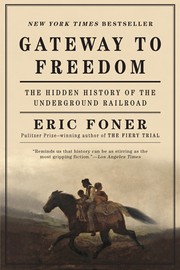
A landmark work of scholarship by America's foremost Civil War historian, focused on New York's freedom network and grounded in newly discovered records. It places the Railroad squarely within the political crisis over the Fugitive Slave Law.
Provides the constitutional and legal scaffolding — including the fugitive slave clause — that made the Fugitive Slave Acts possible. Reading it here gives the learner the legal literacy to fully grasp what freedom seekers were up against.
Deep Scholarship: Memory, Myth, and Legacy
ExpertCritically evaluate the historiography of the Underground Railroad — separating myth from documented history — and understand how its legacy has been remembered, contested, and used in American culture.
▸ Study plan for this stage
Pace: 8–10 weeks, ~40–50 pages/day (accounting for dense historiographical and economic analysis)
- Historiographical debates: how scholars have constructed competing narratives of the Underground Railroad, from abolitionist hagiography to modern revisionist accounts
- The distinction between myth and documented evidence: examining which popular stories about the Underground Railroad have archival support versus which are romantic constructions
- Economic dimensions of slavery and resistance: understanding how enslaved people's labor extraction and forced migration shaped American capitalism and wealth accumulation
- Memory and commemoration: analyzing how the Underground Railroad has been remembered, memorialized, and deployed in American public discourse and identity
- Agency and resistance: recognizing enslaved people as active historical agents rather than passive victims, while avoiding romanticization
- The role of white allies and abolitionists in historical narratives: critically examining how their prominence in popular memory obscures or centers Black leadership
- Contested legacies: understanding how different communities (descendants, activists, institutions) claim and interpret the Underground Railroad's meaning today
- Methodological approaches: learning how historians use material culture, oral tradition, demographic data, and slave narratives to reconstruct hidden histories
- How does Blight's historiographical analysis in 'Passages to Freedom' challenge or complicate popular myths about the Underground Railroad, and what evidence does he use to do so?
- According to Baptist in 'The Half Has Never Been Told,' what is the relationship between slavery's expansion, enslaved people's forced migration, and American economic development? How does this reframe the Underground Railroad within broader systems of exploitation?
- What role do white abolitionists and allies play in the historical record versus in popular memory of the Underground Railroad, and why does this distinction matter?
- How have different communities and institutions used the memory of the Underground Railroad to serve contemporary political, cultural, or identity purposes? What are the implications of these competing interpretations?
- What methodological challenges do historians face when reconstructing Underground Railroad history, and what sources do Blight and Baptist prioritize to overcome these challenges?
- How does understanding the economic logic of slavery and forced migration change your interpretation of resistance and freedom-seeking during the antebellum period?
- Create a two-column chart: 'Popular Myth vs. Documented History' for 5–7 specific Underground Railroad narratives (e.g., Harriet Tubman's rescue missions, the role of Quakers, the 'railroad' metaphor itself). Use evidence from Blight to populate the 'documented history' column.
- Write a historiographical essay (1,500–2,000 words) analyzing how Blight's approach to evidence and narrative differs from earlier abolitionist-era or mid-20th-century accounts of the Underground Railroad. What assumptions do older accounts make that Blight questions?
- Map the economic argument in Baptist's work: trace how enslaved people's forced migration and labor extraction connected to specific industries, regions, and wealth accumulation. Create a visual diagram or written summary showing these connections.
- Conduct a 'memory audit' of a local or national Underground Railroad site, monument, or museum exhibit. Analyze what narrative it presents, whose voices are centered, and what might be missing or mythologized. Compare your findings to Blight's and Baptist's critiques.
- Interview or survey 5–10 people outside your study group about their understanding of the Underground Railroad. Document their responses, then analyze them against the historiographical and economic frameworks presented in the books. What myths persist, and why?
- Write a critical response paper (1,000–1,500 words) to one major argument in either Blight or Baptist, engaging with their evidence and methodology. Where do you find their analysis most compelling, and where might there be gaps or alternative interpretations?
Next up: This stage equips you with the historiographical tools and critical frameworks to interrogate how historical narratives are constructed and contested, preparing you to examine how other marginalized histories have been remembered, suppressed, or weaponized in American culture.
An edited volume bringing together the leading historians of the Railroad to debate evidence, methodology, and meaning. It is the ideal capstone for a learner ready to think critically about what we know and how we know it.
Baptist's sweeping reinterpretation of American slavery as an engine of capitalist expansion reframes everything the learner has read — showing the full economic and human scale of the system the Underground Railroad resisted.
Discussion
Keep reading
Paths that share books, cover the same subject, or open a related topic.