Colson Whitehead Reading Order: Where to Start
This curriculum moves through Colson Whitehead's body of work in a carefully sequenced arc: starting with his most accessible and celebrated novel to build confidence and familiarity with his voice, then stepping back to his early experimental fiction to understand where that voice came from, and finally arriving at the two Pulitzer Prize-winning masterworks with the full context needed to appreciate their depth. Each stage builds the thematic and stylistic vocabulary required for the next, turning a casual reader into a genuine student of Whitehead's craft.
The Entry Point — Finding His Voice
BeginnerGet hooked on Whitehead's storytelling through his most propulsive, genre-blending novel, establishing comfort with his dark wit, social commentary, and narrative momentum before tackling harder work.
▸ Study plan for this stage
Pace: 2–3 weeks, ~25–30 pages/day (Zone One is ~259 pages); read in three loose sections: pp. 1–90 (Friday sweep), pp. 91–180 (Saturday sweep), pp. 181–259 (Sunday sweep), mirroring the novel's own three-day structure
- Genre-blending as social critique: Whitehead uses zombie-apocalypse conventions not for pure horror but as a lens to examine capitalism, labor, trauma, and American myth-making
- Dark wit and ironic distance: Mark Spitz's sardonic interior voice creates emotional detachment as a survival mechanism — humor and horror coexist on the same sentence level
- Narrative momentum vs. fragmented time: the novel moves forward through a single weekend while constantly looping back via flashbacks ('Last Days'), teaching readers how Whitehead controls pace through temporal disruption
- The 'skels' and 'stragglers' as allegory: the two categories of undead map onto broader social distinctions — the violent dispossessed vs. the quietly forgotten — inviting readers to read monsters as metaphor
- Zone One (Manhattan) as American symbol: the reclamation project mirrors real urban renewal, gentrification, and the mythology of rebuilding/progress after catastrophe
- Mark Spitz as an 'average' everyman protagonist: his deliberately unremarkable nature is a narrative and thematic choice — mediocrity as survival strategy in both the apocalypse and pre-apocalypse America
- Whitehead's prose style: long, architecturally complex sentences, brand-name specificity, and pop-culture saturation that root an unreal scenario in hyper-real American consumer life
- Trauma and memory: the flashback structure shows how survivors process catastrophe — the past is never safely past, it erupts into the present continuously
- How does Whitehead use the zombie genre's familiar tropes (survival, clearing, safe zones) to comment on American labor and the myth of post-disaster 'rebuilding'?
- What does Mark Spitz's self-described mediocrity reveal about Whitehead's view of the American ideal of exceptionalism?
- How does the novel's three-day structure combined with its constant flashbacks shape your experience of time and dread — and what does that form say about how trauma works?
- What is the difference between 'skels' and 'stragglers' in the novel, and what social or political reading does that distinction invite?
- How does Whitehead's use of brand names, corporate slogans, and pop-culture references function in a post-apocalyptic setting — what effect does that specificity create?
- By the novel's end, what has Whitehead suggested about the possibility — or impossibility — of truly starting over in America?
- **The Three-Day Reading Log:** As you read each of the novel's three sections (Friday/Saturday/Sunday), keep a one-page log noting: one moment of dark humor, one moment of genuine dread, and one flashback. At the end, compare the three logs — track how the ratio of humor to horror shifts as the weekend progresses.
- **Monster Decoder:** Choose any two 'straggler' scenes and two 'skel' scenes. Write a short paragraph for each arguing what specific social type or condition each undead figure might represent. Practice reading Whitehead's monsters as allegory, not just atmosphere.
- **Sentence Autopsy:** Select one long, brand-saturated paragraph (the novel has many). Copy it out by hand, then annotate it: circle every brand name or pop-culture reference, underline every ironic phrase, and bracket the emotional core buried inside. Write two sentences on what the style is *doing* beyond describing the scene.
- **Rewrite the Everyman:** Write a 200-word journal entry from Mark Spitz's point of view set in his pre-apocalypse life — a mundane Tuesday at work. Try to capture his voice: detached, wry, hyper-observant of consumer culture. This forces you to inhabit Whitehead's narrative register.
- **Flashback Mapping:** Create a simple timeline on paper with two tracks: 'Present Weekend' and 'Last Days Flashbacks.' Each time a flashback occurs, add it to the map. At the end of the novel, look at the shape of the map — write three sentences on what the *pattern* of memory reveals about Mark Spitz's psychology.
- **Genre Contract Reflection:** Before starting the novel, write down five things you expect from a zombie novel. After finishing, return to that list and mark each expectation as 'fulfilled,' 'subverted,' or 'ignored.' Write a short paragraph on what Whitehead's choices tell you about his goals as a writer.
Next up: Mastering Whitehead's dark wit, allegorical monsters, and fragmented time in Zone One builds the exact interpretive muscles — reading social critique beneath genre surface, tolerating non-linear structure, and trusting his prose style — needed to engage with the deeper historical and moral weight of his more demanding work ahead.
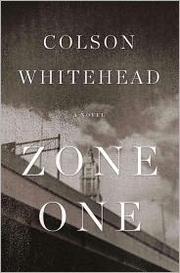
A literary zombie novel set in a post-apocalyptic Manhattan, it is Whitehead's most immediately gripping read and the perfect on-ramp: genre-familiar yet intellectually rich, it introduces his signature move of using popular forms to excavate American trauma and identity.
The Early Experiments — Where It All Began
BeginnerUnderstand Whitehead's origins as a formally adventurous, postmodern writer, seeing how his debut and early novels established the thematic obsessions — race, infrastructure, myth, self-invention — that run through all his later work.
▸ Study plan for this stage
Pace: 10–12 weeks total, reading roughly 20–25 pages per day. Suggested breakdown: Weeks 1–4 for The Intuitionist (~255 pages), Weeks 5–8 for John Henry Days (~390 pages, slightly slower due to density and multiple POVs), Weeks 9–11 for Apex Hides the Hurt (~210 pages). Reserve Week 12 for review, re-read
- Postmodern allegory: Whitehead uses genre conventions (noir detective fiction in The Intuitionist, the press-junket road novel in John Henry Days, the corporate satire in Apex Hides the Hurt) as Trojan horses for deeper meditations on race and American identity.
- Infrastructure as metaphor: Elevators, railroads, and naming systems are never merely functional — they embody power structures, social mobility, and the promises and failures of progress for Black Americans.
- The myth of progress and the 'vertical dream': The Intuitionist's competing schools of Empiricism vs. Intuitionism dramatize two philosophies of advancement — incremental reform vs. radical reimagination — a tension Whitehead returns to throughout his career.
- John Henry as cultural palimpsest: In John Henry Days, the folk hero's legend is shown to be endlessly rewritten by commerce, tourism, journalism, and Black memory, illustrating how myth is always a site of contested ownership.
- Self-invention and naming: Apex Hides the Hurt centers on a 'nomenclature consultant' whose job — and personal crisis — literalizes Whitehead's obsession with how names construct, conceal, and liberate identity.
- The Black professional in white institutions: All three novels feature protagonists who are Black experts operating inside predominantly white systems (elevator inspection, journalism, corporate consulting), using their insider/outsider status to expose those systems' contradictions.
- Formal experimentation as meaning: Whitehead's fragmented timelines, shifting POVs, and genre-blending are not decorative — the form enacts the instability and multiplicity of the histories he examines.
- Commodity culture and co-optation: John Henry Days and Apex Hides the Hurt both dissect how capitalism absorbs, rebrands, and neutralizes Black cultural symbols and histories.
- In The Intuitionist, what do the rival schools of Empiricism and Intuitionism represent beyond elevator inspection, and how does Lila Mae Watson's position between them reflect the novel's argument about race and progress?
- John Henry Days juxtaposes the original John Henry legend with a modern press-junket circus. What does this structural collision reveal about how American myth-making exploits Black labor and Black heroism?
- The protagonist of Apex Hides the Hurt is never named. How does this anonymity function thematically, given that the entire novel is about the power of names?
- Across all three novels, Whitehead's Black protagonists are highly credentialed professionals. How does their expertise both grant them access to white institutions and simultaneously isolate or endanger them?
- How does Whitehead use physical infrastructure — elevator shafts, railroad lines, a town's street grid — as a concrete image for abstract social and racial hierarchies?
- By the end of these three novels, what consistent vision of American history emerges? Does Whitehead present progress as real, illusory, or something more complicated?
- Allegory mapping: After finishing The Intuitionist, draw a two-column chart. On one side list literal plot elements (elevators, inspection reports, the two schools); on the other, write their allegorical equivalents in the history of race in America. Look for at least 8 pairings.
- Myth-tracing timeline: While reading John Henry Days, keep a running log of every version of the John Henry story that appears — folk song, stamp ceremony speech, journalist's article, etc. After finishing, write a one-page reflection: whose version has the most authority, and why?
- Close-reading the unnamed: In Apex Hides the Hurt, select three moments where the protagonist's namelessness is most conspicuous. Write a paragraph for each explaining what Whitehead gains — and what the reader feels — by withholding that name.
- Infrastructure walk: Take a walk or commute in your own city and photograph or sketch 3–5 pieces of infrastructure (bridges, transit lines, street names, buildings). Write a short paragraph for each connecting it to a power dynamic or historical exclusion, in the spirit of Whitehead's method.
- Comparative protagonist essay (500–700 words): Write an informal essay comparing Lila Mae Watson (The Intuitionist), J. Sutter (John Henry Days), and the nomenclature consultant (Apex Hides the Hurt) as variations on a single character type. What do they share? Where do they diverge?
- Genre autopsy: For each of the three novels, write one paragraph identifying the genre Whitehead is borrowing from (e.g., noir, picaresque, corporate satire) and one paragraph explaining how he subverts or 'breaks' that genre to make his thematic point.
Next up: Mastering Whitehead's early allegorical and formally experimental mode — his use of genre, infrastructure, myth, and the isolated Black professional — gives readers the essential interpretive toolkit to recognize how these same obsessions are amplified and historicized in his later, more realist works, where the stakes become explicitly about survival and collective memory rather than individual n

His debut novel — a noir allegory about elevator inspectors and racial integration — is the essential foundation for understanding his entire project; it establishes his love of genre subversion and his method of using absurdist premises to tell serious stories about Black American life.
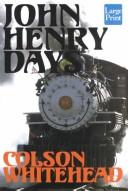
Read second in this stage because it expands the canvas: a maximalist, multi-threaded meditation on the John Henry legend, media culture, and Black mythology that rewards the reader now attuned to Whitehead's layered, allusive style.

A lean, satirical novella about a nomenclature consultant hired to rename a town, it sharpens your ear for Whitehead's dry wit and his preoccupation with language, branding, and the erasure of Black history — themes that echo loudly in the Pulitzer books ahead.
The Pulitzer Masterworks — The Full Reckoning
IntermediateRead Whitehead's two Pulitzer Prize-winning novels with the full context of his voice, themes, and craft, experiencing them as the culmination of everything the earlier stages prepared you to see and feel.
▸ Study plan for this stage
Pace: 6–7 weeks total: Weeks 1–4 for The Underground Railroad (~25–30 pages/day, including 2–3 pause days per week for journaling and reflection), Weeks 5–7 for The Nickel Boys (~20–25 pages/day, with slower, more deliberate reading to absorb the novel's restrained prose and devastating emotional weight).
- Speculative realism as moral argument: how The Underground Railroad literalizes a metaphor (the railroad as actual infrastructure) to force readers to confront the physical and psychological machinery of slavery rather than abstract it
- State violence across eras: how both novels show that American institutions — slavery's plantation economy in The Underground Railroad, the reform-school system in The Nickel Boys — are not aberrations but designed mechanisms of racial control and erasure
- The survivor's burden and the cost of witness: Cora's relentless forward motion versus Elwood and Turner's contrasting philosophies of endurance, idealism, and moral compromise
- Whitehead's use of the chapter-as-portrait structure: how dedicating chapters to secondary characters (Ridgeway, Caesar, Homer in Railroad; Blanche, Griff, Spencer in Nickel Boys) distributes moral weight and implicates an entire society rather than a single villain
- Compression and omission as style: The Nickel Boys' spare, almost reportorial prose as a deliberate counterweight to The Underground Railroad's expansive, picaresque form — and what each choice says about trauma's legibility
- The twist as ethical device: the late revelation in The Nickel Boys about Elwood and Turner's identities reframes every prior scene and forces the reader to re-examine who gets to survive, who gets to be believed, and who history records
- Memory, documentation, and the archive: both novels interrogate what gets written down, who controls the record, and how Black life is rendered invisible or distorted by official history
- Whitehead's dialogue with the African American literary tradition: echoes of Frederick Douglass's Narrative, Harriet Jacobs's Incidents, and the neo-slave narrative genre in Railroad; echoes of Richard Wright and James Baldwin in Nickel Boys
- In The Underground Railroad, Whitehead transforms the railroad from metaphor into literal infrastructure. What does this speculative choice allow him to do thematically and emotionally that a strictly realist narrative could not achieve — and what does it demand of the reader?
- Compare Ridgeway's ideology of the 'American imperative' in The Underground Railroad with the institutional logic of the Nickel Academy in The Nickel Boys. How does Whitehead argue that these two systems, separated by a century, share the same philosophical DNA?
- Elwood Curtis and Turner represent two survival philosophies in The Nickel Boys — roughly, idealism versus pragmatism. By the novel's end, and especially after the identity revelation, how does Whitehead complicate or refuse to adjudicate between these two worldviews?
- Both novels use a structural twist or revelation to reframe everything the reader has already experienced. Compare the function of the late reveal in The Nickel Boys with the episodic, state-by-state structure of The Underground Railroad. How does each formal choice shape the reader's emotional and ethical reckoning?
- How does Whitehead handle the representation of violence in each novel — what is shown, what is withheld, and what does the difference in approach between the two books reveal about his evolving craft and his theory of how literature should engage atrocity?
- Both Cora and the surviving character in The Nickel Boys carry the weight of those who did not make it. How does each novel treat survival — as triumph, as guilt, as accident, or as something more ambiguous — and what does that treatment say about Whitehead's moral vision?
- Parallel passage analysis: Select one scene of institutional violence from The Underground Railroad (e.g., the Randall plantation, the museum in South Carolina) and one from The Nickel Boys (e.g., the White House punishment sessions). Write a 400-word close reading of each, then a 200-word comparison of how Whitehead's prose style, sentence rhythm, and point-of-view choices differ between the two
- The chapter-portrait exercise: Choose one secondary character from each novel (e.g., Ridgeway or Homer from Railroad; Turner or Spencer from Nickel Boys) and write a one-page character brief arguing for that character's thematic function — what aspect of American racial history does this person embody or enable?
- Rewrite the reveal: After finishing The Nickel Boys, write two paragraphs — one from Elwood's perspective and one from Turner's — set at the moment of the novel's central identity crisis. Then write a short reflection on how the exercise changed your understanding of Whitehead's narrative choice to withhold this information.
- Intertextual mapping: Read the opening chapter of Frederick Douglass's Narrative of the Life alongside the first two chapters of The Underground Railroad. Annotate three specific moments where Whitehead is in direct conversation with Douglass — in theme, image, or structure — and three moments where he deliberately departs from or subverts the tradition.
- The newspaper archive exercise: The Nickel Boys is rooted in the real history of the Dozier School for Boys. Spend one session reading two or three contemporaneous news articles or the 2012 Tampa Bay Times investigation that inspired Whitehead. Then write a journal entry on what the novel does that journalism cannot, and vice versa.
- Culminating synthesis essay (600–800 words): Argue whether The Underground Railroad and The Nickel Boys are best understood as companion pieces, as a progression in Whitehead's craft, or as fundamentally different kinds of novels that happen to share a thematic preoccupation. Use specific textual evidence from both books.
Next up: Having now experienced Whitehead's most celebrated and emotionally demanding work, the reader is equipped to step back and examine his full career arc — tracing how the formal experiments, genre play, and thematic obsessions of his earlier and later novels both anticipate and echo these Pulitzer masterworks.

Winner of the 2017 Pulitzer Prize, this reimagining of the antebellum escape network as a literal railroad synthesizes everything from his earlier work — genre reinvention, mythic American history, Black survival — into his most emotionally devastating and widely celebrated achievement; read it first of the two because its historical sweep sets the thematic stage.

Winner of the 2020 Pulitzer Prize, this spare, heartbreaking novel about a brutal reform school in Jim Crow Florida is Whitehead at his most restrained and precise; having read The Underground Railroad, you will feel the full weight of how he has refined his moral vision into something almost unbearably quiet and powerful.
Discussion
Keep reading
Paths that share books, cover the same subject, or open a related topic.