Best Books on the Spanish Inquisition, in Order
This curriculum moves from authoritative narrative overviews that dismantle popular myths, through close institutional and procedural analysis, into the lives of the persecuted minorities — conversos and moriscos — and finally into cutting-edge archival scholarship that pushes the field forward. Starting at the intermediate level, each stage assumes the conceptual vocabulary built in the one before it, so the path rewards reading in order.
Myth-Busting Foundations
IntermediateGain a reliable, evidence-based overview of the Spanish Inquisition's origins, scope, and popular misconceptions, replacing myth with the scholarly consensus.
▸ Study plan for this stage
Pace: 4–5 weeks, ~40–50 pages/day (Kamen's work is dense but accessible; allow time for note-taking and reflection)
- The Spanish Inquisition was a state institution under royal control, not a papal instrument—understanding its political origins and structure dispels the 'foreign oppressor' myth
- The scale and violence of the Inquisition have been dramatically exaggerated by Protestant and Enlightenment propagandists; Kamen's archival evidence reveals a far smaller death toll than popular belief
- Conversos (converted Jews) and Moriscos (converted Muslims) were central to Inquisitorial concerns, reflecting Spain's unique religious and social context post-1492
- The Inquisition's primary function was enforcing religious orthodoxy and protecting royal authority, not systematic genocide—distinguishing institutional purpose from popular mythology
- Torture and execution were used but were not the Inquisition's dominant or defining activity; most cases involved reconciliation, penance, and property confiscation
- The Black Legend—the anti-Spanish propaganda campaign by rivals—fundamentally distorted European and Anglo-American understanding of the Inquisition
- Regional variation was significant; the Inquisition operated differently in Castile, Aragon, and other territories, complicating any monolithic narrative
- The Inquisition's decline and eventual abolition reflect changing political and intellectual currents, not simply humanitarian reform
- How did the Spanish Inquisition differ structurally and functionally from the Medieval Inquisition and the Roman Inquisition? What made it a state institution rather than a papal one?
- What is the Black Legend, and how did it shape European and Anglo-American perceptions of the Spanish Inquisition? Can you identify specific myths it propagated?
- According to Kamen's evidence, what was the actual scale of executions carried out by the Spanish Inquisition, and how does this compare to popular estimates?
- Who were conversos and Moriscos, and why were they the primary targets of Inquisitorial activity? What historical circumstances made them significant?
- What were the most common punishments and outcomes of Inquisitorial trials, and how does this challenge the stereotype of the Inquisition as purely a killing machine?
- How did regional differences (Castile vs. Aragon, for example) affect the Inquisition's operation and severity?
- Create a detailed timeline of the Spanish Inquisition's founding, major phases, and abolition, annotating each with key institutional or political changes Kamen identifies
- Construct a comparison chart: Medieval Inquisition vs. Spanish Inquisition vs. Roman Inquisition, listing origins, authority structures, primary targets, and methods
- Identify and document 5–7 specific myths about the Spanish Inquisition (e.g., 'millions were executed,' 'it was run by the Pope'), then write a 1–2 paragraph rebuttal for each using Kamen's evidence
- Analyze Kamen's discussion of the Black Legend: list the propagandists involved, their motives, and the specific distortions they introduced; trace how these distortions entered popular culture
- Create a statistical summary of Inquisitorial outcomes based on Kamen's data: percentages of executions vs. reconciliations vs. penances, and what this reveals about institutional priorities
- Write a 500-word essay: 'Why the Inquisition Was Not a Genocide Machine,' using Kamen's archival evidence to support your argument against sensationalized accounts
Next up: This stage establishes the factual, evidence-based foundation necessary to move beyond propaganda and engage with more specialized topics—such as the Inquisition's role in specific historical events, its impact on intellectual life, or its relationship to colonial expansion—without the distortion of myth.
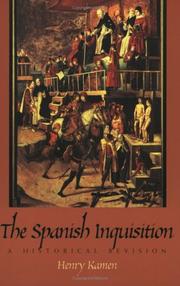
The single most authoritative modern synthesis; Kamen demolishes the 'Black Legend' with hard demographic data and sets the institutional and chronological framework every subsequent book assumes.
Founding, Structure, and Procedure
IntermediateUnderstand how the Inquisition was founded under Ferdinand and Isabella, how its tribunals operated, what its legal procedures looked like, and how torture and sentencing actually functioned.
▸ Study plan for this stage
Pace: 6–8 weeks, ~40–50 pages/day (Lea's work is dense and scholarly; allow time for re-reading complex passages on procedure and legal terminology)
- The role of Ferdinand and Isabella in establishing the Spanish Inquisition as a centralized royal institution, distinct from medieval papal inquisitions
- The hierarchical tribunal structure: the Inquisitor General, regional tribunals, and the Supreme Council (Suprema) and how authority flowed through this system
- The formal legal procedures of the Inquisition: denunciation, arrest, interrogation, torture protocols, and the role of torture in extracting confessions
- The distinction between heresy, apostasy, and related offenses in Inquisitorial law and how charges were constructed and proven
- Sentencing outcomes and their execution: reconciliation, penance, confiscation of property, imprisonment, and relaxation (execution) to secular authorities
- The use of torture as a legally sanctioned investigative tool with specific rules, limits, and documentation requirements
- How the Inquisition functioned as both a religious and political instrument serving royal consolidation in late medieval Spain
- How did the Spanish Inquisition differ structurally and functionally from earlier medieval inquisitions, and what role did Ferdinand and Isabella play in its founding?
- Describe the hierarchical organization of the Spanish Inquisition's tribunals. Who held ultimate authority and how did decisions flow through the system?
- What were the main stages of an Inquisitorial trial, from denunciation through sentencing? What happened at each stage?
- Under what circumstances and according to what rules could torture be applied during an Inquisitorial investigation? What were its legal limitations?
- What were the possible sentences an Inquisition tribunal could impose, and what did each outcome entail for the accused?
- How did the Inquisition use confiscation of property as both a punishment and a source of revenue? What was the legal justification?
- Create an organizational chart of the Spanish Inquisition's structure based on Lea's account, showing the Inquisitor General, the Suprema, regional tribunals, and local officials. Label the authority relationships and decision-making flow.
- Reconstruct a hypothetical Inquisitorial trial from arrest to sentencing, using Lea's descriptions of procedure. Write out each stage (denunciation, arrest, interrogation, torture decision, trial, sentence) with specific details on what happened and why.
- Compile a table of sentencing outcomes mentioned in Lea's work, listing each possible sentence (reconciliation, penance, confiscation, imprisonment, relaxation) with definitions and examples from the text.
- Analyze 2–3 specific trial procedures or torture protocols that Lea describes in detail. Write a 2–3 page analysis explaining the legal reasoning behind each step and how it served the Inquisition's investigative goals.
- Create a timeline of the Inquisition's founding and early institutional development under Ferdinand and Isabella, marking key dates, appointments, and structural changes that Lea identifies.
- Write a comparative brief (1–2 pages) contrasting the medieval papal inquisitions Lea discusses with the Spanish Inquisition, focusing on centralization, royal authority, and procedural differences.
Next up: This stage establishes the institutional and procedural foundations of the Inquisition, preparing you to examine in the next stage how these structures were actually applied against specific groups—particularly Jews, Muslims, and conversos—and the human consequences of these systems in practice.
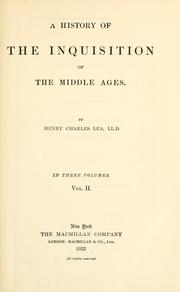
Lea's monumental legal and procedural analysis of inquisitorial process — though focused on the medieval precursor — gives the reader the canonical vocabulary of accusation, denunciation, torture, and auto-da-fé that the Spanish tribunals inherited and adapted.
Conversos, Moriscos, and the Persecuted
IntermediateShift perspective from institution to victim: understand who the conversos and moriscos were, why they were targeted, and how they navigated — or failed to navigate — the Inquisition's reach.
▸ Study plan for this stage
Pace: 4–5 weeks, ~25–30 pages/day
- Conversos as a distinct social category: Jews who converted to Christianity (voluntarily or under coercion) and their ambiguous legal and social status
- Moriscos as descendants of Muslims: their forced conversion after 1492 and the persistent suspicion they maintained Islamic practices in secret
- The logic of persecution: why the Inquisition targeted these groups as threats to religious and political unity, despite (or because of) their nominal conversion
- Daily survival strategies: how conversos and moriscos concealed identity, navigated social hierarchies, and maintained community bonds under surveillance
- The role of denunciation and informants: how fear and social fragmentation enabled the Inquisition's reach into private households and family relationships
- Expulsion and diaspora: the ultimate failure of assimilation and the consequences of mass deportation for Spanish society and the diaspora communities
- Lea's historical method: how primary sources (trial records, edicts, correspondence) reveal the lived experience of the persecuted
- Who were the conversos and moriscos, and how did their legal status differ from Old Christians in Spain?
- What specific practices or behaviors made conversos and moriscos targets of Inquisitorial suspicion, and how did these groups attempt to hide or maintain their identities?
- How did the Inquisition use denunciation and surveillance to penetrate converso and morisco communities, and what role did fear play in fragmenting these groups?
- What were the major waves of persecution, forced conversion, and expulsion, and how did they reshape Spanish society and create diaspora communities?
- How does Lea use primary source evidence (trial records, testimonies, edicts) to reconstruct the daily lives and strategies of conversos and moriscos?
- What were the long-term consequences of the persecution and expulsion of conversos and moriscos for Spain's economy, culture, and international standing?
- Create a timeline of key events in converso and morisco history (1391–1609): mark forced conversions, edicts of expulsion, major Inquisitorial campaigns, and diaspora waves. Annotate each with 2–3 sentences explaining its impact on these communities.
- Read and annotate 2–3 sample Inquisition trial records or denunciations cited by Lea (or excerpted in the text). Identify the accusations, the evidence presented, and the social dynamics that enabled the denunciation. Write a 300-word analysis of what the trial reveals about converso/morisco life.
- Map the geography of converso and morisco settlement in Spain using Lea's descriptions. Note which regions had the highest concentrations, which professions they dominated, and how regional variation affected their vulnerability to persecution.
- Write a first-person narrative (500–700 words) from the perspective of a converso or morisco family member during a specific historical moment (e.g., 1492, 1609, or during an Inquisitorial investigation). Ground it in details from Lea's account of daily life, family bonds, and survival strategies.
- Create a comparison chart: conversos vs. moriscos. Columns should include: origin/background, timing of forced conversion, religious practices they were accused of maintaining, geographic distribution, and ultimate fate. Use this to identify similarities and differences in how they were targeted.
- Analyze Lea's use of primary sources: select one chapter and list all the document types he cites (trial records, edicts, letters, etc.). Write a 250-word reflection on how these sources shape his narrative and what they reveal about the Inquisition's methods that secondary sources alone might miss.
Next up: This stage establishes the human stakes of the Inquisition by centering the experiences of its primary victims, preparing you to examine in the next stage how the institution's ideology, procedures, and bureaucracy were designed and justified to target these groups systematically.

The classic detailed study of the Muslim converts, their forced assimilation, surveillance by the Inquisition, and ultimate expulsion; pairs directly with Netanyahu to give a comparative picture of both persecuted minorities.
The Trials: Case Studies and Archival Records
ExpertRead close reconstructions of actual Inquisition trials to see how procedure, theology, social pressure, and individual agency intersected in specific documented cases.
▸ Study plan for this stage
Pace: 4–5 weeks, ~40–50 pages/day, with 2–3 days per week dedicated to archival analysis and case reconstruction
- Inquisitorial procedure and legal mechanisms: how trials were structured, evidence was gathered, and verdicts were rendered
- The role of confession and torture: theological justifications, procedural contexts, and psychological dimensions in specific cases
- Social networks and denunciation: how family, economic rivalry, and community dynamics drove accusations in documented trials
- Individual agency within institutional constraints: how accused persons, inquisitors, and witnesses navigated limited choices
- Theological reasoning in practice: how heresy was defined and prosecuted through the lens of actual trial records
- Regional variation and chronological change: how Inquisition practices evolved across different territories and centuries
- The archive as evidence: how to read trial documents critically, recognizing gaps, biases, and what they reveal about power
- How did the formal procedures of an Inquisition trial (arrest, interrogation, verdict, sentence) differ from secular courts, and what theological or legal reasoning justified these differences?
- In the case studies Peters presents, what role did denunciation and social pressure play in initiating trials, and how did accusers' motives (economic, personal, religious) shape the proceedings?
- How did inquisitors use confession and torture as tools within their theological and legal framework, and what do trial records reveal about the accused person's agency or resistance?
- What patterns emerge across Peters' case studies regarding which groups (conversos, moriscos, heretics, etc.) were targeted, and how did regional or temporal context affect prosecution?
- How can you read an Inquisition trial record critically to distinguish between the inquisitor's narrative, the accused's testimony, and the social realities underlying the case?
- What does Peters' analysis suggest about the relationship between institutional procedure and individual outcomes in Inquisition trials?
- Create a detailed timeline of a single trial from Peters' case studies, mapping each procedural stage (denunciation → arrest → interrogation → torture decision → verdict → sentence) and annotating what theological or legal justification Peters identifies for each step
- Reconstruct the social network around one trial: identify the accused, accusers, witnesses, and inquisitors; map their relationships (family, economic, religious) and hypothesize how these connections influenced the trial's trajectory
- Write a close reading analysis of a confessional statement or torture scene from Peters' text, examining the language used, what it reveals about coercion or agency, and what gaps or contradictions appear in the record
- Compare two trials from different regions or time periods in Peters' work; identify procedural similarities and differences, and explain what contextual factors (geography, theology, politics) might account for variations
- Create a mock trial document (arrest warrant, interrogation transcript, verdict) based on a case Peters describes, using the language and structure of actual Inquisition records to deepen understanding of procedural logic
- Develop a critical reading guide for one trial record: list what Peters explicitly states, what he infers from silences or contradictions, and what questions remain unanswered by the archive
Next up: This stage grounds you in the granular, documented reality of Inquisition trials, preparing you to evaluate broader historiographical debates about the Inquisition's scale, severity, and social impact in the next stage.

Peters surveys the full range of inquisitorial trials across Iberia with rigorous attention to the actual documentary record, making it the ideal capstone case-study text after Ginzburg's methodological primer.
Advanced Scholarship and Historiographical Debates
ExpertEngage with the sharpest current debates — on racial purity statutes, crypto-Judaism, the Inquisition's modernity, and its long shadow — and situate the Spanish case in comparative European context.
▸ Study plan for this stage
Pace: 8–10 weeks, ~40–50 pages/day, with 1–2 weeks for synthesis and debate engagement
- Limpieza de sangre (blood purity) as a proto-racial ideology and its theological vs. social origins
- Crypto-Judaism and the Inquisition's obsession with internal heresy and hidden practice
- The Converso question: forced conversion, assimilation, and the construction of the 'Jewish problem' in Spain
- Modernity debate: whether the Inquisition represents early modern state violence or continuity with medieval persecution
- The Morisco expulsion and its long-term demographic, economic, and cultural consequences
- Comparative European context: how Spanish persecution differs from and parallels other Christian societies' treatment of religious minorities
- Historiographical shifts: from Black Legend narratives to revisionist scholarship and its limitations
- How did limpieza de sangre statutes emerge from theological debates about conversion and purity, and what made them distinctive as a form of exclusion?
- What evidence do Carr and Ingram present for the scale and nature of crypto-Judaism, and how reliable are Inquisitorial records as sources for this practice?
- How did the Converso experience differ across regions and time periods, and what role did economic competition and social anxiety play in their persecution?
- Is the Spanish Inquisition best understood as a modern institution of state control or as a continuation of medieval religious violence? What does each interpretation reveal and obscure?
- What were the immediate and long-term consequences of the Morisco expulsion for Spanish society, economy, and culture?
- How does the Spanish case compare to the persecution of Jews, Muslims, and other minorities in France, Italy, Portugal, and the Holy Roman Empire during the same period?
- Create a detailed timeline of Converso and Morisco persecution (1391–1609) using both books, marking key legislation, expulsions, and historiographical turning points
- Write a 1,500-word historiographical essay comparing how Carr and Ingram interpret the origins and function of limpieza de sangre—what evidence does each prioritize?
- Construct a comparative chart analyzing persecution of religious minorities across Spain, Portugal, France, Italy, and the HRE (1450–1650), noting methods, scale, and stated justifications
- Analyze 2–3 primary source excerpts (Inquisitorial trial records, royal decrees, or theological writings) cited in the books; evaluate what they reveal about crypto-Judaism and what they obscure
- Debate exercise: prepare arguments for and against the 'modernity thesis' (that the Inquisition prefigures modern racism/state violence), using specific evidence from both books
- Write a 1,000-word reflection on how Carr's and Ingram's work challenges or complicates the 'Black Legend' narrative of Spanish uniqueness and cruelty
Next up: This stage equips you to recognize how early modern Spain's racial and religious anxieties shaped European thought and practice, preparing you to examine the Inquisition's intellectual and cultural legacy—its influence on colonial ideology, modern nationalism, and contemporary debates about religious tolerance and state power.

A rigorous modern synthesis on the morisco expulsion of 1609 that draws on the latest archival work, testing and extending the arguments encountered in Lea and Netanyahu against new evidence.

This edited scholarly volume collects cutting-edge essays on limpieza de sangre, crypto-religious practice, and the long aftermath of persecution — the ideal final text for a reader ready to enter the live historiographical conversation.
Discussion
Keep reading
Paths that share books, cover the same subject, or open a related topic.