The Spanish conquest of the Americas: essential books on the conquistadors
This curriculum takes the reader from vivid narrative introductions to the conquest, through the perspectives of the conquered peoples, and finally into rigorous scholarly analysis of the colonial world that emerged. Each stage builds on the last — first establishing the "what happened," then the "how and why," and finally the deeper structural and cultural forces that shaped the collision of two worlds.
Foundations: The Story of the Conquest
BeginnerGain a clear, engaging narrative understanding of who the conquistadors were, what they did, and how the Aztec and Inca empires fell — building the essential vocabulary, names, and chronology for everything that follows.
▸ Study plan for this stage
Pace: 8–10 weeks, ~25–30 pages/day. Read "Conquistador" over 4–5 weeks (~450 pages), then "The Last Days of the Incas" over 4–5 weeks (~400 pages). Allocate 1 week for review and synthesis.
- The conquistador mindset: who they were (Spanish soldiers, adventurers, entrepreneurs), their motivations (gold, glory, God), and their technological and tactical advantages
- Hernán Cortés's conquest of the Aztec Empire: the alliance with indigenous groups, the role of Malinche as translator and cultural intermediary, and the siege of Tenochtitlan
- The Aztec Empire's structure, military power, and vulnerability to disease and internal divisions
- Francisco Pizarro's conquest of the Inca Empire: the exploitation of civil war, the capture and execution of Atahualpa, and the fall of Cuzco
- The Inca Empire's administrative genius, road systems, and military organization—and why these did not prevent conquest
- The catastrophic role of Old World diseases (smallpox) in decimating indigenous populations
- The human cost of conquest: indigenous perspectives on violence, displacement, and cultural destruction
- Chronology and geography: dates, locations, and the sequence of events from first contact (1519 Cortés, 1532 Pizarro) through consolidation of Spanish control
- Who was Hernán Cortés, what were his primary motivations, and what were the key stages of his conquest of the Aztec Empire as detailed in 'Conquistador'?
- What role did Malinche play in the conquest of the Aztecs, and how did her position as a translator and cultural intermediary shape the outcome?
- How did Cortés use indigenous alliances (particularly with the Tlaxcalans) to overcome the Aztec military advantage?
- Who was Francisco Pizarro, and how did he exploit the Inca civil war and the capture of Atahualpa to conquer an empire of millions?
- What were the major structural and military strengths of the Aztec and Inca empires, and why were these strengths ultimately insufficient to resist Spanish conquest?
- What was the role of disease—particularly smallpox—in the collapse of indigenous populations, and how did this affect the conquest narrative in both books?
- Create a detailed timeline of the conquest, marking key dates and events from both 'Conquistador' and 'The Last Days of the Incas' on a single chart; include the arrival of Cortés (1519), the fall of Tenochtitlan (1521), Pizarro's arrival (1532), and the execution of Atahualpa (1533).
- Write character sketches (1–2 pages each) for Hernán Cortés, Francisco Pizarro, Montezuma II, and Atahualpa, drawing directly from the books to capture their personalities, decisions, and historical significance.
- Map the routes of conquest: draw or annotate maps showing Cortés's march to Tenochtitlan and Pizarro's route through Peru, noting key battles, alliances, and geographic obstacles mentioned in the texts.
- Analyze the role of indigenous allies: write a short essay (3–4 pages) explaining how Cortés's alliances with the Tlaxcalans and other groups were essential to his victory, using specific examples from 'Conquistador'.
- Compare the two conquests: create a Venn diagram or comparative table identifying similarities and differences between the Aztec and Inca conquests, including tactics, indigenous responses, and outcomes as presented in both books.
- Trace the disease narrative: document how 'Conquistador' and 'The Last Days of the Incas' each describe the impact of smallpox on indigenous populations, and write a short reflection on how disease shaped the conquest in ways that military force alone could not.
Next up: This stage establishes the narrative foundation and key players of the conquest, preparing you to examine in the next stage the deeper consequences—indigenous resistance, cultural transformation, and the long-term impact on colonial society—with the specific names, dates, and events now firmly in place.
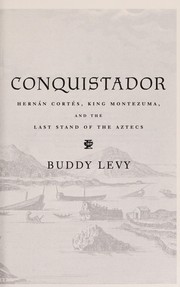
A gripping, accessible narrative of Hernán Cortés and the fall of the Aztec Empire — perfect as a first book because it reads like an adventure story while grounding the reader in key figures, places, and events.
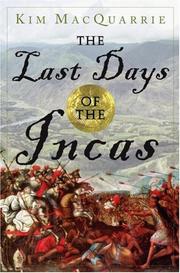
A companion narrative to Levy's book, covering the Spanish conquest of the Inca Empire with the same page-turning style. Reading it second lets the reader immediately compare the two conquests and spot patterns.
Primary Voices: Eyewitnesses to the Conquest
BeginnerEncounter the conquest through the words of people who lived it — a Spanish soldier, a Nahua survivor, and a Dominican friar — developing the ability to read primary sources critically and hear multiple voices.
▸ Study plan for this stage
Pace: 4–5 weeks, ~40–50 pages/day (alternating between the two texts to maintain comparative perspective)
- Eyewitness testimony as a primary source: understanding how Díaz del Castillo's firsthand account differs from later compiled oral histories in The Broken Spears
- The Spanish perspective: Díaz del Castillo's narrative of military strategy, indigenous alliances, and the role of individual conquistadors in shaping the conquest
- The Nahua perspective: how The Broken Spears preserves indigenous voices, prophecies, and the experience of conquest as catastrophe rather than triumph
- Reading against the grain: recognizing bias, omissions, and what each author emphasizes or downplays in their account
- The role of translation and mediation: understanding that The Broken Spears is compiled from Nahuatl codices and oral traditions, while Díaz del Castillo wrote decades after events
- Specific historical moments: the arrival in Tenochtitlan, the Noche Triste, the siege, and how each source narrates these turning points differently
- Power dynamics and agency: how each text portrays indigenous peoples—as obstacles, allies, or active agents in their own story
- How does Bernal Díaz del Castillo's account of first contact in Tenochtitlan differ from the Nahua accounts in The Broken Spears, and what does each emphasis reveal about the author's perspective?
- What role do indigenous allies (particularly the Tlaxcalans) play in Díaz del Castillo's narrative, and how does this compare with how The Broken Spears portrays indigenous participation in the conquest?
- How do the two texts explain the fall of Tenochtitlan differently? What events does each prioritize, and what does this tell you about their values and concerns?
- Identify at least two moments where Díaz del Castillo's account seems to contradict or omit details that appear in The Broken Spears. What might explain these differences?
- What evidence of bias or self-justification do you find in Díaz del Castillo's writing? How does The Broken Spears offer a corrective or alternative view?
- How do the two texts treat the role of disease, prophecy, and divine will in the conquest? What does each source suggest about causation and responsibility?
- Close-read a single scene (e.g., Cortés meeting Montezuma) as it appears in both texts. Create a two-column comparison noting what each account includes, omits, and emphasizes. Write a paragraph explaining what the differences reveal about each author's perspective.
- Track the portrayal of a specific indigenous group (e.g., the Tlaxcalans or the Mexica) across both texts. Create a character/group profile from each source and write a short reflection on how their agency and motivations are represented differently.
- Identify three instances of potential bias or propaganda in Díaz del Castillo's account (e.g., exaggeration of Spanish bravery, minimization of indigenous resistance). For each, hypothesize what The Broken Spears might say about the same event.
- Write a 500-word analytical response to this prompt: 'How does reading The Broken Spears after Díaz del Castillo change your understanding of the conquest? What becomes visible or audible that wasn't before?'
- Create a timeline of major events (arrival, Noche Triste, siege, fall) that includes entries from both texts side-by-side. Annotate with notes on contradictions, gaps, and what each source emphasizes.
- Select a passage from The Broken Spears that references Nahua prophecies or spiritual beliefs. Research its historical context and write a brief explanation of why this perspective is absent or minimized in Díaz del Castillo's account.
Next up: This stage equips you to recognize how primary sources encode perspective and power, preparing you to analyze how colonial documents shaped historical narratives and to interrogate whose voices are centered or silenced in the historical record.
Written by a foot soldier who marched with Cortés, this is the most vivid firsthand Spanish account of the conquest of Mexico. Reading it after the narrative overview lets the reader evaluate an eyewitness against the broader story they already know.

A landmark anthology of Nahua (Aztec) accounts of the conquest, translated from indigenous sources. It is essential for hearing the conquered side and directly complements Díaz's Spanish perspective.
Going Deeper: Causes, Context, and the Wider Conquest
IntermediateUnderstand the structural forces — disease, indigenous alliances, technology, and ideology — that made the conquest possible, and broaden the picture beyond Mexico and Peru to the full sweep of Spanish expansion.
▸ Study plan for this stage
Pace: 10–12 weeks, ~40–50 pages/day (with 1–2 rest days per week). Allocate roughly 4 weeks to Guns, Germs, and Steel (~400 pages), 3 weeks to 1491 (~400 pages), and 3–4 weeks to Rivers of Gold (~600+ pages).
- Geographic determinism and biogeographical advantages: how Eurasian geography (domesticable animals, crops, disease exposure) created technological and military superiority independent of cultural factors
- Pre-Columbian demographic scale and complexity: the Americas had large, sophisticated civilizations with millions of inhabitants, complex trade networks, and advanced agriculture—not empty wilderness
- Disease as conquest mechanism: Old World pathogens (smallpox, measles, influenza) killed 90%+ of indigenous populations before major military campaigns, fundamentally altering the balance of power
- Indigenous political fragmentation and strategic alliances: Spanish conquistadors exploited existing rivalries (Aztec tributary resentment, Inca civil war) and formed crucial indigenous alliances that provided soldiers, logistics, and local knowledge
- Technological factors beyond weapons: Spanish steel, horses, and ships were significant but not decisive alone; indigenous adoption and adaptation of Spanish tools and tactics occurred rapidly
- Ideological justifications: Christian conversion, royal authority, and concepts of civilization were deployed to legitimize conquest, but economic motives (gold, land, labor) were primary drivers
- Broader Spanish expansion: the conquest of the Americas was part of a longer pattern of Spanish imperial expansion (Reconquista, Atlantic exploration) that shaped methods, personnel, and institutions
- Contingency and human agency: individual decisions by conquistadors, indigenous leaders, and Spanish crown officials shaped outcomes; the conquest was not inevitable despite structural advantages
- According to Diamond, what specific geographic and biogeographical factors gave Eurasian societies technological advantages, and how did disease emerge as an unintended but devastating weapon in the Americas?
- How does Mann's 1491 challenge the 'empty wilderness' narrative, and what evidence does he present about pre-Columbian population size, agricultural sophistication, and political organization?
- What role did indigenous political divisions and civil conflicts (Aztec tributary system, Inca succession dispute) play in enabling Spanish conquest, and how did conquistadors exploit these divisions?
- How did Spanish conquistadors form and leverage indigenous alliances, and what were the military, logistical, and political contributions of indigenous allies to the conquest campaigns?
- According to Thomas's Rivers of Gold, how did the Spanish crown's institutions, personnel, and prior experience (Reconquista, Atlantic exploration) shape the methods and scale of conquest in the Americas?
- What evidence suggests that Spanish military technology (guns, steel, horses) was important but not sufficient on its own to explain conquest, and how did indigenous societies respond to and adapt these technologies?
- Create a comparative timeline: map key events from all three books (domestication of animals in Eurasia, pre-Columbian population peaks, first Spanish expeditions, major epidemics, conquest milestones) on a single chart to visualize how disease, geography, and human decisions intersected.
- Build a 'conquest prerequisites' matrix: list the structural factors (disease, geography, technology, ideology, political division) and for each, cite specific evidence from all three books showing how it enabled or constrained Spanish expansion.
- Write three 500-word analytical essays—one per book—answering: (1) What is Diamond's central argument about geographic determinism, and what are its limits? (2) How does Mann reframe indigenous America, and what are the implications for understanding conquest? (3) How does Thomas trace the institutional and personal drivers of Spanish expansion beyond Mexico and Peru?
- Map indigenous alliances in the Aztec and Inca conquests: identify key allied groups (Tlaxcalans, Huancas, etc.), their grievances against the Aztec/Inca, and their military contributions; compare how conquistadors exploited similar divisions in different regions.
- Create a disease impact visualization: using Mann's and Diamond's demographic data, chart estimated indigenous population decline in key regions over 1500–1650, annotating major epidemics and conquest events to show the temporal relationship between disease and military campaigns.
- Conduct a 'contingency analysis': select three pivotal moments in the conquest (e.g., Cortés's alliance with Tlaxcalans, Pizarro's capture of Atahualpa, a specific failed Spanish expedition) and write 300 words on each explaining how different individual decisions could have altered outcomes, grounding your analysis in all three texts.
Next up: This stage equips you with the deep structural and contextual understanding—biogeography, demography, disease, indigenous politics, and Spanish institutional history—necessary to evaluate competing historical interpretations and assess the moral, political, and cultural legacies of conquest in the next stage.
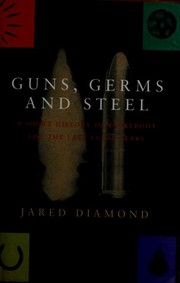
Provides the macro-level environmental and biological framework for why Eurasian civilizations were able to conquer the Americas at all — essential intellectual scaffolding before tackling more specialized historical arguments.

Reconstructs the pre-Columbian Americas in rich detail, showing how sophisticated and populous these civilizations were. Reading it here reframes everything the reader has learned so far about what was actually lost in the conquest.

A comprehensive, authoritative history of the entire early Spanish Empire from Columbus through the first generation of conquistadors. It ties together the Mexican and Peruvian conquests within the broader imperial project.
Advanced Perspectives: Scholarship, Ethics, and Legacy
ExpertEngage with the most rigorous and challenging scholarly interpretations of the conquest — its moral dimensions, the role of indigenous agency, and the long shadow it cast on colonial society and historical memory.
▸ Study plan for this stage
Pace: 8–10 weeks, ~40–50 pages/day, with 1–2 weeks per book for deep engagement and synthesis
- Semiotic conquest: how language, signs, and interpretation became tools of domination as powerful as military force
- Las Casas's eyewitness testimony and moral critique: the role of individual conscience in documenting colonial violence and its limits
- Indigenous agency and resistance: moving beyond victimhood narratives to examine how indigenous peoples shaped their own histories
- Myth-making in conquest historiography: how popular narratives (technological superiority, indigenous passivity, divine will) distort our understanding
- The ethics of representation: how historians and witnesses choose what to record, omit, or interpret about conquest
- Colonial legacies and historical memory: how conquest narratives persist, evolve, and shape modern identities and power structures
- The tension between material and symbolic violence: conquest as both physical destruction and epistemic domination
- How does Todorov define 'semiotic conquest,' and what does he mean by the idea that the Spanish conquered through signs and interpretation rather than military superiority alone?
- What is Las Casas's central moral argument in his account, and what are the strengths and limitations of his testimony as a historical source?
- Which of Restall's seven myths do you find most compelling as a correction to traditional conquest narratives, and why?
- How do these three authors differ in their assessment of indigenous agency and resistance during the conquest?
- What ethical responsibilities do historians have when interpreting conquest narratives, and how do Todorov, Las Casas, and Restall exemplify different approaches?
- How have conquest myths shaped modern understandings of colonialism, and what are the consequences of perpetuating or challenging these narratives?
- Create a detailed outline of Todorov's argument about semiotic conquest, mapping how he traces the role of language, writing, and interpretation in Spanish dominance—then identify one modern parallel where symbolic/informational power operates similarly
- Annotate a passage from Las Casas's account, noting: (1) what violence he describes, (2) his moral judgment, (3) what he might be omitting or not witnessing, and (4) how his perspective as a Spanish friar shapes his testimony
- For each of Restall's seven myths, write a one-paragraph summary of the myth, then a one-paragraph explanation of how Restall dismantles it—then assess whether the 'correction' fully resolves the myth or leaves gaps
- Construct a comparative chart: list key claims about indigenous peoples from each author (Todorov, Las Casas, Restall), note where they agree/disagree, and evaluate the evidence each provides
- Write a 2–3 page reflection: choose one conquest narrative you encountered before reading these books (from school, media, or popular culture) and analyze how it reflects or contradicts the insights from all three authors
- Design a historiographical exercise: select one event from the conquest (e.g., Cortés's arrival, the fall of Tenochtitlan) and write three short paragraphs interpreting it through each author's lens—then reflect on how perspective shapes historical truth
Next up: This stage equips you with the theoretical frameworks, ethical awareness, and historiographical sophistication to evaluate competing interpretations of colonialism—preparing you to examine how conquest legacies shaped specific colonial institutions, indigenous societies, and the long-term trajectories of the Americas.
A profound philosophical and semiotic analysis of how the Spanish understood — and failed to understand — the Other. It elevates the conquest into a meditation on communication, power, and cultural difference.
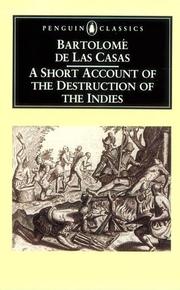
Written by a Spanish priest who witnessed colonial atrocities firsthand, this is the foundational moral indictment of the conquest. Saved for this stage so the reader can fully appreciate its historical context and rhetorical power.

A concise, brilliant work of revisionist scholarship that dismantles popular myths — the lone genius conquistador, the helpless natives, the inevitable outcome — synthesizing everything the reader has learned into a mature, critical understanding.
Discussion
Keep reading
Paths that share books, cover the same subject, or open a related topic.