The Spanish Inquisition is the rare subject where the popular image and the archival record diverge so far that historians spent a century mostly correcting rather than describing. The tribunal kept extensive records, and when they were finally worked through, the picture that emerged was of a bureaucracy that was slower, more procedural, and — in terms of executions — smaller than the legend, while also being an instrument of religious coercion that shaped Spanish life for three hundred years. Both halves of that sentence are true, and books that drop either one are unreliable.
The other thing to get straight early is who it targeted. The Inquisition had no jurisdiction over Jews or Muslims as such — it prosecuted baptized Christians suspected of secretly practicing their former faith. That single jurisdictional fact explains the conversos and the Moriscos, and without it the whole institution looks arbitrary.
Start with the modern standard
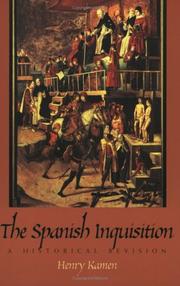
The Spanish Inquisition by Henry Kamen is the book to read first. Successive editions have moved it steadily toward a revisionist position built on tribunal records: sharply lower execution figures than tradition claimed, long periods of near-dormancy, and a body that was often locally weak and financially strained. Kamen has been criticized for underplaying the atmosphere of fear and the effects of the purity-of-blood statutes, and it is worth reading him knowing that critique exists — but this is the evidentiary baseline everything else now argues with.
Then the classic accounts
Henry Charles Lea's A history of the Inquisition of the Middle Ages is the great nineteenth-century work on the earlier, papal Inquisition, which is a genuinely different institution from the Spanish one founded in 1478. Lea is monumental, deeply sourced, and openly hostile to his subject; read him for the medieval background and for the documents, with the awareness that his framing predates modern archival work.
Lea's The Moriscos of Spain covers the descendants of Muslim converts in the century after the fall of Granada — the surveillance, the failed assimilation policies, and the road to expulsion. Together the two Lea volumes give you the long institutional arc, and if you only want one, take the Moriscos volume, since Kamen already covers the Spanish tribunal.
Widen out and go deeper
Inquisition by Edward Peters is the essential companion to Kamen: a history of how the Inquisition came to be imagined the way it is, tracing the Black Legend from Protestant polemic through Enlightenment argument to Gothic fiction and film. Read it and you can finally see why the gap between record and reputation is so large.
Blood and Faith by Matthew Carr narrates the 1609 expulsion of the Moriscos — some three hundred thousand people driven out of Spain — as a story rather than a statistic. It is the most vivid book on this path and the one that keeps the human cost from disappearing into the revisionist arithmetic.
Close with The Conversos and Moriscos in late medieval Spain and beyond, edited by Kevin Ingram. It is an academic collection, so read it selectively, but it is where the current scholarship on convert communities, identity, and survival actually lives.
For the comparative questions this raises — state formation, religious coercion, the machinery of confessional politics — the political science hub has the wider literature.
Read in this order and you will hold both the corrected numbers and the real coercion in view at once. Follow the full path to keep the books in sequence.
Follow the full ordered path here: Best Books on the Spanish Inquisition, in Reading Order.