The 1918 influenza pandemic killed more people than the war it travelled with, and then disappeared from public memory almost completely for eighty years. That double fact — the scale and the forgetting — is what the literature is actually about, and it is why the reading order matters. Most readers start and stop with one big narrative history, which is a fine book and gives a strongly American account of a global event.
Two things are worth knowing before the first page. The name is a misnomer: Spain was neutral, its press was uncensored, and so the outbreak was reported there while the belligerents suppressed it. And the death toll is genuinely uncertain — estimates range from roughly 17 million to around 100 million, with the higher figures resting on extrapolations from India and China where the records are thinnest. Any book stating a single confident number is choosing among estimates.
The narrative, and the scholarship
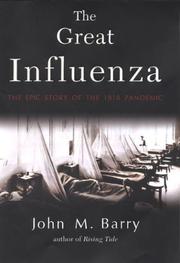
The Great Influenza by John M. Barry is the book most people read, and deservedly — it is propulsive, it is strongest on the transformation of American medicine that preceded the outbreak, and it is where most readers first grasp what the disease did to young adults. Barry also argues for a specific origin in Haskell County, Kansas. That hypothesis is one of several; alternative candidate origins in France and in China are argued by other researchers and the question is not settled.
Pale rider by Laura Spinney is the better global account, covering Iran, India, Brazil, Alaska and South Africa, and is the corrective to Barry's American frame. Read them as a pair.
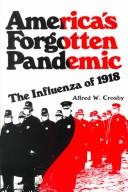
America's Forgotten Pandemic by Alfred W. Crosby is the scholarly foundation of the modern literature — it was the book that asked why a catastrophe of this size left so little cultural trace, and it originally appeared under a different title in the 1970s. Everything since is downstream of it.
Voices and places
Pandemic 1918 by Catharine Arnold is built from testimony and letters rather than analysis, which is its value: the pandemic at the level of households. Living with Enza by Mark Honigsbaum is the British account, useful because so much of the popular literature is American and the British experience differed in timing and in official response.
The virus itself
Flu by Gina Kolata tells the scientific detective story — the expeditions to recover viral material from bodies buried in permafrost, and the eventual sequencing of the 1918 strain. It is the most enjoyable book in the path and it dates from before the sequencing was complete, so read it for the hunt rather than for the current science. Influenza by Jeremy Brown, written by an emergency physician, brings the medical and virological picture up to date and is direct about how much remains unknown.
The wider frame
Three books widen the lens, and you should treat them as optional depth rather than as part of the core story. Spillover by David Quammen is about zoonotic transmission generally rather than 1918 specifically, and is the best explanation in print of where new human pathogens come from. The Pandemic Century, also Honigsbaum, surveys a series of outbreaks across a hundred years — there is overlap with his 1918 book, so most readers want one or the other.
Epidemics and society by Frank M. Snowden is the standing scholarly survey of how epidemic disease has shaped states, cities and medicine, and is the most substantial book here. Plagues and Peoples by William Hardy McNeill is the foundational text of that whole tradition, first published in 1976; it is still worth reading as a work of argument, though a good deal of its specific epidemiological detail has been revised by later research.
Where to stop is straightforward. Barry and Spinney give you the pandemic. Crosby gives you the historiography. Everything after that is context, and it is genuinely worth having, but the story is complete before it. Follow the full path for the study plan at each stage.
Follow the full ordered path here: The Spanish Flu of 1918: The Best Books to Read, in Order.