Best Books on the Spanish Flu of 1918, in Reading Order
The 1918 influenza killed more people than the war it travelled with and then dropped out of public memory almost entirely, which is the puzzle this path is organised around. It opens with the two narrative histories most readers should start with, moves to the scholarship that reconstructed the pandemic from records nobody had bothered to assemble, then turns to the virus itself and where such viruses come from, and closes by placing 1918 inside the longer history of epidemic disease. The later stages are much easier once you already know the 1918 chronology cold.
The two books to read first
BeginnerKnow the outbreak's chronology, its three waves, and the wartime censorship that shaped both the spread and the silence afterwards.
▸ Study plan for this stage
Pace: Five to six weeks for about 940 pages. The Great Influenza (590pp) opens with a long section on the reform of American medical education that some readers find slow and that pays off later — do not skip it, but know it is coming. Read it at 30 pages a session. Pale Rider (352pp) is shorter, faster a
- The three-wave structure: a mild spring 1918 wave, the lethal autumn wave, and a third wave into early 1919 — and the fact that almost all the mortality is in the second
- The W-shaped mortality curve, which is the pandemic's biological signature: influenza normally kills the very young and the very old, and 1918 added an enormous peak among healthy adults aged roughly twenty to forty
- Wartime censorship as both a spreader and an eraser — belligerent governments suppressed reporting to protect morale, which delayed public health responses and helped produce the later silence
- Troop movement and mobilisation camps as the amplifying infrastructure, with crowded barracks and transatlantic transports functioning as ideal transmission environments
- The state of medicine in 1918: no antivirals, no vaccine, antibiotics decades away, and a mistaken belief that the causative agent was a bacterium — Pfeiffer's bacillus
- Secondary bacterial pneumonia as the proximate cause of a large share of deaths, which is why the same virus today would be considerably less lethal
- The public health measures actually available — closures, masking, isolation, staggered hours — and the natural experiment between cities that acted early and cities that did not, with Philadelphia and St Louis as the standard comparison
- Spinney's global correction: India's enormous death toll, Iran, Alaska, Samoa and Brazil, and the point that the pandemic's centre of mortality was not in the countries that wrote its history
- Describe the three waves with approximate dates, and say what proportion of deaths fell in each.
- What is the W-shaped mortality curve, and what makes the young-adult peak so anomalous?
- How did wartime censorship affect the spread, and how did it affect the name?
- Compare Philadelphia and St Louis: what did each city do, when, and what were the outcomes?
- Why did doctors in 1918 think they were dealing with a bacterium, and what did that error cost?
- What does Spinney cover that Barry does not, and what does her global frame change about the pandemic's overall shape?
- Build a month-by-month timeline from early 1918 to mid-1919, marking the waves, the major outbreaks and the armistice. Everything in the later stages hangs off this.
- Draw the W-shaped mortality curve and, beside it, the normal influenza U-curve. Keep the sheet; stage three offers explanations for the difference and you will want the picture in front of you.
- Write 200 words on the Philadelphia and St Louis comparison, including what makes it a strong natural experiment and what confounds it.
- List every country Spinney covers that Barry does not, with its estimated death toll. The geographic imbalance in the literature becomes visible immediately.
- Write down your own current explanation for why the pandemic was forgotten. Seal it — the last stage asks you to revisit it.
Next up: You have the narrative; the next stage shows you where it came from — the archival reconstruction that had to happen before anyone could write a chronology at all.
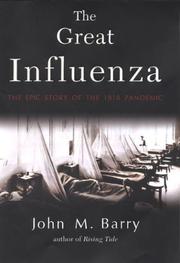
The standard popular history, and unusually strong on the American medical establishment that was trying to meet the outbreak. If you read only one book on 1918, this is it.

Spinney goes global where Barry is largely American — Iran, Alaska, Brazil, India — and is better on the pandemic's demographic and cultural aftermath. Read second, as the corrective to Barry's frame.
How the pandemic was reconstructed
BeginnerSee the evidentiary problem behind the narratives: how historians rebuilt a pandemic from mortality tables, local newspapers and private letters, and why the death toll estimates keep moving.
▸ Study plan for this stage
Pace: Four to five weeks for about 960 pages. America's Forgotten Pandemic (351pp) is academic history and is the slowest of the three — 20 to 25 pages a session, with attention to how Crosby handles his sources rather than only to what he concludes. Pandemic 1918 (371pp) is testimony-driven and reads qui
- The evidentiary problem at the heart of the field: no central surveillance, no viral diagnosis, wartime censorship, and death certificates that often recorded pneumonia rather than influenza
- Excess mortality as the workaround — comparing observed deaths against an expected baseline — and why that method produces estimates rather than counts
- Why the global death toll estimate has moved so much over a century, from around twenty million to fifty and in some estimates higher, and what drives each revision
- Crosby's sources: military and municipal records, mortality tables, local newspapers, and the institutional archives nobody had previously assembled for this purpose
- Crosby's naming of the forgetting, and his own explanations for it — the war's dominance of memory, the speed of the event, the absence of a villain, and the pandemic's failure to fit a narrative arc
- Arnold's contribution and its limits: survivor testimony and letters restore individual experience, but testimony is self-selected toward the survivors and the articulate
- Honigsbaum on the British press and government: how the outbreak was reported under censorship, how it was framed as ordinary sickness, and how quickly it was absorbed into normal life
- How to read a death-toll figure critically: what population, what period, what baseline, and whose records
- How do historians estimate deaths from a pandemic with no diagnostic test and incomplete registration? Describe the excess-mortality method concretely.
- Why have global estimates risen over time? Name at least two specific drivers of the revisions.
- What sources did Crosby use, and what does the fact that nobody had assembled them before tell you about the state of the field in the 1970s?
- What explanations does Crosby give for the forgetting, and which of them do you find strongest?
- What does survivor testimony in Arnold add to Crosby, and what systematic bias does it carry?
- In Honigsbaum's British case, how was the outbreak reported at the time, and how did that reporting shape what was remembered?
- Take any single death-toll figure you encounter and trace it back to its source. Doing this once — and finding how many citations are to other citations — is the most useful hour in this stage.
- Write 200 words explaining excess mortality to someone who has not met the concept, using 1918 as the example.
- Pick one city or region and look for its 1918 mortality records in an online archive. Many are digitised and searchable, and handling the raw material changes how you read the narratives.
- List every explanation for the forgetting offered by Crosby, Arnold and Honigsbaum in a single table, and mark which are evidenced and which are asserted.
- Compare one episode Arnold recounts from testimony with the same episode in Crosby's archival account. The differences show you exactly what each kind of source is good for.
- Add to your timeline a second band recording when each major reconstruction of the pandemic was published. The gap between the event and the scholarship is itself the subject.
Next up: The historians can tell you what happened and how they know; the next stage explains why the virus behaved as it did, and how the 1918 strain was eventually recovered from the ground.
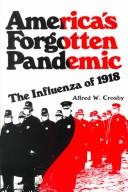
The scholarly foundation everything since is built on, and the book that named the forgetting. Barry's narrative rests on Crosby's research, so read it next.

Built from eyewitness accounts and survivor testimony, which restores the individual experience the mortality statistics erase.

A tightly focused study of Britain in 1918 and how the pandemic was reported, censored and then absorbed into ordinary life. The best single national case study here.
The virus and where it came from
IntermediateUnderstand influenza as a biological agent — antigenic drift and shift, animal reservoirs, why 1918 killed the young — and how the 1918 strain was eventually recovered and sequenced.
▸ Study plan for this stage
Pace: Six to eight weeks for about 1,190 pages. Flu (338pp) is science journalism and reads quickly. Influenza (258pp) is short and clinically grounded. Spillover (592pp) is long, superbly written, and organised as a series of investigations — it is the most enjoyable reading in the path and can be taken
- Influenza A structure in the terms everything else uses: the H and N surface proteins, and what an H1N1 designation actually denotes
- Antigenic drift versus antigenic shift — accumulating mutation producing seasonal variation, against reassortment producing a genuinely novel virus to which populations have little immunity
- Animal reservoirs, particularly wild waterfowl and swine, and why reassortment requires a host susceptible to more than one strain at once
- The recovery of the 1918 virus as Kolata narrates it: preserved autopsy tissue, and the expedition to permafrost burials in Alaska where lung tissue had survived frozen
- Sequencing and later reconstruction of the 1918 strain, and the biosafety and dual-use debate that accompanied it — a genuine ethical argument with serious people on both sides
- The leading explanations for the young-adult mortality peak, held as competing hypotheses rather than settled fact: an unusually vigorous immune response, prior exposure history shaping the immunity of different birth cohorts, and secondary bacterial infection patterns
- The annual vaccine strain-selection problem, which explains why influenza vaccination is a forecasting exercise rather than a solved one
- Quammen's spillover framework: zoonotic pathogens crossing from animal reservoirs at the interface where habitat, agriculture and human settlement meet
- Explain antigenic drift and antigenic shift, and say which one produces pandemics and why.
- How was the 1918 virus recovered? Name both tissue sources and the difficulties of each.
- What are the competing explanations for the young-adult mortality peak, and what evidence supports each?
- What is the dual-use argument about reconstructing the 1918 virus? State both sides fairly.
- Why must the influenza vaccine be reformulated annually, and what determines whether a given year's match is good?
- What is a spillover event, and what conditions make one more likely? Apply Quammen's framework to influenza specifically.
- Draw the reassortment mechanism: two strains, a co-infected host, and a novel combination. One diagram removes most of the mystery from the word 'pandemic'.
- Return to your W-curve sheet from stage one and annotate it with each competing explanation and the evidence for it. This is where the two halves of the path meet.
- Write 200 words arguing for reconstructing the 1918 virus and 200 arguing against, using the actual scientific and security considerations rather than intuition.
- Take one of Quammen's outbreaks and trace it from reservoir to spillover to human transmission, marking each step. Then attempt the same for 1918 and note where the evidence runs out.
- Look up this season's influenza vaccine composition and the previous season's effectiveness estimate, then write a paragraph on what the strain-selection problem looks like in practice.
- List every claim in Brown about what treatment can achieve, and mark which are strongly evidenced. He is unusually candid about the limits and it is worth registering them.
Next up: You now know both what happened and why the virus behaved as it did; the last stage sets 1918 beside the epidemics before and after it, which is the only way to answer the question the path opened with.
The story of the scientific hunt for the 1918 virus, including the frozen Alaskan burials that yielded it. The natural bridge from history into virology.

A physician's account of what influenza actually does and what a century of research has and has not achieved. Read for the clinical picture the historians assume.
Zoonotic transmission explained through the outbreaks that followed 1918, which is the mechanism behind every pandemic in the final stage. The best-written book on this path.
1918 in the long history of epidemics
IntermediatePlace the Spanish flu within a comparative history of epidemic disease, and judge for yourself why this one was forgotten when others were not.
▸ Study plan for this stage
Pace: Three months for roughly 1,100 pages or more. The Pandemic Century (464pp) is a series of episodes and reads well at 30 pages a session. Epidemics and Society is the most rigorous book here, derived from a full university lecture course, and should be worked chapter by chapter over a couple of month
- Honigsbaum's recurring pattern across a century of outbreaks: a scientific confidence that the problem is understood, a novel pathogen that does not fit, delayed recognition, and a familiar political response
- Snowden's central argument that epidemics are not interruptions of history but forces that reshape states, cities, medicine and social hierarchies
- Snowden's comparative cases from plague through cholera, tuberculosis, smallpox and polio, and his attention to the institutions each produced: quarantine, sanitary reform, public health administration
- The recurring social pattern Snowden documents — blame directed at outsiders and the poor, and the political uses to which epidemic fear is put
- The difference between a disease that produces institutions and one that does not, which is one plausible answer to why 1918 left so little behind
- McNeill's thesis that disease pools and their collision are drivers of historical change, most famously in the demographic catastrophe of the Americas after 1492
- McNeill's speculative reach and the honest caveat: written in 1976, it makes bold claims well beyond the evidence available then, and later scholarship has revised several. Read for the framework and check the particulars against Snowden
- The path's closing question, now answerable: why 1918 was forgotten when cholera and AIDS were not. Candidates include the war's dominance of memory, the absence of an institutional legacy, the compressed timescale, the lack of a blameable group, and the fact that the worst-hit populations wrote lea
- What is the recurring pattern Honigsbaum identifies, and does 1918 fit it or precede it?
- How does Snowden argue that epidemics shaped state capacity? Give two concrete institutional examples.
- Which epidemics left durable institutions behind, and which did not? Where does 1918 fall?
- What is McNeill's disease-pool thesis, and which of his specific claims would you now want to check against more recent scholarship?
- Compare the social scapegoating patterns Snowden documents across three epidemics. What did 1918 have or lack that changed the pattern?
- Now answer the path's question: why was the 1918 pandemic forgotten? Assemble the best explanation from all eleven books, and compare it with the prediction you sealed at the start.
- Build a comparative table across six epidemics — plague, cholera, 1918 influenza, polio, AIDS, and one recent outbreak — with columns for mortality, duration, institutional legacy, scapegoated group and place in public memory. This table is the deliverable of the stage.
- Take three of McNeill's specific historical claims and check each against Snowden. Note which hold, which are refined and which are superseded.
- Write 200 words on Snowden's argument that epidemics build states, using an institution that exists today because of a specific outbreak.
- Open your sealed prediction from stage one and write a page on what you got right and wrong, citing the books that changed your mind.
- Take one currently circulating pathogen and apply Quammen's spillover framework and Honigsbaum's response pattern to it. Doing this is uncomfortable and is the point of having read them.
- Write a final two pages on what the 1918 pandemic was and why it left the trace it did, naming which book each claim rests on and marking where the death-toll and origin questions remain genuinely open.
Next up: This is the end of the path — the narratives, the reconstruction, the virology and the comparative history — and the natural next step is to reread the opening chapters of The Great Influenza, whose long detour through the state of American medicine reads as the central argument rather than as a preamble once you know how the rest of the century went.
A hundred years of outbreaks after 1918, each mishandled in a recognisably similar way. Honigsbaum returns here with the comparative case his British study could not make.

The best modern survey of how epidemics have shaped states, medicine and social order from plague onward. The most rigorous book on this path.

The classic argument that disease is a driver of history rather than an interruption to it. Older and more speculative than Snowden, which is why it comes last.
Discussion
Keep reading
Paths that share books, cover the same subject, or open a related topic.