Viruses & pandemics: the reading path
This four-stage curriculum takes a beginner from the basic biology of viruses all the way to policy, preparedness, and cutting-edge virology. Each stage builds on the last: you first develop intuition for how viruses work and spread, then explore history's great pandemics, then go deeper into the science and human systems that shape outbreaks, and finally engage with expert debates about the future. By the end you will be able to read primary sources, evaluate pandemic policy, and understand what it would take to prevent the next catastrophe.
Foundations: How Viruses Work & Spread
BeginnerUnderstand what a virus is, how it hijacks cells, how it moves through populations, and why some outbreaks become pandemics — all in plain language.
▸ Study plan for this stage
Pace: 8–10 weeks total: ~5 weeks on "Spillover" (~30 pages/day, 5 days/week) followed by ~4 weeks on "The Viral Storm" (~25 pages/day, 5 days/week). Reserve the final week for review, journaling, and completing exercises. Weekend sessions can be lighter (re-reading key passages, note consolidation).
- Zoonotic spillover: how viruses jump from animal reservoir hosts to humans, as illustrated through Quammen's case studies (Ebola, Nipah, SARS, HIV)
- Reservoir hosts vs. amplifier hosts: the ecological distinction Quammen draws between animals that silently carry a pathogen and those that amplify transmission to humans
- The concept of the 'viral chatter' introduced by Wolfe — the constant low-level cross-species viral exchange that precedes full pandemic emergence
- Basic viral replication: how a virus hijacks host cell machinery (attachment, entry, replication, assembly, release) explained in lay terms across both books
- R₀ (basic reproduction number) and what makes a virus capable of sustained human-to-human transmission — a threshold concept underpinning both authors' pandemic risk arguments
- Ecological disruption as a driver of emergence: deforestation, bushmeat hunting, and human encroachment into wildlife habitats as recurring themes in Quammen's field reporting
- Wolfe's 'pandemic stages' framework: the five-stage model from pathogens exclusive to animals through to fully human-adapted pandemic viruses
- Global connectedness as a pandemic accelerant: how modern travel, trade, and urbanization (Wolfe's central argument) transform local outbreaks into global threats
- After reading Quammen's case studies, can you explain in plain language what a 'spillover event' is and name at least three animal reservoirs linked to major human outbreaks?
- How does Wolfe's concept of 'viral chatter' differ from a full spillover, and why does he argue that monitoring chatter is the key to pandemic early warning?
- What biological and ecological conditions does Quammen identify as necessary for a zoonotic virus to move from a single human infection to a sustained outbreak?
- Using Wolfe's five-stage pandemic framework, how would you classify COVID-19, seasonal influenza, and Ebola — and what evidence from the books supports your classification?
- Both authors discuss human behavior (bushmeat hunting, wildlife trade, global travel) as risk factors. What specific examples do they each provide, and what do those examples have in common?
- What is R₀, why does it matter for predicting whether an outbreak becomes a pandemic, and where do the books implicitly or explicitly reference this concept?
- Spillover case-study map: As you read Quammen, create a one-page fact sheet for each major outbreak he covers (Ebola, Nipah, SARS, HIV/SIV, etc.) recording: the reservoir host, the spillover mechanism, the human death toll, and what stopped (or didn't stop) wider spread. Compare sheets at the end to spot patterns.
- Pandemic stage classifier: Draw Wolfe's five-stage model as a ladder diagram. After finishing 'The Viral Storm,' place at least six real viruses (from either book) on the correct rung and write one sentence justifying each placement.
- Vocabulary building log: Keep a running glossary of technical terms introduced in both books (zoonosis, fomite, virulence, pathogen, reservoir, R₀, antigenic shift, etc.). For each term write the book's plain-language definition and then find one real-world news headline that uses the term correctly.
- Comparative author essay (500 words): Quammen is a field journalist; Wolfe is a virologist-turned-entrepreneur. Write a short essay comparing how each author's background shapes the way they explain viral emergence — what does each one emphasize, and what does each one leave out?
- Risk-factor mind map: Using both books as sources, build a mind map with 'Pandemic Risk' at the center. Branch out into ecological, biological, behavioral, and technological risk factors, citing at least one specific passage from each book per branch.
- Discussion or journal prompt — 'What would it take?': After finishing both books, write a one-page response to this question: Based on what Quammen and Wolfe argue, what combination of factors would need to align for the next major pandemic to emerge — and which factors do you think are most controllable?
Next up: By grounding you in how viruses emerge and spread at a biological and ecological level, this stage equips you with the conceptual vocabulary (spillover, R₀, pandemic stages, viral chatter) needed to critically engage with the historical, epidemiological, and policy-focused material that deeper stages of the curriculum will explore.
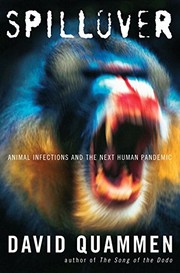
A gripping, narrative-driven introduction to zoonotic viruses — those that jump from animals to humans. It builds essential vocabulary (reservoir host, spillover event, R0) through vivid storytelling, making it the perfect first book.

Written by a virus hunter, this book explains the ecological and evolutionary forces that create new pandemics. It deepens the concepts from Spillover with a focus on surveillance and early detection.
History's Great Pandemics
BeginnerTrace the arc of history's most devastating outbreaks — plague, flu, polio, HIV — and understand how human society, medicine, and public health responded and changed.
▸ Study plan for this stage
Pace: 10–12 weeks total, reading roughly 25–35 pages per day. Week 1–4: "The Great Influenza" (nearly 500 pages of text; allow extra time for the dense scientific and historical detail). Week 5–8: "Plagues and Peoples" (~350 pages; slower, more analytical reading — pause often to reflect on macro-historic
- Pandemic origins and spillover: how novel pathogens emerge and find human hosts, illustrated by the 1918 flu's likely avian/swine origins in Barry's account and McNeill's broader 'disease pool' framework
- The role of war, migration, and crowding in amplifying outbreaks: Barry's detailed portrait of military camps as incubators of the 1918 flu; McNeill's analysis of how trade routes and conquests spread plague and smallpox across civilizations
- Science vs. ignorance in crisis: Barry's contrast between the heroic bacteriologists (Welch, Flexner, Lewis) racing to identify the pathogen and the U.S. government's censorship and propaganda that suppressed public truth during WWI
- Macro-historical 'disease ecology': McNeill's central thesis that epidemic disease is not random catastrophe but a structured interaction between human populations, their domesticated animals, and microbial 'civilizations' — a lens that reframes all of history
- Civilizational vulnerability and immunity gaps: McNeill's case studies showing how populations with no prior exposure (e.g., Indigenous Americans meeting smallpox) suffered catastrophic mortality, while previously exposed populations built herd immunity over generations
- Institutional failure and political obstruction: Shilts's meticulous chronicle of how the CDC, NIH, FDA, Reagan White House, and blood-bank industry each delayed action on AIDS through bureaucratic turf wars, budget politics, and homophobia
- Stigma, identity, and public health: Shilts's portrayal of how the gay community's hard-won civil liberties clashed with calls to close bathhouses, and how stigma delayed both research funding and behavior change
- The human cost of delayed response: across all three books, the recurring lesson that early, honest, science-driven action saves lives — and that every week of delay is measured in bodies
- After reading Barry, explain in your own words why the 1918 influenza was so lethal to young adults (the 'W-curve' mortality pattern) and what role the wartime censorship played in worsening the death toll.
- Drawing on McNeill's 'Plagues and Peoples,' what does he mean by 'macro-parasitism' and 'micro-parasitism,' and how does this dual framework help explain why some societies collapsed under epidemic disease while others absorbed it?
- McNeill argues that the Columbian Exchange was as much a biological event as an economic one. Using specific examples from the book, how did Old World diseases reshape the demographic and political landscape of the Americas?
- Barry describes a generation of American medical scientists trying to modernize U.S. medicine in the early 20th century. Who were the key figures, what institutions did they build, and how did those institutions perform under the pressure of 1918?
- Based on Shilts's reporting in 'And the Band Played On,' identify at least three distinct institutions or power structures that delayed an effective U.S. response to AIDS in the early 1980s, and explain the specific mechanism of each delay.
- All three books feature a tension between individual freedom and collective public-health measures. Compare how this tension played out in at least two of the books, noting what was similar and what was historically specific to each era.
- Timeline wall: Create a single master timeline spanning 1300–1990 and plot every major outbreak event, policy decision, and scientific milestone from all three books. Use color-coding by book. This forces you to see the long arc and spot patterns across centuries.
- Mortality math: For each pandemic covered (1918 flu, Black Death, Columbian Exchange diseases, early AIDS), find the estimated death toll and calculate it as a percentage of the contemporary world or regional population. Write a one-paragraph reflection on what those percentages mean in human terms.
- Institutional autopsy (Barry + Shilts): Choose one institution — the U.S. Public Health Service, the CDC, or the military medical corps — and write a 1–2 page memo as if you are an outside auditor in 1918 (Barry) and again in 1983 (Shilts). What failed? What would you recommend?
- McNeill debate prep: McNeill's thesis is controversial — some historians say he over-biologizes history. Write a one-page 'steel-man' of his argument and a one-page rebuttal, using only evidence from 'Plagues and Peoples' itself.
- Stigma mapping (Shilts): As you read 'And the Band Played On,' keep a running log of every instance where stigma (against gay men, IV drug users, Haitians) directly caused a delay in research, funding, or public communication. At the end, categorize the entries: which delays were political, which were cultural, which were scientific?
- Cross-book synthesis essay: After finishing all three books, write a 500-word essay answering: 'What single structural change — in government, science, or society — would have most reduced the death toll in each of the three pandemics, and is there a common thread?' This is your capstone for the stage.
Next up: Having traced history's great pandemics from the ground level of human suffering, political failure, and scientific heroism, the reader is now primed to move from 'what happened' to 'how disease actually works' — making the biology and virology stage a natural and urgent next step.
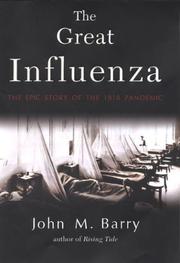
The definitive account of the 1918 flu pandemic. Reading it after Stage 1 lets you apply your new vocabulary to a real catastrophe, and it introduces the public-health and political dimensions of pandemics.

A sweeping historical argument that infectious disease has shaped civilizations more than wars or economics. It provides the long-view context that makes individual outbreaks meaningful.

A masterful narrative of the early AIDS epidemic that shows how politics, stigma, and institutional failure can accelerate a pandemic — a crucial human-systems lesson before moving to harder science.
Going Deeper: Science, Systems & Modern Outbreaks
IntermediateUnderstand the virology and epidemiology behind modern outbreaks (SARS, Ebola, COVID-19) at a more mechanistic level, and see how global health systems succeed or fail in real time.
▸ Study plan for this stage
Pace: 10–12 weeks total (~25–35 pages/day, 5 days/week). Week 1–3: "The Hot Zone" (read viscerally but analytically — annotate every biological mechanism and containment decision). Week 4–7: "Epidemics and Society" (slower, denser — treat as a textbook; take chapter notes and build a timeline). Week 8–10:
- Viral hemorrhagic fever biology and filovirus replication cycles, as dramatized in Preston's account of Ebola Reston and Zaire strains in 'The Hot Zone'
- Biosafety levels (BSL-1 through BSL-4) and what containment protocols actually look like under field and laboratory conditions, drawn from Preston's USAMRIID narrative
- Snowden's central thesis in 'Epidemics and Society': that epidemic diseases are not random natural events but are shaped by — and in turn reshape — social structures, politics, economies, and human behavior
- The concept of 'crowd diseases' and how urbanization, trade, colonialism, and war have historically created the conditions for pandemic emergence, as traced across Snowden's case studies (plague, cholera, smallpox, influenza, HIV/AIDS, SARS)
- Epidemiological fundamentals embedded across all three books: R₀ (basic reproduction number), herd immunity thresholds, case fatality rate vs. infection fatality rate, and the epidemic curve
- Christakis's sociological framework in 'Apollo's Arrow': how COVID-19 exposed and stress-tested American social networks, institutions, norms, and inequalities in real time
- The tension between individual liberty and collective public-health mandates — mask policies, lockdowns, contact tracing — as analyzed by Christakis through behavioral and network science
- Systemic and institutional failure modes: how 'Epidemics and Society' and 'Apollo's Arrow' together reveal why early-warning signals are ignored, why responses are politicized, and what resilient health systems require
- After reading 'The Hot Zone,' can you explain — in plain biological terms — how a filovirus like Ebola hijacks host cells, why its lethality is both its strength and its epidemiological weakness, and what specific containment decisions at Reston and in Zaire succeeded or failed and why?
- Drawing on Snowden's 'Epidemics and Society,' what is the argument that epidemics are 'socially constructed' events, and can you support it with at least three historical case studies from the book spanning different eras and disease types?
- How do the three books collectively illustrate the gap between scientific knowledge of a pathogen and society's actual response to it — what non-biological factors (political, economic, cultural) consistently widen that gap?
- Using Christakis's analysis in 'Apollo's Arrow,' how did pre-existing social inequalities in the United States determine who bore the greatest burden of COVID-19 morbidity, mortality, and economic disruption?
- What does Christakis mean by the 'temporary' alteration of social norms during a pandemic, and based on his historical comparisons and sociological data, what does he predict about post-pandemic social 'florescence'?
- Synthesizing all three books: what would an ideal early-warning and rapid-response system for a novel outbreak look like, and which specific failures described by Preston, Snowden, and Christakis would it be designed to prevent?
- OUTBREAK TIMELINE MAP: After finishing 'The Hot Zone,' build a dual-track timeline of the 1989 Reston outbreak — one track for the biological progression of the virus, one for the human/institutional response. Annotate every decision point with a verdict: effective, delayed, or failed. Then repeat the exercise for a modern outbreak of your choice using what Snowden and Christakis add.
- SNOWDEN CASE-STUDY MATRIX: Create a comparison table with columns for: disease, era, social/political conditions that enabled it, public-health response, and long-term societal change. Populate one row per major case study in 'Epidemics and Society' (plague, cholera, tuberculosis, influenza 1918, HIV/AIDS, SARS). Use this matrix to identify patterns Snowden argues are universal.
- R₀ SENSITIVITY EXERCISE: Using the epidemiological concepts embedded in all three books, look up the confirmed R₀ ranges for Ebola Zaire, SARS-CoV-1, and SARS-CoV-2. Calculate the theoretical herd immunity threshold for each (HIT = 1 − 1/R₀). Then write a one-page reflection on how these numbers alone fail to predict real-world outcomes — use specific evidence from Preston, Snowden, and Christakis
- POLICY DEBATE BRIEF: Using 'Apollo's Arrow' as your primary source and 'Epidemics and Society' as historical context, write two short briefs (one page each) arguing opposite sides of a specific COVID-19 policy (e.g., school closures, mask mandates, or vaccine prioritization). This forces engagement with Christakis's data and Snowden's historical precedents rather than personal opinion.
- INSTITUTIONAL AUTOPSY: Choose one institution discussed in any of the three books (e.g., the CDC, WHO, USAMRIID, a city public-health department) and write a 2-page 'autopsy' of its performance during a specific outbreak. Use Preston for operational detail, Snowden for structural/historical context, and Christakis for sociological analysis of trust and compliance.
- READING JOURNAL — 'THEN VS. NOW': While reading 'Apollo's Arrow,' keep a running two-column journal. Left column: a claim or observation Christakis makes about COVID-19 society. Right column: your own evidence (news articles, personal experience, data) that confirms, complicates, or refutes it. Aim for at least 20 entries. Review at the end to identify your three most-changed assumptions.
Next up: By grounding outbreak science in vivid biology (Preston), deep historical structure (Snowden), and real-time sociological analysis (Christakis), this stage equips the reader to move from understanding *why* pandemics happen to critically evaluating *how humanity should prepare and govern* its response — the natural focus of an advanced stage on global health policy, pandemic preparedness, and the

A visceral, detailed look at Ebola's biology and the biosafety systems built to contain it. It makes concepts like viral hemorrhagic fever and BSL-4 containment concrete and memorable.

A Yale historian's rigorous survey of how epidemic diseases have interacted with society from antiquity to COVID-19 — bridges the narrative history of Stage 2 with more analytical, systems-level thinking.
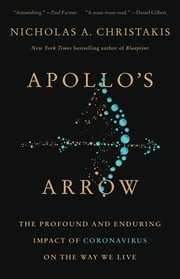
A sociologist and physician's real-time analysis of COVID-19, covering network science, human behavior, and social resilience. It applies intermediate epidemiological concepts to the most recent major pandemic.
Advanced: Preparedness, Policy & the Next Pandemic
ExpertCritically evaluate global pandemic preparedness, biosecurity policy, and the scientific and political choices that will determine humanity's vulnerability to future threats.
▸ Study plan for this stage
Pace: 8–10 weeks total; ~25–35 pages/day. Week 1–3: "Deadliest Enemy" (Osterholm) — read in three sittings of roughly 80 pages, pausing after each major section to take policy notes. Week 4–6: "Pale Rider" (Spinney) — read at a slower, more analytical pace (~20–25 pages/day) to absorb the historical epide
- Pandemic threat hierarchy: Osterholm's ranked taxonomy of infectious threats (influenza, HIV, antibiotic resistance, zoonotic spillover) and the risk-assessment logic behind it
- Biosecurity infrastructure gaps: the systemic failures in surveillance, stockpiling, international coordination, and public-health funding that Osterholm diagnoses as chronic vulnerabilities
- The 1918 influenza as a stress-test of civilization: Spinney's reconstruction of how the H1N1 pandemic exposed the limits of wartime governance, medical science, and social trust simultaneously
- Social and political determinants of pandemic mortality: Spinney's cross-national comparison showing how censorship, inequality, and institutional credibility shaped death tolls as much as virology did
- The 'premonition' problem — ignored expertise: Lewis's portrait of how Charity Dean, Carter Mecher, and the Wolverine team identified COVID-19's threat weeks before official action, illustrating the structural suppression of bottom-up scientific warning
- Bureaucratic inertia vs. adaptive decision-making: the CDC/federal response failures Lewis documents and the contrast with improvisational local and informal networks
- Non-pharmaceutical interventions (NPIs) and the Mecher doctrine: the evidence base for layered NPIs (school closures, social distancing, masking) developed after 1918 and nearly buried before 2020
- Ethical and political dimensions of preparedness policy: who bears the cost of readiness, who holds decision-making authority during a crisis, and how democratic accountability functions under emergency conditions
- After reading Osterholm, can you articulate his top five pandemic threats in priority order and defend the criteria he uses to rank them — and where would you challenge his framework?
- Spinney documents vastly different 1918 mortality outcomes across countries and cities. What combination of political, social, and biological variables best explains those differences, and what does that imply for modern preparedness?
- Lewis shows that Charity Dean and Carter Mecher had actionable intelligence about COVID-19 well before federal agencies responded. What specific institutional and cultural mechanisms blocked that intelligence from reaching decision-makers in time?
- Comparing Osterholm's prescriptions with the actual 2020 response Lewis describes: which of Osterholm's recommended reforms were in place, which were ignored, and what was the measurable consequence of each gap?
- How does the 1918 'second wave' phenomenon Spinney analyzes inform current thinking about multi-wave pandemic planning, and does Osterholm's preparedness framework adequately account for it?
- Across all three books, a recurring theme is the tension between scientific expertise and political authority. Synthesize the authors' implicit and explicit arguments about how that tension should be resolved in a democracy.
- Policy gap audit: After finishing 'Deadliest Enemy,' create a two-column table listing each of Osterholm's specific policy recommendations alongside publicly available evidence (WHO reports, CDC budget data, congressional testimony) on whether that recommendation has since been implemented — annotate with your own assessment of adequacy.
- 1918 comparative case study: Using Spinney's cross-national data, build a simple scoring matrix for 5–6 countries (e.g., USA, South Africa, India, Australia, Western Samoa, Spain) rating each on: censorship level, pre-existing inequality, public-health infrastructure, and war-related disruption — then correlate your scores with the mortality figures Spinney provides and write a one-page interpreta
- Bureaucratic timeline reconstruction: From 'The Premonition,' reconstruct a day-by-day timeline (January–March 2020) of what Charity Dean / the Wolverine team knew vs. what the CDC and White House officially communicated — identify the specific decision points where a different institutional choice could have changed outcomes.
- Counterfactual policy memo: Write a 600–900 word memo addressed to a fictional National Security Advisor, dated January 15, 2020, drawing only on knowledge Osterholm had published and the 1918 lessons Spinney documented — recommend three concrete actions and justify each with evidence from the books.
- Cross-book synthesis essay: Write a 1,000-word critical essay answering: 'Are the failures described by Osterholm, Spinney, and Lewis the result of correctable policy mistakes, or do they reflect deeper, structural features of how modern states handle low-probability, high-consequence risks?' Cite specific passages from all three books.
- Debate preparation: Identify one major claim each author makes that you find least convincing. For each, write a 150-word rebuttal using evidence from the other two books or from your own research — then write a 150-word defense of the author's position to stress-test your own critique.
Next up: By synthesizing Osterholm's threat frameworks, Spinney's historical epidemiology, and Lewis's institutional autopsy into a coherent critique of preparedness systems, the reader is now equipped to engage with primary scientific literature, international policy documents, and emerging research on novel pathogens — the foundation for any subsequent stage focused on cutting-edge virology, biosurveilla

Written by one of the world's leading epidemiologists, this book lays out a frank, expert-level assessment of pandemic threats and what a serious preparedness agenda must include — essential for policy-level thinking.

Returns to the 1918 flu but with a global, scientific lens — examining the virus's genetics, immune evasion, and long-term demographic effects. It rewards the reader who now has the vocabulary to appreciate the deeper science.

A forensic look at the institutional failures exposed by COVID-19, told through the scientists and public-health officials who saw it coming. It synthesizes everything in the curriculum into a pointed argument about what must change.
Discussion
Keep reading
Paths that share books, cover the same subject, or open a related topic.