The Napoleonic Wars explained: essential books from Austerlitz to Waterloo
This four-stage curriculum takes a beginner from a vivid narrative introduction to Napoleon's life and wars, through the mechanics of his campaigns and coalition battles, into the strategic and political dimensions of the era, and finally to the deep scholarly debates that define modern Napoleonic historiography. Each stage builds the vocabulary, context, and analytical tools needed to fully absorb the next, culminating in a rich, rounded understanding of how Napoleon reshaped Europe between 1803 and 1815.
Foundations: Napoleon the Man and the Era
BeginnerGain a confident chronological grasp of Napoleon's life, personality, and the broad sweep of the Napoleonic Wars, building the basic vocabulary and cast of characters needed for everything that follows.
▸ Study plan for this stage
Pace: 8–10 weeks, ~40–50 pages/day (Roberts first: 4–5 weeks, ~40 pages/day; Chandler second: 4–5 weeks, ~50 pages/day)
- Napoleon's early life, education, and rise to power (1769–1799): from Corsican outsider to military genius to First Consul
- The Napoleonic Code and administrative reforms: how Napoleon reorganized French law, governance, and society
- The strategic and tactical innovations that made Napoleon's military campaigns distinctive (speed, concentration of force, artillery)
- The major campaigns and their outcomes: Italy (1796–97), Egypt (1798–99), Austerlitz (1805), Jena (1806), Wagram (1809), Russia (1812), Leipzig (1813), Waterloo (1815)
- The Grande Armée: its composition, organization, logistics, and why it was revolutionary for its time
- Napoleon's personality and decision-making: ambition, confidence, ruthlessness, and the psychological factors driving his choices
- The geopolitical context: the French Revolution's aftermath, European coalition politics, and why nations repeatedly fought Napoleon
- The human cost and legacy: casualties, civilian impact, and how Napoleonic warfare changed European military culture
- Trace Napoleon's path from his birth in Ajaccio to his appointment as First Consul in 1799. What key moments and personal qualities enabled his rise?
- What were the main features of the Napoleonic Code, and why did it matter beyond France?
- Describe the core tactical and strategic principles that gave Napoleon an edge over his opponents (e.g., use of artillery, speed of movement, concentration of force). Provide specific examples from campaigns discussed in Chandler.
- What happened in the Russian campaign of 1812, and why is it considered a turning point in Napoleon's fortunes?
- Compare and contrast two major Napoleonic campaigns (e.g., Austerlitz vs. Waterloo). What changed in Napoleon's circumstances, enemies, or methods between them?
- How did the Grande Armée differ from the armies of other European powers, and what advantages and vulnerabilities did it have?
- Create a detailed timeline of Napoleon's life and major campaigns (1769–1815) with 15–20 key dates, events, and battles. Include brief notes on outcomes and significance.
- Read Roberts' chapters on Napoleon's early life and personality, then write a 500-word character sketch of Napoleon at age 30, age 40, and age 45, noting how his ambitions and methods evolved.
- Map out 4–5 of Chandler's major campaigns on blank maps of Europe, marking army positions, supply lines, and key battle sites. Annotate with the strategic objective and outcome.
- Create a 'cast of characters' reference sheet with 20–25 key figures (allies, rivals, generals, family members) mentioned in both books, including their role and relationship to Napoleon.
- After finishing Chandler, write a 1000-word essay analyzing one campaign in depth (e.g., Austerlitz, Russia, Waterloo), using Chandler's tactical detail and Roberts' context about Napoleon's motivations.
- Debate or discuss: 'Was Napoleon a liberator or a tyrant?' Use specific evidence from both books—his reforms, his wars, his treatment of conquered territories—to build a nuanced argument.
Next up: This stage establishes the chronological backbone and key personalities of the Napoleonic era, equipping you with the vocabulary, major events, and strategic concepts needed to dive deeper into specialized topics—whether that's the diplomatic history, the experience of soldiers and civilians, the naval dimension, or the long-term consequences of Napoleonic rule.

The single best modern one-volume biography — authoritative, compulsively readable, and grounded in primary sources. It gives the beginner a complete narrative spine from Corsica to St. Helena, including every major campaign, before diving into specialist works.
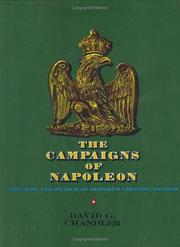
Read the introductory chapters and campaign summaries first as a reference companion; Chandler's clear maps and campaign outlines will anchor the military geography and terminology that all later books assume.
The Campaigns: Battles, Tactics, and Turning Points
BeginnerUnderstand how Napoleon actually fought — his operational method, the Grande Armée's organisation, and the decisive battles from Austerlitz to Waterloo — at a level of detail that goes beyond biography.
▸ Study plan for this stage
Pace: 6–8 weeks, ~40–50 pages/day. Read Castle's Austerlitz (approx. 200 pages) over 4–5 weeks, then Cornwell's Waterloo (approx. 300–350 pages) over 3–4 weeks. Allocate 1 week for review and synthesis exercises.
- Napoleon's operational method: the manoeuvre sur les derrières (attack on enemy flanks/rear) and concentration of force at the decisive point
- Grande Armée organisation: corps structure, artillery massing, and the coordination of independent columns converging on a battlefield
- The role of reconnaissance and intelligence in Napoleonic warfare—how Napoleon used cavalry and scouts to locate and exploit enemy weakness
- Austerlitz as the paradigm battle: feigned retreat, false weakness, and the destruction of a numerically superior coalition
- Waterloo as the reversal: how terrain, allied coordination, and Napoleon's tactical inflexibility led to his final defeat
- The difference between Napoleonic success (1805) and failure (1815): command decisions, troop morale, and the evolution of enemy tactics
- The role of artillery in Napoleonic tactics: massed gun batteries as the decisive arm and their deployment in attack and defence
- How individual battles fit into broader campaigns: logistics, supply lines, and the strategic context that shaped tactical choices
- Explain Napoleon's manoeuvre sur les derrières and how he executed it at Austerlitz. Why was this tactic so effective against the Austro-Russian army?
- Describe the organisation of the Grande Armée's corps system. How did this structure allow Napoleon to coordinate multiple columns across a wide front?
- What role did cavalry and reconnaissance play in Napoleon's victory at Austerlitz? How did intelligence shape his tactical decisions?
- Compare the tactical situations at Austerlitz (1805) and Waterloo (1815). What changed in Napoleon's approach, and how did his enemies adapt?
- How did Napoleon use artillery as a decisive weapon? What was the difference between artillery deployment at Austerlitz and at Waterloo?
- Analyse the final hours of Waterloo. What specific decisions or circumstances led to Napoleon's defeat, and could different choices have changed the outcome?
- Map exercise: Using Castle's battle maps from Austerlitz, trace Napoleon's troop movements hour by hour. Identify where the manoeuvre sur les derrières began and how it unfolded. Repeat with Cornwell's Waterloo maps.
- Tactical comparison table: Create a two-column table comparing Austerlitz and Waterloo across categories—terrain, troop strength, artillery placement, cavalry use, and outcome. Identify which factors favoured Napoleon at Austerlitz and which worked against him at Waterloo.
- Corps organisation diagram: Draw the structure of a Napoleonic corps (infantry divisions, cavalry, artillery, supply). Annotate with the approximate number of men and the role of each component. Use Castle's descriptions to ground this in historical detail.
- Battle narrative reconstruction: Write a 500-word account of a single hour at Austerlitz (e.g., the cavalry charge, the breakthrough on the Pratzen Heights, or the destruction of the Russian centre). Use Castle's text and cite specific details.
- Artillery deployment analysis: Using Cornwell's descriptions of Waterloo's artillery exchanges, sketch the positions of French and Allied gun batteries at a key moment (e.g., mid-afternoon). Explain why each side placed guns where they did and what the tactical intent was.
- Decision-point analysis: Identify three critical decisions Napoleon made at Austerlitz and three at Waterloo. For each, write one paragraph explaining the decision, its immediate effect, and whether it was sound given the information available at the time.
Next up: This stage grounds you in the mechanics and reality of Napoleonic warfare through two contrasting case studies, preparing you to explore the broader strategic and political contexts—such as how Napoleon's operational genius interacted with diplomacy, coalition-building, and the economic and social forces that ultimately constrained his empire.

A focused, accessible account of Napoleon's masterpiece battle; reading one campaign in depth before tackling broader works trains the reader to think operationally and appreciate terrain, logistics, and command decisions.
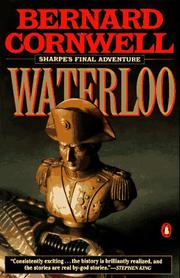
Cornwell's narrative gift makes the final campaign gripping and clear for the non-specialist, while his rigorous sourcing ensures accuracy — the perfect bookend to Austerlitz that shows how and why Napoleon's system ultimately failed.
Strategy, Coalition, and the Wider War
IntermediateMove beyond individual battles to understand the strategic, diplomatic, and coalition dimensions of the wars — why the coalitions formed, how Britain funded and sustained resistance, and how the Peninsular and Russian campaigns became Napoleon's undoing.
▸ Study plan for this stage
Pace: 4–5 weeks, ~40–50 pages/day (approximately 300 pages total)
- The Russian campaign as a strategic turning point: how Napoleon's invasion of Russia in 1812 marked the beginning of his decline despite initial military success
- Logistics and supply chains as decisive factors: why the Grande Armée's inability to sustain itself in the Russian interior proved more damaging than battlefield defeats
- The role of geography and climate: how Russia's vast distances, harsh winter, and scorched-earth tactics neutralized French tactical superiority
- Coalition resilience and British support: how Britain's financial backing and diplomatic efforts kept anti-Napoleonic alliances alive despite repeated setbacks
- The human cost of total war: how the 1812 campaign devastated the Grande Armée and shattered the myth of French invincibility across Europe
- Strategic overreach and imperial hubris: how Napoleon's attempt to control Europe through military conquest ultimately triggered unified resistance
- The Peninsular War as a parallel drain: how simultaneous conflict in Spain tied down French resources and demonstrated the limits of occupation
- Tsar Alexander I's resolve and Russian nationalism: how Russian leadership and popular resistance transformed the campaign from a military contest into an existential struggle
- Why did Napoleon believe he could defeat Russia militarily, and what strategic miscalculations led to the failure of the 1812 campaign?
- How did logistics and supply lines determine the outcome of the Russian campaign more decisively than individual battles?
- What role did Britain play in sustaining anti-Napoleonic coalitions, and how did British strategy differ from continental European approaches?
- How did the Russian winter and geography function as weapons against the Grande Armée, and why couldn't French tactical genius overcome these obstacles?
- What was the relationship between the Peninsular War and the Russian campaign, and how did simultaneous conflicts drain French resources?
- How did the 1812 campaign shatter Napoleon's image of invincibility and embolden other European powers to resist French hegemony?
- Create a detailed timeline of the Grande Armée's advance and retreat, marking key dates, locations, and casualty figures; compare it to a map showing supply lines and distances from France
- Analyze the logistical calculations: estimate how many men, horses, and tons of supplies were needed daily, and calculate why foraging in Russia proved impossible—use Zamoyski's figures as your baseline
- Write a strategic memo from Napoleon's perspective (pre-invasion) outlining his assumptions about Russian behavior, supply availability, and campaign duration; then annotate it with what actually happened
- Compare the fates of three different corps or divisions during the retreat; trace their routes, losses, and survival rates to understand how geography and timing affected different units
- Create a coalition map showing Britain's financial and diplomatic support to Russia, Austria, and Prussia in 1812–1813; identify how British subsidies enabled continued resistance
- Write a 500-word analysis of how the Peninsular War (mentioned in Zamoyski's context) competed with the Russian campaign for French military resources and attention
Next up: This stage establishes why the 1812 Russian campaign was the decisive turning point—the moment when Napoleon's strategic overreach and logistical fragility became undeniable—preparing you to examine how the surviving European powers exploited this collapse through coordinated coalition warfare and how Napoleon's final defeat unfolded across multiple theaters.

Zamoyski's richly sourced narrative of the Russian campaign — told from French, Russian, and Polish perspectives — explains the catastrophic strategic miscalculation that broke the Grande Armée and shifted the balance of the coalitions permanently.
Deep Mastery: Historiography, Legacy, and Reappraisal
ExpertEngage with the major scholarly debates — Napoleon as military revolutionary, as political moderniser, as destroyer of the old order — and understand how historians have contested his legacy, arriving at a nuanced, evidence-based personal judgement.
▸ Study plan for this stage
Pace: 12–14 weeks, ~40–50 pages/day. Esdaile (600 pp, 3 weeks); Horne (500 pp, 2.5 weeks); Clausewitz (650 pp, 4 weeks); synthesis and debate work (2.5 weeks).
- Esdaile's international systems approach: how Napoleon's wars reshaped European power structures, alliances, and the balance of power rather than being driven by his will alone
- The military revolutionary thesis: whether Napoleon fundamentally transformed warfare (corps system, artillery concentration, rapid maneuver) or refined existing practices—and what evidence supports each view
- Napoleon as political moderniser: Esdaile and Horne on administrative reform, legal codification, and institutional change versus destruction of feudalism and traditional sovereignty
- Clausewitz's theory of war as political instrument: the trinity of government, army, and people; how this framework reappraises Napoleon's campaigns as expressions of political will rather than pure military genius
- The historiographical divide: 'great man' narratives versus structural/systemic explanations for Napoleonic dominance and eventual defeat
- Contested legacies: nationalism, liberalism, and reaction—how different nations and ideologies have claimed or rejected Napoleon's inheritance
- Evidence and sources: how Esdaile's international archives, Horne's biographical synthesis, and Clausewitz's theoretical framework each construct different interpretations of the same events
- According to Esdaile, what role did the international system and coalition dynamics play in Napoleon's rise and fall, and how does this challenge 'great man' interpretations?
- What specific military innovations does Esdaile credit to Napoleon, and which does he argue were continuations of 18th-century practice? Where do Horne and Clausewitz agree or diverge?
- How do Horne's biographical approach and Esdaile's systemic approach produce different conclusions about Napoleon's agency and responsibility for the wars?
- Using Clausewitz's framework, explain how Napoleon's political objectives shaped his military strategy in a specific campaign discussed in all three texts.
- What evidence do these three authors present for and against the thesis that Napoleon was a genuine political moderniser rather than a destroyer of the old order?
- How have different national historiographies (French, British, German, Russian) interpreted Napoleon's legacy differently, and what does each interpretation reveal about the interpreter rather than Napoleon?
- Comparative source analysis: Select one major campaign (e.g., 1812 Russian campaign) and trace how Esdaile's international-systems reading, Horne's biographical narrative, and Clausewitz's political-military theory each explain its causes and outcomes. Write a 2-page synthesis showing where they align and conflict.
- Historiographical debate map: Create a visual chart identifying the major scholarly positions on Napoleon (military revolutionary vs. refiner; moderniser vs. destroyer; genius vs. product of circumstances). Assign each author's main claims to positions on this map with supporting quotes.
- Clausewitzian reappraisal: Select three Napoleonic campaigns from Esdaile or Horne and analyze each using Clausewitz's trinity framework (government, army, people). How does this lens change your understanding of Napoleon's decision-making?
- Evidence evaluation exercise: Identify one major claim in Esdaile about international power dynamics and one in Horne about Napoleon's character. What primary sources would each author need to strengthen or refute their argument? Consult their bibliographies.
- Personal judgement essay (2,500 words): 'Was Napoleon a revolutionary force or a conservative one?' Construct an argument using evidence from all three texts, acknowledging the historiographical assumptions underlying each author's interpretation.
- Comparative national legacies: Research how one specific nation (France, Britain, Germany, Russia, or Spain) has interpreted Napoleon's legacy in the 19th and 20th centuries. How do Esdaile's, Horne's, and Clausewitz's frameworks help explain these different national reappraisals?
Next up: This stage equips you to recognize that no single interpretation of Napoleon is definitive—you now understand how evidence, methodology, and historiographical tradition shape competing narratives, preparing you to engage with specialized monographs, primary sources, or regional studies that challenge or refine these master interpretations.

The definitive revisionist account that challenges the Napoleon-centric view, arguing the wars were driven as much by European power rivalries as by French aggression — essential reading for any serious student of the period.
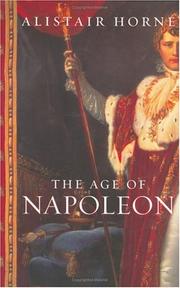
Horne synthesises the cultural, social, and political transformation Napoleon wrought across Europe, providing the broad civilisational context that ties together everything the reader has learned about battles and strategy.

Clausewitz wrote this foundational theory of war directly in response to observing Napoleon's campaigns; reading it last allows the advanced student to see the Napoleonic Wars through the eyes of a brilliant contemporary analyst and understand their lasting intellectual legacy.
Discussion
Keep reading
Paths that share books, cover the same subject, or open a related topic.