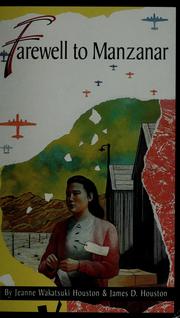
Begin with Richard Reeves's Infamy and then Jeanne Wakatsuki Houston's Farewell to Manzanar, in that order and close together. Reeves is a journalist rather than a specialist, and his single-volume narrative runs from the panic after Pearl Harbor through the removal orders, the assembly centres and the camps to the men of the 442nd fighting in Europe while their families were behind wire. Houston's memoir, written with her husband James D. Houston, is short and supplies what no policy history can: a seven-year-old's Manzanar, and the far longer unravelling of her family afterwards.
The facts the whole shelf rests on are not in dispute. In 1942 the United States removed roughly 120,000 people of Japanese ancestry from the West Coast and held them under guard for the duration of the war. About two thirds were American citizens. Not one was ever charged with espionage or sabotage. What the books argue about is why it was ordered, what the government knew when it defended the policy in court, and what the country owed afterwards.
One gap in this list is worth naming rather than papering over. Michi Weglyn's Years of Infamy, published in 1976 by a former camp inmate and the book that first forced suppressed government evidence into public view, does not resolve in our catalogue and so is not listed below. It is one of the most important works on the subject, and the survivor-scholar strand here is thinner without it.
How the decision was made
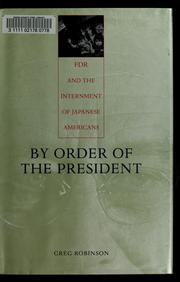
Greg Robinson's By order of the president argues Roosevelt's own role from his papers and his decades of earlier writing about Japanese immigration. It is the book that made it untenable to treat Executive Order 9066 as something a reluctant president signed on military advice. Roger Daniels's Prisoners without trial is the compact standard survey by the historian who did most to establish the field — the fastest way to get the chronology and the numbers straight. Robinson's later A tragedy of democracy widens the frame to North America, taking in Canada, Mexico and the Latin American deportations, and is the most complete scholarly treatment available.
The camps, as the people in them recorded them
Miné Okubo's Citizen 13660 appeared in 1946 and was the first published account of camp life by anyone who had been in one: 190 drawings made at Tanforan and Topaz, each with a few lines of caption — the horse stalls, the queues, the dust, the boredom. Monica Sone's Nisei daughter recounts a Seattle childhood and then Minidoka, written in 1953 when almost nobody wanted to hear it; its lightness of tone is itself evidence about what could be said at the time. Yoshiko Uchida's Desert exile covers the same two camps from an adult student's view and is sharper about her father's separate FBI detention. Impounded is a photobook: Dorothea Lange's images of the removal, commissioned by the government and then impounded by it, with commentary by Linda Gordon and Gary Okihiro explaining what each picture shows and why it was suppressed.
The law, and the reckoning
Peter Irons's Justice at War is the legal history of Hirabayashi, Yasui and Korematsu, and Irons is not a neutral bystander to it: researching the book he found the suppressed intelligence reports showing the Justice Department knew its military-necessity claim was false, and he went on to serve as a lawyer in the coram nobis petitions that vacated the convictions in the 1980s. Read it as scholarship by a participant. Tetsuden Kashima's Judgment without trial recovers a separate incarceration most general accounts omit entirely — the men seized by the FBI within hours of Pearl Harbor and held for years in Justice and Army camps, apart from their families.
Personal justice denied is not a book but the 1982 report of a congressional commission, which concluded that the removal was caused by race prejudice, war hysteria and a failure of political leadership, and which led to the apology and reparations of the 1988 Civil Liberties Act. Read at least the summary and conclusions.
Fiction and aftermath
John Okada's No-no boy, published in 1957, follows a young man who answered no to the loyalty questionnaire's two key questions, refused the draft, and returns from prison to a community that will not have him. It sold almost nothing and Okada died believing it forgotten; it is now the central literary work on the subject. Close with Daniel James Brown's Facing the Mountain, on the 442nd Regimental Combat Team alongside one draft resister — it holds the service and the resistance together without pretending either settles the question.
Follow the stages in order and the legal argument stops being abstract.
Follow the full ordered path here: Japanese American Internment: The Books to Read, in Order.
Ready to learn something deeply?
Build a reading path — free