The Poppy War Reading Order and Guide
This curriculum prepares a beginner reader to get the absolute most out of R.F. Kuang's Poppy War trilogy by first building essential historical and cultural context, then reading the trilogy itself in order, and finally deepening understanding through thematic and craft-level exploration. Each stage feeds directly into the next, so nothing feels overwhelming or out of place.
Historical & Cultural Foundations
BeginnerGain accessible, essential background on modern Chinese history — the Second Sino-Japanese War, the Nanjing Massacre, and the Chinese Civil War — so that the trilogy's real-world parallels land with full weight.
▸ Study plan for this stage
Pace: 6–8 weeks total: Weeks 1–3 on "The Rape of Nanking" (~25–30 pages/day, including time to pause and process emotionally heavy material); Weeks 4–8 on "China: A History" (~30–35 pages/day, focusing especially on the chapters covering the late Qing collapse, the Republic era, the Warlord Period, and th
- The Second Sino-Japanese War (1937–1945): causes, major campaigns, and the power vacuum that enabled Japanese expansion into China
- The Nanjing Massacre (1937–38): Iris Chang's documentation of the scale of atrocities, the international witness accounts (the 'Rape of Nanking Safety Zone'), and the long history of denial and memory suppression
- Dehumanization as a mechanism of mass violence: how Chang analyzes the psychological and ideological conditioning of Japanese soldiers, a lens directly mirrored in R.F. Kuang's portrayal of the Mugenese
- The collapse of the Qing Dynasty and the fragmented Republic: Keay's account of how dynastic failure, foreign humiliation ('Century of Humiliation'), and warlordism created the unstable China that the trilogy fictionalizes as the Nikara Empire
- The Warlord Era and regional power struggles: Keay's treatment of competing factions as the real-world template for the trilogy's provincial warlords and the Cike's fractured alliances
- The Chinese Civil War (Nationalists vs. Communists): Keay's narrative of the KMT–CCP conflict, the Long March, and how ideological warfare shapes characters like Rin who are caught between systems of power
- Opium's role in Chinese history: both authors touch on how opium — as imperial weapon and social plague — informs the trilogy's central metaphor of shamanic drug use and colonial exploitation
- Historical trauma, memory, and narrative: Chang's argument that bearing witness is a moral act, which primes readers to understand Kuang's own authorial mission in fictionalizing these events
- After reading Iris Chang, can you describe at least three categories of atrocity documented at Nanjing and explain why international witnesses in the Safety Zone were so critical to the historical record?
- How does Chang explain the psychological and institutional factors that allowed ordinary Japanese soldiers to commit mass violence — and how does this compare to how R.F. Kuang depicts the Mugenese in the trilogy?
- Using Keay's account, can you trace the chain of events from the fall of the Qing Dynasty through the Warlord Era to the outbreak of full-scale war with Japan — and explain why China was so politically fragmented at the time?
- How does Keay characterize the ideological and military conflict between the Nationalists (KMT) and the Communists (CCP), and which real-world figures and factions does this bring to mind when you think about the trilogy's characters?
- Both Chang and Keay address the 'Century of Humiliation' — how do their perspectives on foreign exploitation of China (by Japan, Western powers, etc.) complement each other, and why is this concept essential to understanding Rin's rage?
- Why did the Nanjing Massacre remain suppressed or minimized in both Japanese and, at times, Chinese political discourse? What does Chang say about the ethics of historical memory, and how does that inform Kuang's choice to fictionalize rather than ignore these events?
- **Atrocity-to-Fiction Mapping:** As you read Chang, keep a two-column journal: on the left, note a specific documented event or dynamic from Nanjing; on the right, write the scene or character beat from the trilogy it most closely mirrors. Aim for at least 15 entries by the time you finish the book.
- **Keay Timeline:** After finishing the relevant chapters of Keay, draw a hand-written timeline from 1850 to 1950 marking: the Opium Wars, Taiping Rebellion, fall of the Qing, Warlord Era, Long March, Nanjing Massacre, and the end of the Civil War. Annotate each event with one sentence connecting it to a nation, faction, or character in the trilogy.
- **Witness Perspective Exercise:** Chang devotes significant space to foreign witnesses like John Rabe and Minnie Vautrin. Write a one-page reflection from the perspective of a fictional neutral observer watching the fall of Golyn Niis (the trilogy's Nanjing analogue) — drawing only on details Chang provides for authenticity.
- **Comparative Ideology Card Sort:** Using Keay's descriptions of KMT and CCP ideology, create two index cards summarizing each faction's goals, methods, and base of support. Then create a third card for the Cike/the Empress/the Red Emperor in the trilogy and note which real-world faction each most resembles and why.
- **'Century of Humiliation' Essay:** Write a short (400–600 word) personal essay answering: 'How does understanding China's Century of Humiliation change the way you read Rin's hatred of the Mugenese and her willingness to use the Phoenix?' Use at least one specific passage from each book as evidence.
- **Pre-Trilogy Prediction Log:** Before opening The Poppy War, write down five predictions about themes, character motivations, or plot events you now expect — based solely on what you've learned from Chang and Keay. Revisit and annotate this log after finishing each book in the trilogy.
Next up: By grounding readers in the documented historical horror of Nanjing and the political chaos of Republican China, this stage ensures that when they open "The Poppy War," every fictional parallel carries genuine moral and emotional weight — transforming the trilogy from fantasy into an act of witness.

The Poppy War's most harrowing events are directly inspired by the Nanjing Massacre; reading Chang's landmark account first makes those fictional scenes viscerally meaningful rather than abstract.

A readable single-volume survey of Chinese history that gives beginners the dynastic, cultural, and political vocabulary Kuang's world-building draws on throughout the trilogy.
Thematic Priming — War, Trauma & Power
BeginnerEncounter the core themes of the trilogy — the psychology of war, the cost of power, and the making of a soldier — through approachable literary fiction before diving into Kuang's dense prose.
▸ Study plan for this stage
Pace: 4–5 weeks total: Week 1–2 — Read "All Quiet on the Western Front and Related Readings" (~20–25 pages/day, including the supplementary readings); Week 3–5 — Read "The Things They Carried" (~15–20 pages/day, reading slowly and re-reading key vignettes like "How to Tell a True War Story" and "On the Ra
- Dehumanization through war: How both Remarque's Paul Bäumer and O'Brien's soldiers lose their pre-war identities and are reshaped — or destroyed — by combat experience.
- The psychology of trauma and survival guilt: The emotional and psychological toll on survivors, explored through Paul's detachment in All Quiet and O'Brien's recurring grief over Kiowa, Ted Lavender, and Linda.
- The making of a soldier — indoctrination and loss of innocence: How institutions (school, state, military) manufacture soldiers out of young people, a theme central to Rin's arc in The Poppy War.
- The cost of power and leadership: The moral burden carried by those who give orders versus those who follow them, seen in Remarque's officers and O'Brien's Lieutenant Jimmy Cross.
- Truth, memory, and storytelling as survival: O'Brien's meta-fictional argument in 'How to Tell a True War Story' — that emotional truth matters more than factual accuracy — is a key lens for reading Kuang's mythologized history.
- Camaraderie and its fragility: The bonds formed under extreme duress (Paul's platoon, O'Brien's Alpha Company) and how their sudden severing defines the emotional core of war literature.
- The body as a site of war: Physical suffering, death, and the materiality of violence — from the trenches of WWI to the weight of the soldiers' literal and figurative loads in The Things They Carried.
- Complicity and moral injury: Characters who participate in violence they know is wrong, planting the seed for understanding Rin's later choices in The Poppy War.
- After reading All Quiet on the Western Front, how does Remarque use Paul's relationships with his schoolmates and his visits home to show that war does not merely kill soldiers — it makes them unfit for the life they left behind? Use at least two specific scenes.
- O'Brien opens The Things They Carried with an exhaustive catalog of physical objects. By the end of the book, how has the meaning of 'what they carried' shifted from the literal to the psychological and moral? What does Jimmy Cross carry that weighs the most?
- Both Paul Bäumer and Tim O'Brien (the character) witness the death of someone they feel personally responsible for. Compare how each processes guilt and what coping mechanism — if any — each finds. What does this suggest about the limits of storytelling as therapy?
- In 'How to Tell a True War Story,' O'Brien argues that a true war story cannot be moral and that you can tell a true war story by its absolute and uncompromising allegiance to obscenity and evil. How does this philosophy challenge the way the Related Readings in the Remarque volume frame WWI? Do they offer a competing moral framework?
- Both books feature young people who were pressured or manipulated into enlisting. Trace the role of social and institutional authority (teachers, parents, the state) in that process. How does this prepare you to analyze Rin's path through Sinegard in The Poppy War?
- Where do you see the first seeds of 'the cost of power' in these two books — moments where a character gains control or authority and immediately pays a price for it? How might those moments foreshadow the central tension of The Poppy War trilogy?
- **The Soldier's Load Inventory:** Inspired by O'Brien's opening chapter, write a 1–2 page inventory of what a character of your own choosing (a student, an athlete, a new employee) 'carries' — literal objects plus emotional and moral weights. Then annotate each item: is it a burden, a comfort, or both? This trains you to read Rin's burdens in The Poppy War with the same layered attention.
- **Side-by-Side Death Scene Analysis:** Select one death scene from All Quiet (e.g., Kemmerich's boots, Kat's death) and one from The Things They Carried (e.g., Ted Lavender, Kiowa). Write a one-page comparison focusing on: How does the narrator describe the body? What does the death cost the surviving characters emotionally? What does the author want you to feel vs. think? This builds the close-re
- **Truth Audit:** After finishing 'How to Tell a True War Story,' go back and find two moments in All Quiet on the Western Front that feel emotionally true but may be factually or historically simplified. Write a short paragraph on each: What is Remarque sacrificing for emotional impact, and does it work? This exercise directly prepares you for Kuang's mythologized, fictionalized Nanjing Massacre.
- **Theme Tracker Journal:** Keep a running two-column journal as you read both books. Left column: quote or scene. Right column: label it with one of the stage's key themes (e.g., 'dehumanization,' 'moral injury,' 'camaraderie'). By the end of Stage 1, you should have at least 15–20 entries. Review it before moving to The Poppy War to prime your thematic radar.
- **The Pressure to Enlist — A Close Read of 'On the Rainy River':** Read this chapter of The Things They Carried twice. On the second read, annotate every sentence where O'Brien describes social pressure, shame, or fear of judgment. Then write a half-page reflection: Is O'Brien a coward for going to war, or for not fleeing? How does Kuang use a similar dynamic to push Rin toward Sinegard?
- **Comparative Character Sketch:** Write a one-page character sketch pairing Paul Bäumer (All Quiet) with a soldier of your choice from The Things They Carried. Focus on: What did they want before the war? What did the war take from them? What, if anything, did it give them? This exercise builds the character-analysis framework you'll need for tracking Rin's transformation across three novels.
Next up: Having internalized the psychological and moral grammar of war literature — dehumanization, trauma, the seduction and cost of power — readers are now equipped to recognize these same forces operating at a far more intense, mythological, and morally extreme register in R.F. Kuang's The Poppy War.
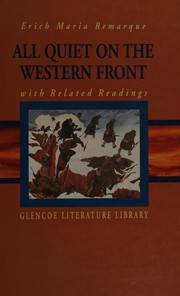
A short, devastating novel about how war destroys the humanity of those who fight it — the exact emotional and moral territory Kuang explores with Rin across all three books.

Prepares the reader for Kuang's blending of myth, memory, and atrocity by showing how fiction can be the most truthful way to process the trauma of war.
The Poppy War Trilogy — In Sequence
IntermediateRead R.F. Kuang's complete trilogy in publication order, experiencing Rin's full arc from war-college student to revolutionary, with all the historical allegory and moral complexity now fully accessible.
▸ Study plan for this stage
Pace: 10–12 weeks total: ~3–4 weeks per book at roughly 25–35 pages/day. Suggested breakdown — The Poppy War: weeks 1–3; The Dragon Republic: weeks 4–7 (slightly longer at ~530 pages); The Burning God: weeks 8–11, with week 12 reserved for reflection, re-reading key passages, and completing synthesis exer
- Rin's arc as a tragic hero: her rise from a war-college scholarship student (Sinegard) to a shaman-soldier to a revolutionary consumed by vengeance — tracking how each book darkens her moral compass
- Historical allegory and real-world parallels: The Poppy War maps the Second Sino-Japanese War and the Nanjing Massacre (the Mugenese invasion of Golyn Niis); The Dragon Republic echoes the Chinese Civil War; The Burning God draws on Mao's Long March and Communist revolution
- The nature of divine power and its cost: shamanism as a Faustian bargain — the gods (especially the Phoenix) offer annihilating power in exchange for the self, raising questions about agency, addiction, and identity
- Colonialism, imperialism, and the cycle of violence: the Hesperian 'civilizing mission,' the opium-like grip of foreign powers on Nikan, and how liberation movements can replicate the oppression they fight
- Moral ambiguity and the corruption of idealism: every faction — the Militia, the Dragon Republic, the Southern Coalition — is shown to be compromised; Rin's choices force the reader to question whether righteous ends justify atrocious means
- Trauma, genocide, and collective memory: Kuang refuses to sanitize atrocity; the Golyn Niis massacre, the use of plague weapons, and the firebombing of Speer are rendered in unflinching detail to demand moral reckoning
- Power, race, and the 'dark-skinned' Speerlies: Rin's ethnic identity as a Speerly is central to her otherness, her access to the Phoenix, and the genocide of her people — a lens on how marginalized groups are weaponized and then discarded
- Leadership, revolution, and the authoritarian temptation: Rin's final transformation into a revolutionary warlord mirrors the very tyrants she fought, completing the trilogy's central tragic irony
- By the end of The Poppy War, what has Rin sacrificed — physically, psychologically, and morally — to win the war, and how does Kuang use the Golyn Niis massacre to force the reader (and Rin) into an ethical crisis?
- How does The Dragon Republic complicate the binary of 'liberator vs. oppressor'? What do the Hesperians and the Nikara warlords (including Yin Vaisra) reveal about the relationship between foreign intervention and domestic power struggles?
- Trace the Phoenix's role across all three books: in what ways does the god function as a symbol of both liberation and self-destruction, and how does Rin's relationship with it change from book to book?
- The Burning God ends with Rin achieving her revolutionary goal but at a cost that mirrors the atrocities she originally fought against. What is Kuang arguing about the nature of revolution and the people who lead them?
- How does Kuang use real historical events (the Nanjing Massacre, the Chinese Civil War, Mao's rise) without reducing the trilogy to simple allegory? Where does the fiction diverge from history, and why might those divergences be meaningful?
- Which secondary characters — Kitay, Nezha, Venka, Altan — function as foils to Rin, and how do their fates collectively comment on the costs of war and the limits of loyalty?
- Allegory mapping: After each book, create a two-column chart pairing major fictional events/characters with their real historical counterparts (e.g., Golyn Niis ↔ Nanjing, the Hesperians ↔ Western imperial powers). Note where Kuang departs from history and journal about the narrative effect of those departures.
- Rin's moral ledger: Keep a running log as you read — after each major decision Rin makes, write 2–3 sentences on whether you believe her choice was justified, then revisit earlier entries as the trilogy progresses to track how your own moral position shifts.
- Character foil essay: Write a 500–700 word comparative analysis of Rin and Altan (The Poppy War / The Dragon Republic) OR Rin and Nezha (The Dragon Republic / The Burning God), arguing what each pairing reveals about the trilogy's central themes of power and self-destruction.
- Close-reading the atrocity scenes: Select one graphic scene of violence from each book (e.g., Golyn Niis, the plague ships, the final firestorm). Annotate the prose choices — point of view, pacing, sensory detail, what is shown vs. withheld — and write a paragraph on how Kuang's craft shapes the reader's ethical response.
- Revolutionary rhetoric analysis: Collect 5–8 speeches or internal monologues in which Rin (or another leader) justifies violence for a greater good. Arrange them chronologically and write a short analysis of how the rhetoric escalates and what rhetorical moves recur across all three books.
- Post-trilogy reflection letter: After finishing The Burning God, write a one-page letter from your present self to the version of you who just finished The Poppy War, explaining what you now understand about the trilogy's moral architecture that you couldn't have seen at the end of book one.
Next up: Completing Rin's full arc — and sitting with the trilogy's unresolved moral weight — primes the reader to engage with Kuang's later, more formally experimental work and with the broader tradition of grimdark and post-colonial fantasy that the trilogy both draws from and critiques.
The first book — start here. It establishes Rin, the Nikara Empire, shamanism, and the horror of the Mugenese invasion; everything in the later books builds on these foundations.

Read immediately after Book 1. The conflict expands into civil war and colonial intervention; the political complexity deepens and Rin's moral descent accelerates.

The trilogy's conclusion — read last. It pays off every character thread and thematic question raised in Books 1 and 2, and should not be read out of order.
Going Deeper — Author's Craft & Influences
IntermediateUnderstand where Kuang's ideas come from by reading her own nonfiction-adjacent work and a key influence, sharpening your ability to discuss and think critically about the trilogy.
▸ Study plan for this stage
Pace: 6–8 weeks total: Weeks 1–5 on Babel (~25–30 pages/day, reading slowly and annotatively); Weeks 6–7 on The Art of War (~10–15 pages/day with pauses for reflection, since the text is short but dense with aphorism); Week 8 reserved for synthesis, review, and completing exercises.
- Linguistic imperialism and the politics of translation — Babel's central conceit that language is power mirrors Kuang's critique of how colonial systems extract and weaponize culture, directly informing the Poppy War's treatment of the Nikara Empire and its borrowed mythologies.
- The silver-working system as allegory — The 'loss in translation' magic in Babel is a metaphor for cultural erasure and colonial exploitation; understanding it deepens your reading of how Kuang constructs systemic oppression in the trilogy.
- Kuang as a self-aware author — Babel is Kuang's explicit meditation on her own craft, identity, and complicity; reading it reveals the moral questions she embeds in her fantasy work, particularly around collaboration with oppressive systems.
- Sun Tzu's strategic philosophy — The Art of War's core doctrines (deception, adaptability, knowing the enemy and self, the cost of prolonged war) are direct intellectual ancestors of the military logic and character decisions throughout the Poppy War trilogy.
- Shi (势) — positional advantage — Sun Tzu's concept of exploiting momentum and circumstance over brute force maps onto how Rin and other commanders win or lose battles in the trilogy, and how underdogs survive against empires.
- The ethics of violence and total war — Both books grapple with when destruction is justified; Babel's revolutionaries and Sun Tzu's cold calculus together frame the moral architecture Kuang builds across the trilogy.
- Influence vs. imitation — Studying these two books together trains the reader to distinguish between Kuang consciously borrowing a framework (Sun Tzu's strategy) and Kuang writing in direct dialogue with a tradition (colonial academia in Babel), a critical-thinking skill applicable to all her work.
- Author's positionality — Babel foregrounds how a writer's racial, linguistic, and institutional identity shapes what stories get told and how; this lens reframes every authorial choice visible in the Poppy War trilogy.
- How does the 'loss in translation' silver-working magic in Babel function as a critique of colonialism, and where do you see the same critique operating — perhaps less literally — in the Poppy War trilogy?
- Sun Tzu argues that 'the supreme art of war is to subdue the enemy without fighting.' Which characters in the Poppy War trilogy most embody this principle, and which most violently reject it — and what does Kuang seem to be saying through those choices?
- Babel's protagonist Robin must choose between complicity and destruction with no clean third option. How does this same impossible moral geometry appear in Rin's arc across the trilogy, and what does Kuang's treatment of both characters suggest about her worldview?
- Which specific doctrines from The Art of War (e.g., the use of spies, the danger of a prolonged campaign, the importance of terrain) can you identify playing out in the military campaigns of the Poppy War trilogy, and does Kuang follow or subvert Sun Tzu's prescriptions?
- Babel is set in an alternate Oxford and engages directly with British imperial academia. How does writing that book appear to have sharpened or shifted the way Kuang frames institutional power and individual resistance — themes also central to the Poppy War?
- How does reading The Art of War change your understanding of Rin as a strategic thinker? Is she a good Sun Tzu student, a bad one, or is Kuang deliberately writing her as a tragedy of someone who learns the wrong lessons from the right text?
- Annotation map: As you read Babel, flag every passage where Kuang discusses language, power, or complicity. After finishing, write a one-page 'translator's note' in Kuang's voice explaining how those themes connect to a single chapter of your choice from the Poppy War trilogy.
- Sun Tzu doctrine tracker: Create a two-column table. Left column: list 10 specific maxims from The Art of War. Right column: for each, find a matching scene, decision, or outcome from the Poppy War trilogy and write 2–3 sentences explaining the connection or contradiction.
- Comparative character essay (500–700 words): Choose one character from Babel (Robin, Ramy, Victoire, or Griffin) and argue which Poppy War character they most resemble in terms of their relationship to power and resistance. Use textual evidence from both books.
- 'Lost in translation' creative exercise: Invent a silver bar pairing (a word in any two languages where meaning is genuinely lost between them) in the style of Babel's magic system, then write a short paragraph explaining what that loss reveals about a cultural tension also present in the Poppy War world.
- Strategic battle brief: Pick one major military engagement from the Poppy War trilogy and write a one-page analysis in the style of a Sun Tzu commentary — assess what the commander did right or wrong according to The Art of War's principles, and predict what Sun Tzu would have advised instead.
- Influence web: Draw a visual diagram connecting at least 6 specific elements from Babel and The Art of War to specific scenes, characters, or themes in the Poppy War trilogy. Annotate each connection with one sentence. This becomes your reference sheet for the next stage.
Next up: By mapping Kuang's intellectual and moral sources through Babel and The Art of War, the reader is now equipped to move into a deeper critical and contextual stage — examining the real historical events (the Second Sino-Japanese War, the Nanjing Massacre) and scholarly frameworks that ground the trilogy's most harrowing content.
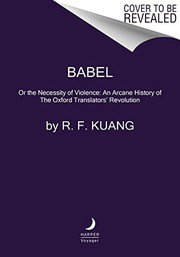
Kuang's follow-up novel tackles colonialism and linguistic power with the same unflinching moral seriousness as the Poppy War; reading it reveals her consistent authorial preoccupations and growth.
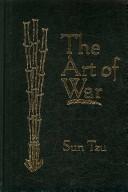
A short classic that Kuang's military strategy and philosophy of power directly echo; reading it after the trilogy reframes many of Rin's decisions and the warlords' rhetoric in a new light.
Advanced Context — Opium, Empire & Memory
ExpertEngage with the trilogy's deepest historical layer — the Opium Wars and the long shadow of empire — and with scholarly thinking on how nations remember (or suppress) atrocity.
▸ Study plan for this stage
Pace: 6–7 weeks total: Weeks 1–2 on *Opium Nation* (~25–30 pages/day, including reflection pauses after each chapter); Weeks 3–6 on *The Opium War* (~30–35 pages/day, heavier analytical reading); Week 7 reserved for synthesis, cross-book comparison, and completing exercises.
- The opium trade as a structural engine of empire — how Britain's economic interests in the drug trade with China shaped geopolitical dominance and created cycles of addiction, poverty, and dependency that persisted for generations
- Ground-level human cost vs. macro-historical narrative — Nawa's immersive journalism in *Opium Nation* foregrounds individual Afghan lives (farmers, addicts, traffickers, women) to show how imperial and post-imperial forces translate into personal devastation, a lens that enriches reading Lovell's b
- The Opium Wars as a founding trauma of Chinese national identity — Lovell's argument in *The Opium War* that the wars are not merely historical events but are actively mythologized and weaponized in Chinese political memory, shaping nationalism, foreign policy, and the 'century of humiliation' narra
- Selective and contested memory: how states, institutions, and cultures choose what to commemorate, distort, or suppress about atrocity and defeat — a theme running through both books and central to R.F. Kuang's fictional Nikan/Mugen dynamic
- The complicity of 'civilized' powers — Lovell's forensic dismantling of British self-justifying rhetoric (free trade, civilization, rule of law) as cover for coercive imperialism, mirrored in Nawa's examination of how Western intervention in Afghanistan perpetuated the very drug economy it claimed t
- Addiction as a political weapon and social control mechanism — both books, from different angles, show how dependency (chemical, economic, political) is manufactured and maintained by powerful actors to subdue populations
- Gender, vulnerability, and empire — Nawa's reporting gives sustained attention to Afghan women caught between patriarchal tradition and the violence of the drug economy, adding a gendered axis of analysis largely absent from conventional imperial history
- The gap between official history and lived experience — both authors expose the distance between state-sanctioned accounts and the testimonies of those who actually bore the costs, a methodological and ethical lesson directly applicable to reading Kuang's fictional historiography
- After reading *Opium Nation*, how does Nawa use individual biography and on-the-ground reportage to argue that Afghanistan's contemporary opium crisis is inseparable from its history of foreign intervention — and what specific patterns does she identify that echo the 19th-century dynamics Lovell describes?
- Lovell argues in *The Opium War* that China's memory of the wars is as politically constructed as Britain's self-exculpatory forgetting — what evidence does she marshal for this claim, and what are the dangers she identifies in both forms of historical distortion?
- How do both books together complicate the idea of a clean 'victim/aggressor' binary in imperial history, and how might this complexity inform a richer reading of the Nikara/Mugen/Federation relationships in the Poppy War trilogy?
- What does Lovell reveal about the internal British debates — moral, legal, and commercial — surrounding the opium trade, and how does the suppression of dissenting voices within the empire mirror the memory-suppression mechanisms Kuang depicts in her fictional world?
- In what ways does Nawa's portrayal of Afghan opium farmers — economically trapped, politically abandoned, morally stigmatized — parallel the situation of colonized or occupied peoples in Lovell's account of Qing-era China, and what does this parallel suggest about the structural logic of empire across time and geography?
- Both books deal with the problem of who gets to tell the story of suffering. How do Nawa and Lovell each navigate their own positionality as authors, and what methodological choices do they make to give voice to those history has marginalized?
- **Parallel Timeline Chart:** Build a two-column timeline — one for the events in *The Opium War* (1839–1860 and their afterlives) and one for the modern Afghan opium crisis in *Opium Nation*. Then add a third column mapping corresponding fictional events or themes from the Poppy War trilogy. Look for structural echoes: where does Kuang seem to be directly fictionalizing a real dynamic from either
- **Close-Reading the Rhetoric of Justification:** Select three passages from *The Opium War* in which British officials, merchants, or politicians justify the trade or the wars. Write a 300–400 word analysis of the rhetorical strategies used (appeals to civilization, free trade, law, etc.). Then find an analogous moment of self-justifying imperial rhetoric in *Opium Nation* (e.g., Western intervent
- **Memory & Myth Annotation:** As you read Lovell's chapters on how the Opium Wars are remembered in modern China, keep a running annotation log. Each time she describes a commemorative act, a textbook account, a political speech, or a suppressed counter-narrative, note it. At the end, write a one-page reflection: how does manufactured national memory function as a form of ongoing power, and where
- **Voice Reconstruction Exercise:** Choose one figure from *Opium Nation* who appears briefly — a farmer, a female addict, a low-level trafficker — and one figure from *The Opium War* who is named but not centered (a Chinese merchant, a Qing foot soldier, a Canton resident). Write a one-page first-person interior monologue for each, drawing only on details the books provide. Reflect afterward: what
- **Thesis Stress-Test Debate:** Formulate Lovell's central thesis about Chinese national memory in one sentence. Then formulate Nawa's central argument about foreign intervention in one sentence. Now write a short (500-word) devil's advocate response to each — the strongest possible counterargument. This trains the critical distance needed to engage with Kuang's own authorial choices without simply
- **Synthesis Essay — 'The Long Shadow':** Write a 600–800 word essay responding to this prompt: *'Both Nawa and Lovell suggest that the most lasting damage of empire is not military defeat but the corruption of memory, identity, and self-determination. Using specific evidence from both books, evaluate this claim and explain how it deepens your understanding of what R.F. Kuang is doing in the Poppy
Next up: Having internalized the real historical machinery of empire, opium, and contested memory through Nawa and Lovell, the reader is now equipped to return to Kuang's trilogy itself with a fully loaded analytical toolkit — able to interrogate not just what the fiction depicts, but how and why it fictionalizes, where it is faithful to history, where it deliberately distorts, and what ethical responsibil

Provides serious, on-the-ground context for the opium trade that gives the trilogy its title and one of its central metaphors of colonial exploitation and addiction.

A rigorous, highly readable history of the actual Opium Wars whose legacy haunts every page of Kuang's trilogy, from the Federation of Mugen to the Hesperians — reading this last unlocks the trilogy's full allegorical architecture.
Discussion
Keep reading
Paths that share books, cover the same subject, or open a related topic.