Best Books on the Scramble for Africa, in Reading Order
In 1870 European powers held a handful of coastal footholds in Africa; by 1914 they claimed almost the entire continent. This path resists starting at the Berlin Conference, because the partition only makes sense if you first know what was being partitioned — so it opens with two long-run histories of Africa before turning to Pakenham's narrative of the scramble itself. It then works through the Congo as the extreme case, the wars of conquest and resistance, and finally the ideology that justified the whole enterprise together with the writers who took it apart.
The Continent Being Divided
BeginnerLearn enough African history before 1880 — states, trade networks, the slave trades, Islam, environment — to see the partition as something done to functioning societies.
▸ Study plan for this stage
Pace: 4–5 months for roughly 1,560 pages — this is the longest stage and the one people are tempted to skip. Do not. Meredith first at ~25 pages/day, then Reader at ~20, since his chapters on soil, disease and demography are argument rather than narrative and need slower attention. A map of pre-colonial A
- The major pre-colonial African states and their scale — Mali and Songhai, Great Zimbabwe, Benin, Asante, Ethiopia, the Sokoto Caliphate, Buganda — which the partition maps erased
- The trans-Saharan, Indian Ocean and Atlantic trade networks, all long-established, and Meredith's framing of African history through the outsiders who came for gold, slaves, ivory and rubber
- The three slave trades — Atlantic, trans-Saharan and Indian Ocean — with different durations, destinations and demographic effects, and the internal African participation in each
- The spread of Islam across the Sahel and the East African coast, and the states it built, centuries before European inland penetration
- Reader's environmental constraints: tsetse fly and trypanosomiasis limiting cattle and horses, soil fertility, rainfall variability, and the resulting low population densities across much of the continent
- Why Europeans held only coastal footholds until the 1870s — malaria above all, and what quinine changed
- Firearms and steamships as the other half of the technological answer, and the timing that made 1880 rather than 1780 the moment of partition
- Name six substantial African states existing before 1880, their approximate location and what they were built on economically.
- Why were Europeans confined to the coast for nearly four centuries, and what specifically changed in the mid-nineteenth century?
- How do the three slave trades differ in duration, direction and demographic consequence, and how does Meredith handle African participation in them?
- Give three examples from Reader of an environmental constraint determining where and how people could live, and say what each implies about population density.
- Meredith organises African history around outsiders and their appetites. What does that framing illuminate, and what does it structurally leave out?
- Draw a map of Africa in 1870 marking the major states, the trade routes and the actual extent of European holdings. Keep it — you will draw the 1914 map in the next stage and the comparison is the point of the whole path.
- Take one African state Meredith covers and write a two-page account of its political structure, economy and external relations in the century before partition, using only what the two books provide.
- Build a table of Reader's environmental constraints against their human consequences — disease, soil, water, animals — and mark for each whether it favoured or hindered European penetration.
- Write 300 words on the quinine and steamship argument: how much of the timing of the scramble is explained by technology, and what the explanation leaves unaccounted for.
- Read Meredith and Reader on the same region and write a paragraph on where the narrative historian and the environmental historian disagree about what mattered.
Next up: Knowing what existed before 1880 is what makes the next stage a partition of functioning societies rather than a diplomatic story about empty space.

Five thousand years of African history organised around the outsiders who came for its resources, which makes it the ideal frame for the scramble specifically. Read it first: it is long but genuinely narrative.

A biography of the continent from geology and human origins forward, stronger than Meredith on environment, disease and demography. It explains constraints — tsetse, soil, rainfall — that shaped where Europeans could and could not settle.
The Partition Itself
IntermediateFollow the diplomacy and the land grab from the 1870s to 1912: Berlin, the chartered companies, the treaties, and the rivalries that drove it.
▸ Study plan for this stage
Pace: 3 months for Pakenham's 738 dense pages at ~15 pages/day. The book moves between a dozen theatres and as many national politics, so read with a notebook tracking who is doing what where; without one the middle chapters become a blur of names. Prerequisite: the previous stage, which supplies everythi
- The Berlin Conference of 1884–85: what it actually decided (rules of the game, the principle of effective occupation, free navigation of the Congo and Niger) and the persistent myth that Africa was carved up around its table
- The chartered company as the instrument of cheap empire — Rhodes's British South Africa Company, the Royal Niger Company, the Imperial British East Africa Company — and its consequences for how conquest was financed and conducted
- The treaty as the legal fiction of the scramble: agreements signed by chiefs who could not read them, for terms neither side understood the same way
- The individual drivers Pakenham foregrounds — Leopold II, Rhodes, Bismarck, Salisbury, Ferry, Stanley — and his emphasis on personality and rivalry over economic determinism
- Fashoda in 1898 as the point where the scramble nearly produced a European war, and what its resolution shows about the balance of power
- The economic argument Pakenham underplays and the counter-literature on it: whether colonies paid, and for whom
- The book's structural limitation: written from European archives and largely from the European side, with African actors appearing mostly as they appear in those archives
- What did the Berlin Conference actually decide, and what is the popular version that it did not?
- Explain the doctrine of effective occupation and how it changed the incentives of every power involved.
- Why were chartered companies used, and what did governments gain and lose by delegating conquest to them?
- What happened at Fashoda, and why did Britain and France not go to war over it?
- Pakenham explains the scramble largely through the ambitions of individuals. State the strongest structural or economic counter-explanation and say which you find more persuasive.
- Reading Pakenham after Meredith and Reader, name three specific places where the European archive gives a misleading account of what happened on the ground.
- Draw the map of Africa in 1914 by colonial power, then set it beside the 1870 map you drew in stage one. Write 300 words on what the borders cut through.
- Keep a running index as you read: one line per treaty or annexation — date, territory, power, method, African party. By the end you will have the partition as a table, which is far easier to reason about than the narrative.
- Pick one territory and write out its acquisition step by step, naming who signed what and on whose authority. Then write a paragraph on whether the treaty could have meant the same thing to both parties.
- Take Pakenham's account of one episode and list every African individual who is named. The length of the list is itself the finding.
- Write a 400-word answer to 'why did the scramble happen when it did' using Pakenham's personality-driven account, then a second 400-word answer using only economic and technological factors. Decide which you would defend.
Next up: With the partition mapped, the next stage takes the single territory where the logic of extraction ran furthest and was exposed in its own time.
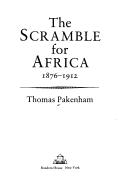
The standard narrative history of the partition, tracking every major power and most of the minor ones across four decades. It is written from the European archives and largely from the European side, which is a real limitation — the previous stage exists to offset it.
The Congo, the Extreme Case
IntermediateStudy the one colony that became an international scandal in its own time, and trace what its regime left behind.
▸ Study plan for this stage
Pace: 6–7 weeks for ~745 pages at ~20 pages/day. Hochschild reads like narrative history and is hard to put down; Wrong is reportage and shorter still. Read them in order and close together — Wrong is written to be continuous with Hochschild, and the effect depends on the sequence.
- The Congo Free State as Leopold II's personal possession rather than a Belgian colony, and how a private individual acquired a territory the size of Western Europe
- The rubber terror: the quota system, the hostage-taking of women, and the severed hands demanded as accounting for expended cartridges
- The mortality estimate Hochschild popularises and its contested status — the book is explicit that the figures are estimates and some Belgian historians reject the scale; read it as the case for the prosecution
- Morel and Casement and the Congo Reform Association as one of the first modern international human rights campaigns, including its use of photography and eyewitness testimony
- How the scandal ended: Belgian annexation in 1908, and what did and did not change afterwards
- Wrong's continuity thesis — Mobutu's kleptocracy as the same extractive machinery under new management, with foreign patrons in the place of Leopold
- The role of outside powers in sustaining Mobutu, and what the Congo case implies about attributing post-colonial failure solely to post-colonial leadership
- The gap between Hochschild's archival and campaign material and Wrong's first-hand reporting during the 1997 collapse — two kinds of evidence about one place
- How did Leopold acquire the Congo, and what did the other powers get in return for recognising it?
- Describe the rubber quota system and the specific mechanisms of enforcement. Why did the severed-hand practice arise from the ammunition accounting rather than from sadism alone?
- What is the range of mortality estimates for the Free State, what are they based on, and why do historians disagree?
- What made the Congo Reform Association effective, and what does it prefigure about later human rights campaigning?
- State Wrong's continuity argument and the best objection to it — how much of Mobutu's Zaire is explained by Leopold's Congo, and how much is not?
- Which foreign actors sustained Mobutu, for what reasons, and how does that complicate a colonial-legacy explanation?
- Write a 300-word summary of Hochschild's evidence for the mortality figure, distinguishing what is documented from what is inferred. Then write 150 words on whether the disputed number changes the moral case.
- Trace one Congolese rubber-producing district from the 1890s to the 1990s using both books, and mark every point at which the mode of extraction changed and every point at which it did not.
- Take the Congo Reform Association's methods — testimony, photographs, parliamentary pressure, missionary networks — and list which are still used by human rights organisations today.
- Read Casement's report as Hochschild describes it and write a paragraph on why an official investigation by a serving consul carried weight that missionary testimony had not.
- Compare Hochschild's Leopold and Wrong's Mobutu as characters: write a one-page structural comparison of how each extracted, who was paid off, and who bore the cost.
Next up: The Congo shows what extraction did through administration; the next stage shows what the partition looked like where it had to be enforced by war.
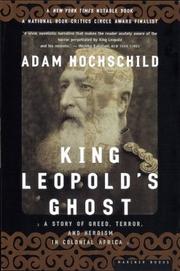
Leopold II's private Congo state, the rubber terror, and the reform campaign of Morel and Casement. The mortality figure it popularises is disputed by some Belgian historians, and the book is explicit that the numbers are estimates — read it as the case for the prosecution, powerfully made.
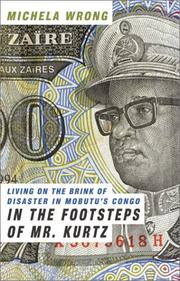
Mobutu's Zaire, reported by a correspondent who was there for the collapse, and continuous with Hochschild by design. The clearest available answer to what a century of extraction does to a state.
Conquest and Resistance
IntermediateSee the partition as it was actually enforced — colonial wars, settler conflict, and the destruction of societies from the inside.
▸ Study plan for this stage
Pace: 3–4 months for roughly 1,510 pages. Morris at ~20 pages/day, Pakenham's Boer War at the same, and then Achebe's 192 pages in two or three sittings — read Things Fall Apart last and read it slowly despite its length. Read Morris knowing it is a 1965 book built mainly from British sources; that limita
- The rise of the Zulu kingdom under Shaka and its military organisation — the age-regiment system and the tactical doctrine that made Isandlwana possible
- Isandlwana and Rorke's Drift in January 1879: the largest defeat inflicted on a British force by an African army, and the immediate mythologising that followed
- The manufactured casus belli: the ultimatum Britain issued knowing it could not be met, which is the pattern of the later conquests in miniature
- The Boer War as the closing of the scramble era, and the point at which European methods — farm burning, scorched earth, concentration camps for civilians — were applied to Europeans and became a scandal for that reason
- Pakenham's revisionist findings on the Boer War: the incompetence of the British command, the length and cost of the guerrilla phase, and the camp mortality
- Achebe's Umuofia: a functioning society with law, religion, justice and internal conflict, described from inside before the missionaries and the district commissioner arrive
- Okonkwo's tragedy as double — the society's collision with colonialism and his own rigidity within it — which is why the novel is not a simple indictment
- The final paragraph of Things Fall Apart, in which the whole preceding novel becomes a paragraph in the commissioner's book, and what Achebe is saying about who writes history
- How was the Zulu army organised, and what specifically caused the British defeat at Isandlwana?
- What was the British ultimatum to Cetshwayo, and why does Morris's account of it matter for understanding the pattern of colonial wars?
- Morris wrote in 1965 from largely British sources. Name three points where you would expect Zulu sources to give a different account, and say what those sources would be.
- Why did the concentration camps of the Boer War generate outrage when comparable colonial measures elsewhere had not?
- What does Achebe show about Igbo society that the historical accounts on this path cannot, and what is the significance of showing its internal conflicts as well?
- Explain the last paragraph of Things Fall Apart and its relationship to the rest of the book.
- Draw the Isandlwana battlefield from Morris's account with the British camp, the Zulu approach and the enveloping horns, then write 200 words on why the British dispositions failed.
- Write a 250-word account of the Anglo-Zulu War as a Zulu chronicler might have written it, using only facts Morris supplies. Note which facts you could not obtain from his book.
- Take Pakenham's evidence on the concentration camps — numbers, mortality, causes — and set it beside his account of how it was reported in Britain. Write a paragraph on what made it visible.
- Read the first third of Things Fall Apart and list everything it establishes about Umuofia's institutions before any European appears. That inventory is Achebe's argument.
- Write 400 words comparing how Morris, Pakenham and Achebe each handle the moment a society is defeated — three different vantage points on the same event type.
- Return to your stage-one map of pre-colonial states and mark, for each, whether it was conquered by war, absorbed by treaty, or dismembered by a border. Note how thin the evidence is for some of them.
Next up: Having seen the partition planned, administered and enforced, the last stage asks what made it thinkable in the first place and what it left behind.
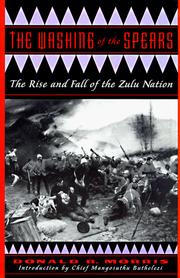
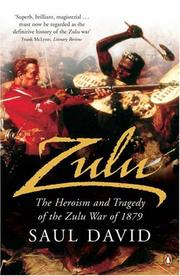
The rise and fall of the Zulu kingdom and the 1879 war, still the fullest English account. A pre-scramble conflict that shows the pattern the later conquests followed; note that it is a 1965 book written largely from British sources.
Pakenham's earlier and equally definitive book on the war that ended the scramble era, and the one where European methods — concentration camps, scorched earth — were used on Europeans. Read it after The Scramble for Africa; it is the same author closing his own story.

The novel of Igbo society meeting the missionaries and the district commissioner, written explicitly to answer the European literature about Africa. Short, and the only book on this path written from inside a society being colonised.
The Ideology and the Reckoning
IntermediateExamine the racial thinking that made the partition seem legitimate, and the critiques that dismantled it — then follow the consequences into the present.
▸ Study plan for this stage
Pace: 3–4 months. Heart of Darkness is 136 pages but should be read twice, with Achebe's essay 'An Image of Africa' between the readings; Lindqvist's 179 pages read fast and should follow immediately; Memmi is short and dense and rewards slow reading; Meredith's 752 pages then take ~25 pages/day over two
- Heart of Darkness as both indictment and artefact: Conrad saw the Congo trade for what it was, and wrote Africans as scenery without speech — which is the substance of Achebe's charge
- The Achebe critique and the standard defences of Conrad, and why the argument has not settled after fifty years
- Lindqvist's method: reading the novella's marginal phrase back through nineteenth-century race science, and his claim that the extermination logic was already thoroughly European before it was applied in Africa
- Lindqvist's continuity thesis linking colonial massacre to later European atrocity, and the objections to it — the risk of collapsing distinct historical events into one lineage
- The specific intellectual materials that made partition legitimate: social Darwinism, polygenism, craniometry, the civilising mission, and the legal category of terra nullius
- Memmi's structural analysis of the colonial relationship: the coloniser who refuses and the coloniser who accepts, the portrait of the colonised, and the mutual deformation of both parties
- Meredith's account of the first fifty years of independence — the borders inherited intact, one-party states, the resource curse, the Cold War proxy conflicts
- Meredith's contested distribution of responsibility between the colonial inheritance and post-independence leadership, and the debate that position sits inside
- What does Conrad show accurately about the Congo trade, and what does his handling of African characters withhold?
- State Achebe's charge against Conrad precisely, and give the strongest defence of Conrad you can construct. Which do you find better founded?
- What is Lindqvist's argument about the phrase 'exterminate all the brutes', and what evidence does he assemble for it?
- Where is Lindqvist's continuity thesis strongest and where does it overreach? Name a specific historical link you would want more evidence for.
- Explain Memmi's distinction between the coloniser who refuses and the coloniser who accepts, and why he argues the first position is untenable.
- How does Meredith apportion responsibility for post-independence outcomes, and what would you need to know to judge whether the balance is right?
- Read Heart of Darkness, then Achebe's essay, then Heart of Darkness again. Write 400 words on what changed between the two readings — this is the exercise the stage is built around.
- Trace Lindqvist's chain of citations for one of his links between race science and colonial massacre, and write out the chain with your own assessment of each step.
- Take three passages from Conrad and annotate them for what Hochschild's evidence confirms and what he shows Conrad missed or softened.
- Apply Memmi's framework to one specific colonial situation covered elsewhere on this path — Leopold's Congo, settler South Africa, Achebe's Umuofia — and write two pages on where it fits and where it does not.
- Pick three African countries and, using Meredith, write for each a one-page account of the first thirty years after independence, distinguishing what the colonial inheritance determined from what post-independence decisions did.
- Write a final 1,000-word essay answering the question the path exists for: what the scramble did, and how much of the present it explains. Cite specific books for each claim, and mark the places where the honest answer is that the evidence is contested.
Next up: This closes the path: from what existed before 1880, through the partition and its enforcement, to the ideology that licensed it and the argument about its legacy that is still open.

The 1899 novella of the Congo trade, and the single most argued-over text about European Africa — Achebe's essay calling Conrad a racist is part of the standard reading. Read it here, after Hochschild, so you can see how much Conrad saw and how much he did not.
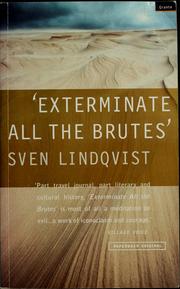
A short book that reads Conrad's phrase back through nineteenth-century European race science and colonial massacre, arguing for continuity with later European atrocity. Read it directly after Heart of Darkness; that is how it is built to be read.

Memmi's 1957 analysis of the psychology of the colonial relationship, written from Tunisia and applicable well beyond it. The theoretical companion to everything narrative on this path.
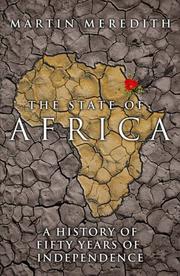
Fifty years of independent Africa, which is where the argument about the scramble's legacy actually gets tested. Meredith holds post-independence leadership responsible as well as the colonial inheritance, a position not everyone accepts — the right note to end on, because the debate is unfinished.
Discussion
Keep reading
Paths that share books, cover the same subject, or open a related topic.