The Anglo-Zulu War: books to read, in order
The war of 1879 is famous for two days in January — a British column destroyed at Isandlwana, a mission station held at Rorke's Drift — and the popular memory of it was shaped by a film and by eleven Victoria Crosses awarded partly to bury the defeat. This path builds the Zulu kingdom first, then reads the standard narrative history, then the modern battle studies that revise it, and ends with the specialist work on the Zulu army and the war's aftermath.
The standard narratives
BeginnerGet the whole story once, from Shaka to the destruction of the kingdom, before examining any single battle closely.
▸ Study plan for this stage
Pace: 3-4 weeks. Saul David's Zulu first, at around 40 pages a day, then Donald Morris's The Washing of the Spears, which is long and should be given two weeks. Read them in that order and read Morris with a date in mind: it was published in 1965 and its account of the Zulu kingdom's origins rests on colo
- The ultimatum of December 1878 and Bartle Frere's decision to issue it without London's authorisation
- Confederation as the imperial policy the war was meant to serve, and the Transvaal annexation that preceded it
- The three-column invasion plan and why it dispersed British strength
- The sequence of the war: Isandlwana, Rorke's Drift, the sieges, Khambula, Ulundi, and the partition that followed
- The difference between a war of imperial policy and a war of local initiative, and where the responsibility for 1879 actually sits
- How the defeat at Isandlwana was managed politically at home
- Who decided on this war, and by what authority? What did the Colonial Office in London know and when?
- What were the terms of Frere's ultimatum, and why was Cetshwayo unable to comply even had he wished to?
- Where does David's account of Zulu political decision-making differ from Morris's, and what accounts for the difference — new evidence, or a different set of assumptions about the sources?
- Morris wrote in 1965. Name three specific things in The Washing of the Spears that you would want to check against a modern source before repeating.
- By the end of these two books, what is your own account of why Britain won a war it began by losing?
- Build a two-column timeline of 1878-1879, imperial decisions on the left and Zulu decisions on the right. Where the right column is empty, note which book left it empty and whether it had the sources to fill it.
- Take Morris's account of Shaka's rise and set it beside David's. Write a paragraph identifying every point where Morris is relying on oral tradition transmitted through colonial informants.
- Draw the three-column invasion on a map of Zululand with the dates. Then state, in writing, the single decision you would have changed and what you think the consequence would have been.
- Write one paragraph making the case that the war was Frere's, and one making the case that it was the inevitable outcome of confederation policy. Cite a page from each book for each.
Next up: You now have the British narrative in full, which makes it possible to see how much of the Zulu kingdom it left out — the subject of the next stage.
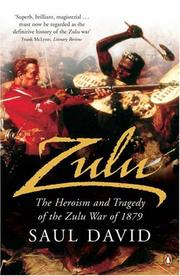
The most readable modern single-volume history of the war, strong on the political manoeuvring behind Frere's ultimatum. The right first book because it moves at pace and covers the whole campaign.
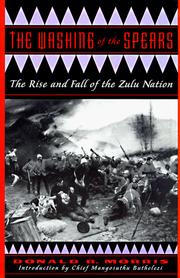
The 1965 classic that made the war famous to English-language readers, covering the rise of the Zulu kingdom as well as the war. Sixty years of scholarship has revised its details and its assumptions, so read it for the narrative sweep and let the later books correct it.
The Zulu kingdom on its own terms
BeginnerUnderstand the state the British invaded — how Shaka built it, how it was governed, and why 1879 was the end of something rather than the start.
▸ Study plan for this stage
Pace: 3-4 weeks. Ritter's Shaka Zulu first for the story, Laband's The Rise and Fall of the Zulu Nation second for the history, and Kingdom in Crisis third. Read Ritter with the caveat stated plainly: it is a 1955 reconstruction built from oral tradition and openly novelised in places, with invented dialo
- The amabutho age-regiment system as the basis of both the army and the state's control of labour and marriage
- Shaka's consolidation and the debate over the mfecane — how much regional upheaval is actually attributable to the Zulu kingdom, and how much to slave-raiding and colonial pressure
- The kingdom's political structure: the king, the great chiefs, the royal homesteads, and the limits of central power
- Cetshwayo's position in 1878 and the internal constraints on his freedom of action
- Why the Zulu state could mobilise overwhelmingly but could not sustain a long campaign
- Zulu strategy in 1879 as a set of deliberate choices rather than a reflex
- What did the amabutho system do besides raise soldiers, and why does that make it an economic institution as much as a military one?
- Ritter and Laband describe the same events from different evidentiary bases. Name two episodes where Ritter's version is clearly shaped by narrative rather than sources.
- In Kingdom in Crisis, what were the Zulu strategic options after Isandlwana, and why was none of them able to end the war favourably?
- How far was Cetshwayo in control of the war his kingdom was fighting?
- What does the mfecane debate turn on, and how would you tell a reader which position the book in front of them has taken?
- Take one incident described in both Ritter and Laband and write the two accounts side by side, marking in Ritter's every sentence that no source could support.
- Diagram the amabutho system — age cohorts, homesteads, the marriage restriction — and then use the diagram to explain why a Zulu army could not stay in the field for months.
- Using Kingdom in Crisis, write the Zulu council's argument for and against a strategy of avoiding battle after Isandlwana, as the participants might have made it.
- State the mfecane thesis in one paragraph, then write the strongest revisionist objection to it. Say which you find more convincing and on what grounds.
Next up: With the Zulu state and army understood as institutions, the two famous battles can be read as the outcome of decisions rather than as a disaster and a miracle.
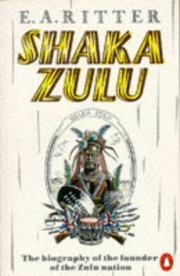
The most widely read account of Shaka's rise, based on oral tradition and openly novelized in places. Read it first for the story and then read Laband, who treats the same material as history under evidential control.
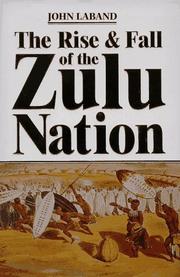
The standard scholarly history of the kingdom from Shaka to 1879, by the leading historian of the Zulu state. This is where the Zulu side stops being background and becomes the subject.

Laband on the Zulu response to the invasion — the strategic decisions, the strain on the kingdom, the reasons it could not sustain a long war. Read after Rise and Fall, since it assumes the political structure that book describes.
Isandlwana and Rorke's Drift, close up
IntermediateReconstruct the two famous days in detail and evaluate the competing explanations for the disaster and the myth-making that followed it.
▸ Study plan for this stage
Pace: 4-5 weeks. Knight's Zulu Rising is the longest book on the path and deserves two weeks on its own; it is also where the modern account of Isandlwana lives, and it gives Zulu oral testimony the same evidentiary weight as British reports, which the older books do not. Then Snook's two volumes, How Can
- The camp at Isandlwana: why it was not entrenched, and whose standing orders that violated
- Chelmsford's division of the column on 22 January and the reconnaissance that drew him away
- The ammunition-supply thesis — screwed-down boxes, quartermasters, distance from the firing line — and the evidence for and against it
- The Zulu attack formation and the discovery of the impi in the Ngwebeni valley
- Rorke's Drift as a defensive action, and the eleven Victoria Crosses as an act of political management following a catastrophic defeat
- The Court of Inquiry and what it did not ask
- How competing reconstructions are built: ground, timings, cartridge cases, and oral testimony
- State the ammunition thesis precisely. What is the physical evidence, and what does Snook conclude about it after walking the ground?
- Knight, Snook and Lock and Quantrill do not agree on why the camp fell. Set out the three explanations and say what evidence would distinguish them.
- Zulu Rising uses Zulu testimony throughout. Where does that testimony change the reconstruction rather than merely decorate it?
- What is the case that the Court of Inquiry obscured the scale and causes of the defeat, and how strong is it? What would count as proof?
- Rorke's Drift was a small action. Explain how it came to occupy the place in British memory that it does, and who benefited from that.
- Take the ammunition-supply claim and trace it through all four books, recording for each what the author says the evidence is. Then write one paragraph stating which version you accept and why.
- Reconstruct the timeline of 22 January by the hour from How Can Man Die Better, and check it against Knight's. Note every point where they diverge by more than thirty minutes and what turns on the difference.
- Map the camp and the Zulu approach on the actual terrain contours reproduced in Snook, then argue in writing whether the position was defensible at all with the troops present.
- Write the case for the defence of Colonel Pulleine, and then the case against, citing a specific passage for each.
- Read Like Wolves on the Fold on the Victoria Cross awards and then write the paragraph a Victorian newspaper would have printed about Rorke's Drift. Mark which of its claims the modern evidence supports.
Next up: The famous month covered, the last stage supplies the military system behind the Zulu decisions and follows the war to the destruction of the kingdom the first three stages have been describing.

The definitive modern account of Isandlwana and Rorke's Drift, giving the Zulu testimony equal weight with the British. If you read only one detailed book on the war, this is it.

A soldier's forensic reconstruction of Isandlwana, hour by hour, testing the ammunition-supply and camp-defence theories against the ground. Read after Knight for the tactical argument in depth.
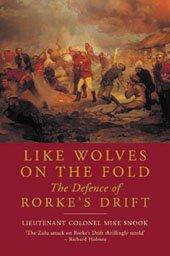
Snook's companion volume on Rorke's Drift, and the clearest analysis of how a small defensive action was inflated into a redemptive national legend. The natural pairing with the previous book.
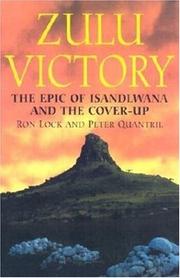
Lock and Quantrill argue that the scale of the Isandlwana defeat was deliberately obscured by the army's own inquiry. Read last in this stage as the revisionist case against the official record.
The army, the campaign and the aftermath
BeginnerStudy the Zulu military system in technical detail, follow the war past its famous first month, and see what the British did to the kingdom afterwards.
▸ Study plan for this stage
Pace: 4 weeks. Read The Anatomy of the Zulu Army as reference rather than narrative — dip into it alongside the other three rather than front to back. Then Brave Men's Blood for the campaign past January, Great Zulu Commanders for the leadership, and Zulu Warriors on the aftermath. This is the stage that
- The amabutho in technical detail — mobilisation, ritual preparation, the chest-and-horns formation, weapons and their effective ranges
- Khambula and Gingindlovu as the battles that broke Zulu offensive capacity, and why they are less remembered than a defeat
- The second invasion, the death of the Prince Imperial, and Ulundi as a political rather than a military necessity
- Wolseley's partition of Zululand into thirteen chiefdoms and its function as a policy of deliberate fragmentation
- The Zulu civil wars of the 1880s as a direct consequence of that settlement
- Individual Zulu generalship — Ntshingwayo, Dabulamanzi — restored against the anonymous mass of British accounts
- Cetshwayo's capture, exile, return and death
- Describe the chest-and-horns attack in operational terms. What does it require of the ground, the timing and the command, and where at Isandlwana did each of those conditions hold?
- Why did Khambula matter more to the outcome of the war than Isandlwana? What changed in Zulu capability after it?
- What did the partition of Zululand actually do, and was fragmentation an intended result or an accident of Wolseley's haste?
- How does Great Zulu Commanders change your reading of the decisions made on 22 January?
- By 1888 the Zulu kingdom no longer existed. Trace the causal chain from the ultimatum to that outcome and mark which links were contingent.
- Map the Zulu order of battle from The Anatomy of the Zulu Army onto the deployment diagram in Zulu Rising. Note which regiments were where and whether the two books agree.
- Draw the whole 1879 campaign on one map with dates for every engagement. Then measure, in your own words, how much of the war the popular account leaves out.
- Take one Zulu commander from Knight's biographical studies and rewrite a single episode from stage three from his point of view, using only claims the sources support.
- Read the terms of the 1879 settlement in Zulu Warriors and write the paragraph predicting what will happen next. Then check it against what did.
- Return to Morris's The Washing of the Spears from stage one, pick two passages about the Zulu kingdom, and write down what Laband and Knight have since revised in each.
Next up: This closes the path: you can now read any account of 1879 and tell whether it is drawing on Zulu evidence or only on British reports.
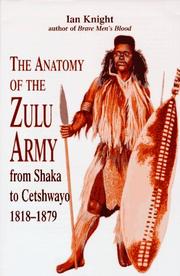
The specialist reference on the amabutho system, weapons, mobilization and tactics — the organizational facts that make Zulu decisions at Isandlwana intelligible rather than mysterious.
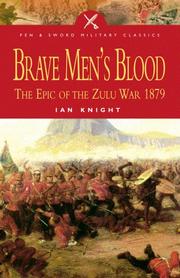
Knight's campaign history of the whole war, including Khambula, Hlobane, Ulundi and the death of the Prince Imperial, which the Isandlwana-centred books skip past.
Biographical studies of the Zulu leadership across the kingdom's whole history, which restores the individual generalship that British accounts tend to render as an anonymous mass.

Laband on the long aftermath — the partition of Zululand, the civil wars that followed and the final destruction of Zulu independence. The right closing book, because the war did not end when the fighting did.
Discussion
Keep reading
Paths that share books, cover the same subject, or open a related topic.