The trap in this subject is that the partition of Africa was documented overwhelmingly by the people doing the partitioning. The expedition memoirs, the parliamentary records and the missionary letters are all European, so a reading list assembled by convenience produces a story of explorers, gunboats and treaties in which Africans appear as terrain. That is not a moral complaint about the sources so much as a practical one: it produces a bad explanation, because it cannot account for African states, armies and economies that shaped what the Europeans could and could not do.
The order below therefore starts with continental history rather than with the scramble itself, so that 1884 arrives in the middle of a story rather than at the start of one. It closes with the writers who answered.
The continent before the partition
The fortunes of Africa is the best single-volume entry, Martin Meredith's five-thousand-year economic and political sweep, and it puts the European century in proportion. Africa by John Reader is the more ambitious book — geology, ecology and human settlement as well as politics — and is worth the extra length if you want to understand why the continent's population and disease environments made colonisation look the way it did.
The scramble itself
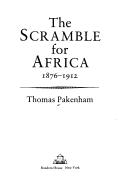
The scramble for Africa, 1876-1912 is the standard narrative account. Thomas Pakenham covers the whole partition from the Berlin Conference outward, and it is a superb piece of storytelling written firmly in the tradition of European high-political history. Read it for the chronology and the cast, and read what follows as the correction.
King Leopold's ghost is the one book here most people have already heard of, and deservedly: Adam Hochschild's account of the Congo Free State and the campaign against it is the clearest case study of what concession-company colonialism did. One honest note — the death-toll figure the book popularised is contested among historians, who dispute both the baseline population estimates and how much of the decline to attribute to violence rather than disease and displacement. The atrocities are documented; the arithmetic is argued over. In the Footsteps of Mr. Kurtz jumps forward to Mobutu's Zaire and belongs on the path because it shows what the colonial state was handed on to.
The wars
The washing of the spears is the long narrative of the Anglo-Zulu War and the rise of the Zulu kingdom. It was published in 1965, it is written from a frankly imperial vantage point, and its scholarship has been superseded, but nothing has replaced it as a readable account of that campaign. The Boer War is Pakenham again and is the better book of the two, covering the conflict that ended the scramble era and rehearsed much of the twentieth century, including concentration camps for civilians.
The reply
Things Fall Apart is the essential counterweight and the most-read African novel of the century — Chinua Achebe on an Igbo community before and during the arrival of colonial administration. Read it before Heart of Darkness, not after. Joseph Conrad's novella is on this path because it is the text every subsequent argument refers back to, and because Achebe's essay attacking it as racist is itself one of the central documents of the debate; the argument over whether the book indicts empire or reproduces its dehumanisation is genuinely unresolved.
Exterminate All the Brutes takes its title from Conrad and traces European extermination thinking through nineteenth-century science and policy. The Colonizer and the Colonized is Albert Memmi's short analysis of what colonial rule does to both parties psychologically. The state of Africa closes the path with Meredith on the post-independence decades, which is where the borders drawn in Berlin do their lasting damage.
Two caveats. The path runs past the scramble proper into decolonisation and after, deliberately, because the partition is unreadable without its consequences. And the pre-colonial coverage here is thinner than the subject deserves — that gap is ours, not the field's. Our apartheid South Africa hub picks up one of the longest threads.
Follow the path in order and the adventure story turns back into history.
Follow the full ordered path here: Best Books on the Scramble for Africa, in Reading Order.