The Best Books on the History of the Congo
This curriculum traces the full arc of Congolese history — from the sophisticated Kingdom of Kongo through Leopold II's genocidal rubber regime, the turbulent post-independence era under Mobutu, and the ongoing crises of the modern DRC. Starting at an intermediate level, each stage deepens analytical complexity and primary-source density, so that by the final stage the reader can engage with scholarly debate and contemporary reporting with genuine historical grounding.
The Grand Narrative — Start Here
IntermediateGain a sweeping, readable command of the entire Congo story from precolonial kingdoms to the present, establishing the chronological spine and key vocabulary for everything that follows.
▸ Study plan for this stage
Pace: 8–10 weeks, ~40–50 pages/day (approximately 3–4 weeks per book, accounting for note-taking and reflection)
- The Congo as a precolonial entity: the Kongo Kingdom, Luba Empire, and other centralized states with their own sophisticated political and economic systems
- Leopold II's personal rule (1885–1908) and the Congo Free State as a private colonial project, distinct from traditional European colonialism
- The mechanics and scale of exploitation: forced labor, rubber extraction, violence, and the demographic catastrophe (estimated 10 million deaths)
- The transition from Leopold's rule to Belgian colonialism (1908 onward) and the shift from extraction to administration
- Congolese resistance, agency, and adaptation across the colonial period—not a narrative of passive victimhood
- Independence (1960), the Lumumba crisis, and the Cold War's immediate impact on Congo's political trajectory
- The Mobutu era (1965–1997): authoritarianism, kleptocracy, and the hollowing of the state
- Post-Mobutu Congo: civil wars, regional conflicts, and the ongoing struggle for state legitimacy and development
- What were the major precolonial political entities in the Congo region, and what does this tell us about the idea of 'Congo' before European colonization?
- How did Leopold II's Congo Free State differ from other European colonies, and what were the consequences of his personal rule?
- What were the primary methods of exploitation under Leopold and early Belgian rule, and what was the human cost?
- How did Congolese people resist and adapt to colonialism, and what forms did this resistance take?
- What were the immediate causes and consequences of the 1960 independence crisis, particularly around Lumumba?
- How did Mobutu consolidate power, and what were the long-term effects of his rule on Congo's state institutions and society?
- What regional and international factors have shaped Congo's trajectory since the 1990s?
- Create a detailed timeline (visual or written) spanning from 1880 to 2000, marking major events from both books: Leopold's takeover, key uprisings, Belgian takeover, independence, Lumumba's death, Mobutu's coup, and the wars of the 1990s. Annotate with 2–3 sentences per event.
- Map the Congo's borders and major regions (Katanga, Kasai, Kivu, etc.). Note which precolonial kingdoms occupied which areas, and track how colonial and postcolonial borders were drawn. Identify how geography shaped resource extraction and conflict.
- Write a 500-word character study of either Leopold II or Mobutu, using specific examples from the books to illustrate how each consolidated and maintained power, and what this reveals about colonial and postcolonial state-building.
- Compile a glossary of key terms and figures: Force Publique, État Indépendant du Congo, Katanga secession, Patrice Lumumba, Joseph Kasavubu, Mobutu Sese Seko, Zaire, etc. Include brief definitions and significance.
- Create a comparison chart: precolonial Congo (political structures, trade networks, societies), Leopold's Congo (extraction methods, violence, resistance), Belgian Congo (administration, education, urbanization), and independent Congo (1960–1997). Identify continuities and ruptures.
- Write two short analytical essays (300–400 words each): (1) 'How did the Congo Free State's violence shape the trajectory of the Belgian Congo?' and (2) 'Why did Congo's independence lead to crisis, and how did this crisis set the stage for Mobutu's rise?'
Next up: This stage establishes the chronological backbone and introduces the major actors, institutions, and turning points; the next stage will likely zoom into specific themes (e.g., resource politics, regional conflict, identity and ethnicity, or economic structures) with deeper, more specialized texts.
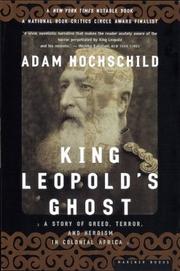
The essential entry point: a gripping, meticulously researched narrative of Leopold II's Congo Free State that also introduces the precolonial context. It gives the reader the moral and historical framework the rest of the curriculum builds on.

Read this immediately after Hochschild. Van Reybrouck's sweeping oral-history-driven account covers 500 years — Kingdom of Kongo to Mobutu to the 2000s — and provides the full chronological spine missing from any single-era study.
The Kingdom of Kongo — Deep Roots
IntermediateUnderstand the Kingdom of Kongo as a sophisticated, literate, diplomatically active African state, and grasp how the Atlantic slave trade dismantled it — essential context for why colonialism hit as hard as it did.
▸ Study plan for this stage
Pace: 6–8 weeks, ~25–30 pages/day (approximately 150–170 pages/week)
- The Kingdom of Kongo as a centralized, hierarchical state with established diplomatic protocols and administrative structures before European contact
- Kongo's literacy in Portuguese and use of written documents for governance, trade, and diplomacy—challenging the 'pre-literate Africa' narrative
- The role of the Atlantic slave trade in transforming Kongo's economy, politics, and social structure from the 15th through 18th centuries
- How Kongo's elite strategically engaged with European traders and adapted to new commercial realities, rather than passively succumbing to external forces
- The internal fragmentation and civil conflicts within Kongo exacerbated by the slave trade, particularly the destabilization of royal authority
- Kongo's religious and cultural synthesis—the adoption of Christianity and its integration with existing belief systems
- The Atlantic world as a connected system in which African, European, and American actors shaped outcomes, not a story of European dominance alone
- What were the key political and administrative structures of the Kingdom of Kongo before the Atlantic slave trade became dominant, and how did they function?
- How did the Kingdom of Kongo use literacy and written communication in its diplomatic and commercial dealings, and what does this reveal about European assumptions about African societies?
- Describe the mechanisms by which the Atlantic slave trade destabilized Kongo's political system and social hierarchy. What role did internal conflicts play?
- How did Kongo's rulers and elites strategically respond to and adapt to the opportunities and pressures created by European trade, and what were the consequences of these choices?
- What was the relationship between Christianity and indigenous Kongo religious practices, and how did this synthesis shape Kongo society?
- How does Thornton's framework of the 'Atlantic world' change the way we understand Kongo's history compared to narratives that emphasize European agency alone?
- Create a detailed organizational chart of the Kingdom of Kongo's political hierarchy (king, provincial governors, nobility, commoners) based on Thornton's descriptions, and annotate it with the functions and responsibilities of each level.
- Compile and analyze 3–5 primary source excerpts (letters, treaties, or documents) from Kongo's rulers or Portuguese officials that Thornton cites, noting what they reveal about Kongo's diplomatic sophistication and literacy.
- Write a 2–3 page analytical essay: 'How did the slave trade transform Kongo's economy and politics?' Use specific examples from Thornton to show causation, not just correlation.
- Create a timeline (1400–1800) marking key events in Kongo's history—founding of the kingdom, Portuguese contact, major slave trade expansions, internal conflicts, and religious transformations—and write 2–3 sentences explaining the significance of each.
- Construct a comparison table: 'Kongo's Engagement with the Atlantic World' with columns for Political Responses, Economic Adaptations, Religious Changes, and Social Consequences, filling it with evidence from the text.
- Debate or write a position paper: 'To what extent were Kongo's elites complicit in the slave trade, and to what extent were they victims of structural forces beyond their control?' Use Thornton's evidence to support your argument.
Next up: This stage establishes Kongo as a sophisticated, agency-bearing African state whose decline was neither inevitable nor solely externally imposed, providing the essential foundation for understanding how colonialism in the late 19th century encountered a fragmented, weakened region—and why the colonial project could proceed with such devastating efficiency.

Broadens the Kongo story into its Atlantic context, showing how Central African peoples were active agents — not merely victims — in the early modern world. Builds the analytical vocabulary needed for later colonial-era reading.
Leopold's Terror — The Colonial Wound
IntermediateMove beyond Hochschild's narrative to understand the structural and economic machinery of the Congo Free State and Belgian Congo, and the African resistance it provoked.
▸ Study plan for this stage
Pace: 4–5 weeks, ~25–30 pages/day (accounting for dense economic and archival material)
- The rubber trade as the economic engine of the Congo Free State: extraction quotas, forced labor systems, and profit mechanisms
- Morel's investigative methodology: how he used trade statistics, eyewitness testimony, and official documents to expose the system
- The distinction between formal colonial law and actual practice: the gap between Leopold's stated 'civilizing mission' and systematic coercion
- The role of international commerce and European demand in sustaining the terror: complicity of traders, shippers, and consumers
- African agency and resistance: how Congolese communities responded to, evaded, and resisted rubber extraction demands
- The structural logic of extraction: how the system was designed to maximize profit through violence rather than violence being incidental
- Morel's political impact: how documentary evidence shifted European public opinion and created pressure for reform
- What specific economic mechanisms did the Congo Free State use to compel rubber production, and how did quotas drive violence?
- How did Morel use trade data and official records to construct his argument about systematic exploitation?
- What was the relationship between European rubber demand and the intensification of forced labor in the Congo?
- How did Africans resist, negotiate with, or adapt to rubber extraction demands, and what were the consequences?
- What was the difference between Leopold's public claims about the Congo Free State and the actual system Morel documented?
- Why was Morel's work significant in shifting European attitudes toward colonialism, and what made his evidence persuasive?
- Create a timeline mapping rubber quotas, production figures, and documented violence in specific regions—identify correlations between increased demands and atrocities
- Analyze 3–4 key documents Morel cites (trade statistics, official reports, or eyewitness accounts): what does each reveal about the system, and what does it conceal?
- Map the supply chain: trace rubber from extraction point through European markets—identify where profits accumulated and who benefited at each stage
- Write a comparative analysis: identify one region or community Morel discusses and research how they specifically resisted or adapted to rubber demands
- Construct Morel's argument in outline form: what is his central claim, what evidence supports it, and what counterarguments does he address?
- Create a 'propaganda vs. reality' chart comparing Leopold's public statements about the Congo Free State with Morel's documented findings on the same topics
Next up: Understanding the structural machinery and economic logic of extraction in *Red Rubber* prepares you to examine how this system evolved, adapted, and was reformed under Belgian direct rule, and how African communities built longer-term resistance movements in response.
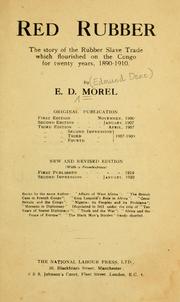
Morel was the journalist who broke the Congo atrocity story to the world. Reading his original 1906 exposé as a primary source sharpens the reader's sense of how the humanitarian campaign was constructed and what evidence it relied on.
Independence, Lumumba & Mobutu
IntermediateUnderstand the catastrophic decolonization of 1960, the assassination of Patrice Lumumba, and the three-decade kleptocracy of Mobutu Sese Seko as interconnected chapters in a single Cold War tragedy.
▸ Study plan for this stage
Pace: 4–5 weeks, ~40–50 pages/day (the book is ~500 pages; allow time for reflection and note-taking on dense political narrative)
- Patrice Lumumba's vision for a unified, independent Congo and the forces that opposed him (Belgium, Cold War powers, internal rivals)
- The catastrophic power vacuum and civil war immediately following independence in June 1960
- Mobutu Sese Seko's rise to power through a military coup and his consolidation of a personalist dictatorship
- The mechanics of Mobutu's kleptocracy: how state resources were systematized for personal enrichment and patronage networks
- Cold War geopolitics as the backdrop: how external powers (US, USSR, Belgium) shaped Congo's trajectory for ideological gain
- The assassination of Lumumba in January 1961 and its role as a turning point in Congo's post-independence fate
- Wrong's investigative method: how she reconstructs Congo's history through interviews, archives, and personal narrative
- What were Patrice Lumumba's core political goals for an independent Congo, and why did they threaten both Western and internal Congolese interests?
- How did the transition from Belgian colonial rule to independence in 1960 create the conditions for civil war and foreign intervention?
- What role did Cold War rivalry play in Mobutu's rise to power, and how did external support enable his consolidation of control?
- How did Mobutu systematically transform the Congolese state into a vehicle for personal wealth accumulation, and what were the consequences for ordinary Congolese?
- Why was Lumumba assassinated, and who were the key actors (Congolese, Belgian, American) involved in or complicit in his death?
- How does Wrong use investigative journalism and narrative reconstruction to piece together Congo's history, and what are the limitations of her sources?
- Create a detailed timeline of key events from June 1960 (independence) to January 1961 (Lumumba's assassination), noting the actors and decisions at each turning point
- Write a character sketch of Patrice Lumumba based on Wrong's portrayal: his background, ideology, rhetoric, and the contradictions he faced as a nationalist leader
- Map the Cold War interests in Congo: create a chart showing what the US, USSR, Belgium, and other powers wanted from Congo and how they pursued those goals
- Trace Mobutu's path to power: identify the key moments, allies, and decisions that allowed him to consolidate control from 1960 onwards
- Analyze Wrong's investigative method by selecting 2–3 key passages where she reconstructs historical events; note her sources, assumptions, and how she handles gaps in evidence
- Write a short essay (500–750 words) explaining how Lumumba's assassination was both a Congolese political crime and a Cold War proxy killing
Next up: This stage establishes the tragic origins of Congo's post-colonial state and the personalist dictatorship that would dominate it for 32 years, providing essential context for examining how Mobutu's regime evolved, how it affected Congolese society and economy, and ultimately how it collapsed in the 1990s.
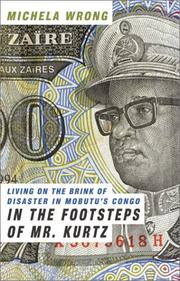
Wrong's portrait of Mobutu's Zaire is the best single-volume account of how kleptocracy works at a systemic level. Vivid, analytically sharp, and essential for understanding the institutional rot the DRC still lives with.
The Modern DRC — War, Minerals & Survival
ExpertEngage with the complex, ongoing crises of the post-Mobutu DRC — the Congo Wars, the mineral economy, mass atrocity, and the resilience of ordinary Congolese — with the full historical depth now in place.
▸ Study plan for this stage
Pace: 6–8 weeks, ~40–50 pages/day (approximately 300–350 pages/week). Stearns' narrative is dense with interlocking actors and timelines; slower pace allows for note-taking on key figures, factions, and mineral supply chains.
- The collapse of Mobutu's state (1990–1997) and the power vacuum that enabled regional invasion and civil war
- The First Congo War (1996–1997) and the role of Rwanda, Uganda, and Burundi in backing Laurent-Désiré Kabila's rebellion
- The Second Congo War (1998–2003) as a regional proxy conflict involving nine African nations and the competition for mineral wealth
- The mineral economy: how coltan, diamonds, gold, and cobalt fueled and financed armed groups and warlords
- The logic of predatory state-building: how military commanders and political elites used war to accumulate personal wealth and control territory
- Mass atrocity and sexual violence as weapons of war, displacement, and control in the DRC conflict
- The agency and resilience of ordinary Congolese civilians caught between state collapse, foreign invasion, and armed group predation
- The limits of international intervention and the failure of peace processes to address underlying structural causes of conflict
- What were the immediate causes of Mobutu's fall, and how did the Rwandan genocide and regional geopolitics accelerate the collapse of the Zairian state?
- How did the First Congo War differ from the Second Congo War in terms of actors, objectives, and international involvement?
- Explain the relationship between mineral extraction and armed conflict in the DRC: how did access to coltan, diamonds, and gold shape military strategy and financing?
- Who were the key military and political figures in the Congo Wars (Kabila, Kagame, Museveni, Bemba, Nkunda, etc.), and what were their competing interests?
- What role did sexual violence and mass atrocity play in the Congo Wars, and how did perpetrators justify or rationalize these crimes?
- How did ordinary Congolese civilians experience and respond to state collapse, foreign invasion, and armed group predation during the 1990s and 2000s?
- Create a detailed timeline of the Congo Wars (1996–2003) with key events, turning points, and shifts in military control; annotate with which armed groups, foreign powers, and mineral interests were dominant at each phase.
- Build a network map of major actors in the Congo Wars (military commanders, warlords, regional leaders, multinational corporations, international organizations) and draw connections showing alliances, rivalries, financial flows, and mineral supply chains.
- Track the mineral economy: select one mineral (coltan, diamonds, or gold) and trace its supply chain from DRC mines through armed group control, regional smuggling networks, and international markets; document how profits funded specific military operations or warlords.
- Write character sketches (2–3 pages each) of 4–5 key figures (e.g., Kabila, Kagame, Bemba, Nkunda, Museveni) based on Stearns' account: their backgrounds, motivations, military strategies, and role in the broader conflict.
- Analyze a specific atrocity or conflict episode from the book (e.g., a massacre, displacement, or siege) and write a 3–4 page critical analysis examining the perpetrators' logic, the victims' experiences, and the international response (or lack thereof).
- Conduct a close reading of Stearns' treatment of civilian agency and resilience: identify 3–4 examples of how ordinary Congolese resisted, survived, or adapted to the chaos of war, and reflect on how this complicates narratives of victimhood or helplessness.
Next up: This stage equips you with a granular understanding of how state collapse, regional militarism, and resource competition created the conditions for mass violence in the DRC—a foundation essential for examining the post-2003 transition, the persistence of armed groups, and contemporary efforts at state-building and accountability.
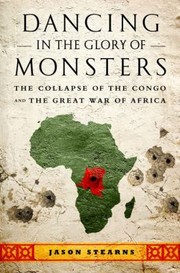
The authoritative account of the First and Second Congo Wars (1996–2003), the deadliest conflict since WWII. Stearns interviewed hundreds of participants; this book is unreadable without the prior stages but indispensable with them.
Discussion
Keep reading
Paths that share books, cover the same subject, or open a related topic.