Joseph Conrad Reading Order: Where to Start
This curriculum moves from Conrad's most accessible shorter fiction through his towering major novels, then opens outward into the postcolonial debate his work ignited. Because the learner starts at an intermediate level, the path assumes comfort with literary prose but builds Conrad-specific vocabulary — his layered narration, moral ambiguity, and colonial settings — before tackling the densest works and the critical controversy surrounding them.
Conrad's Shorter Fiction: Learning His Voice
IntermediateGrasp Conrad's signature techniques — the frame narrator, psychological intensity, and colonial atmosphere — in compact, manageable forms before tackling the long novels.
▸ Study plan for this stage
Pace: 4–5 weeks total; roughly 20–25 pages per sitting, 4–5 sittings per week. Week 1: Read and annotate "The Secret Sharer" in full (≈60 pp.), allowing 2–3 sittings. Week 2: Read "The Shadow-Line" (≈120 pp.) across 4–5 sittings. Weeks 3–4: Read "Youth" (≈50 pp.) in 2 sittings, then spend the remaining ti
- The Frame Narrator and Narrative Distance: How Conrad layers storytelling voices — especially the unnamed captain in 'The Secret Sharer' and Marlow in 'Youth' — to create irony, unreliability, and intimacy simultaneously.
- The Double and the Shadow Self: The relationship between the captain and Leggatt in 'The Secret Sharer' as a study in psychological projection, identity, and moral ambiguity.
- The Ordeal as Initiation: All three works frame a young commander's trial — concealing a fugitive, navigating a becalmed plague ship, surviving the Judea's doomed voyage — as a rite of passage into selfhood and authority.
- Colonial and Imperial Atmosphere: The exotic, morally fraught settings (Eastern seas, colonial ports) function not merely as backdrop but as active forces that expose the fragility of European identity and order.
- Psychological Intensity and Interiority: Conrad's technique of rendering extreme mental states — paranoia, guilt, exhaustion, nostalgia — through close third-person or first-person narration, often with physical symptoms mirroring inner crisis.
- The Sea as Moral Arena: Ships, weather, and the ocean are never neutral in Conrad; in 'The Shadow-Line' the becalmed ship and depleted quinine supply literalize the captain's inner paralysis, while in 'Youth' the burning Judea becomes a symbol of romantic illusion.
- Compression and Economy of Form: How Conrad achieves the thematic density of a novel within novella and short-story length — through symbolic objects (the hat in 'The Secret Sharer'), recurring motifs, and carefully controlled revelation.
- Nostalgia, Memory, and the Retrospective Voice: Particularly in 'Youth,' the older Marlow's retrospective narration creates a double temporality — the excitement of youth and the melancholy of experience — that is central to Conrad's worldview.
- In 'The Secret Sharer,' what does the captain's decision to hide Leggatt reveal about his own psychological state and his fitness for command? Is he heroic, reckless, or something more ambiguous?
- How does Conrad use the physical environment — the becalmed, disease-ridden ship — in 'The Shadow-Line' to externalize the young captain's inner crisis of confidence and grief?
- In 'Youth,' how does the older Marlow's retrospective narration change the meaning of the adventure? What is lost and what is gained by telling the story from a distance of years?
- Across all three works, what does Conrad suggest about the relationship between isolation, command, and self-knowledge? Is solitude a gift or a danger for his protagonists?
- How does Conrad handle colonial settings and non-European characters in these three texts? What attitudes are reinforced, complicated, or left unexamined?
- Identify a key symbolic object or image in each of the three works ('The Secret Sharer,' 'The Shadow-Line,' 'Youth') and explain how Conrad uses it to carry thematic weight beyond its literal function.
- Close-Reading Annotation Sprint: Re-read the opening two pages of each work and annotate every choice Conrad makes about narrative voice — who is speaking, from what distance in time, and what tone is established. Write a one-paragraph comparison of how each opening positions the reader differently.
- Double-Entry Journal: While reading 'The Secret Sharer,' keep a two-column journal. Left column: passages describing the captain's external actions. Right column: passages revealing his internal state. After finishing, write a short analysis of how Conrad braids the two together.
- Symbolic Object Inventory: Identify one recurring or charged object in each novella/story (e.g., the captain's hat in 'The Secret Sharer,' the ship's log or quinine in 'The Shadow-Line,' the burning Judea in 'Youth'). Write a 200-word close reading of each object, tracing every appearance and its evolving significance.
- Comparative Character Sketch: Write a 400–500 word essay comparing the three protagonists as young commanders at a moment of crisis. What do they share? Where do they diverge? What does Conrad seem to value or critique in each?
- Narrative Voice Rewrite Exercise: Choose one pivotal scene from 'Youth' narrated by the older Marlow and rewrite it as if it were narrated in the present tense by the young Marlow living through it. Reflect in a short paragraph on what changes — and what this reveals about Conrad's deliberate choice of retrospective narration.
- Colonial Gaze Reflection: After finishing all three texts, list every named and unnamed non-European character or community that appears. For each, note how much interiority or agency Conrad grants them. Write a 300-word critical reflection on what patterns you notice and how they might inform your reading of Conrad's longer works.
Next up: By mastering Conrad's core techniques — layered narration, psychological doubling, symbolic settings, and the colonial gaze — in these shorter, structurally transparent works, the reader is now equipped to track those same techniques operating at full, sustained complexity in Conrad's major novels.

A tight, almost claustrophobic novella about identity and moral complicity at sea; the perfect first taste of Conrad's doubled-self theme and his precise, pressurized prose.

A semi-autobiographical sea novella that deepens the initiation-into-command theme; reading it second lets you see how Conrad revisits and expands the concerns of 'The Secret Sharer'.

Introduces Marlow — Conrad's great narrator — in a relatively light, ironic story of romantic illusion; essential preparation for the far darker Marlow of 'Heart of Darkness'.
The Major Works: Conrad at Full Power
IntermediateEngage with Conrad's three undisputed masterpieces in the order that builds interpretive stamina, from the concentrated novella to the sprawling political novel.
▸ Study plan for this stage
Pace: 10–12 weeks total: ~2 weeks for Heart of Darkness (~30 pages/day, re-reading key passages); ~3–4 weeks for Lord Jim (~25 pages/day, pausing at structural shifts); ~5–6 weeks for Nostromo (~30 pages/day, with dedicated review sessions after each of the three parts)
- Narrative framing and unreliable narration: Marlow as witness, filter, and moral participant across Heart of Darkness and Lord Jim
- Imperialism and its ideological critique: the gap between civilizing rhetoric and colonial violence, most concentrated in Heart of Darkness
- The moment of moral failure and its aftermath: Jim's jump in Lord Jim as the structuring trauma around which identity and judgment orbit
- Chronological disruption and analepsis: Conrad's deliberate scrambling of time to implicate the reader in the act of interpretation
- The 'destructive element': idealism, illusion, and the cost of submitting to — or fleeing from — reality, a thread running from Kurtz through Jim to Nostromo's silver
- Material interests vs. human idealism in Nostromo: how economic forces (the San Tomé mine) corrupt, motivate, and ultimately determine character and political fate
- Conrad's prose style: the impressionistic accumulation of sensory detail, syntactic delay, and strategic obscurity as ethical and aesthetic choices
- Community, isolation, and solidarity: how each book tests whether human bonds can survive extreme moral pressure
- In Heart of Darkness, what is the function of the frame narrator who listens to Marlow on the Nellie — how does his presence shape our trust in and distance from Marlow's account?
- Kurtz is barely present in Heart of Darkness yet dominates the novel. How does Conrad construct his power through absence, rumor, and other characters' testimony rather than direct portrayal?
- Lord Jim's first half is told out of chronological order through Marlow's oral narrative. What does this structural choice argue about the nature of judgment and the possibility of ever fully 'knowing' another person?
- How does the silver of the San Tomé mine function as a character in its own right in Nostromo — what does it do to Nostromo, to Charles Gould, and to Costaguana as a whole?
- Compare the three protagonists — Marlow/Kurtz, Jim, and Nostromo — as studies in different kinds of failure. What does Conrad suggest is the relationship between idealism and self-destruction?
- Conrad has been both celebrated as an anti-imperialist and criticized (notably by Chinua Achebe) for reproducing colonial dehumanization of Africa. Using Heart of Darkness as your primary text, where do you locate the novel's moral limits, and does your reading of Lord Jim or Nostromo complicate or confirm that assessment?
- Close-reading journal: After finishing Heart of Darkness, select three passages where Marlow's language becomes conspicuously vague or evasive (e.g., describing Kurtz's 'unspeakable' acts). Write one paragraph per passage arguing what the evasion reveals rather than conceals.
- Structural mapping of Lord Jim: Draw a timeline of the novel's actual chronology of events, then map the order in which Marlow presents them. Annotate at least five points where the reordering creates irony, suspense, or moral judgment — and write a short reflection on what is gained and lost.
- Character dossier for Nostromo: As you read, keep a running one-page profile for Charles Gould, Nostromo, and Decoud, tracking how each character's relationship to the silver changes across the three parts. At the end, write a 300-word synthesis comparing their trajectories.
- Engage with the critical debate: Read Chinua Achebe's 1975 essay 'An Image of Africa: Racism in Conrad's Heart of Darkness' and Cedric Watts's rebuttal. Write a 400-word position paper that takes a stance, using specific textual evidence from Heart of Darkness to support your argument.
- Comparative essay (600–800 words): Choose one theme — illusion, betrayal, or the corrupting power of a single obsessive idea — and trace it across all three books in this stage, using at least one specific scene or passage from each novel as evidence.
- Imitation exercise: Write a 200-word paragraph in Conrad's style — using a Marlow-like narrator, impressionistic sensory detail, and at least one instance of syntactic delay (a long subordinate clause before the main verb) — describing a morally ambiguous scene of your own invention.
Next up: Mastering Conrad's narrative complexity, colonial critique, and thematic density in these three masterpieces equips the reader to engage with his shorter, more experimental late works and political fiction — where the same preoccupations are refracted through darker irony and increasingly fragmented form.

The central text in any Conrad curriculum and the fulcrum of all postcolonial debate about him; reading it after the shorter Marlow story lets you appreciate its full symbolic and narrative complexity.

Conrad's first long novel expands Marlow into a full book-length narrator wrestling with honour, guilt, and empire; the moral questions raised here are the direct extension of 'Heart of Darkness'.
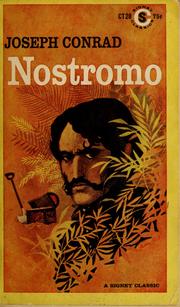
Conrad's most ambitious novel — a panoramic study of capitalism, imperialism, and political idealism in a fictional South American republic; best tackled after you are fully at home in his style.
Rounding Out Conrad: The Political Novels
ExpertSee Conrad's range beyond the sea and Africa, exploring his anarchist and espionage fiction, which adds a European political dimension to his critique of modernity.
▸ Study plan for this stage
Pace: 6–8 weeks total; Week 1–3: The Secret Agent (~30 pages/day, including re-reading key chapters such as the Verloc–Winnie confrontation and the Greenwich bombing aftermath); Week 4–7: Under Western Eyes (~25 pages/day, given its denser psychological and political layering); Week 8: Comparative review,
- Irony as political critique: Conrad's use of sustained, cold irony in The Secret Agent to expose the absurdity and moral bankruptcy of both anarchists and the state apparatus
- The double agent and complicity: how figures like Verloc and Razumov are trapped between institutional powers, making them simultaneously victims and perpetrators
- Domestic space as political space: the Verloc household in The Secret Agent as a site where private life is fatally contaminated by political intrigue
- Surveillance, confession, and betrayal: Under Western Eyes as a study in the psychology of guilt, the coercive power of confession, and the impossibility of political innocence
- Conrad's skepticism toward ideology: his refusal to romanticize either revolutionary radicalism or autocratic order, positioning both as equally dehumanizing forces
- The unreliable narrator and mediated truth: the role of the unnamed English teacher-narrator in Under Western Eyes as a filter that distances, distorts, and ironizes Razumov's story
- European modernity and its discontents: London and Geneva as symbolic cities representing imperial complacency and revolutionary exile, respectively
- Language, translation, and untranslatability: Under Western Eyes's meditation on whether Russian interiority can ever be rendered legible to a Western reader
- In The Secret Agent, how does Conrad use irony to implicate the police, the embassy, and the anarchists equally in the Greenwich bombing — and what does this equivalence suggest about his view of political violence?
- What is the function of Winnie Verloc in The Secret Agent? How does her tragedy reframe the novel's political concerns as also deeply personal and gendered?
- How does Razumov's act of betrayal in Under Western Eyes shape every subsequent relationship he forms, and in what sense is his eventual confession both a liberation and a destruction?
- Compare the narrative strategies of the two novels: how does the omniscient, ironic narrator of The Secret Agent differ from the teacher-narrator of Under Western Eyes, and what does each choice reveal about Conrad's attitude toward his subject matter?
- Both novels feature characters who are instruments of larger political forces beyond their control. How do Verloc and Razumov each illustrate Conrad's critique of ideological systems that sacrifice individuals?
- Under Western Eyes is partly Conrad's response to Dostoevsky. Where do you see Conrad deliberately departing from or arguing against the Russian literary tradition in his treatment of guilt, confession, and redemption?
- Close-reading annotation: Select the chapter in The Secret Agent describing the aftermath of Stevie's death and annotate every instance of irony — verbal, situational, and dramatic. Write a one-page analysis of how Conrad's ironic distance shapes the reader's moral response.
- Character map of complicity: Draw a diagram for each novel showing every character's relationship to the central act of betrayal (the bombing in TSA; Razumov's denunciation in UWE). Use arrows to indicate who manipulates whom, and annotate each arrow with the motive (money, fear, ideology, love). Reflect in writing on what the diagrams reveal about Conrad's political worldview.
- Comparative essay (1,500–2,000 words): Argue whether Conrad is more sympathetic to Winnie Verloc or Razumov as tragic figures, using specific textual evidence from both novels to support your claim.
- City as symbol exercise: Write two short descriptive paragraphs (one for London in The Secret Agent, one for Geneva in Under Western Eyes) that capture how Conrad renders each city's atmosphere. Then write a third paragraph comparing what each city represents ideologically in its respective novel.
- Narrator reliability audit: Re-read the opening and closing pages of Under Western Eyes's framing sections (the teacher-narrator's preface and final remarks). List every moment where the narrator admits uncertainty or limitation. Write a short reflection on how these admissions affect your trust in the story you have been told.
- Research and response: Read a brief overview of the 1894 Greenwich bombing (the real event behind The Secret Agent) and the 1905 Russian Revolution (the backdrop of Under Western Eyes). Write one page on what Conrad changed or omitted from historical reality in each case, and speculate on why those choices serve his artistic and political purposes.
Next up: Mastering Conrad's political irony and his skepticism toward all ideological systems — whether anarchist, imperial, or revolutionary — equips the reader to engage with the broader retrospective assessments of his career, including his late work and the full arc of his critique of modernity across genres and geographies.
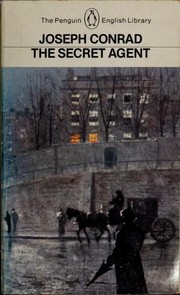
A darkly ironic London thriller about terrorism and state power; its savage comedy is a striking contrast to the tropical settings, showing Conrad's political vision in a new light.

Conrad's great Russian novel, about betrayal and revolution; reading it after 'The Secret Agent' completes his portrait of political idealism corrupted — and deepens the themes you'll bring to the critical debate.
The Postcolonial Debate: Conrad on Trial
ExpertUnderstand the fierce critical controversy over Conrad's legacy — is he a proto-postcolonial critic of empire or a racist perpetuator of it? — and develop your own informed position.
▸ Study plan for this stage
Pace: 8–10 weeks total. Week 1–2: Things Fall Apart (~20–25 pages/day, reading slowly and annotatively to absorb Achebe's counter-narrative). Week 3–4: Hopes and Impediments (~15–20 pages/day, pausing after each essay to take position notes). Week 5–7: Conrad by Norman Sherry (~25–30 pages/day, cross-refe
- Achebe's 'An Image of Africa' thesis — the argument, made explicit in Hopes and Impediments, that Heart of Darkness dehumanizes Africans and that Conrad was a 'thoroughgoing racist'
- Counter-narrative as critique: how Things Fall Apart constructs a fully realized Igbo civilization (Umuofia, the clan's laws, Okonkwo's interiority) as a direct literary rebuttal to the Africa of Conrad's imagination
- The biographical context in Sherry's Conrad: how Conrad's Congo journey, his Polish exile, and his outsider status in English letters shaped his worldview — and whether biography mitigates or compounds the charge of racism
- Complicity vs. critique: the distinction between a text that exposes imperial ideology and one that reproduces it — and why Heart of Darkness sits uneasily between both positions
- The implied reader and narrative voice: Marlow as unreliable narrator, the frame narrative, and whether Conrad distances himself from or endorses Marlow's dehumanizing language
- Postcolonial literary theory as a reading practice: how Achebe's essays in Hopes and Impediments model a politically committed close reading that holds canonical texts accountable
- The politics of the literary canon: who gets to define 'great literature,' whose suffering is rendered invisible, and what is at stake in removing or retaining Conrad from syllabi
- Authorial intention vs. textual effect: Sherry's biographical evidence of Conrad's anti-imperial sympathies set against Achebe's insistence that good intentions do not neutralize harmful representation
- After reading Things Fall Apart alongside Hopes and Impediments, can you articulate precisely which narrative and stylistic choices Achebe makes that directly answer Conrad's Africa — and why those choices constitute a critical argument as much as a novel?
- What are the three or four most specific textual charges Achebe levels against Conrad in 'An Image of Africa' (collected in Hopes and Impediments), and how does Sherry's biography either challenge or inadvertently reinforce each one?
- Sherry's Conrad presents a man shaped by displacement, colonialism's victims (Poland under partition), and genuine horror at Belgian atrocities — does this biographical portrait complicate or settle Achebe's moral verdict, and why?
- Is the distinction between 'Conrad the man' and 'Heart of Darkness the text' a defensible critical move? Use evidence from all three books to argue for or against it.
- How does Achebe's dual role — as novelist (Things Fall Apart) and as critic (Hopes and Impediments) — strengthen or weaken his authority in the debate? Does fiction constitute a valid form of literary criticism?
- Having read all three books, what is your own informed position: can Heart of Darkness be taught as great literature without perpetuating the harm Achebe identifies, and what conditions or framings, if any, would be required?
- Parallel passage mapping: Select three scenes in Things Fall Apart that depict Igbo ritual, justice, or domestic life, then find the closest thematic counterpart in Heart of Darkness (using your memory or notes). Write a 400-word comparison arguing what Achebe's version 'corrects' or 'restores' — grounding your claim in Achebe's own critical language from Hopes and Impediments.
- Prosecution vs. defense brief: Draft two short (300-word) legal-style briefs — one prosecuting Conrad using Achebe's charges from Hopes and Impediments, one defending Conrad using biographical evidence from Sherry's Conrad. Then write a one-paragraph verdict explaining which brief you find more persuasive and why.
- Annotated re-reading: Return to the essay 'An Image of Africa' in Hopes and Impediments and annotate every claim Achebe makes with one of three margin labels: (B) supported by Sherry's biography, (T) a matter of textual interpretation, or (C) a claim about cultural/political context. Tally the results and reflect on what the distribution tells you about the nature of the debate.
- Character interiority audit: Track every moment in Things Fall Apart where Achebe grants Okonkwo, Ezinma, or Obierika a complex inner life — fear, ambivalence, tenderness, doubt. Then ask: does Conrad's Marlow ever grant a comparable interiority to any African character? Write a 250-word reflection using Achebe's critical framework from Hopes and Impediments to interpret your findings.
- Biographical empathy test: Using three specific facts from Sherry's Conrad (e.g., Conrad's Polish background, his Congo diary, his relationships with African crew members), write a 350-word essay arguing whether biographical empathy is a legitimate tool in postcolonial criticism or whether it risks excusing textual harm — citing Achebe's position in Hopes and Impediments as your counterpoint.
- Position statement: After completing all three books and the above exercises, write a 500-word personal critical position statement answering the stage's central question. You must cite at least one passage from each of the three books and acknowledge the strongest counterargument to your own view.
Next up: By forging a personal, evidence-based position on Conrad's moral and literary legacy through these three books, the reader is now equipped to move from debate about Conrad to deeper immersion in Conrad's own major texts — reading Heart of Darkness, Lord Jim, or Nostromo not naively, but with Achebe's critique, Sherry's biography, and their own critical framework already in hand.

Achebe wrote this novel explicitly as an African counter-narrative to Conrad; reading it alongside the famous 1975 lecture ('An Image of Africa') shows what 'Heart of Darkness' erases and why it matters.
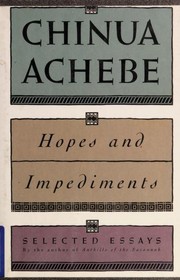
Contains Achebe's landmark essay 'An Image of Africa: Racism in Conrad's Heart of Darkness,' the single most important critical attack on Conrad; essential reading to understand the postcolonial case against him.
Sherry's biographical and critical scholarship provides the counter-argument — grounding Conrad in his historical moment and tracing the real sources of his fiction — giving you the tools to weigh both sides of the debate.
Discussion
Keep reading
Paths that share books, cover the same subject, or open a related topic.